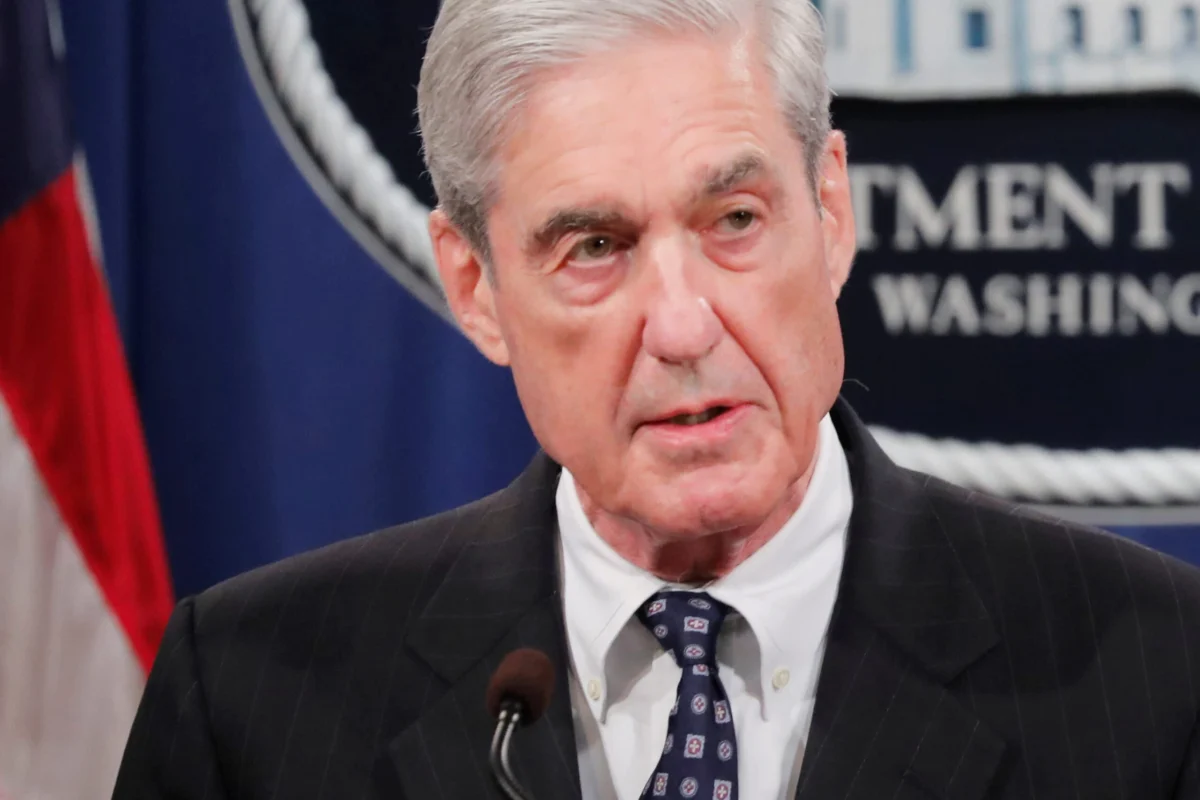
Robert Mueller, the esteemed former Special Counsel whose meticulous investigation into Russian interference in the 2016 U.S. presidential election dominated national headlines for years, and a former director of the Federal Bureau of Investigation (FBI) who served with distinction across multiple administrations, passed away on Friday at the age of 81. His family confirmed the news in a statement released on Saturday, expressing profound sadness and requesting privacy during this difficult time. "With deep sadness, we are sharing the news that Bob passed away on Friday night," the statement read, offering no further details regarding the circumstances of his death. The initial report of his passing was first published by MS Now on Saturday, prompting an outpouring of reactions from across the political spectrum, including a sharply critical and controversial post from former President Donald Trump.
Mueller’s death marks the end of a remarkable career dedicated to public service, spanning decades in law enforcement, the military, and high-stakes federal investigations. While his final years in the public eye were largely defined by the politically charged Special Counsel inquiry, his professional life was a testament to a commitment to justice and the rule of law, often operating outside the glare of partisan politics until his appointment in 2017. His legacy is complex, intertwined with some of the most tumultuous periods in recent American history, from the aftermath of the September 11th attacks to the deep divisions surrounding the 2016 election and its aftermath.
A Life of Distinguished Service: From Marine to FBI Director
Born in New York City in 1944, Robert Swan Mueller III’s path to public service began long before his federal appointments. He graduated from Princeton University in 1966, where he played lacrosse. Following his graduation, Mueller answered the call to serve his country during the Vietnam War, commissioning as an officer in the United States Marine Corps. He led a rifle platoon in Vietnam and was decorated for his valor, receiving the Bronze Star Medal with Combat "V" for heroism and the Purple Heart for wounds sustained in combat. His military service instilled in him a disciplined approach and a quiet resolve that would characterize his subsequent career.
Upon returning from Vietnam, Mueller pursued a legal education, earning his Juris Doctor from the University of Virginia School of Law in 1973. He began his legal career in private practice before transitioning to public service as an Assistant U.S. Attorney in San Francisco. His reputation for diligence and integrity quickly grew, leading to a series of increasingly significant roles within the Department of Justice. He served as the U.S. Attorney for the District of Massachusetts and later as the Assistant Attorney General for the Criminal Division, overseeing major investigations and prosecutions, including those related to terrorism and drug trafficking.
Mueller’s most extensive period of leadership prior to the Special Counsel role came with his appointment as the sixth Director of the Federal Bureau of Investigation. Nominated by President George W. Bush, he was confirmed by the Senate just days before the tragic events of September 11, 2001. His tenure, which stretched an unprecedented 12 years from 2001 to 2013, became one of the most transformative periods in the FBI’s history. Tasked with reshaping the bureau’s priorities in the wake of the 9/11 attacks, Mueller spearheaded a dramatic shift from a primary focus on law enforcement to one centered on preventing terrorism. He oversaw the integration of intelligence gathering with traditional investigative work, modernized the agency’s technological capabilities, and worked to enhance cooperation with other intelligence agencies both domestically and internationally. His leadership during this critical period earned him widespread bipartisan respect, culminating in a rare congressional waiver that allowed him to serve two years beyond the standard 10-year term, upon the request of President Barack Obama.
The Special Counsel Investigation: A Defining Chapter
It was in May 2017 that Robert Mueller was once again called upon for a role of immense national importance. Following the unexpected dismissal of FBI Director James Comey by President Trump and growing concerns over the integrity of the 2016 election, Deputy Attorney General Rod Rosenstein appointed Mueller as Special Counsel to investigate "any links and/or coordination between the Russian government and individuals associated with the campaign of President Donald Trump" and "any matters that arose or may arise directly from the investigation." This appointment immediately thrust Mueller, known for his stoicism and aversion to the limelight, into the epicenter of a political maelstrom.
For nearly two years, Mueller led a team of experienced prosecutors and FBI agents, conducting a comprehensive and exhaustive inquiry that delved into the intricacies of Russian interference and allegations of obstruction of justice. The investigation resulted in indictments against 34 individuals and three Russian companies, including Russian intelligence officers for hacking and disseminating stolen Democratic Party emails, and members of the Internet Research Agency for their extensive social media disinformation campaign aimed at influencing American voters. These indictments provided irrefutable evidence, corroborated by U.S. intelligence agencies, of Russia’s "sweeping and systematic" efforts to sow discord and favor one candidate over another.
The Special Counsel’s final report, officially titled "Report On The Investigation Into Russian Interference In The 2016 Presidential Election," was submitted to Attorney General William Barr in March 2019. Its public release, initially preceded by a summary from Attorney General Barr, ignited a fierce political debate. The report was divided into two main volumes: Volume I detailed the findings regarding Russian interference and coordination, concluding that while Russia engaged in extensive efforts to influence the election, the investigation "did not establish that members of the Trump Campaign conspired or coordinated with the Russian government in its election interference activities." Volume II addressed the obstruction of justice allegations against President Trump, outlining "numerous acts" by the President that could be construed as obstruction but ultimately declining to make a prosecutorial judgment. Mueller cited the long-standing Department of Justice policy that a sitting president cannot be indicted, effectively leaving the question of presidential accountability to Congress.
In a rare public statement in May 2019, Mueller underscored the findings of his report, emphasizing that if his office "had confidence that the President clearly did not commit a crime, we would have stated so." He reiterated that charging the President with a crime was not an option under DOJ policy, reinforcing that "the Constitution requires a process other than the criminal justice system to formally accuse a sitting president of wrongdoing." His subsequent testimony before two House committees in July 2019 further elucidated the report’s conclusions, though he largely stuck to the text of the report itself, maintaining his characteristic reserved demeanor despite intense questioning from lawmakers.
Political Fallout and Divergent Reactions
The Special Counsel investigation and Robert Mueller himself became immediate lightning rods for political contention. Former President Donald Trump consistently lambasted the probe as a "witch hunt" and a "hoax," asserting that it was a politically motivated effort to undermine his presidency. His rhetoric often included personal attacks on Mueller and members of his team, contributing to a deeply polarized national conversation surrounding the investigation’s legitimacy and findings.
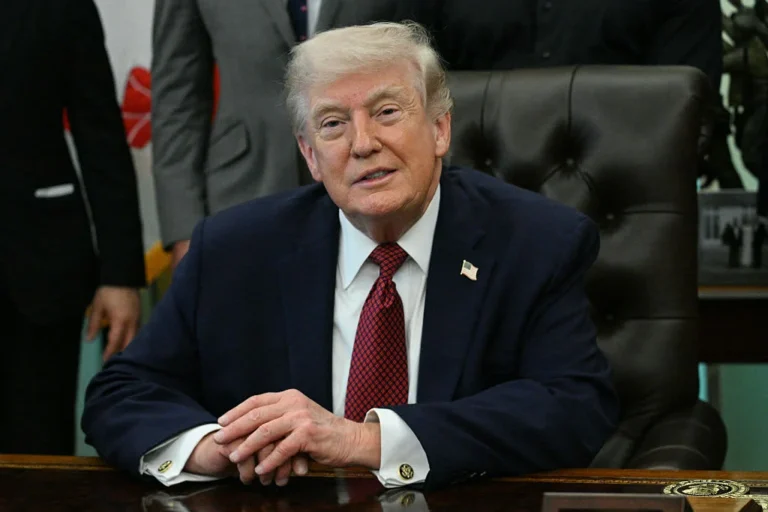
Immediately following the news of Mueller’s death, Trump reiterated his long-held animosity towards the former Special Counsel. In a post on his social media platform Truth Social, he stated: "Good, I’m glad he’s dead." He further added, "He can no longer hurt innocent people!" This stark and unsympathetic reaction quickly drew widespread condemnation, highlighting the enduring bitterness that characterized Trump’s relationship with Mueller and the investigation.
Beyond Trump’s controversial remarks, Mueller’s passing is expected to elicit a broader spectrum of reactions. Observers anticipate an outpouring of tributes from former colleagues, bipartisan leaders who worked with him during his FBI tenure, and those who respected his commitment to the rule of law. Figures like former Presidents George W. Bush and Barack Obama, under whom Mueller served, are likely to acknowledge his significant contributions to national security and justice. Many legal scholars and commentators will undoubtedly reflect on his unwavering professionalism and integrity in the face of intense political pressure, viewing him as a quintessential public servant who prioritized duty over personal gain or political expediency.
Broader Impact and Enduring Legacy
Robert Mueller’s life and work, particularly his role as Special Counsel, leave an indelible mark on American legal and political history. His investigation brought unprecedented scrutiny to the issue of foreign interference in U.S. elections, prompting heightened awareness and efforts to bolster election security. It also triggered a profound national debate about presidential power, the limits of executive authority, and the mechanisms for accountability within the American system of government. While his report did not find a criminal conspiracy between the Trump campaign and Russia, it meticulously documented numerous contacts and detailed Russia’s systematic efforts, solidifying the consensus among intelligence agencies regarding the threat to democratic processes.
Furthermore, Mueller’s quiet resilience throughout the investigation, his refusal to engage in political theatrics, and his steadfast adherence to legal and ethical principles reinforced the image of a public servant dedicated to upholding the Constitution. In an era marked by increasing political polarization and distrust in institutions, Mueller represented a steadfast commitment to facts and process, even when those facts proved inconvenient or politically explosive. His legacy will undoubtedly be debated for years to come, with some viewing him as a guardian of democratic norms and others as a central figure in a politically motivated assault. However, what remains undeniable is the profound impact of his work on the discourse surrounding national security, presidential conduct, and the integrity of American elections.
As the nation reflects on his passing, Robert Mueller will be remembered not only for the high-profile investigations he led but for a lifetime of unwavering dedication to the United States Marine Corps, the Department of Justice, and the Federal Bureau of Investigation. His commitment to public service, marked by a quiet determination and an unshakeable adherence to the principles of justice, will stand as a testament to a life well-lived in the service of his country.
This is breaking news. Please refresh for updates.
—The Associated Press contributed to this report.
About the Author