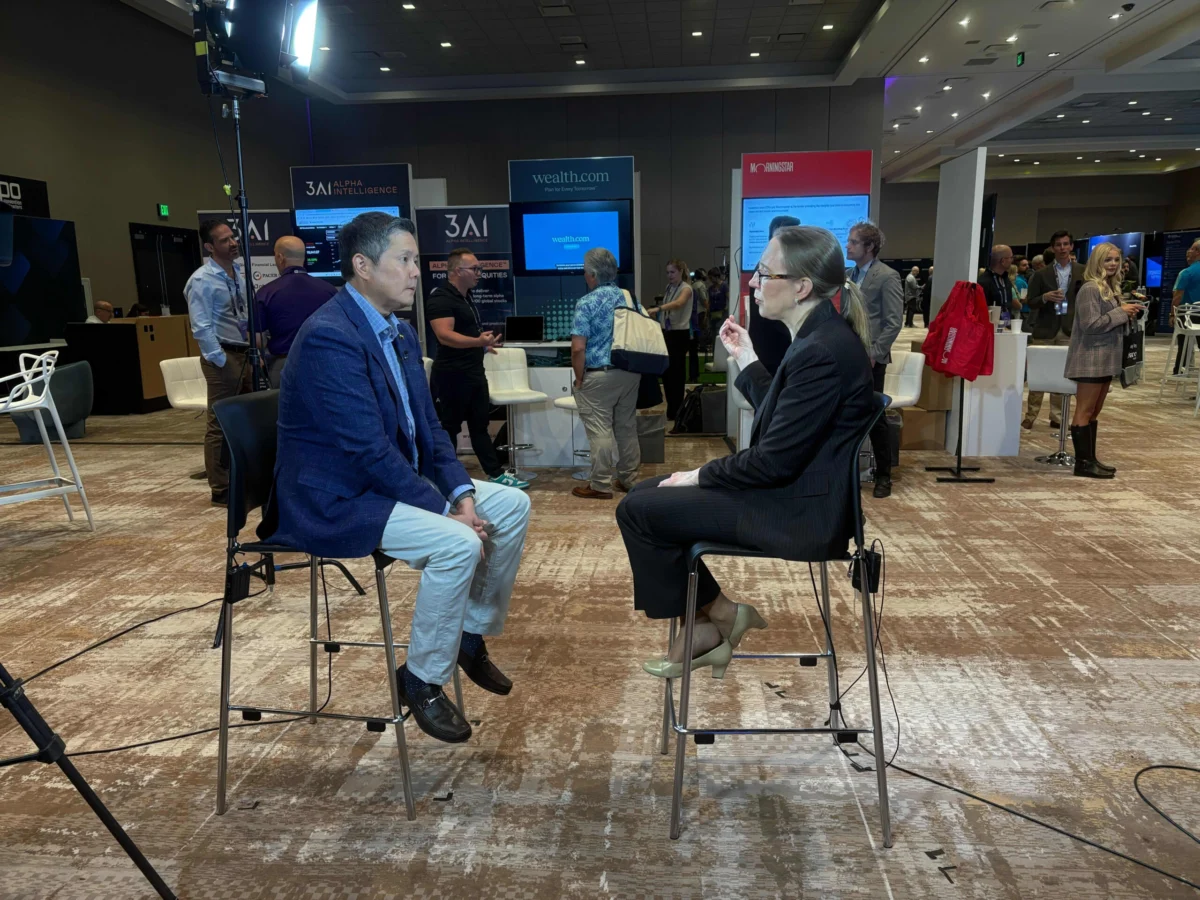
SEC Commissioner Hester Peirce has articulated a forward-looking stance regarding the integration of innovative financial products, specifically exchange-traded funds (ETFs) tied to cryptocurrencies and the burgeoning field of tokenization, into mainstream Wall Street offerings. Her remarks, made during an exclusive interview with "ETF Edge" host Dominic Chu this week from the VettaFi’s Exchange 2026 conference in Las Vegas, underscore a willingness by a key regulator to engage with market participants on these complex and rapidly evolving areas. This proactive invitation for dialogue suggests a potential shift towards greater regulatory clarity and collaboration in the digital asset space.
Commissioner Peirce, often dubbed "Crypto Mom" for her consistently supportive views on digital assets and blockchain innovation, emphasized the importance of a collaborative approach. "We want to work with people on new products," Peirce stated, directly addressing the industry. "It really is a come in and talk to us about what you’re trying to do. We want to work with you toward being able to experiment to see whether the market wants your products." This open-door policy represents a significant signal to financial institutions, asset managers, and fintech innovators who have long sought clearer pathways for bringing digital asset products to market within the existing regulatory framework.
The Significance of VettaFi’s Exchange 2026 Conference
Peirce’s participation at the VettaFi’s Exchange 2026 conference in Las Vegas provides crucial context for her statements. The annual VettaFi Exchange is a premier event for the ETF industry, gathering leading financial advisors, institutional investors, asset managers, and technology providers to discuss market trends, product innovation, and regulatory developments. Her presence there, she noted, was due to the sector’s critical importance: "I’m here because this is such an important segment of what we regulate."
The conference serves as a vital forum for gauging the pulse of the ETF market, exploring new investment strategies, and anticipating future growth areas. Topics typically range from thematic ETFs and active management to the integration of artificial intelligence and, increasingly, digital assets. Peirce’s engagement at such an event highlights the SEC’s recognition of the ETF industry’s role as a major conduit for investor access to new asset classes and investment methodologies. Her direct interaction with industry leaders at this forum indicates a desire to understand market needs and challenges firsthand, rather than relying solely on formal submissions.
Tokenization: A Maturing Conversation
Beyond crypto-linked ETFs, Commissioner Peirce also addressed the growing interest in the tokenization of financial instruments, noting a significant uptick in engagement from market participants. Tokenization involves representing ownership of real-world assets—ranging from real estate and art to corporate bonds and private equity—on a blockchain. This process aims to enhance liquidity, transparency, and fractional ownership, potentially revolutionizing how assets are traded and managed.
Peirce acknowledged a perceptible shift in the regulatory environment surrounding digital assets. "It’s not the SEC’s job to decide… how the market moves forward," she asserted, reinforcing the regulator’s role as an overseer rather than an innovator. However, she quickly added, "But tokenization is one of those areas that since the administration changed and since the attitude toward crypto and blockchain changed, people have come to us and they’ve said, ‘We really think tokenization has potential here.’" This observation suggests a renewed willingness by both industry and potentially parts of the government to explore the practical applications of blockchain technology beyond speculative cryptocurrencies.
The potential benefits of tokenization are vast. For instance, by fractionalizing high-value assets, it could democratize access for smaller investors, enabling participation in markets previously exclusive to institutions. Enhanced transparency and immutability offered by blockchain could also streamline back-office operations, reduce settlement times, and lower transaction costs, thereby increasing overall market efficiency. Major financial institutions, including BlackRock, JPMorgan, and Fidelity, have already publicly expressed interest in and launched pilot programs for tokenized funds and other assets, signaling a serious commitment to exploring this technological paradigm shift.
A Timeline of Regulatory Engagement with Digital Assets
The journey of digital assets within the U.S. regulatory landscape has been marked by cautious optimism, significant hurdles, and recent breakthroughs. For years, the SEC maintained a highly reserved stance on spot Bitcoin ETFs, citing concerns about market manipulation, surveillance sharing agreements, and investor protection.

- 2013-2017: Early applications for Bitcoin ETFs were consistently rejected, often due to concerns about the nascent nature of cryptocurrency markets and their susceptibility to fraud and manipulation.
- 2018-2021: The SEC continued to deny spot Bitcoin ETF applications, even as Bitcoin futures ETFs gained approval, highlighting the regulator’s comfort with regulated futures markets versus the underlying spot market. Commissioner Peirce frequently dissented from these rejections, advocating for a more accommodating approach.
- January 2024: A landmark decision saw the SEC approve nearly a dozen spot Bitcoin ETFs, following a court order in favor of Grayscale Investments against the agency. This approval marked a pivotal moment, opening the floodgates for institutional and retail investors to gain exposure to Bitcoin through regulated, traditional investment vehicles. The success of these ETFs, which collectively garnered billions in inflows within weeks of launch, demonstrated significant market demand.
- Post-Spot Bitcoin ETF Approval: The focus has shifted to other digital assets, with Ethereum spot ETFs currently under consideration. Peirce’s recent comments suggest that this momentum could extend to a broader range of tokenized financial products, signaling a more comprehensive engagement with blockchain-based innovations.
This chronology illustrates a gradual, albeit often reluctant, acceptance by regulators of digital assets. Peirce’s current statements suggest a desire to accelerate this engagement, moving beyond reactive approvals to proactive collaboration on product development.
Balancing Innovation with Robust Investor Protection
Central to the SEC’s mandate is investor protection, and Commissioner Peirce underscored that any collaboration on new products must adhere to this principle. "We want to do it [work with issuers] in a way that respects investor protection," she affirmed. This is not merely a formality but a foundational element of the SEC’s role in maintaining fair and orderly markets.
Peirce clarified the SEC’s function in this context: "It’s not our job to say which products are good or bad. It is our job to work with sponsors to make sure that they’re disclosing what those products are, what the risks are [and] what they’re intended to be used for." This distinction is critical. The SEC’s role is not to pick winners and losers in the market but to ensure that investors receive clear, comprehensive, and accurate information about the products they consider.
For complex and novel products like crypto-linked ETFs and tokenized securities, disclosure becomes paramount. This includes:
- Clear Risk Warnings: Articulating the unique risks associated with digital assets, such as price volatility, cybersecurity threats, regulatory uncertainty, and potential for market manipulation.
- Product Structure Transparency: Explaining how the product works, its underlying assets, and any leverage or derivatives involved.
- Intended Use: Guiding investors on who the product is designed for and under what circumstances it might be suitable.
- Operational Risks: Disclosing risks related to custody, trading venues, and the technological infrastructure underpinning digital assets.
The SEC’s emphasis on robust disclosure is particularly relevant as retail investor accessibility to new ETFs improves. While ETFs offer diversification and ease of access, complex or highly speculative products can pose significant risks if not properly understood. Peirce’s comments reinforce the agency’s commitment to ensuring that innovation does not come at the expense of investor safety and market integrity.
Broader Impact and Implications for the Financial Industry
Commissioner Peirce’s remarks carry significant implications for the financial industry, suggesting a potential thawing of regulatory skepticism and an opening for more direct engagement.
- Accelerated Product Development: Asset managers and fintech firms are likely to interpret Peirce’s comments as an encouragement to refine and submit proposals for novel crypto ETFs (e.g., those tracking other major cryptocurrencies like Ethereum or Solana, or multi-asset crypto funds) and tokenized products. This could lead to a faster pace of innovation in the regulated financial sector.
- Increased Dialogue: The invitation to "come in and talk to us" could foster a more collaborative environment, allowing industry participants to proactively address regulatory concerns during the product development phase, rather than facing rejections after lengthy and costly application processes.
- Enhanced Regulatory Clarity: While Peirce’s statements do not constitute formal guidance, they contribute to an evolving narrative that acknowledges the permanence and potential of digital assets. This ongoing dialogue could eventually lead to clearer regulatory frameworks tailored for digital securities.
- Market Efficiency and Liquidity: Successful tokenization initiatives, facilitated by a more receptive regulatory environment, could unlock new levels of market efficiency, particularly in illiquid asset classes. Fractional ownership and 24/7 trading capabilities could transform markets for real estate, private equity, and even collectibles.
- Competitive Landscape: The U.S. regulatory stance on digital assets impacts its competitiveness on the global stage. A more accommodating approach could prevent innovation from migrating to more crypto-friendly jurisdictions, ensuring the U.S. remains a leader in financial technology. Other regions, such as the European Union with its MiCA regulation and various Asian financial hubs, are actively developing comprehensive frameworks for digital assets, placing pressure on the U.S. to articulate a clear path forward.
Industry Reactions and Future Outlook
Industry leaders have long advocated for a more constructive dialogue with regulators. Peirce’s statements are likely to be met with cautious optimism. Asset managers who have already invested heavily in blockchain technology and digital asset divisions will likely see this as validation of their long-term strategies. Fintech companies, often at the forefront of technological disruption, will be eager to leverage this openness to bring their innovations to a broader market.
However, the path forward is not without its challenges. The SEC operates as a multi-member commission, and Peirce’s views, while influential, do not always represent the consensus of the entire body. The inherent complexities of digital asset regulation—ranging from defining what constitutes a security to ensuring robust cybersecurity and market integrity—will require ongoing diligence and sophisticated solutions.
Ultimately, Commissioner Peirce’s message from the VettaFi Exchange 2026 conference is a crucial signal: the SEC, or at least a significant voice within it, is ready to engage. This openness for collaboration on emerging crypto ETFs and tokenization suggests a maturation of the digital asset conversation, moving from outright skepticism to a focused effort on integrating these innovations responsibly into the fabric of traditional finance, all while upholding the paramount goal of investor protection. The coming months and years will reveal the extent to which this invitation translates into tangible progress and a redefined landscape for digital financial products.
About the Author