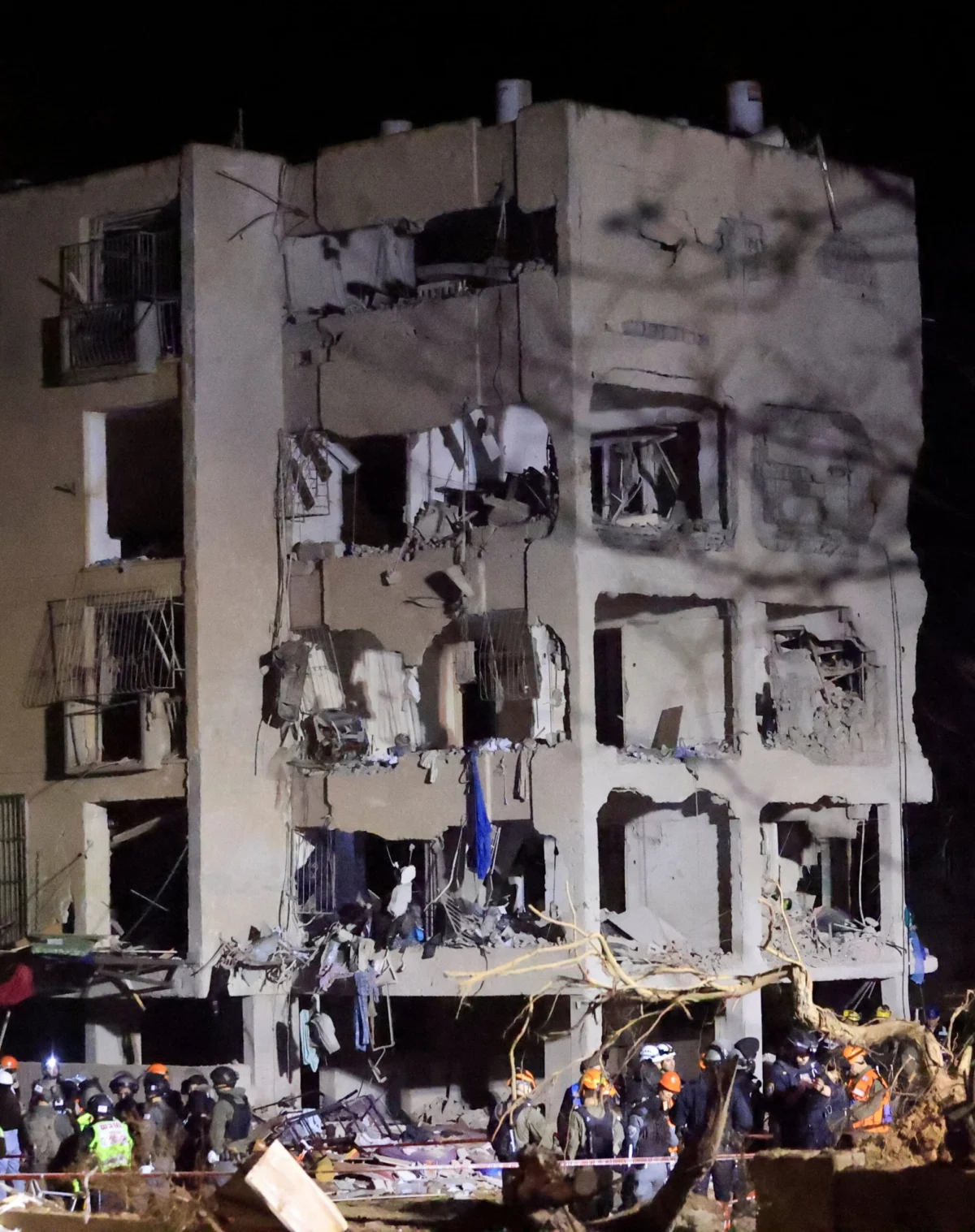
The long-simmering conflict in the Middle East exploded into a perilous new chapter on Saturday, March 22, 2026, as Iran and Israel engaged in unprecedented direct military exchanges, escalating a war that began just four weeks prior. The weekend saw a series of retaliatory strikes, with Iran targeting communities near Israel’s primary nuclear research site and Israel launching extensive bombardments against key Iranian cities. These actions have ignited grave concerns across the globe, pushing the region closer to a full-scale conflagration and sending immediate shockwaves through international energy markets and diplomatic circles.
Escalation: Iran’s Direct Strikes on Israeli Territory
Iran’s audacious strikes focused on the southern Israeli cities of Dimona and Arad. Dozens were injured, with initial reports indicating that four individuals sustained serious injuries, including a four-year-old girl, while twenty-nine others suffered lighter wounds. Emergency services, comprising firefighters and police, converged on two distinct impact sites, where initial footage revealed a bus with its windows shattered and significant structural damage to several residential and commercial buildings. Authorities are actively searching for individuals who remain unaccounted for, underscoring the chaos and immediate danger inflicted by the barrages.
Crucially, this marked the first instance in the ongoing conflict where Israel’s highly sensitive nuclear research center, situated near Dimona, was directly targeted. While the Israeli military confirmed that its sophisticated air defense systems were unable to intercept all incoming missiles, the strategic implications of striking such a facility are profound. Dimona, home to the Shimon Peres Negev Nuclear Research Center, has long been widely understood as the heart of Israel’s undeclared nuclear program. Targeting it represents a significant escalation, crossing a previously unbreached threshold in the volatile regional power struggle. Israeli Prime Minister Benjamin Netanyahu, describing the evening as "very difficult," immediately dispatched additional emergency resources to the affected areas, signaling the severity of the situation.
Israel’s Retaliation and Chronological Context
In swift and decisive retaliation, Israel launched its own wave of attacks across Iran. Reports confirmed Israeli strikes on the capital city of Tehran, the western city of Karaj, and the central city of Isfahan. While the full extent of casualties and damage from these strikes is still being assessed, Iranian state media reported a tragic incident in the northern city of Ramsar, where three members of a single family were killed in a strike on a residential building. These retaliatory actions underscore the spiraling nature of the conflict, with both nations demonstrating a willingness to strike deep within each other’s territories, moving beyond proxy engagements to direct military confrontation.

The current escalation follows a tense period that began on February 28, 2026, when the United States and Israel initiated airstrikes against various Iranian targets. This latest round of attacks, however, brings the war into its fourth week with a dangerous shift in tactics. Prior to Saturday’s events, Iranian media had alleged that U.S.-Israeli forces had attacked the Shahid Ahmadi-Roshan Natanz nuclear enrichment complex. Israel, however, vehemently denied responsibility for any such strikes in that region. The International Atomic Energy Agency (IAEA) promptly responded to these reports, stating in a post on X that "no abnormal radiation levels have been detected" and confirming an ongoing investigation. This particular Iranian nuclear facility at Natanz has a contentious history, having been targeted by Israel and the United States during a 12-day conflict with Iran in June 2025, highlighting its recurring significance as a flashpoint in regional hostilities. The repeated targeting of nuclear-related facilities, whether confirmed or alleged, elevates the risk profile of the conflict dramatically, raising the specter of radiological fallout and environmental catastrophe.
Mounting Humanitarian Toll and Widening Regional Instability
The human cost of this escalating conflict has continued to mount dramatically across the Middle East. The latest figures paint a grim picture: over 1,500 people have been killed in Iran, more than 1,000 in Lebanon, at least 60 in Iraq, 17 in Israel, 13 U.S. service members, 8 in the United Arab Emirates, 5 in Kuwait, 3 in Saudi Arabia, and 2 in Bahrain. These numbers, updated at the start of the conflict’s fourth week, reflect the widening geographic scope and intensifying lethality of the hostilities.
Beyond direct casualties, the ripple effects of the conflict are destabilizing the entire region. Saudi Arabia took decisive action, expelling five Iranian diplomats, including the security attaché and his assistant, giving them 24 hours to depart. This diplomatic rupture followed the Saudi Defense Ministry’s report of downing 20 Iranian drones earlier in the day, showcasing the direct threats faced by Gulf nations. Similarly, the United Arab Emirates Defense Ministry announced its successful interception of three ballistic missiles and eight drone attacks. Jordan’s military reported an astonishing 240 missiles and drones fired at its territory since the war began, resulting in 24 injuries among its population. These incidents underline the pervasive nature of the conflict, with projectiles routinely crossing international borders and threatening civilian populations and critical infrastructure across the Arabian Peninsula. Egyptian President Abdel-Fattah el-Sissi and Saudi Crown Prince Mohammed bin Salman issued a joint statement stressing that Iran’s escalating aggression against Gulf states poses a severe threat to regional safety and stability. Ahmed Aboul Gheit, chief of the Arab League, highlighted the visits of el-Sissi and Jordanian King Abdullah II to multiple Gulf states as a reflection of "full Arab solidarity" in the face of the mounting crisis.
The Diego Garcia Incident: Iran’s Intercontinental Reach Attempt
One of the most alarming developments of the weekend was the revelation that Iran had unsuccessfully targeted a joint U.S.-U.K. military base on Diego Garcia, a remote island in the Indian Ocean. U.K. officials confirmed the attempt, with the Ministry of Defence (MoD) telling CNBC that "Iran’s unsuccessful targeting of Diego Garcia was before yesterday’s update on the use of U.K. bases by the U.S." This incident signifies a dramatic expansion of Iran’s operational reach and intent.
According to Israel’s military, Iran employed a two-stage intercontinental ballistic missile (ICBM) in the attack. These sophisticated missiles are designed with at least two rocket engines, one propelling the missile into space, and another guiding it to its target, capable of ranges up to 4,000 kilometers (approximately 2,500 miles). Lt. Gen. Eyal Zamir, Chief of Staff, issued a stark warning regarding the implications of such weaponry: "These missiles are not intended to strike Israel. Their range extends to the capitals of Europe – Berlin, Paris, and Rome are all within direct threat range." The Wall Street Journal had first reported the attack on Friday, citing multiple U.S. officials, bringing this critical information to light.

This reported attack marks a significant milestone: Iran’s first operational use of intermediate-range ballistic missiles. It represents a clear and unprecedented attempt to project power and threaten U.S. interests far beyond the immediate Middle Eastern theater. British Prime Minister Keir Starmer’s office had earlier on Friday approved the use of British bases by U.S. forces for defensive operations in the region, including "U.S. defensive operations to degrade missile sites and capabilities being used to attack ships in the Strait of Hormuz." The MoD clarified that this permission extends to RAF Fairford in England and Diego Garcia in the Chagos Islands for "specific and limited defensive operations." The U.K. strongly condemned Iran’s actions, stating, "Iran’s reckless attacks, lashing out across the region and holding hostage the Strait of Hormuz, are a threat to British interests and British allies." The statement affirmed the continued deployment of "[Royal Air Force] jets and other U.K. military assets… to defend our people and personnel in the region."
Economic Fallout: The Strait of Hormuz and Global Oil Markets
The war, which commenced with U.S. and Israeli airstrikes on February 28, has profoundly impacted global energy supplies by effectively choking off the Strait of Hormuz. This narrow, economically crucial waterway separates Iran from the United Arab Emirates and is a vital chokepoint for global oil transit. Approximately one-fifth of the world’s oil supply, predominantly crude from the Gulf destined for Asia, typically transits through this strait. However, data analyzed by Charles Schwab indicates that daily transit calls have plummeted to nearly zero from highs above 120 earlier this year, signaling a severe disruption to global energy flows.
This disruption has naturally sent oil prices soaring. Benchmark Brent crude oil futures for May delivery surged by 3.26% to close at $112.19 a barrel on Friday, marking its highest close since July 2022. Similarly, U.S. West Texas Intermediate (WTI) futures for April settled 2.27% higher at $98.32 a barrel. These elevated prices reflect the market’s acute anxiety over supply stability and the potential for further escalation, which could further constrict this vital maritime artery.
In an effort to mitigate these rising prices and stabilize global energy markets, the Trump administration took an unusual step late Friday. It issued a 30-day waiver on sanctions concerning the purchase of Iranian oil at sea. U.S. Treasury Secretary Scott Bessent announced on X that this move is expected to release approximately 140 billion barrels of oil into global markets. However, Bessent emphasized the temporary and restrictive nature of this authorization: "This temporary, short-term authorization is strictly limited to oil that is already in transit and does not allow new purchases or production." He further stated that "Iran will have difficulty accessing any revenue generated
About the Author