The Federal Reserve stands poised to maintain its benchmark interest rate this week, facing a complex confluence of domestic economic data and escalating global geopolitical risks that severely constrain its policy options. With market participants largely anticipating a pause, the focus will acutely shift to Chair Jerome Powell’s commentary and the updated economic projections for any subtle indications regarding the future trajectory of monetary policy. The decision comes amidst fears of an inflation resurgence, a persistently robust yet uneven labor market, and the destabilizing influence of the ongoing conflict in the Middle East, particularly its implications for global energy prices.
The Immediate Outlook: A Foregone Conclusion for March
As the Federal Open Market Committee (FOMC) convenes, the consensus among economists and financial markets is near-unanimous: the federal funds rate will remain unchanged in its current target range of 3.5% to 3.75%. This decision is widely considered a foregone conclusion for the March meeting, with the CME Group’s FedWatch Tool indicating a near-zero probability of a rate cut. The prevailing sentiment has shifted dramatically in recent weeks, pushing back expectations for the first rate cut of the cycle from early summer to potentially late autumn. Futures pricing now largely suggests that policymakers will not consider easing until at least September, with October appearing more probable, and even then, only a single rate cut is projected for the entirety of the current year.
This conservative stance by the Fed is a direct reflection of a U.S. economy that continues to defy predictions of a significant slowdown, coupled with new external shocks. "The decision itself is almost guaranteed – a rate hold at the March meeting," noted BeiChen Lin, Senior Investment Strategist at Russell Investments. "But any hints Chair Powell might drop about the path of future interest rates will be key. Broadly speaking, the U.S. economy is still on solid footing. This means, however, that the bar for further rate cuts in the U.S. may be quite elevated."
Economic Crosscurrents: Inflation, Labor, and Growth
The Federal Reserve operates under a dual mandate from Congress: to foster maximum employment and maintain price stability. Achieving this balance has proven particularly challenging in the post-pandemic era, characterized by supply chain disruptions, unprecedented fiscal stimulus, and shifting consumer demand.
-
Inflationary Concerns: While headline inflation, as measured by the Consumer Price Index (CPI), has retreated significantly from its 2022 peaks, it has proven stubbornly sticky, particularly in the services sector. Recent data releases have underscored this challenge. The latest core inflation figures, which strip out volatile food and energy prices, registered at 3.1% in January, well above the Fed’s long-term target of 2%. Furthermore, the fourth-quarter Gross Domestic Product (GDP) was revised down to a modest 0.7% growth, but underlying price pressures remained evident. Policymakers are acutely aware that while goods inflation has largely moderated, persistent wage growth and strong consumer demand continue to fuel services inflation, making the final mile to the 2% target particularly arduous. The specter of an inflation spike, potentially exacerbated by external factors, is a primary deterrent to premature rate cuts. Former Fed Vice Chair Roger Ferguson has vocalized his concerns, stating, "I’m more worried about higher inflation. You know, the Fed has a 2% target. They’ve been away from that target for multiple years now, actually. At some point, it’s going to start to come into question whether or not the 2% target is really what the Fed’s aiming at, and so I am much more worried about that."
-
Mixed Signals from the Labor Market: The U.S. labor market has been a beacon of resilience, often cited as a key factor preventing a recession. February’s jobs report, for instance, showed continued job creation, with the unemployment rate remaining historically low. Wage growth, while moderating from its peak, is still robust enough to contribute to inflationary pressures. However, the signals are not uniformly strong. Some indicators point to a gradual cooling, such as a slight uptick in initial jobless claims or a decrease in job openings from their pandemic-era highs. The Fed must discern whether the labor market is merely normalizing from overheated conditions or if underlying weakness is beginning to emerge. Cutting rates too soon could reignite inflation, while waiting too long risks unnecessary economic slowdown and job losses.

-
Economic Growth Resilience: Despite tighter monetary policy, the U.S. economy has demonstrated remarkable resilience. Consumer spending remains robust, supported by strong household balance sheets and a vibrant job market. Business investment, though somewhat constrained by higher borrowing costs, continues in key sectors. This enduring strength provides the Fed with the luxury of patience, allowing it to wait for clearer signals that inflation is definitively on a sustainable path back to its 2% target.
Geopolitical Complications: The Shadow of Conflict
Adding another layer of complexity to the Fed’s calculus is the ongoing conflict in the Middle East, specifically the Iran war. This geopolitical flashpoint has introduced significant uncertainty into global energy markets, directly impacting inflation expectations. The region’s critical role in global oil supply, particularly through the Strait of Hormuz, makes any escalation a direct threat to price stability worldwide.
Even before the recent intensification, markets had begun to factor in the potential for higher energy prices. However, the direct attacks and their repercussions have markedly altered the market’s calculus. While Fed officials typically "look through" transient oil shocks, prolonged instability or significant disruptions to supply chains can have a more lasting inflationary effect. Higher oil prices translate into increased costs for transportation, manufacturing, and ultimately, consumer goods, undermining the Fed’s efforts to bring inflation under control. The prospect of sustained elevated energy prices poses a serious challenge, as it represents a supply-side shock that monetary policy is less equipped to address directly. Instead, the Fed would have to tighten financial conditions further to counteract the demand-side impact of higher energy costs, potentially risking a deeper economic downturn.
The Fed’s Dilemma and Forward Guidance
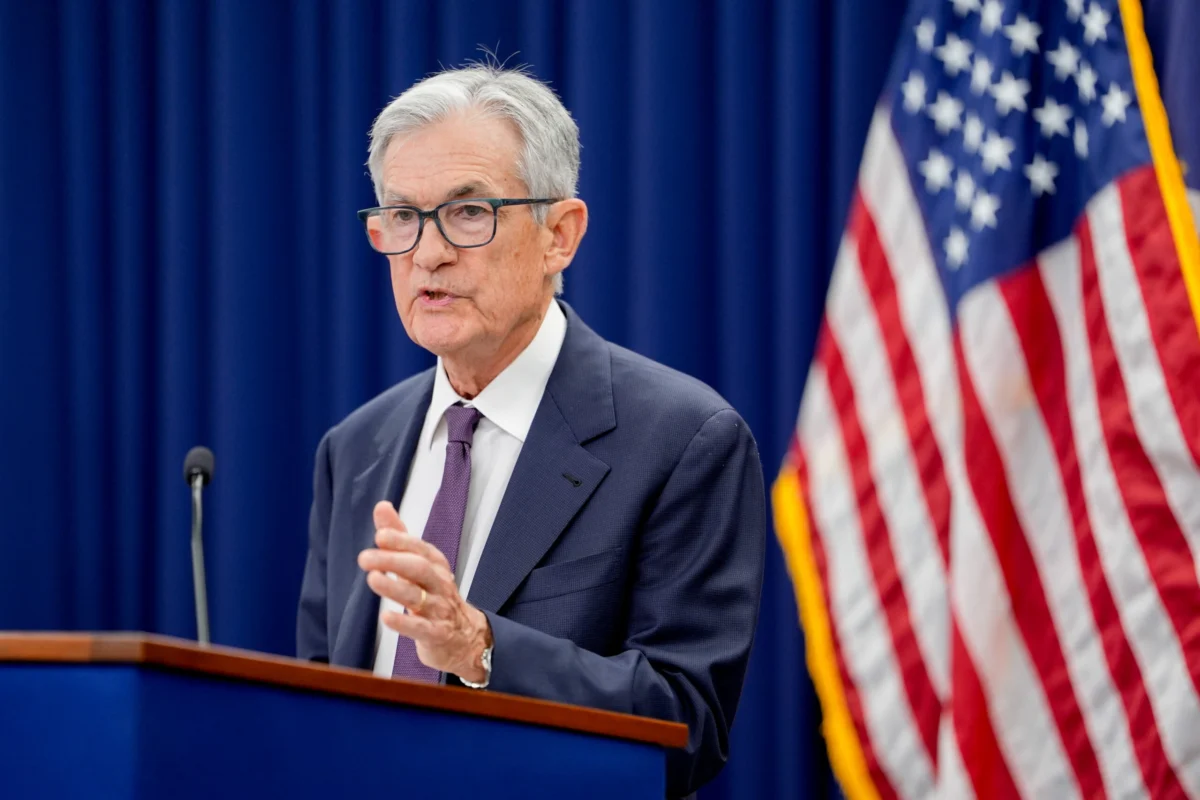
In this environment of conflicting signals and elevated uncertainty, Chair Powell’s messaging will be under intense scrutiny. The post-meeting statement and his subsequent press conference will be dissected for any deviation from previous guidance, any nuanced shifts in the committee’s collective outlook, or any specific acknowledgment of the geopolitical landscape. If, as some reports suggest, this could be Powell’s next-to-last meeting as chair, markets might be wary of reading too much into his individual statements, seeking instead a clearer articulation of the committee’s consensus.
Bank of America’s Fed-watchers highlighted this challenge: "With an April cut almost entirely priced out, Powell’s ability to guide markets depends on the extent to which they perceive his comments as representing the committee’s consensus rather than his own views. Even setting this constraint aside, Powell will have his work cut out for him." Powell’s communication strategy will need to strike a delicate balance: acknowledging the risks without inducing panic, reaffirming the Fed’s commitment to its dual mandate without pre-committing to a specific policy path, and maintaining optionality in a rapidly evolving economic and geopolitical landscape.
Market Expectations and the Dot Plot
Beyond the immediate rate decision, investors will eagerly await the release of the updated Summary of Economic Projections (SEP). This quarterly release includes the Fed’s closely watched "dot plot," a graphical representation of individual FOMC members’ expectations for the federal funds rate at various points in the future. The dot plot provides a crucial glimpse into the collective thinking of the committee and its perceived future policy trajectory.

Most observers, however, anticipate few significant changes in either the SEP or the dot plot. The Fed could potentially nudge up its projections for economic growth and inflation slightly from the last update in December, reflecting the recent resilience of the economy and persistent price pressures. However, the rate outlook is expected to remain largely intact. In December, officials indicated a consensus for just one rate cut this year. Despite ongoing debates within the committee and occasional dissents on specific policy nuances, the broader consensus is figured to hold, reinforcing the "higher for longer" narrative that has gained traction in recent months.
David Kelly, Chief Global Strategist at JPMorgan Asset Management, echoed this sentiment: "Looking at their communications, they will likely emphasize that the conflict in the Middle East has added further uncertainty to the outlook for both inflation and employment. However, their forecasts could look remarkably similar to three months ago." This consistency, even in the face of new challenges, would underscore the Fed’s cautious approach and its commitment to seeing definitive evidence of inflation returning to target before initiating an easing cycle.
Political Crosscurrents and Succession Uncertainty
Adding another layer of external pressure and complexity to the Fed’s operations are the lingering political crosscurrents. The central bank, by design, is intended to operate independently of political influence to make decisions based solely on economic data and its mandates. However, this ideal is often challenged by political rhetoric and actions.
Former President Donald Trump has been a vocal critic of Jerome Powell and the Fed’s monetary policy, consistently pressing for rate cuts. In a recent appearance, Trump reiterated his stance, questioning the Fed’s judgment: "What’s a better time to cut interest rates than now? A third-grade student would know that." Such public pressure, while not directly influencing the FOMC’s voting, can create an uncomfortable environment for policymakers trying to maintain their independence and credibility.
Furthermore, an unusual political entanglement surrounds the potential succession of Jerome Powell. His nomination of Kevin Warsh to succeed him in May is reportedly being held up by a case that the U.S. Justice Department, under U.S. Attorney Jeanine Pirro, is pursuing against Powell himself over the Fed’s headquarters renovation. Until this matter is resolved, Senator Thom Tillis, a Republican from North Carolina, has publicly stated his intention to block the Warsh nomination in the Senate Banking Committee. This unprecedented situation adds an element of political drama and uncertainty to the leadership of the central bank, potentially complicating long-term planning and market perceptions of institutional stability, even as the immediate focus remains on monetary policy.
Broader Implications and the Path Ahead
The Federal Reserve’s decision this week, while likely a hold, carries significant implications for various sectors of the economy. For consumers, the continued high interest rates mean elevated borrowing costs for mortgages, auto loans, and credit card debt, potentially dampening demand. Businesses, especially those reliant on financing, will continue to face higher capital costs, which could impact investment decisions and hiring plans. For financial markets, the "higher for longer" narrative suggests continued volatility in bond markets and a reassessment of equity valuations, particularly for growth stocks sensitive to interest rate changes.
Looking ahead, the Fed’s path remains highly data-dependent. Policymakers will continue to scrutinize every piece of economic data – from inflation reports and labor market statistics to consumer spending patterns and geopolitical developments. The challenge will be to differentiate between temporary fluctuations and genuine shifts in economic trends. The ultimate goal remains a "soft landing" – bringing inflation back to target without triggering a severe recession. Whether the Fed can successfully navigate these treacherous waters, balancing conflicting forces and external pressures, will be the defining economic story of the coming months. The March meeting, while not expected to deliver a policy change, will nonetheless serve as a critical juncture for assessing the central bank’s resolve and its vision for the future of monetary policy.
About the Author