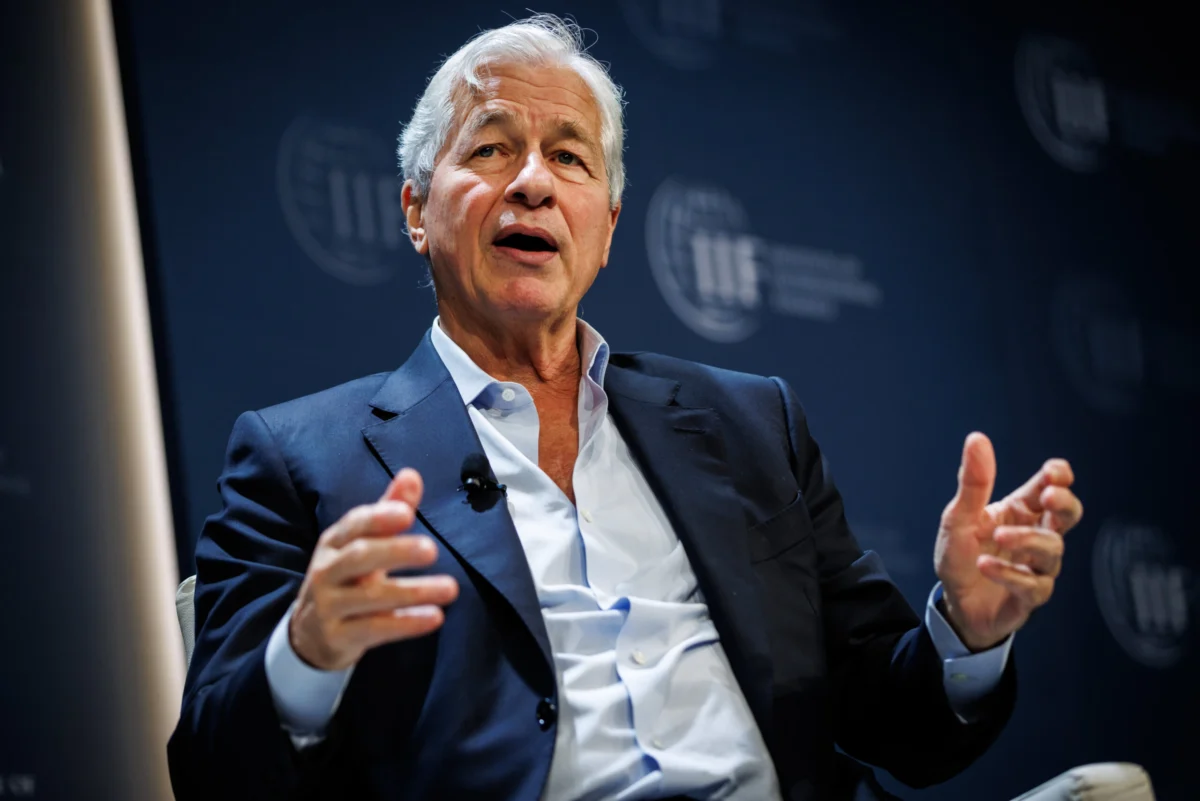
Jamie Dimon, the influential Chief Executive Officer of JPMorgan Chase & Co., delivered a sobering assessment on Tuesday regarding the immediate impact of artificial intelligence on cybersecurity, stating that while AI tools hold future promise for defense, they are currently escalating corporate vulnerabilities. Speaking during the bank’s quarterly earnings call, Dimon revealed that JPMorgan is actively testing Anthropic’s advanced new model, the Mythos preview, as part of its extensive efforts to harness AI’s benefits while simultaneously safeguarding against sophisticated cyber threats wielded by malicious actors employing the very same technology. His remarks underscore a growing apprehension among financial leaders and regulators about the dual-edged nature of AI, a technology widely hailed for its productivity potential but increasingly recognized as a potent weapon in the hands of cybercriminals.
"AI’s made it worse, it’s made it harder," Dimon told analysts, acknowledging the immediate challenges posed by the rapidly evolving technological landscape. He elaborated that the technology "does create additional vulnerabilities, and maybe down the road, better ways to strengthen yourself too." This sentiment reflects a critical juncture for the financial industry, which is at once eager to integrate AI for efficiency and competitive advantage, yet acutely aware of the existential risks it introduces in the realm of digital security. When pressed by a reporter about the specifics of Mythos, Dimon appeared to reference Anthropic’s own warnings about the model’s capacity to uncover widespread software weaknesses. "I think you read exactly what is it," he stated, adding, "It shows a lot more vulnerabilities need to be fixed."
The Dual-Edged Sword of AI in Cybersecurity
The advent of artificial intelligence, particularly in its generative forms, has inaugurated a new era of both unprecedented opportunity and profound risk for critical infrastructure sectors like finance. While AI holds immense potential to revolutionize fraud detection, automate compliance, enhance customer service, and streamline back-office operations, its capabilities are equally accessible to cyber adversaries. Malicious actors are increasingly leveraging AI to craft more sophisticated phishing campaigns, generate polymorphic malware that evades traditional defenses, automate reconnaissance of target networks, and even orchestrate complex, multi-stage attacks with unprecedented speed and scale.
The Mythos model, developed by AI firm Anthropic, epitomizes this dual-use dilemma. Announced just last week, Mythos is designed with advanced capabilities to analyze vast swathes of code and identify latent vulnerabilities, a powerful tool for ethical hackers and cybersecurity teams seeking to harden their systems. However, the very efficacy that makes Mythos a valuable defensive asset also highlights the potential for misuse. If such powerful vulnerability-discovery tools were to fall into the wrong hands, or if similar AI models are developed by adversarial groups, the implications for digital security could be catastrophic. The financial sector, with its immense repositories of sensitive data and vast sums of capital, represents an especially attractive target, making the deployment and understanding of such technologies a matter of paramount concern.
A Chronology of Mounting Concerns and Industry Response
The timeline surrounding Dimon’s statements reveals a rapidly intensifying focus on AI’s cybersecurity implications within the highest echelons of finance and government.
- Early April 2026: Anthropic publicly unveils the Mythos preview, showcasing its advanced capabilities in identifying software vulnerabilities. The announcement, while highlighting a defensive tool, simultaneously alerts the industry to the potential for such AI models to expose previously unknown weaknesses at scale.
- Mid-April 2026 (Last Week): In a clear indication of the escalating concerns, Treasury Secretary Scott Bessent convenes an urgent meeting with a select group of prominent US bank CEOs. The primary agenda item for this high-level gathering was the discussion of the substantial risks posed by advanced AI models like Mythos to the nation’s financial infrastructure. This proactive engagement by the Treasury Department underscores a recognition of AI’s potential to introduce systemic vulnerabilities, necessitating a coordinated, government-industry response.
- Monday, April 13, 2026: Goldman Sachs CEO David Solomon, during his bank’s own earnings call, acknowledges that Goldman Sachs is also testing Mythos. While Solomon declined to elaborate further on their findings or specific concerns, his confirmation signals that major financial institutions across the board are actively engaging with these new AI tools and grappling with their implications.
- Tuesday, April 14, 2026: JPMorgan Chase CEO Jamie Dimon makes his pointed remarks during the bank’s first-quarter 2026 earnings call, articulating the immediate increase in vulnerabilities despite AI’s long-term defensive potential. His candid assessment provides a public window into the private discussions and strategic considerations underway within the world’s largest financial institution regarding AI and cybersecurity.
This sequence of events illustrates not only the rapid development of AI capabilities but also the swift and serious response from financial regulators and industry leaders, highlighting the perceived urgency of understanding and mitigating these emerging risks.
The Financial Sector’s Battleground: A High-Stakes Environment
The financial sector has long been a primary target for cybercriminals, nation-state actors, and hacktivists due to the lucrative nature of the assets it manages and the sensitive personal and corporate data it holds. Annual reports from various cybersecurity firms and government agencies consistently place financial services among the top industries experiencing the highest volume and sophistication of cyberattacks. For instance, data from leading cybersecurity research indicates that financial institutions face an average of hundreds of thousands of cyber incidents annually, with thousands of these representing significant breaches or targeted attacks. The average cost of a data breach in the financial sector significantly exceeds the cross-industry average, often running into the tens of millions of dollars per incident, not including the immeasurable damage to reputation and customer trust.
The interconnectedness of the global financial system amplifies these threats. As Dimon aptly pointed out, "Banks… are attached to exchanges and all these other things that create other layers of risk." This web of dependencies—from payment processors and trading platforms to cloud service providers and fintech partners—means that a vulnerability exploited in one entity can cascade throughout the entire system, potentially triggering widespread disruption or even systemic risk. The rise of AI-powered attacks could exacerbate this issue, enabling adversaries to more rapidly identify and exploit weaknesses across multiple interconnected components, making defense an increasingly complex and collaborative endeavor. The sheer volume of transactions, the instantaneous nature of modern finance, and the reliance on digital infrastructure mean that any compromise can have immediate and far-reaching consequences, threatening not just individual institutions but the stability of national and global economies.
JPMorgan’s Proactive Stance and Investment in Cyber Resilience
Recognizing the gravity of these threats, JPMorgan Chase, as the world’s largest bank by market capitalization, has for years committed substantial resources to maintaining a formidable cybersecurity posture. Dimon emphasized the bank’s deep and ongoing investment in this critical area. "We spend a lot of money. We’ve got top experts. We’re in constant contact with the government," he stated, outlining a comprehensive approach that blends financial commitment, human capital, and strategic partnerships. The bank’s cybersecurity operations involve dedicated teams of thousands of specialists, encompassing ethical hackers, threat intelligence analysts, incident responders, and security architects, all working around the clock to defend against an ever-evolving threat landscape.
This proactive stance includes continuous monitoring, advanced threat detection systems, and robust incident response protocols. JPMorgan’s Chief Financial Officer, Jeremy Barnum, echoed Dimon’s assessment of AI’s dual nature, noting that the industry has long understood that such tools cut both ways in cybersecurity. "These tools can make it easier to find vulnerabilities, but then also potentially be deployed by bad actors in attack mode," Barnum explained on the earnings call. He clarified that recent advances from Anthropic and others have not necessarily created an entirely new problem but have rather "intensified an existing trend," underscoring the continuous arms race between attackers and defenders.
Beyond cutting-edge technology and expert personnel, Dimon also stressed the enduring importance of fundamental cybersecurity practices, often referred to as "cyber hygiene." "A lot of it is hygiene… how do you protect your data? How do you protect your networks, your routers, your hardware, changing your passcode?" he articulated. He concluded that "Doing all those things right dramatically reduces the risk," highlighting that while advanced AI tools are crucial, foundational security measures remain indispensable in building a resilient defense against both traditional and AI-enhanced threats. This holistic approach, combining high-tech solutions with disciplined operational practices, is deemed essential for safeguarding a financial institution of JPMorgan’s scale and complexity.
Regulatory Landscape and Government Engagement
The concerns voiced by Jamie Dimon and other financial leaders are not isolated; they resonate deeply within regulatory bodies and government agencies responsible for maintaining financial stability and national security. Financial regulators such as the Office of the Comptroller of the Currency (OCC), the Federal Reserve, and the Consumer Financial Protection Bureau (CFPB) in the U.S., along with international bodies, have long imposed stringent cybersecurity requirements on banks and other financial institutions. These regulations mandate robust risk management frameworks, regular penetration testing, comprehensive incident response plans, and detailed reporting of cyber incidents.
The recent meeting convened by Treasury Secretary Scott Bessent with bank CEOs specifically to discuss AI-related risks marks a significant escalation of government involvement. This gathering signals a shift from general cybersecurity oversight to a targeted focus on the unique challenges posed by advanced AI models. The Treasury Department’s engagement reflects a recognition that AI’s potential for systemic disruption requires a coordinated national strategy, bridging the gap between technological innovation, financial stability, and national security. Such discussions are critical for fostering public-private partnerships, enabling intelligence sharing, and potentially developing new regulatory guidelines or industry standards tailored to the AI era. Regulators are likely to push for greater transparency from AI developers, demand more rigorous risk assessments from financial institutions adopting AI, and explore mechanisms for collective defense against AI-powered cyberattacks. The goal is to ensure that the benefits of AI are realized without compromising the integrity and resilience of the financial system.
Broader Implications for Industry and Policy
The immediate vulnerabilities highlighted by Dimon carry profound implications for the entire financial industry and for policymakers globally. The "arms race" in cybersecurity is set to intensify dramatically, with AI accelerating both offensive and defensive capabilities. Financial institutions will be compelled to significantly increase their investments in AI-driven defensive technologies, recruiting and training a new generation of cybersecurity professionals skilled in machine learning and data science. This will also place increased pressure on AI developers like Anthropic to prioritize "security by design," integrating robust safeguards and ethical considerations into their models from inception, rather than as an afterthought.
Operational resilience and business continuity planning will become even more critical. Banks must anticipate not only direct attacks but also cascading failures across the interconnected financial ecosystem. This necessitates enhanced collaboration within the industry, including threat intelligence sharing, joint exercises, and common standards for AI security. Regulators, in turn, may need to develop new frameworks that balance innovation with risk mitigation, potentially introducing AI-specific cybersecurity mandates or guidance that address the unique characteristics of machine learning models, such as explainability, bias, and adversarial attacks. The discussions initiated by Treasury Secretary Bessent are likely just the beginning of a broader governmental effort to understand, regulate, and secure the integration of AI into critical national infrastructure. The challenge lies in fostering an environment where innovation can thrive responsibly, without inadvertently exposing the financial system to unacceptable levels of risk.
Conclusion: Navigating the AI Frontier
Jamie Dimon’s candid remarks serve as a vital wake-up call, crystallizing the immediate and complex cybersecurity challenges presented by artificial intelligence, even as it promises transformative benefits. While AI undoubtedly offers powerful tools for future defense against cyber threats, the current reality, as underscored by the vulnerabilities unearthed by models like Mythos, is that it also provides bad actors with unprecedented capabilities to penetrate digital defenses. The financial sector, as a critical nexus of global commerce and data, finds itself on the front lines of this evolving technological frontier.
Navigating this landscape will require sustained and significant investment, not just in advanced AI-driven defenses, but also in the foundational "cyber hygiene" that Dimon emphasized. It will demand unprecedented levels of collaboration between financial institutions, cybersecurity experts, AI developers, and government regulators to collectively understand, anticipate, and mitigate emerging threats. The goal is to harness the immense potential of AI to enhance security and efficiency, while simultaneously safeguarding the integrity and resilience of the financial system against an increasingly sophisticated and AI-augmented array of adversaries. The journey ahead will be complex, but the imperative for vigilance and proactive engagement is clearer than ever.
About the Author