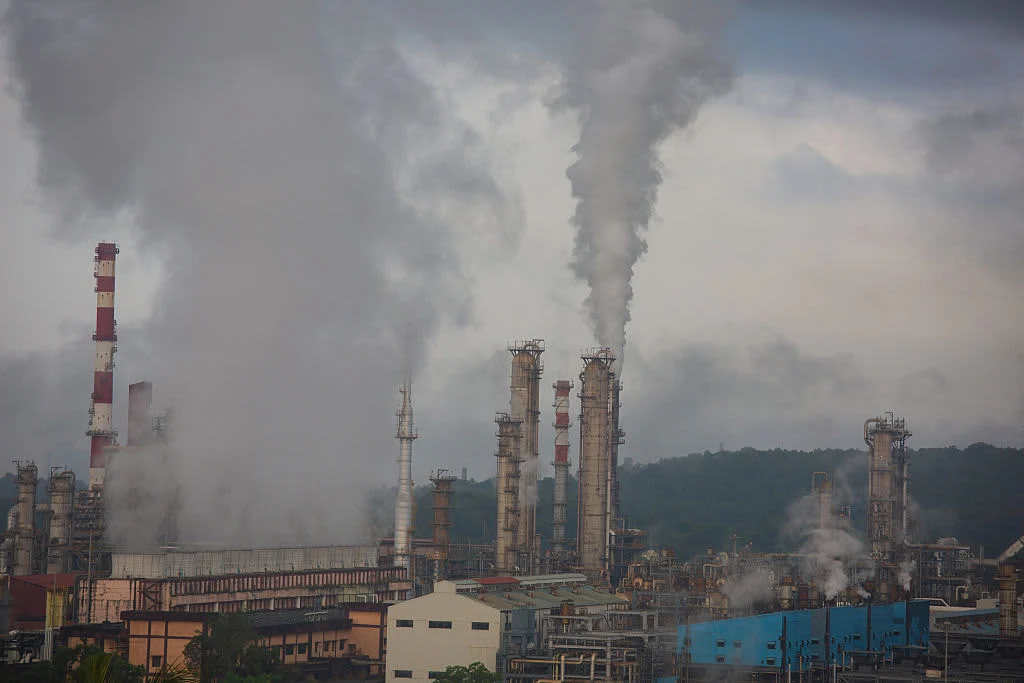
MANGALURU, INDIA – India’s robust private sector activity experienced a significant deceleration in March 2026, plummeting to its lowest level since October 2022. This downturn, revealed by the HSBC flash Purchasing Managers’ Index (PMI) compiled by S&P Global, signals a notable shift in the economic landscape, primarily driven by a weakening of domestic demand for goods and services. The slowdown occurred despite an encouraging surge in international orders, highlighting a divergence between internal and external market dynamics.
Decoding the PMI Data: A Comprehensive Overview
The HSBC flash India Composite PMI, a crucial barometer measuring the combined monthly change in manufacturing and services output, registered 56.5 in March. This figure marks a considerable drop from 58.9 recorded in February and fell short of the Reuters poll median expectation of 59.0. A PMI reading above 50.0 indicates economic expansion, while a figure below this threshold signifies contraction. While the Indian economy remains in growth territory, the pace of expansion has evidently moderated, raising questions about the sustainability of its rapid ascent.
Breaking down the composite index, both the manufacturing and services sectors contributed to the overall deceleration. India’s factory activity, a vital component of its industrial backbone, slowed to 53.8 in March, down from 56.9 in February. This performance also lagged behind the poll expectation of 56.8. The services sector, which constitutes a dominant share of India’s GDP and has been a key driver of recent growth, recorded 57.2. This was notably below the analyst forecast of 58.3, indicating a more subdued expansion than anticipated.
The report’s granular details painted a clearer picture of the challenges. Production declines were most pronounced among goods producers, who explicitly cited the escalating Middle East conflict as a primary cause of market volatility, rising input costs, and a discernible softening in demand. This confluence of factors led to factory output registering its weakest performance since August 2021. Concurrently, the services sector posted its slowest expansion since January 2025, with travel disruptions attributed to military strikes in the Gulf region playing a significant role in hampering growth.
The Shadow of Geopolitical Instability and Inflationary Pressures
Companies surveyed in the HSBC flash PMI report have consistently pointed to the Middle East war, unstable market conditions, and persistent inflationary pressures as key factors "dampening growth." This external shock has exacerbated internal vulnerabilities, with cost inflation nearing a four-year high. Such elevated input costs, if sustained, threaten to erode corporate profitability and potentially stifle future investment and hiring.
The original article specifically states, "India’s private-sector business activity had been on an upswing since the start of 2026, but the U.S.-Israel war with Iran has adversely impacted the economy." This strong attribution by the report underscores the direct linkage perceived by businesses between geopolitical events and domestic economic performance. The conflict’s ripple effects are manifold, impacting global energy markets, supply chains, and investor sentiment, all of which have direct implications for an import-dependent economy like India.
One of the most immediate and tangible consequences for India is the threat of an energy crunch. As a major importer of crude oil, India is particularly vulnerable to price volatility and supply disruptions stemming from instability in the Middle East, a critical oil-producing region. Higher energy prices translate directly into increased import bills, which are expected to widen India’s current account deficit. This widening deficit, in turn, exerts downward pressure on the local currency, with the Indian rupee already touching record lows in recent days, further compounding inflationary pressures through more expensive imports.
Beyond energy, the conflict has also caused significant disruptions to key aviation and trade routes, particularly those transiting through the Gulf region. This impacts not only the cost and efficiency of air cargo and sea freight but also affects industries reliant on international travel and tourism. For India’s thriving services sector, which includes significant contributions from IT services, travel, and hospitality, such disruptions can have a material impact on business operations and revenue streams.
Diverging Demand Dynamics: Domestic Softness vs. Export Strength

A peculiar dichotomy emerged in March’s data: while domestic demand witnessed a significant slowdown, international orders recorded their highest rise. Pranjul Bhandari, chief India economist at HSBC, highlighted this contrast, noting, "Softer domestic demand weighed on new orders, which rose at the slowest pace in more than three years, despite a record surge in new export orders." This suggests that while global demand for Indian goods and services remains robust, internal consumption and investment sentiment may be faltering.
The "record surge in new export orders" is a silver lining, indicating the competitiveness of Indian products and services in global markets. This could be driven by various factors, including diversified export baskets, competitive pricing, and perhaps a redirection of global orders away from more unstable regions. However, for a large economy like India, sustained growth cannot solely rely on exports; a healthy domestic market is crucial for broad-based prosperity and resilience.
Companies are also grappling with the challenge of elevated costs. Bhandari noted that businesses are "absorbing part of the increase in costs by lowering their margins." While this strategy might maintain market share in the short term, prolonged margin compression can negatively impact corporate profitability, deter capital expenditure, and ultimately slow job creation. This could lead to a vicious cycle where reduced corporate earnings lead to less investment, further dampening domestic demand and economic activity.
Official Reactions and Policy Implications
The gravity of the geopolitical situation has not gone unnoticed at the highest levels of Indian leadership. Prime Minister Narendra Modi, addressing the parliament on Monday, described the conflict in the Middle East as "concerning." He cautioned the nation that "The difficult global conditions caused by this war are likely to persist for a long time," urging Indians to "remain prepared and united," drawing parallels to the collective resilience demonstrated during the COVID-19 pandemic. This statement underscores the government’s recognition of the severe and potentially protracted economic challenges posed by the external environment.
The Reserve Bank of India (RBI) is likely to monitor these developments closely. With cost inflation nearing a four-year high and the rupee weakening, the central bank faces a delicate balancing act between supporting economic growth and maintaining price stability. While the RBI has generally adopted a hawkish stance on inflation, persistent external pressures could necessitate a re-evaluation of its monetary policy toolkit. Potential measures could include interventions to stabilize the rupee, or a cautious approach to interest rate adjustments, factoring in both domestic inflation and the need to prevent capital outflows.
Government economists and policymakers will also be strategizing on how to mitigate the impact of these external shocks. This could involve exploring alternative trade routes, strengthening energy security through diversification of supply sources, and providing targeted support to sectors most affected by supply chain disruptions and rising input costs. The emphasis will likely be on reinforcing India’s economic resilience against global headwinds.
Broader Economic Outlook and Future Challenges
The slowdown in March marks a pause in what had been an otherwise buoyant economic period for India. The start of 2026 had been characterized by an upbeat business sentiment, partly fueled by India finalizing significant trade deals with two major partners: the United States and the European Union. These agreements were expected to open new avenues for trade and investment, boosting India’s global economic integration. Indeed, as recently as February, private companies in India recorded a rapid rise in total new orders and international sales, prompting them to hire additional staff and scale up output, according to the HSBC PMI release on February 20. The current deceleration, therefore, represents a sharp reversal of this positive momentum.
The ability of India, often lauded as the world’s fastest-growing major economy, to navigate these complex challenges will be critical. The confluence of weakening domestic demand, persistent inflationary pressures, and the severe external shock from the Middle East conflict creates a formidable test for policymakers and businesses alike.
Looking ahead, the longevity and intensity of the geopolitical tensions will be a key determinant of India’s economic trajectory. A prolonged conflict could further disrupt global trade, elevate commodity prices, and dampen investor confidence, potentially slowing down India’s ambitious growth targets. Conversely, a de-escalation could provide much-needed relief, allowing the positive effects of domestic reforms and new trade agreements to materialize more fully.
The government’s focus on infrastructure development, ease of doing business, and fostering a robust domestic manufacturing base (e.g., through initiatives like ‘Make in India’) will be crucial in building long-term resilience. However, in the immediate term, the nation faces the challenge of managing the fallout from a volatile global environment while simultaneously nurturing internal demand to ensure its economic engine continues to hum, albeit at a slightly more measured pace. The March PMI data serves as a stark reminder that even a rapidly growing economy like India is not immune to the interconnectedness of the global economic and geopolitical landscape.
About the Author