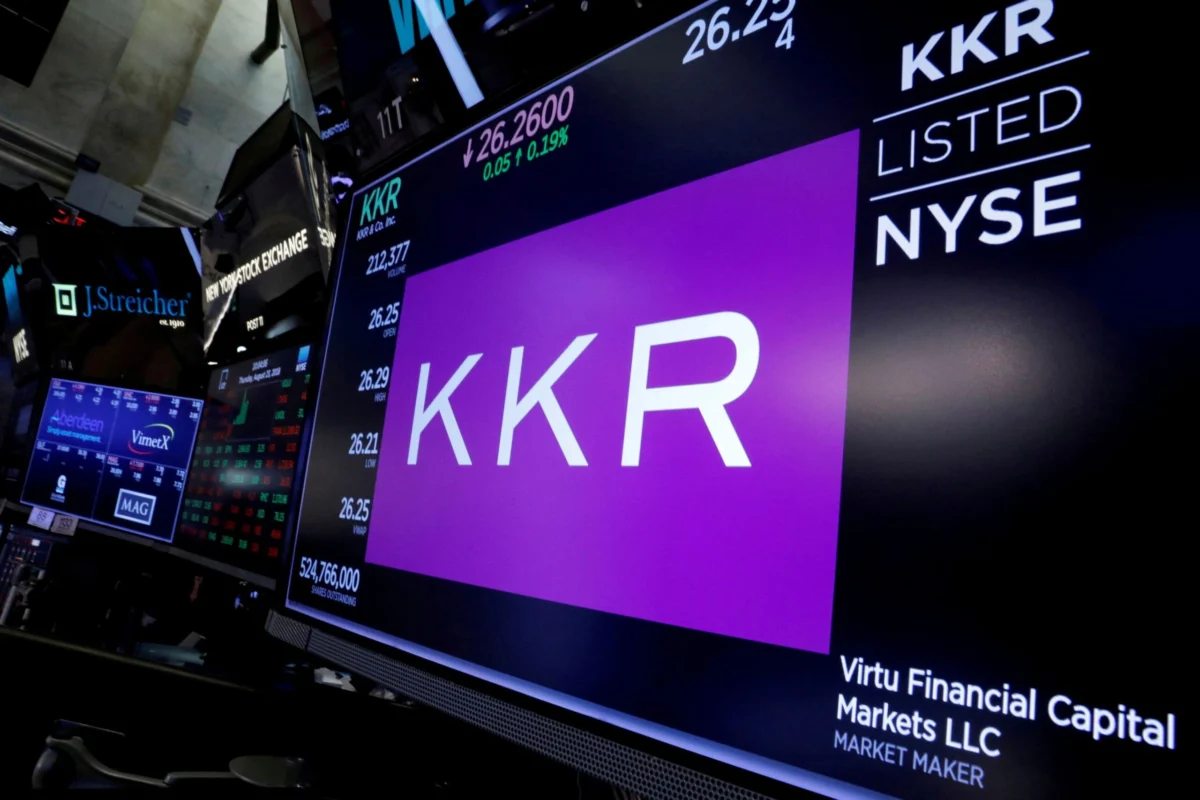
Moody’s Ratings on Monday delivered a significant blow to the private credit sector by downgrading FS KKR Capital Corp (FSK), a prominent business development company (BDC) co-managed by investment giants KKR and Future Standard, to "junk" territory. The one-notch downgrade, from Baa3 to Ba1, signals a heightened level of concern regarding the fund’s asset quality, profitability, and overall financial resilience, placing it alongside other high-yield, speculative-grade investments. This move reverberates across the burgeoning private credit landscape, raising questions about valuation, risk management, and investor confidence in an asset class that has experienced exponential growth in recent years.
The decision by the esteemed ratings firm was primarily driven by what Moody’s described as "continued asset quality challenges," which have manifested in a series of weak earnings reports and a notable erosion of net asset value (NAV) over time when compared to its BDC peers. A critical indicator highlighted in Moody’s report was the alarming rise in non-accrual loans, which surged to 5.5% of FSK’s total investments by the close of 2025. This figure represents one of the highest rates among rated BDCs, signaling a growing cohort of borrowers who have ceased making scheduled payments on their debt obligations to FSK. Such a high proportion of non-performing assets directly impacts a fund’s cash flow, profitability, and the perceived health of its underlying loan portfolio.
Understanding FS KKR Capital Corp and the BDC Landscape
FS KKR Capital Corp (FSK) operates as a Business Development Company, a specific type of closed-end investment company that invests primarily in debt and equity of private companies, often middle-market businesses that may find traditional bank financing difficult to access. BDCs are legally required to distribute at least 90% of their taxable income to shareholders annually, making them attractive to income-seeking investors. FSK, with its significant scale, has historically been a key player in this segment, leveraging the formidable origination and underwriting capabilities of KKR, one of the world’s largest alternative asset managers, and Future Standard. The fund’s strategy involves providing bespoke financing solutions, including senior secured loans, junior secured loans, and, in some cases, equity investments, across a diverse range of industries.
The private credit market, of which BDCs are a vital component, has witnessed explosive growth over the past decade. Following the 2008 financial crisis, stricter regulations on traditional banks led to a retreat from certain lending activities, creating a void that private credit funds eagerly filled. This "shadow banking" sector offered borrowers more flexible terms and faster execution than traditional banks, while promising investors higher yields than public debt markets. Assets under management in private credit have swelled to trillions of dollars globally, attracting institutional investors, pension funds, and increasingly, retail investors through various structures, including BDCs and semi-liquid funds.
Chronology of Deterioration and Moody’s Scrutiny
The downgrade by Moody’s did not emerge in isolation but rather followed a discernible pattern of financial underperformance and increasing stress within FSK’s portfolio. The latter half of 2025 proved particularly challenging for the fund. In the fourth quarter alone, FSK reported a net loss of $114 million, a stark contrast to the modest $11 million in net income it managed to generate for the entire year 2025. These figures, as cited by Moody’s, underscore the accelerating deterioration in the fund’s financial health and its struggle to generate sufficient returns amidst rising credit defaults.
The core of FSK’s difficulties, as pinpointed by Moody’s, lies in its "underlying asset quality," which has worsened at a pace exceeding that of its peer group. The rise in non-accrual loans to 5.5% by the end of 2025 is a critical benchmark in this assessment. Non-accrual status is typically assigned when a loan is 90 days or more past due, or when there is significant doubt about the borrower’s ability to make future payments. Such loans not only cease generating income but also often necessitate write-downs, directly eroding the fund’s net asset value. This increasing rate of loan defaults points to deeper issues within the fund’s portfolio, potentially stemming from aggressive underwriting standards, exposure to particularly vulnerable sectors, or a general downturn affecting its borrower base.
Beyond the headline non-accrual rate, Moody’s also flagged several other structural aspects of FSK’s portfolio that contribute to its heightened risk profile. These include a higher leverage ratio compared to its peers, meaning the fund relies more heavily on borrowed money to finance its investments. While leverage can amplify returns in a favorable environment, it equally magnifies losses during periods of distress. Additionally, FSK reportedly holds a higher proportion of payment-in-kind (PIK) loans. PIK loans allow borrowers to pay interest with additional debt rather than cash, conserving their liquidity but adding to their principal balance, often a sign of a company struggling with cash flow. Such loans can mask underlying financial weakness and defer a cash crunch, but ultimately increase the borrower’s debt burden.
Furthermore, Moody’s noted a lower percentage of first-lien loans in FSK’s portfolio compared to its peers. First-lien loans are senior secured debts, meaning they are backed by specific collateral and have the highest priority in repayment in the event of a borrower’s bankruptcy or liquidation. A lower proportion of first-lien loans implies a greater exposure to junior or unsecured debt, which carries higher risk and lower recovery prospects in a default scenario. These combined factors paint a picture of a fund with a riskier composition than its industry counterparts, making it more susceptible to economic headwinds and credit events.
Broader Implications for the Private Credit Market
The downgrade of FS KKR Capital Corp by Moody’s is not an isolated incident but rather the latest and perhaps most pronounced signal of increasing distress rippling through the private credit world. The sector, once celebrated for its resilience and ability to generate superior risk-adjusted returns, is now facing a confluence of challenges. Rapidly rising interest rates, initiated by central banks globally to combat inflation, have increased borrowing costs for the underlying companies financed by private credit funds. This has squeezed corporate margins, making it harder for highly leveraged businesses to service their debt. The economic slowdown in various sectors, coupled with persistent inflationary pressures, further complicates the operational environment for these portfolio companies.
Concerns about upcoming credit losses have been particularly acute in certain segments, notably within software and technology companies, which often relied on aggressive growth projections and high leverage. Many private credit funds, in their pursuit of yield, deployed significant capital into these sectors during periods of low interest rates and robust economic growth. Now, with the macroeconomic landscape shifting, the vulnerabilities in these portfolios are being exposed.
The ripple effects are already being felt by investors. Retail investors, who have increasingly allocated capital to private credit funds seeking diversification and higher yields, have been rushing to withdraw funds. This surge in redemption requests has, in many instances, led to funds "running into gates," where they limit the amount of capital investors can withdraw in a given period. For example, reports from earlier in the year indicated that a private credit fund managed by Apollo Global Management provided investors with only 45% of their requested withdrawals, highlighting the illiquidity inherent in private credit assets and the potential for mismatches between investor liquidity demands and the underlying investments. The FSK downgrade reinforces these liquidity concerns and could further dampen retail investor enthusiasm for the asset class.
Impact on FSK and KKR
For FS KKR Capital Corp itself, the downgrade to junk status carries several immediate and long-term ramifications. A "Ba1" rating signifies that the fund’s obligations are subject to substantial credit risk, potentially making it more difficult and expensive for FSK to raise new debt capital. Lenders and bond investors typically demand higher interest rates (a higher risk premium) for lending to entities with lower credit ratings to compensate for the increased default risk. This directly translates to higher borrowing costs for FSK, which in turn will erode its net interest margin and ultimately depress future returns for its shareholders. Given that BDCs often employ leverage to "juice returns," an increase in the cost of that leverage will directly impact their profitability and dividend-paying capacity.
Beyond the direct financial implications, the downgrade poses a significant reputational challenge for both FSK and its powerful co-managers, KKR and Future Standard. KKR, as a global leader in alternative investments, prides itself on its rigorous investment processes and robust risk management. A downgrade of a fund bearing its name could trigger increased scrutiny from institutional investors, consultants, and potential limited partners considering allocations to other KKR-managed funds. While FSK is just one component of KKR’s vast empire, its underperformance and credit rating deterioration could influence broader perceptions of KKR’s capabilities in the private credit space, especially in a tightening credit environment.
Official Responses and Market Outlook
As of the immediate aftermath of Moody’s announcement, FS KKR Capital Corp had not publicly returned a request for comment. This lack of immediate response is not uncommon in such situations, as firms typically take time to formulate a comprehensive statement addressing the downgrade and outlining their strategy for improvement. However, market observers will keenly await any commentary from FSK’s management or KKR regarding their plans to address the asset quality challenges, manage the non-accrual loans, and potentially adjust their investment strategy or capital structure.
Looking ahead, the Moody’s downgrade of FSK serves as a stark reminder that the private credit market, while offering compelling opportunities, is not immune to economic cycles and credit deterioration. Industry analysts suggest that this event could catalyze further re-evaluations by other rating agencies and investors, potentially leading to more downgrades or a broader reassessment of risk premiums across the private credit spectrum. Funds with similar portfolio characteristics – high leverage, significant exposure to PIK loans, and a lower proportion of first-lien debt – are likely to face increased scrutiny.
The coming months will be critical for the private credit sector. As central banks continue to navigate inflation and potential recessionary pressures, the ability of highly leveraged private companies to service their debts will be severely tested. The FSK downgrade underscores the importance of stringent underwriting, active portfolio management, and transparent reporting in an asset class that has historically operated with less public disclosure than its public market counterparts. Investors, both institutional and retail, are now facing a more nuanced risk-reward calculus, demanding greater clarity and robust risk mitigation strategies from fund managers in the evolving private credit landscape. The era of seemingly limitless growth and easy profits in private credit may be giving way to a period of heightened caution and differentiation, where fundamental credit analysis and disciplined investing will be paramount.
About the Author