The geopolitical landscape of the Middle East plunged into deeper uncertainty on Monday as the United States initiated a naval blockade on Iran’s ports, a decisive measure implemented after high-stakes talks between Washington and Tehran collapsed without resolution over the weekend. The drastic escalation immediately sent shockwaves through global financial markets, with crude oil prices surging and equity futures indicating a volatile start to the trading week across Asia-Pacific and Western exchanges. This comes amidst an already tense environment, evidenced by the discovery of debris from a NATO air defence system in Dortyol, Turkey, on March 4, 2026, which had intercepted a missile reportedly launched from Iran, underscoring the active and dangerous nature of the ongoing conflict.
The Diplomatic Deadlock in Islamabad
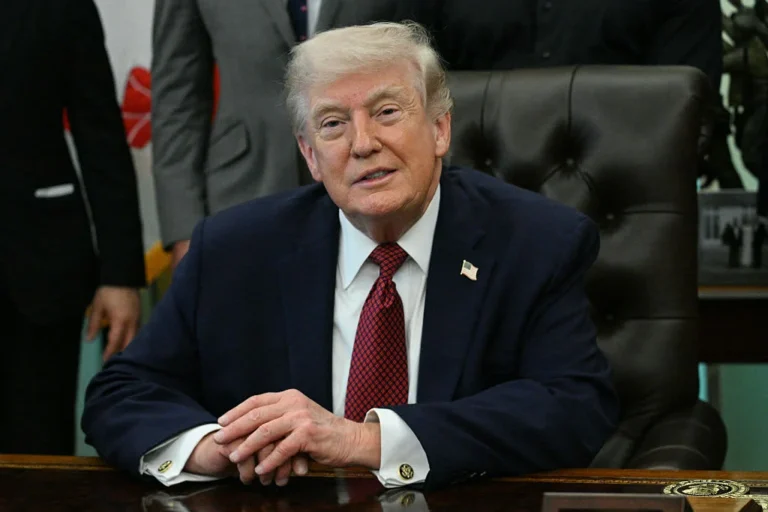
The critical negotiations, held in Islamabad, Pakistan, had been framed as a last-ditch effort to de-escalate the burgeoning US-Iran conflict, which has simmered and occasionally boiled over for months. While specific details of the discussions remain shrouded in diplomatic secrecy, sources close to the negotiations indicated that fundamental disagreements over Iran’s nuclear program, its regional proxy activities, and the stringent US economic sanctions proved insurmountable. The United States, under President Donald Trump, reportedly demanded verifiable cessation of missile development and regional destabilization efforts, alongside unrestricted international access through the Strait of Hormuz. Tehran, conversely, insisted on the immediate and unconditional lifting of all US sanctions, a formal security guarantee, and an end to perceived American military encroachment in the Persian Gulf. The breakdown of these talks reignited profound worries among international observers that the conflict, now officially acknowledged as a "US-Iran war," is set to be more protracted and economically damaging than initially feared, potentially leading to sustained higher oil prices and severe strains on global economies.
Escalation on the Seas: The Naval Blockade
The US naval blockade targets Iran’s vital port traffic, a move designed to cripple the nation’s economy and its ability to project power by cutting off critical trade routes. This action follows President Trump’s previous threats, which included bombing "every bridge and power plant in Iran," though he had recently agreed to a two-week ceasefire to allow safe passage through the Strait of Hormuz. The blockade, however, represents a significant hardening of the US stance, moving beyond targeted strikes to a broader economic strangulation. The Strait of Hormuz, a narrow chokepoint between the Persian Gulf and the Gulf of Oman, is strategically paramount, with approximately one-fifth of the world’s total oil consumption passing through it daily. Any disruption here inevitably sends ripples across global energy markets.
The implications of such a blockade are multifaceted. From a military perspective, it risks direct confrontation between US naval assets and Iranian forces, particularly the Islamic Revolutionary Guard Corps (IRGC) Navy, which has historically threatened to close the Strait in response to perceived aggression. Economically, it aims to prevent Iran from exporting its oil and importing essential goods, further exacerbating the country’s economic woes. However, it also carries the risk of unintended consequences, including accidental clashes, humanitarian concerns regarding civilian access to goods, and a potential for Iran to retaliate by targeting international shipping, regardless of its origin.
Military Dimensions and the Shadow of Conflict
The debris of the NATO air defence system found in Dortyol, Hatay province, Turkey, on March 4, 2026, serves as a stark reminder of the conflict’s geographical reach and the active engagement of regional powers. This incident, involving the interception of an Iranian missile, confirms that the conflict is not confined to the Persian Gulf but has broader regional implications, potentially drawing in NATO allies. While NATO has maintained a cautious stance, its involvement in missile defence underscores the alliance’s commitment to protecting its member states from external threats. Turkey, a key NATO member bordering both the Middle East and the Black Sea, finds itself on the front lines of this escalating geopolitical confrontation.
President Trump’s reported consideration of resuming airstrikes on Iran, as detailed by the Wall Street Journal, further amplifies the military threat. Such a decision would mark a return to direct military engagement, abandoning the current strategy of economic blockade and potentially escalating the conflict to a full-scale regional war. Iran possesses a significant arsenal of ballistic and cruise missiles, as well as an asymmetrical naval doctrine focused on swarm attacks and mine warfare, posing a credible threat to US and allied interests in the region. The prospect of renewed airstrikes, coupled with the naval blockade, paints a grim picture of unchecked military escalation.
Global Economic Repercussions
The immediate and profound impact of the failed talks and the subsequent blockade was felt across global financial markets. Crude oil prices surged dramatically on Sunday, reflecting deep-seated fears of supply disruptions from the Middle East. West Texas Intermediate (WTI) crude jumped an alarming 8.65% to $105.22 per barrel as of 7:45 p.m. ET, while Brent crude, the international benchmark, gained 8.4% to reach $103.6 per barrel. These price spikes evoke memories of past Middle East crises, where geopolitical tensions directly translated into volatile energy markets and broader economic instability. Historically, oil price shocks have often preceded global economic downturns, fueling inflation and dampening consumer and business confidence. Analysts are now warning of potential "stagflationary" pressures, where high inflation combines with stagnant economic growth.
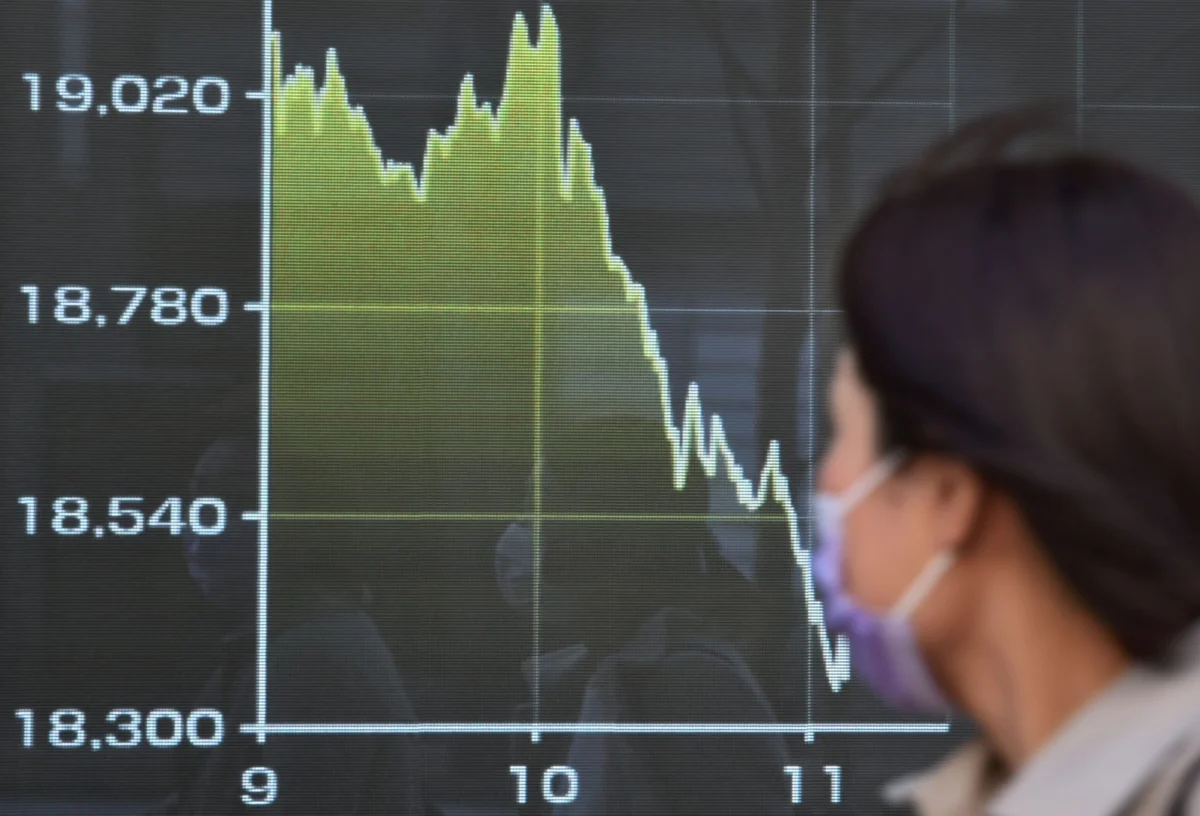
The ripple effect extended to equity markets. Asia-Pacific markets were set to open mixed on Monday, reflecting a cautious and uncertain investor sentiment. Japan’s Nikkei 225 was poised for a lower open, with its Chicago futures contract trading at 56,150, notably below the index’s previous close of 56,924.11. This decline signals investor apprehension regarding the impact of higher energy costs on industrial output and consumer spending in export-oriented economies. In contrast, Hong Kong’s Hang Seng index futures stood at 25,964, slightly above its last close of 25,893.54, indicating a potentially mixed reaction influenced by regional factors and specific sector performance. Australia’s futures last traded at 9,056, higher than the S&P/ASX 200’s last close of 8,960.60, possibly reflecting a temporary boost to its energy and materials sectors due to rising commodity prices.
Overnight on Wall Street, futures markets signalled significant losses, foreshadowing a turbulent trading day. Dow Jones Industrial Average futures dropped by 517 points, or 1.1%. S&P 500 futures lost 1.1%, and Nasdaq 100 futures shed 1.2%. These declines underscore a broad-based investor flight from riskier assets, as geopolitical uncertainty combines with fears of sustained inflation and a potential global recession. Investors are likely to seek refuge in safe-haven assets such as gold, government bonds, and certain currencies, further distorting market dynamics.
A History of Strain: US-Iran Relations
The current crisis is deeply rooted in decades of animosity and mistrust between the United States and Iran, dating back to the 1979 Islamic Revolution. Tensions dramatically escalated following the US withdrawal from the Joint Comprehensive Plan of Action (JCPOA), or Iran nuclear deal, in 2018 under the Trump administration. The US then reimposed and expanded a "maximum pressure" campaign of sanctions aimed at crippling Iran’s economy and forcing it to renegotiate a new, more comprehensive agreement addressing its nuclear program, ballistic missile development, and regional influence.
This campaign led to a series of tit-for-tat escalations, including attacks on oil tankers in the Gulf, drone incidents, and missile strikes on regional targets. Iran consistently denied responsibility for some attacks while openly retaliating against others, asserting its right to defend its sovereignty and interests. The "US-Iran war" mentioned in current reports signifies that these isolated incidents have now coalesced into a recognized state of conflict, albeit one that has largely avoided large-scale conventional warfare until now. The current blockade marks a perilous new phase in this long-standing geopolitical rivalry.
Regional and International Reactions
The international community reacted with alarm to the news of the blockade and the failed talks. The United Nations Secretary-General issued a statement expressing "grave concern" over the escalating tensions and called on all parties to exercise maximum restraint and return to the negotiating table. European Union leaders reiterated their commitment to diplomacy and multilateral solutions, warning that a full-blown conflict in the Middle East would have catastrophic global consequences. China and Russia, both permanent members of the UN Security Council, urged de-escalation, with Russia calling the US blockade a "provocative and unlawful act" that violates international maritime law.
Within the Middle East, reactions were sharply divided. Regional US allies like Saudi Arabia and Israel, long wary of Iran’s ambitions, cautiously welcomed the firm US stance, though they also expressed concerns about the potential for wider conflict to destabilize the region further. Other nations, particularly those reliant on the Strait of Hormuz for trade, voiced deep apprehension about maritime security and the disruption of vital shipping lanes. Turkey, having already experienced an Iranian missile interception over its territory, finds itself in a precarious position, balancing its NATO obligations with its complex regional diplomacy.
The Humanitarian Cost and Future Outlook
Beyond the economic and geopolitical ramifications, the escalating conflict carries a significant potential for humanitarian crisis. A naval blockade, if prolonged, could lead to shortages of food, medicine, and other essential goods for the Iranian populace, exacerbating an already challenging economic situation. The prospect of renewed airstrikes or a broader military confrontation raises fears of civilian casualties, mass displacement, and a refugee crisis that could overwhelm neighbouring countries. International aid organizations have already begun to prepare for potential humanitarian fallout, appealing to all parties to adhere to international humanitarian law.
The path forward remains fraught with peril. The failure of diplomatic talks, coupled with the imposition of a naval blockade and the threat of renewed airstrikes, suggests a trajectory toward further escalation rather than de-escalation. The global community now watches anxiously, hoping for a renewed diplomatic initiative before the "US-Iran war" spirals into a full-scale regional catastrophe with far-reaching and irreversible global consequences. The coming days will be critical in determining whether the international community can pull the two adversaries back from the brink of a devastating conflict.
About the Author