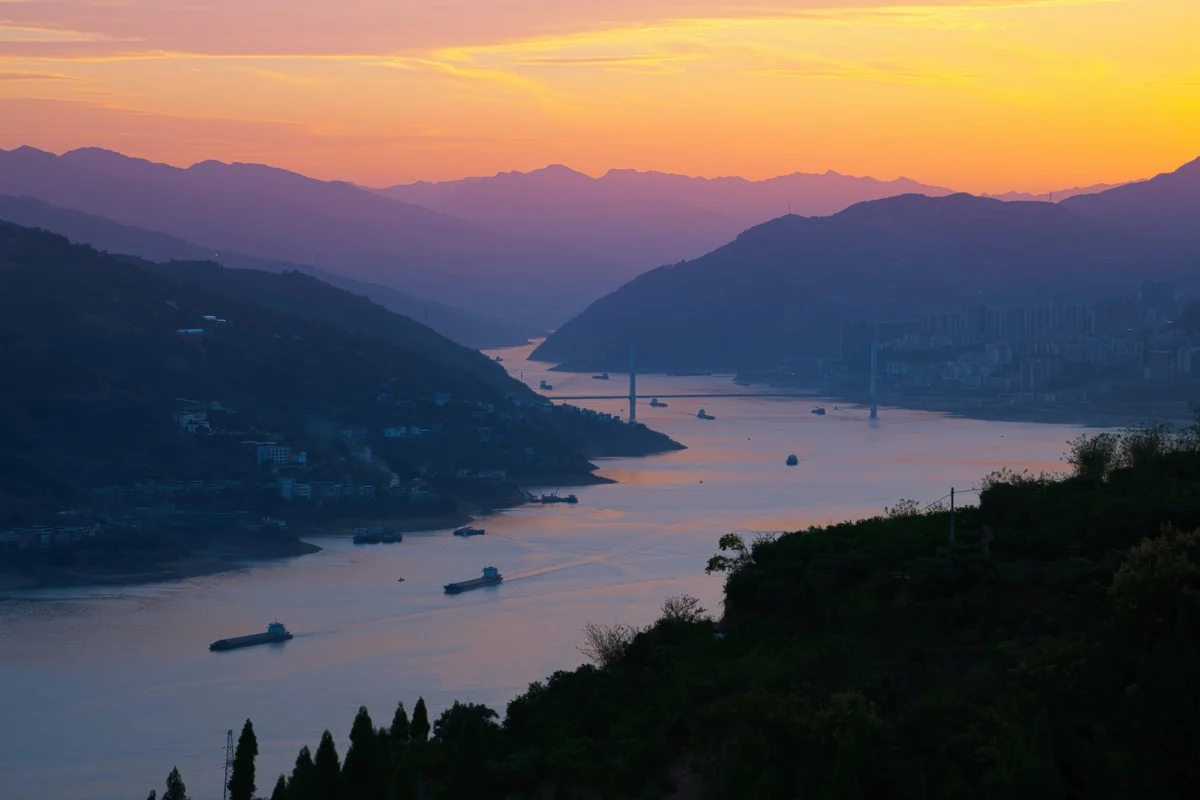
The Yangtze River, a 3,915-mile artery that serves as the lifeblood of Chinese civilization, is currently witnessing an ecological renaissance that has surpassed the expectations of many conservationists and policymakers. According to a landmark study published in the journal Science in February 2026, fish biomass in Asia’s longest river has more than doubled since the implementation of a comprehensive, decade-long commercial fishing ban in 2021. The research, conducted by an international team of scientists, reveals a 209 percent increase in overall fish biomass across 57 monitored sections of the river, signaling a potential turning point for one of the world’s most stressed freshwater ecosystems.
This recovery follows decades of industrialization, overfishing, and dam construction that had pushed the Yangtze to the brink of ecological collapse. The findings provide the first large-scale empirical evidence that bold, basin-wide policy interventions can catalyze rapid biological recovery, offering a blueprint for the restoration of other major river systems such as the Mekong, the Amazon, and the Mississippi.
The Historical Context: From Development to Protection
For centuries, the Yangtze has been affectionately known as China’s "Mother River." Stretching from the glaciers of the Tibetan Plateau to the bustling estuaries of the East China Sea, its basin supports nearly 600 million people and generates approximately 40 percent of China’s gross domestic product (GDP). However, the river’s economic importance long came at a devastating environmental cost.
Between 1950 and 2020, the Yangtze underwent a period of rapid and often unregulated development. The construction of massive hydroelectric projects, most notably the Gezhouba Dam in the 1980s and the Three Gorges Dam in the 2000s, fragmented the river’s natural flow and blocked the migratory paths of numerous species. Simultaneously, heavy industrial runoff from cities like Wuhan and Nanjing, combined with the discharge of agricultural chemicals and microplastics, severely degraded water quality.
By the early 21st century, the river’s biodiversity was in freefall. The Chinese paddlefish, often called the "Panda of the Yangtze" and one of the world’s largest freshwater fish, was declared extinct. The Yangtze River dolphin, or Baiji, met a similar fate, becoming the first cetacean species driven to extinction by human activity in modern times. Annual fish catches had plummeted from 427,000 tons in the 1950s to less than 100,000 tons by the 2010s, with many of the remaining fish being small, juvenile, or of low commercial value.
In response to this crisis, the Chinese government shifted its national strategy from "Great Development" to "Great Protection." This culminated in the Yangtze River Protection Law, which took effect on March 1, 2021, marking the first time China had enacted a law specifically dedicated to a single river basin.
A Comprehensive Ban: Methodology and Early Results
The centerpiece of the protection efforts is a 10-year moratorium on commercial fishing in the main stem of the Yangtze, its major tributaries, and the large connected lakes, such as Poyang and Dongting. Unlike previous seasonal bans, which lasted only three to four months and often resulted in "pulse fishing"—where fishermen would catch even more immediately after the ban ended—this decade-long initiative was designed to give species multiple generations to reproduce and stabilize.
The recent study in Science evaluated the impact of this ban by comparing biomass and diversity metrics before and after 2021. The international research team, led by fisheries researcher Fangyuan Xiong, monitored 57 distinct river sections. Their findings were striking: not only did total biomass surge by 209 percent, but species richness—the number of different species present in a given area—increased by 13 percent.
The data indicates that larger fish species have benefited the most. Fish longer than 7.5 inches showed the highest rates of population growth. Apex predators, such as the black Amur bream, have returned in significant numbers, which scientists interpret as a sign of a recovering and healthy food web. When top-level predators thrive, it typically indicates that the lower levels of the trophic pyramid—prey fish, crustaceans, and aquatic plants—are also recovering.
The Resurgence of the Yangtze Finless Porpoise
Perhaps the most significant victory for conservationists is the recovery of the Yangtze finless porpoise. This sleek, "smiling" mammal is the only freshwater porpoise in the world and has long been a mascot for environmental efforts in China.
According to the research, the porpoise population in the Yangtze main stem has increased from an estimated 445 individuals before the ban to approximately 595 today. This 33 percent increase is attributed to two primary factors: the abundance of prey and the reduction of human-induced stress.
"The improvements of conditions include both habitat and food for the iconic Yangtze finless porpoise," noted Fangyuan Xiong. With the removal of thousands of miles of gillnets and the reduction of underwater noise pollution from fishing vessels, the porpoises have been able to expand their hunting grounds. For the first time in decades, residents in urban centers like Wuhan have reported seeing porpoises breaching near city riverfronts, a sight that was once considered a rarity.
Other endangered species, including the Yangtze sturgeon and the Chinese sucker, have also seen immediate stock improvements. While these species still face long-term challenges related to habitat fragmentation, the cessation of fishing has removed the immediate threat of accidental bycatch, allowing captive-bred individuals released into the wild a better chance of survival.
The Human Cost: Resettling a Way of Life
The ecological success of the Yangtze ban has not come without significant social and economic upheaval. The implementation of the policy required the government to recall 111,000 fishing vessels and transition 231,000 fishermen into new livelihoods. For many of these individuals, fishing was not just a job but a multi-generational heritage.
To mitigate the impact, the Chinese government allocated billions of yuan in subsidies and vocational training. Many former fishermen have been transitioned into roles that utilize their knowledge of the river, such as "ecological rangers" or river patrollers tasked with enforcing the ban and cleaning up debris.
Steven Cooke, a fisheries professor at Carleton University and study co-author, emphasized the dual nature of the ban’s success. "I am always impressed by the resilience of nature when given space and time to recover," Cooke said. "However, the collateral damage to fishing communities is immense. The biggest take-home is let’s do a better job of managing our freshwater rivers so we never have to consider full fishing bans as the medicine."
The resettlement program remains a complex administrative task, with ongoing efforts to ensure that older fishermen, who may find it difficult to learn new trades, are provided with adequate social security and pension support.

Remaining Obstacles: Dams, Pollution, and Microplastics
While the doubling of biomass is a historic milestone, the report warns that the Yangtze is not yet fully healed. The river remains one of the most engineered waterways on Earth, and physical barriers continue to pose a threat to migratory species.
The Gezhouba and Three Gorges Dams, while providing essential flood control and renewable energy, remain formidable obstacles for fish that need to travel upstream to spawn. Even with the fishing ban in place, some species cannot complete their life cycles because their historical spawning grounds are inaccessible or have been altered by changes in water temperature and sediment flow caused by the dams.
Furthermore, the Yangtze basin remains a major corridor for global shipping. While the ban has removed fishing boats, cargo traffic continues to generate significant underwater noise and chemical runoff. Microplastics are another growing concern; as the river flows through some of the world’s most densely populated urban areas, it carries a massive load of plastic waste into the ocean, affecting the health of the fish that the ban is trying to protect.
Analysis of Global Implications
The success of the Yangtze fishing ban offers a profound lesson for global environmental policy. It demonstrates that the "half-measures" often favored by political bodies—such as small protected areas or short seasonal closures—may be insufficient for restoring large-scale, degraded ecosystems. The Yangtze model suggests that for a system as large as a major river, only a basin-wide, long-term commitment can provide the stability necessary for biological recovery.
Sébastien Brosse, from the Center for Research on Biodiversity and the Environment in Toulouse, noted that this initiative is unique because of its scale. "This is not comparable to any other conservation measure because it is the first basin-wide initiative on a large river," Brosse said. "Strong political decisions in favor of the environment have a marked and rapid benefit for biodiversity and ecosystem health."
As the world grapples with a global biodiversity crisis, the Yangtze’s recovery provides a rare glimmer of hope. It suggests that even in the face of intense industrialization, nature possesses an inherent resilience. If the current trends continue through 2030, the Yangtze may serve as a global case study for how a nation can successfully transition from exploiting its natural resources to stewarding them for future generations.
The ban is currently entering its sixth year. While it is not a permanent fix for every ecological ailment, the data from the first five years confirms that the "Mother River" is breathing again. The challenge for the next half-decade will be to address the structural issues of dam management and pollution, ensuring that the biomass gains are not just a temporary surge, but a permanent restoration of the Yangtze’s legendary vitality.
About the Author