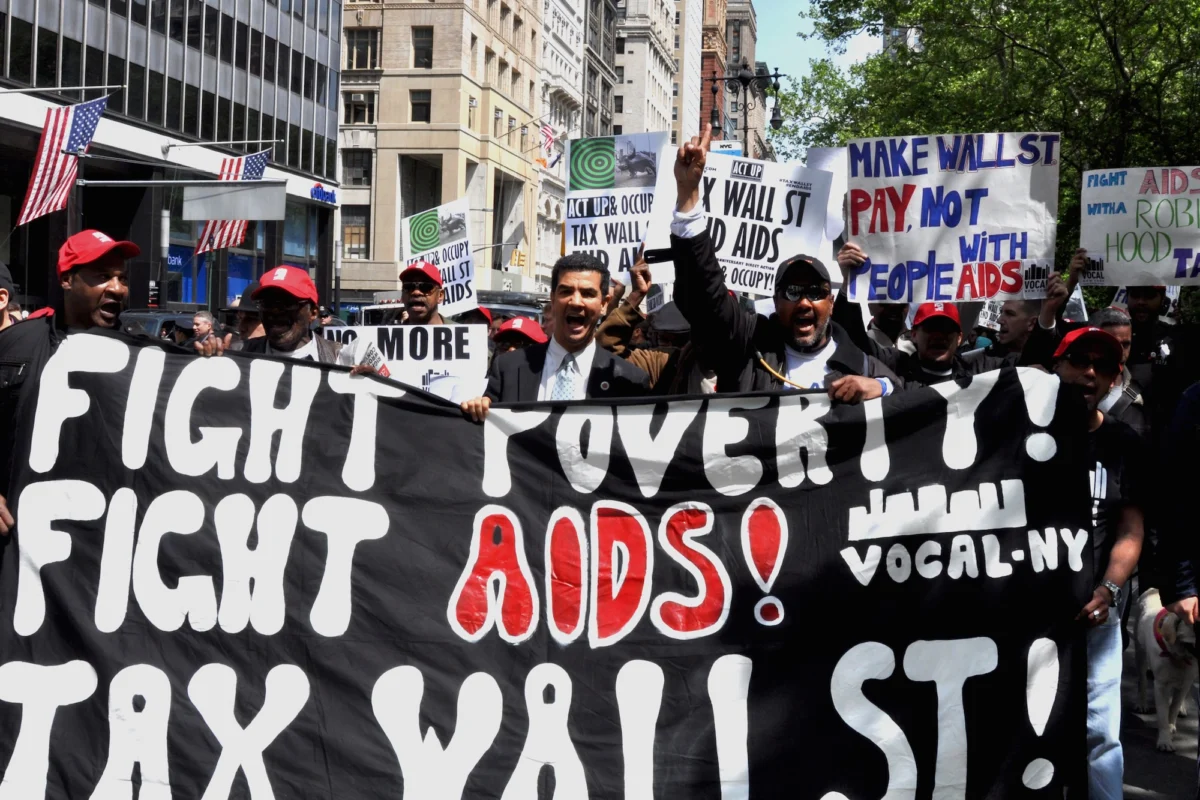
The American political landscape is currently defined by a resurgence of grassroots mobilization that mirrors the intensity of the late 20th-century civil rights and public health movements. The "No Kings" movement, which has successfully organized millions of citizens across the United States to protest federal government overreach under the administration of President Donald Trump, now faces a critical strategic juncture. While mass marches serve as a visual testament to public discontent, history suggests that sustained change requires a transition from symbolic demonstration to targeted direct action. This strategic evolution is best exemplified by the AIDS Coalition to Unleash Power (ACT UP), an organization founded in the 1980s that has recently re-emerged as a central player in the fight against significant cuts to public health infrastructure and the rising influence of the technology sector in government policy.
The Foundation of Grassroots Resistance: A Historical Perspective
To understand the current wave of activism, it is essential to examine the historical precedent set by ACT UP New York. Formed in 1987, the organization was a response to what activists termed "intentional negligence" by the federal government during the height of the HIV/AIDS epidemic. By the time ACT UP held its first demonstration, the virus had been circulating for seven years, yet federal acknowledgement remained minimal.
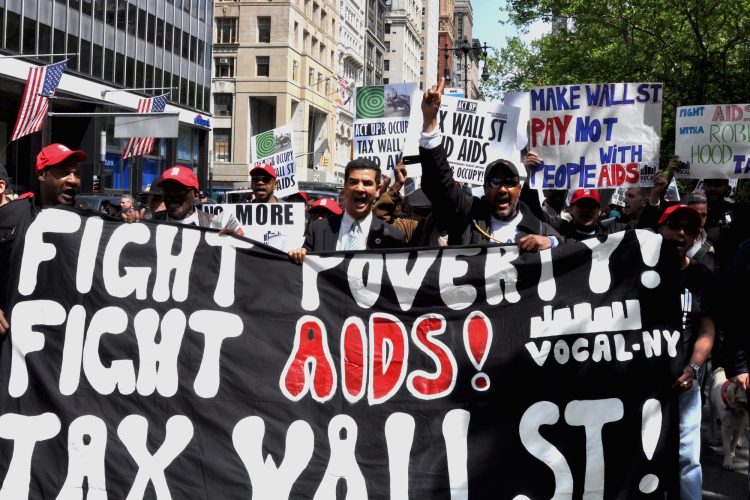
The socio-economic conditions of 1987 provided a stark backdrop for the group’s initial actions. While the median individual income in the United States hovered around $18,000, the only approved treatment for AIDS at the time, AZT, cost approximately $10,000 per year. This disparity led to ACT UP’s first major action: a march on Wall Street to protest pharmaceutical profiteering. This was followed by a series of highly coordinated disruptions, including the 1988 occupation of the U.S. Food and Drug Administration (FDA) headquarters in Maryland and the 1989 demonstration at the New York Stock Exchange, where members chained themselves to the VIP balcony to halt trading. These actions were not merely protests; they were calculated interruptions of the financial and regulatory systems that activists believed were prioritizing profit over human life.
The Modern Crisis: DOGE and the Dismantling of Public Health
The contemporary iteration of this struggle centers on the "Department of Government Efficiency" (DOGE), a newly established federal agency led by billionaire Elon Musk. Tasked with identifying and eliminating "wasteful" government spending, the agency has focused heavily on the healthcare sector. The resulting policy shifts have been swift and consequential.
Under the guidance of DOGE, the Trump administration has canceled funding for nearly 200 HIV/AIDS research studies and eliminated $1.5 billion from the Centers for Disease Control and Prevention (CDC) budget specifically earmarked for AIDS-related programs. These domestic cuts are mirrored by a radical shift in foreign policy. The administration has significantly reduced funding for the President’s Emergency Plan for AIDS Relief (PEPFAR)—a program credited with saving 25 million lives globally since its inception in 2003—and has moved to fully dismantle the U.S. Agency for International Development (USAID).
The implications of these cuts are documented in recent public health projections. According to data published by The Lancet, the dissolution of USAID, which operated with an annual budget of approximately $40 billion, could lead to more than 9 million preventable deaths worldwide by 2030. Activists argue that these cuts represent a fundamental shift in national priorities, as the administration simultaneously requests $40 billion for the construction of industrial detention centers for immigrants and an estimated $200 billion for military operations related to Iran.
Chronology of the 2025-2026 Resistance Movement
The escalation of direct action over the past 18 months highlights the growing synergy between veteran activists and new grassroots movements:
- January 2025: The establishment of the Department of Government Efficiency (DOGE) marks the beginning of rapid federal budget reallocations.
- June 2025: The Trump administration announces the cancellation of 200 HIV research grants, sparking localized protests in research hubs like San Francisco and New York.
- September 2025: Reports emerge detailing the $1.5 billion cut to the CDC. The No Kings movement begins coordinating with ACT UP to share organizational resources.
- February 2026: A landmark study in The Lancet warns of a massive global death toll resulting from the dismantling of USAID.
- March 2026: ACT UP marks its 39th anniversary with a massive rally in New York City, shifting its focus from government agencies to the private tech firms facilitating federal policies.
Targeting the Tech Sector: The Palantir Protest
The most recent escalation occurred last week in New York City’s Greenwich Village. Hundreds of demonstrators gathered at the New York City AIDS Memorial before marching to the offices of Palantir, a data-mining firm owned by billionaire Peter Thiel. The choice of target was deliberate. Palantir recently secured a $30 million contract to develop AI-enabled surveillance programs for the Immigration and Customs Enforcement (ICE) agency.
The protest featured a "die-in," a signature ACT UP tactic where participants lie motionless on the ground to symbolize the lives lost due to policy decisions. This action sought to highlight the intersection of public health and immigration policy, specifically the denial of medical care within detention centers. Eric Sawyer, a founding member of ACT UP, stated that the administration’s priorities—prioritizing warfare and surveillance over healthcare—are fundamentally "out of line with American priorities."

This shift in focus toward the technology sector reflects a broader public disillusionment with the influence of Silicon Valley billionaires on democratic governance. While figures like Musk and Thiel were instrumental in the administration’s rise, their involvement in "efficiency" programs that gut social safety nets has created a new focal point for activists.
Data Analysis: Public Sentiment and Economic Anxiety
Despite the administration’s focus on deregulation and cost-cutting, public opinion data suggests a significant disconnect between federal policy and voter concerns. A recent Gallup poll indicates that healthcare remains the top priority for Americans, surpassing the economy, crime, and immigration.
The poll results highlight a growing "partisan split" on domestic issues, but healthcare remains a rare point of universal anxiety. Furthermore, the "AI boom," spearheaded by Musk and Thiel, has introduced new economic anxieties. Concerns regarding worker displacement due to automation and the rising cost of electricity—driven by the massive energy demands of new data centers—have led to localized resistance against tech infrastructure projects in states like Texas and Ohio.
The political fallout is also becoming visible in the media landscape. High-profile figures who previously supported the administration’s tech-centric approach, such as podcaster Joe Rogan, have recently expressed public regret over their endorsements, citing concerns over the rapid erosion of democratic norms and the aggressive dismantling of public institutions.
Broader Implications for Democratic Governance
The re-emergence of ACT UP and the growth of the No Kings movement suggest that the United States is entering a period of sustained civil unrest. The transition from "march-based" activism to "direct-action" activism indicates that the movement is becoming more sophisticated, targeting the specific financial and technological levers that enable federal policy.

The dismantling of USAID and the defunding of the CDC represent more than just budgetary shifts; they signal a withdrawal from the post-WWII global health order. Analysts suggest that if these policies remain in place, the United States will lose significant "soft power" on the world stage, potentially allowing other global powers to fill the vacuum in international development and public health leadership.
Domestically, the focus on "efficiency" at the expense of public health may have long-term electoral consequences. As healthcare costs continue to rise and access to life-saving treatments for conditions like HIV/AIDS becomes more restricted, the administration may find it difficult to maintain its support base among moderate and independent voters.
Conclusion: The Path Forward for Grassroots Movements
The current wave of protest is characterized by a unique blend of historical expertise and modern digital organization. By applying the direct-action tactics of the 1980s to the technological challenges of the 2020s, groups like ACT UP and Rise and Resist are providing a blueprint for how a decentralized movement can exert pressure on both government and corporate entities.
As the 2026 midterm elections approach, the success of these movements will likely depend on their ability to translate street-level energy into sustained policy influence. The message from the streets of New York is clear: for millions of Americans, the "efficiency" of a budget is irrelevant if it comes at the cost of human life. The focus on "Money for AIDS and Healthcare, Not for ICE and Warfare" serves as a rallying cry for a movement that seeks to reclaim the priorities of the American government for the benefit of its citizens rather than its financial and technological architects.
About the Author