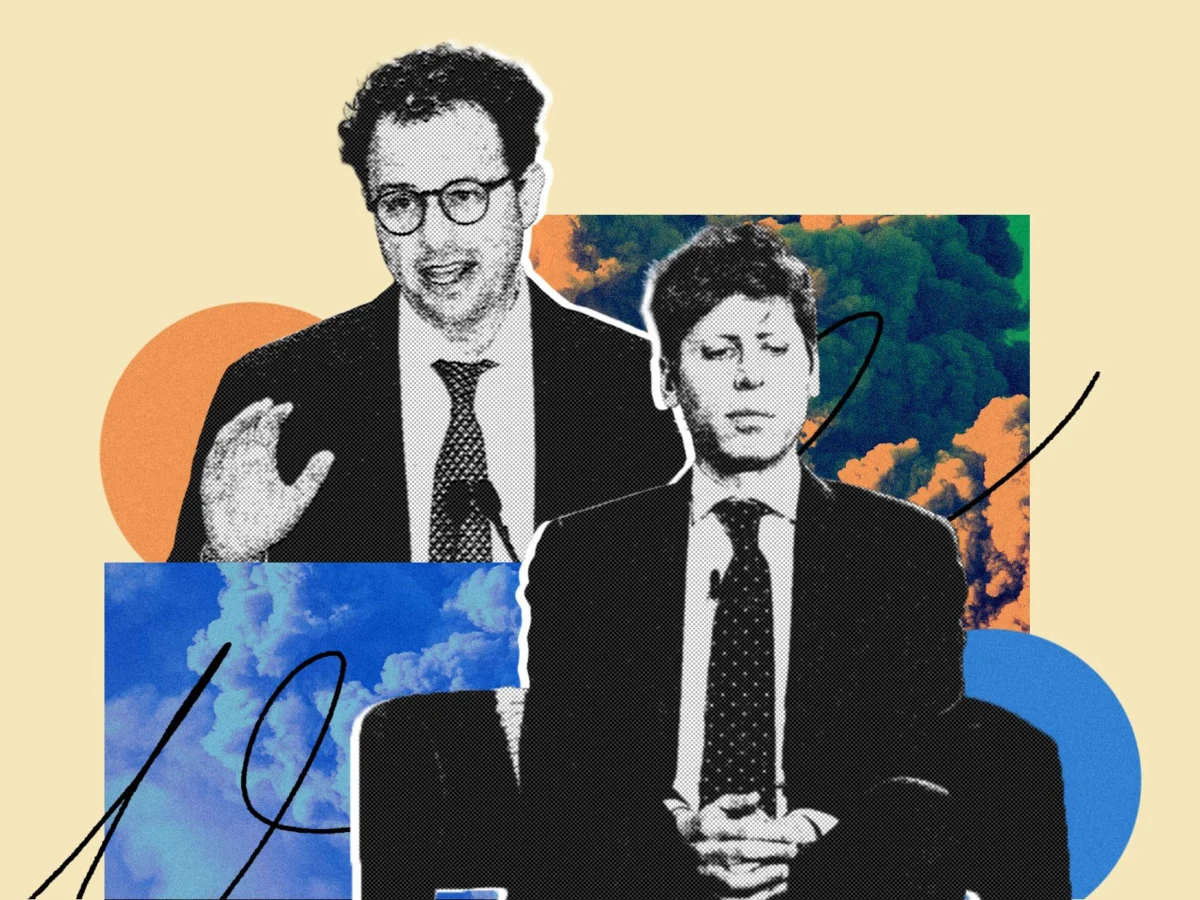
The burgeoning landscape of artificial intelligence regulation has reached a critical inflection point in Illinois, as two of the world’s most prominent AI laboratories, Anthropic and OpenAI, find themselves on opposite sides of a controversial legislative proposal. At the center of the dispute is Senate Bill 3444, a piece of legislation that seeks to establish a legal "safe harbor" for AI developers. If passed, the law would effectively shield companies from liability in the event that their technologies are utilized to facilitate large-scale catastrophes, including mass casualties or property damage exceeding $1 billion. The clash highlights a fundamental disagreement over the future of corporate responsibility in the age of generative AI and underscores the growing influence of state-level politics on a technology that has thus far eluded comprehensive federal oversight.
The Core of the Legislative Dispute: SB 3444 vs. SB 3261
Senate Bill 3444, sponsored by State Senator Bill Cunningham and supported by OpenAI, proposes a framework where AI developers are granted immunity from certain civil lawsuits if they adhere to specific self-regulatory protocols. Under the current draft, a lab would not be held responsible for the misuse of its models by third parties—even in scenarios involving catastrophic outcomes like the creation of biological weapons or massive infrastructure failure—provided the company has drafted and published a safety framework on its public website.
OpenAI has championed the bill as a pragmatic approach to innovation, arguing that it provides a "harmonized" framework that allows advanced technology to reach Illinois businesses and citizens while maintaining a baseline of safety transparency. The company contends that such state-level laws are necessary precursors to an eventual national standard, ensuring the United States maintains its competitive edge in the global AI race.
Anthropic, however, has emerged as the bill’s most vocal corporate critic. The San Francisco-based firm, which was founded by former OpenAI executives with a specific focus on "AI safety," views the legislation as a dangerous abdication of corporate accountability. Anthropic has actively lobbied Senator Cunningham and other Illinois lawmakers to either fundamentally restructure the bill or reject it entirely. Instead, Anthropic has thrown its weight behind a competing piece of legislation, SB 3261. This alternative bill would mandate that developers of "frontier models"—the most powerful AI systems currently in existence—undergo rigorous third-party auditing and create public safety and child protection plans that are verified by external experts rather than self-certified.
A Chronology of the AI Regulatory Surge
The legislative battle in Illinois is the latest chapter in a rapidly accelerating timeline of AI governance efforts that began in earnest following the public release of ChatGPT in late 2022.
- October 2023: The Biden-Harris Administration issued Executive Order 14110, the first major federal attempt to establish safety and security standards for AI. However, the order largely relied on voluntary commitments from major labs, leading to calls for enforceable legislation.
- Early 2024: With a divided U.S. Congress unable to pass comprehensive AI laws, individual states began filling the vacuum. California introduced SB 1047, a landmark safety bill, while New York and Illinois began drafting their own frameworks.
- March 2024: SB 3444 was introduced in the Illinois General Assembly. While initially seen as a standard transparency bill, its liability shield provisions quickly drew fire from safety advocates and rival tech firms.
- April 2024: Anthropic testified before Illinois lawmakers, publicly breaking with OpenAI on the issue of liability. Concurrently, Illinois Governor JB Pritzker’s office signaled skepticism regarding the bill’s "get-out-of-jail-free" provisions.
Analyzing the Impact of Liability Shields
The concept of a liability shield is not new to the tech industry. Section 230 of the Communications Decency Act has long protected internet platforms from being held liable for content posted by their users. However, legal experts argue that AI presents a different set of challenges. Unlike a social media platform that merely hosts content, an AI model actively generates new outputs based on complex algorithms.
Thomas Woodside, cofounder and senior policy adviser at the Secure AI Project, notes that liability under common law serves as a vital deterrent. "Liability already exists under common law and provides a powerful incentive for AI companies to take reasonable steps to prevent foreseeable risks," Woodside stated. He warned that SB 3444 would "dismantle" these existing incentives, potentially leading to a "race to the bottom" where companies prioritize speed over safety because the financial consequences of a disaster are legally mitigated.
The $1 billion threshold for property damage is particularly significant. In the context of cybersecurity, a single AI-enabled ransomware attack on a state’s power grid or healthcare system could easily surpass this figure. By setting a high bar for liability and offering a path to immunity, critics argue the bill creates a "moral hazard" where the public bears the risk of innovation while the corporations reap the rewards.
Official Responses and Political Friction
The political response in Springfield has been mixed. While Senator Cunningham has expressed a desire to lead on AI safety, the pushback from the executive branch has been firm. A spokesperson for Governor JB Pritzker clarified the administration’s stance, stating that the Governor "does not believe big tech companies should ever be given a full shield that evades responsibilities they should have to protect the public interest."
Anthropic’s Head of US State and Local Government Relations, Cesar Fernandez, echoed this sentiment. In a statement, Fernandez emphasized that transparency without accountability is insufficient. "Good transparency legislation needs to ensure public safety and accountability for the companies developing this powerful technology, not provide a get-out-of-jail-free card against all liability," he said.
OpenAI, represented by spokesperson Liz Bourgeois, maintains that their goal is a consistent safety framework that prevents a "patchwork" of conflicting state laws. The company argues that by working with states like New York, California, and Illinois, they are helping to build a blueprint for federal action that balances safety with the need for the U.S. to remain a leader in AI development.
The Philosophical Divide: Anthropic vs. OpenAI
The friction between Anthropic and OpenAI is deeply rooted in the history of the two companies. Anthropic was founded in 2021 by Dario and Daniela Amodei, who left OpenAI due to concerns over the company’s shift toward a more commercial, less safety-centric direction following its multi-billion dollar partnership with Microsoft.
Since its inception, Anthropic has branded itself as a "public benefit corporation," prioritizing the mitigation of existential risks. This stance has made them allies of "effective altruism" circles and safety advocates, but it has also drawn criticism from deregulation proponents. David Sacks, a prominent venture capitalist and former AI advisor to the Trump administration, recently accused Anthropic of engaging in "regulatory capture," suggesting that the company is using fear-mongering about AI risks to lobby for regulations that would favor established players and stifle smaller competitors.
OpenAI, meanwhile, has moved aggressively to integrate its technology into the global economy. While it maintains a dedicated safety team and has published various safety "preparedness" frameworks, its support for liability shields suggests a preference for a legal environment that minimizes the "litigation risk" associated with deploying frontier models at scale.
Broader Implications for National AI Policy
The outcome of the Illinois debate will likely serve as a bellwether for AI regulation across the United States. If SB 3444 passes in its current form, it could provide a template for other states to offer similar protections to AI labs, potentially creating a "pro-tech" corridor in the Midwest. Conversely, if Anthropic and its allies succeed in pivoting the state toward SB 3261, Illinois could join California in setting some of the world’s strictest standards for AI auditing and developer responsibility.
The debate also highlights the limitations of self-regulation. The primary criticism of SB 3444 is that it allows companies to "grade their own homework." By merely requiring the publication of a safety framework—without mandating that the framework be effective or independently verified—the law could create a facade of safety that does little to actually prevent harm.
As the 2024 legislative sessions continue, the tension between innovation and accountability remains the central theme of the AI era. The Illinois showdown proves that the industry is no longer a monolith; as the stakes rise, the companies behind the world’s most powerful technology are increasingly willing to fight one another in the halls of government to define the rules of the game. Whether those rules will ultimately protect the public or the corporations remains an open and fiercely contested question.
About the Author