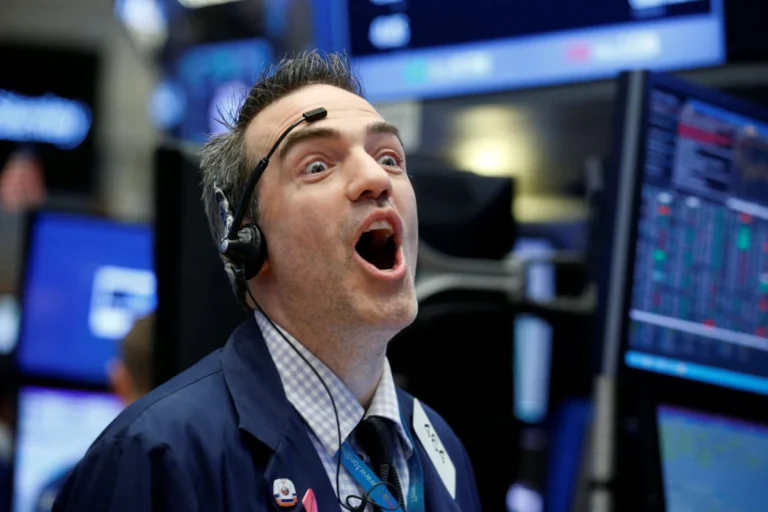
New York, NY – Goldman Sachs, a titan long synonymous with market-making prowess, faced an uncharacteristic setback in the first quarter of 2026, as its vaunted fixed income division delivered results significantly below analyst expectations. The stumble, which saw fixed income revenue plummet 10% and miss projections by a substantial $910 million, according to StreetAccount data, has raised questions across Wall Street, particularly as nearly all of its major rivals reported blockbuster performances in the same period. This underperformance marks a rare blemish on the otherwise robust financial results posted by the firm for the quarter, triggering a dip in its share price and prompting intense scrutiny of its trading operations.
When confronted with the disappointing figures, Goldman Sachs executives initially attributed the results to an unfavorable trading environment. CFO Denis Coleman, speaking to analysts on Monday following the bank’s earnings report, stated, "It was basically just a function of the overall environment making markets. We remain actively engaged with clients, but our performance in rates and mortgages was relatively lower." This explanation, however, began to fray as competitors like JPMorgan Chase, Morgan Stanley, and Citigroup unveiled their first-quarter earnings in the subsequent days, revealing record or near-record hauls from their fixed income desks. The stark contrast quickly shifted the narrative from an industry-wide challenge to a specific underperformance within Goldman Sachs’ hallowed trading floors.
The Uncharacteristic Underperformance: A Deep Dive
Goldman Sachs’ fixed income, currencies, and commodities (FICC) division, traditionally a cornerstone of its revenue generation and a symbol of its market dominance, reported a revenue figure that stood in sharp contrast to its historical strength. The 10% year-over-year decline was not just a statistical miss; it represented a profound deviation from the firm’s established trajectory and reputation. Analysts, who had projected a more moderate performance, were left to reconcile Goldman’s narrative with the surging figures from its peers. The $910 million shortfall against StreetAccount’s consensus estimate was particularly jarring for a business line that is typically a model of precision and predictive acumen.
This division, responsible for trading bonds, currencies, and commodities, is often seen as a bellwether for market volatility and a testament to a firm’s ability to navigate complex economic landscapes. For Goldman, a firm that has historically thrived on market dislocation, the inability to capitalize on the very volatility that seemingly boosted its competitors signaled a deeper issue. The specific mention of underperformance in "rates and mortgages" by Coleman further narrowed the focus of internal and external investigations, pointing towards specific areas of market exposure and trading strategies that may have gone awry.
Competitors’ Stellar Performances: A Telling Contrast
The narrative of an industry-wide "unfavorable environment" quickly dissolved in the face of stellar results from Goldman’s peers. JPMorgan Chase, the nation’s largest bank, reported a remarkable 21% surge in fixed income trading revenue, reaching an impressive $7.1 billion. This figure represented the bank’s second-biggest haul ever, underscoring a period of robust client activity and successful positioning. Analysts pointed to JPMorgan’s diversified client base and its strong presence across various fixed income products as key drivers of this success, suggesting a broad-based ability to capture market opportunities.
Morgan Stanley, a firm often perceived as more equities-centric, also defied expectations. Its bond business posted a substantial 29% jump in revenue, a particularly noteworthy achievement given that fixed income typically plays a secondary role to its dominant equity and wealth management divisions. This performance suggested that even firms with less primary focus on fixed income were able to capitalize on the market dynamics of Q1 2026.
Citigroup, another major player in the fixed income space, saw its bond trading revenue climb by 13% to $5.2 billion. This consistent growth across major competitors painted a clear picture: the first quarter of 2026, far from being universally challenging, presented significant opportunities for well-positioned and agile trading desks. The collective success of these institutions threw Goldman Sachs’ underperformance into sharper relief, transforming it from an isolated incident into a subject of strategic concern.
Goldman’s Storied Trading Legacy: A Foundation Under Scrutiny
To truly grasp the significance of this quarter’s stumble, one must appreciate Goldman Sachs’ unparalleled legacy in trading. For decades, the firm’s fixed income division had been the envy of Wall Street, a reputation forged long before the 2008 financial crisis under leaders like Lloyd Blankfein. Goldman was renowned for its exceptional trading prowess, its ability to generate outsized gains even in periods of extreme market dislocation. The bank’s identity as "a trader’s firm" – one expected to outperform its peers, especially in turbulent times – has been a core tenet of its corporate culture and investor appeal for well over a decade.
This legacy is rooted in a history of aggressive risk-taking, sophisticated market analysis, and a deep bench of highly skilled traders. Post-crisis regulatory changes, such as the Volcker Rule, significantly curtailed proprietary trading, forcing firms like Goldman to pivot towards a more client-driven, agency model. However, the underlying culture of sharp market insight and superior execution persisted. The expectation remained that when markets became volatile, Goldman’s FICC desk would not merely navigate the turbulence but actively profit from it, leveraging its superior intelligence and client flow. This enduring expectation makes the first-quarter stumble particularly notable and unsettling for investors and insiders alike. It challenges a fundamental aspect of the firm’s perceived strength and competitive advantage.
The "Worst-in-Class" Verdict and Internal Pressures
The stark contrast between Goldman’s results and those of its rivals quickly led to pointed criticism from industry analysts. Mike Mayo, a veteran Wells Fargo analyst known for his incisive commentary on financial institutions, minced no words, calling Goldman’s results "worst-in-class." In an interview, Mayo articulated the prevailing sentiment on Wall Street: "It seems that something went wrong at Goldman in fixed income." He further speculated on the internal repercussions, suggesting, "I’d imagine that at Goldman, a fire is being lit under the traders, managers and risk overseers in FICC after such an underperformance."
Mayo’s assessment is not merely speculative; it reflects the intense performance culture within Goldman Sachs. An underperformance of this magnitude in a core division would undoubtedly trigger a comprehensive review of strategies, personnel, and risk management frameworks. This could involve deep dives into specific trading books, an evaluation of leadership within the FICC division, and potentially a re-calibration of risk appetite or market positioning strategies. The pressure on the FICC leadership, from divisional heads to individual desk managers, would be immense, requiring immediate and demonstrable plans for course correction.
The Prevailing Theory: Caught Offsides on Interest Rates
The most widely circulated theory among market participants, many of whom requested anonymity to speak candidly, is that Goldman Sachs was caught offsides on trades tied to interest rates during the first quarter. This theory gains credence when viewed through the lens of the quarter’s evolving macroeconomic and geopolitical landscape.
Chronology of Market Expectations and Shocks:
-
Early Q1 2026: Dovish Expectations: At the beginning of the year, market consensus largely anticipated the Federal Reserve to implement at least two interest rate cuts in 2026. This outlook was driven by receding inflation fears, a belief that economic growth was moderating, and the Fed’s signals that it was monitoring disinflationary trends. Many Wall Street firms, including potentially Goldman, positioned their portfolios to benefit from falling interest rates, which typically involves holding longer-duration bonds or taking positions in interest rate swaps that profit from a decline in benchmark rates.
-
Mid-Q1 2026: The Geopolitical Shock: This carefully constructed market expectation was abruptly shattered by the advent of the Iran war. The conflict, escalating rapidly, sent shockwaves through global energy markets. Oil prices surged dramatically, driven by supply concerns and heightened geopolitical risk premiums.
-
Inflation Resurgence and Policy Shift: The sharp rise in oil prices immediately rekindled fears of inflation, which had only recently shown signs of moderation. The prospect of higher energy costs feeding into broader consumer prices forced a rapid re-evaluation of the Federal Reserve’s policy trajectory. Markets began to aggressively price out the anticipated rate cuts, with some investors even bracing for the unprecedented possibility of rate hikes later in the year, a complete reversal from the initial dovish sentiment.
Impact on Goldman’s Positions: If Goldman Sachs had indeed positioned itself for rate cuts, its portfolios would have been severely impacted by this sudden shift. Trades betting on lower rates would have rapidly moved into loss-making territory as yields rose across the curve. The speed and magnitude of this reversal would have left little room for nimble adjustment, especially in larger, less liquid positions. This scenario explains how a firm renowned for its trading acumen could still suffer significant losses if its initial market view was profoundly misaligned with an unforeseen geopolitical shock.
A Sole Blemish on an Otherwise Strong Quarter
It is crucial to contextualize the fixed income miss within Goldman Sachs’ overall first-quarter performance. Despite the FICC division’s struggles, the firm as a whole exceeded earnings expectations handily. This was largely thanks to exceptionally strong performances from its equities traders and investment bankers. The equities division, benefiting from robust market activity and strong client engagement, delivered impressive results. Similarly, the investment banking arm, driven by a resurgence in M&A activity and capital markets transactions, also contributed significantly to the firm’s top line.
This diversification highlights CEO David Solomon’s ongoing strategy to broaden Goldman’s revenue streams beyond its traditional reliance on FICC. However, the market reaction to the earnings report underscored the enduring importance of the fixed income division to investor perception. Despite the overall beat, Goldman Sachs’ shares dropped as much as about 4% on Monday following the report. This immediate decline reflected investor disappointment with the FICC performance, signaling that even strong results elsewhere could not fully offset the reputational and financial implications of an underperforming core business unit.
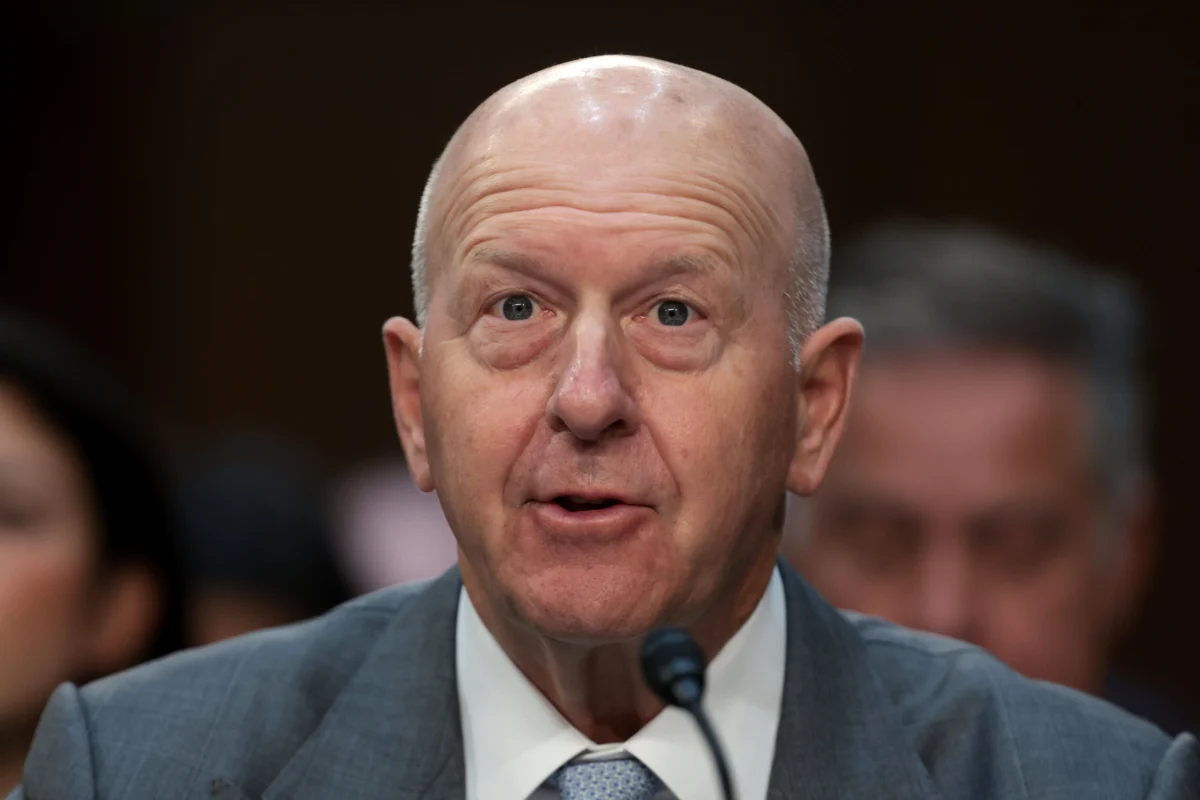
CEO David Solomon, addressing the quarter’s performance during the company’s conference call, sought to put the fixed income results into perspective: "When I look at the scale and the diversity of the business, it’s performing very, very well. Some quarters, it’s going to be stronger here, stronger there." While this statement acknowledges the cyclical nature of different business lines, it also subtly defends the firm’s broader strategy and resilience. Goldman Sachs declined to offer further comment beyond the official earnings call.
Broader Impact and Implications for Goldman Sachs
The first-quarter fixed income stumble carries significant implications for Goldman Sachs, both internally and in its standing on Wall Street.
Internal Scrutiny and Strategic Review:
The underperformance will undoubtedly trigger an intensive internal review within the FICC division. This will likely involve a deep dive into risk management protocols, trading strategies, and the decision-making processes that led to the reported losses. Questions will arise regarding the firm’s ability to anticipate and react to rapid market shifts, particularly those driven by unforeseen geopolitical events. Leadership within FICC may face increased pressure to demonstrate immediate corrective action and improved performance in subsequent quarters. This could manifest in personnel changes, a re-evaluation of market positioning, or even a recalibration of the division’s overall strategy.
Reputational Impact:
For a firm that prides itself on its trading acumen, the "worst-in-class" label is a significant blow to its reputation. While Goldman Sachs’ brand is robust, consistent underperformance in a flagship division could erode investor confidence and raise questions about its competitive edge. The market’s immediate negative reaction to the stock, despite an overall earnings beat, underscores how deeply entrenched the expectation of Goldman’s trading superiority is. Maintaining this reputation requires not just good quarters, but an ability to outperform even in challenging conditions.
Strategic Direction and Diversification:
The incident also shines a spotlight on Goldman’s ongoing strategic pivot towards a more diversified business model, with increased emphasis on investment banking, asset management, and wealth management. While the FICC division remains crucial, Solomon’s comments about the "scale and diversity of the business" suggest that the firm is less dependent on any single division’s performance than it once was. This quarter’s results could inadvertently strengthen the argument for continued diversification, potentially leading to further allocation of resources to less volatile, more client-centric businesses.
The Evolving Market Landscape:
The volatility experienced in Q1 2026, characterized by geopolitical shocks and rapid shifts in monetary policy expectations, highlights an increasingly complex and challenging environment for fixed income traders. The confluence of rising oil prices, inflation fears, and a hawkish pivot from central banks creates a landscape ripe for both opportunity and significant risk. Goldman Sachs, like all major financial institutions, must continuously adapt its strategies, technology, and risk frameworks to navigate these dynamic conditions. The Q1 2026 results serve as a potent reminder that even the most formidable trading houses are not immune to the unpredictable forces of global markets. The coming quarters will be critical in demonstrating whether Goldman Sachs can reclaim its dominant position in fixed income and reassert its legendary trading prowess.
About the Author