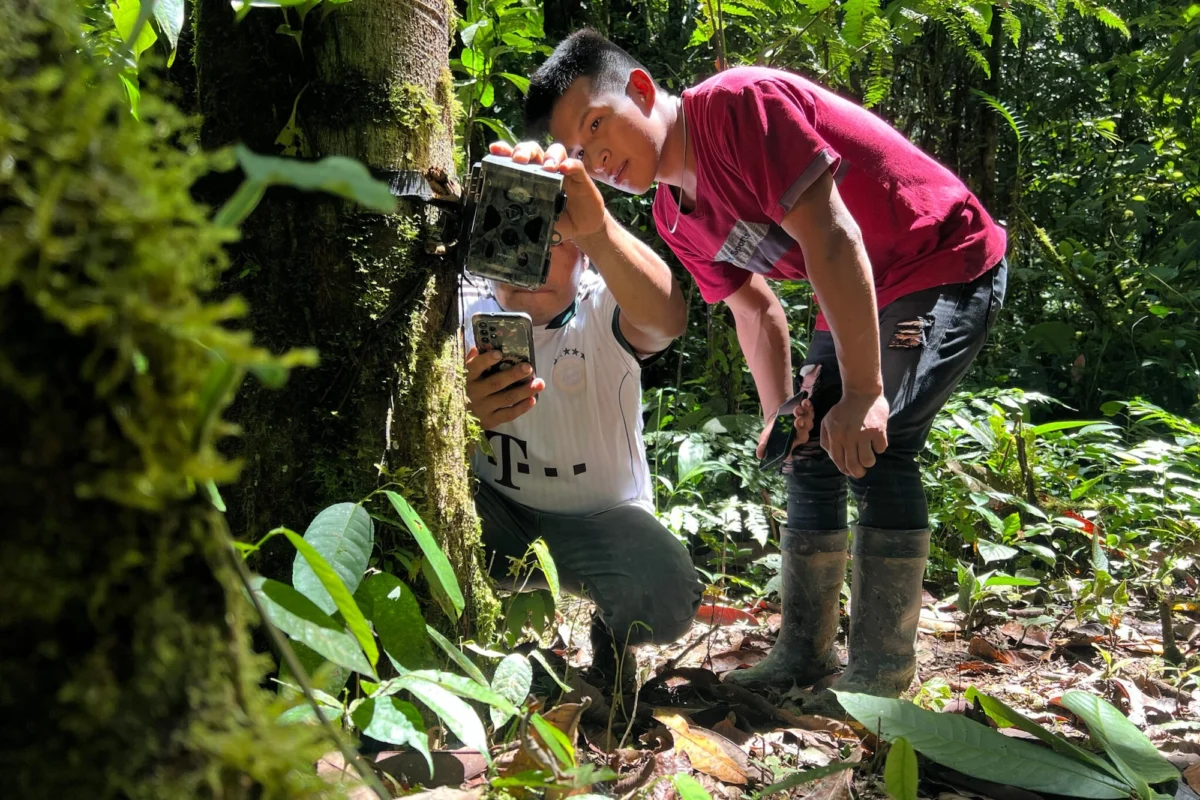
Deep within the southeastern Amazonian highlands of Ecuador, near the border with Peru, a pair of Shuar paraecologists, Olger Kitiar and Jhostin Antún, recently froze in their tracks upon discovering a massive, four-toed indentation in the churned mud. The print belonged to a jaguar, a fresh and imposing piece of evidence of the apex predator’s presence in the Shuar territory of Maikiuants. This was not merely a moment of ecological wonder; it was a critical data point in a high-stakes legal battle. In Ecuador, where the "Rights of Nature" are enshrined in the constitution, the presence of an endangered species can serve as a powerful legal barrier against large-scale industrial activities. The forest where the jaguar roams sits atop vast copper reserves currently claimed by Solaris Resources, a Canadian mining company seeking to develop an open-pit mine that would permanently alter this biodiversity hotspot.

The Constitutional Shift: Nature as a Legal Subject
To understand the conflict in Maikiuants, one must look back to 2008, when Ecuador became the first nation in the world to recognize the Rights of Nature within its Constitution. This legal framework shifted the status of the environment from being "property" to a "living subject" with the right to exist, regenerate, and maintain its vital cycles. Under Articles 71 through 74, any person or community can take legal action on behalf of an ecosystem, demanding its protection or restoration.

This constitutional mandate has been tested and upheld in several landmark cases. Most notably, in 2021, Ecuador’s Constitutional Court ruled in favor of the Los Cedros protected cloud forest. The court found that mining concessions granted in the area violated the forest’s right to exist and the rights of the species living within it. This ruling established a "precautionary principle," meaning that if there is a risk of irreversible damage to an ecosystem or its endangered species, the state must prioritize conservation over extraction. For the Shuar people of Maikiuants, this precedent is the foundation of their resistance against the Warintza Project, the mining initiative spearheaded by Solaris Resources.
The Rise of the Paraecologists: Paramedics for Ecosystems
In regions like the Amazon, scientific data is often sparse, leaving local communities vulnerable to corporate environmental impact assessments that may downplay ecological risks. To bridge this gap, the nonprofit organization Ecoforensic, co-founded by British ecologist Mika Peck and Inde Kaur Hundal, has pioneered the training of "paraecologists." These are local residents who combine traditional ecological knowledge with modern scientific methods to document their ancestral lands.

Jhostin Antún and Olger Kitiar are part of this new vanguard. Trained in species inventory, water sampling, and camera trap maintenance, these paraecologists act as "ecosystem paramedics." Their work involves documenting the presence of keystone and endangered species—such as the jaguar, the Andean condor, and various newly discovered amphibians—to create a "forensic" record of the territory’s health. This data is then translated into legal evidence that can be presented in court. In 2023, similar efforts in the Intag Valley successfully halted a mega-copper mine after paraecologists proved the existence of endangered species that the mining company’s studies had conveniently omitted.

Biodiversity at the Crossroads of the Andes and the Amazon
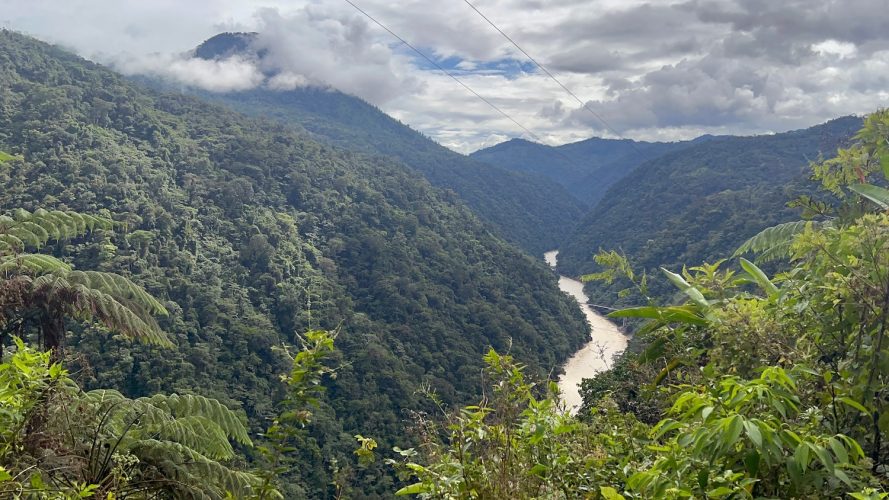
Maikiuants is situated in a unique transition zone where the high Andes mountains meet the tropical lowlands. This rugged topography has created a multitude of microclimates, leading to incredibly high rates of endemism—species that exist nowhere else on Earth. During recent studies, paraecologists and collaborating scientists like Edwin Zárate of the University of Azuay discovered a new species of frog with night-dark skin and iridescent blue dots, now slated to be named the "Maikiuants frog."

The ecological stakes are quantified by the fragility of these niches. According to Zárate, the destruction of a single mountain slope could result in the total extinction of an entire evolutionary lineage. Ecoforensic’s review of Solaris Resources’ environmental impact assessment (EIA) revealed what they termed "critical deficiencies." The company’s report allegedly failed to mention 91 at-risk or endangered species and provided insufficient data on the potential contamination of local waterways. In the mining industry, heavy-metal pollution and acidic runoff are common byproducts that can devastate aquatic life cycles for decades.

A History of Concessions and Conflict
The threat to Shuar territory is not new, but it has intensified. Since the 1990s, successive Ecuadorian governments have carved the Amazon into mining concessions, often without the "free, prior, and informed consent" of Indigenous populations required by international law. In 2019, the acquisition of the Warintza Project by Solaris Resources marked a turning point. The company has since engaged in what community leaders describe as "divide and conquer" tactics, securing agreements with a few neighboring Shuar communities by offering infrastructure, schools, and healthcare—services the cash-strapped Ecuadorian state has long failed to provide.

This has led to internal friction within the Shuar nation. Pro-mining groups argue that extraction is the only path to economic development and better healthcare. Conversely, the residents of Maikiuants view the mine as an existential threat. The tension has spilled over into the legal and physical realms. In 2022, criminal complaints were filed against Maikiuants leaders, and the government deployed military forces to protect the mining concession. The region remains a flashpoint for violence against environmental defenders; high-profile activists like Eduardo Mendúa and José Isidro Tendetza Antún have been killed in recent years, highlighting the extreme risks faced by those who oppose extractive industries.

The Global Copper Rush and the AI Boom
The pressure on Ecuador to open its mountains to mining is driven by global market demands. Copper is a cornerstone of the modern world, essential for electrical wiring, telecommunications, and the "green energy transition" (electric vehicles and wind turbines). However, a new and massive driver of copper demand has emerged: Artificial Intelligence.

The construction of data centers to power AI systems requires staggering amounts of copper. A conventional data center may use up to 15,000 tons of the metal, while those optimized for AI can require triple that amount. As global copper prices reach record highs, the Ecuadorian government, led by President Daniel Noboa, has moved to accelerate mining projects to address the country’s sovereign debt. This economic drive often clashes with constitutional protections, leading to a "legal war" between the executive branch and the judiciary over the interpretation of nature’s rights.

Analysis of Implications: The Future of Maikiuants
The outcome of the struggle in Maikiuants will have far-reaching implications for international environmental law. If the paraecologists’ data successfully triggers a "Rights of Nature" injunction, it will solidify the role of community-led science in global conservation efforts. It would signal to multinational corporations that environmental impact studies will be rigorously scrutinized by the very people living on the land.

However, the political climate remains hostile. The Noboa administration has recently taken steps to restrict the activities of non-governmental organizations and has frozen the bank accounts of prominent Indigenous leaders. This systemic pressure suggests that legal victories alone may not be enough to protect the territory without sustained international attention and support for environmental defenders.

For the Shuar people, the concept of buen vivir (living well in harmony with nature) is not an abstract philosophy but a survival strategy. As Jorge Antún, a community elder, noted, the forest is their pharmacy, their supermarket, and their spiritual temple. The paraecologists of Maikiuants are fighting for more than just a forest; they are fighting for the continuity of a culture that views itself as inseparable from the land. As they continue to monitor their camera traps and document the movements of the jaguar, they are building a fortress of data intended to withstand the encroaching pressure of global industry. The "monkey’s axe," a Shuar legend of a buried evil, serves as a poignant metaphor for the copper beneath their feet: once unearthed, the consequences may be impossible to contain.
About the Author