
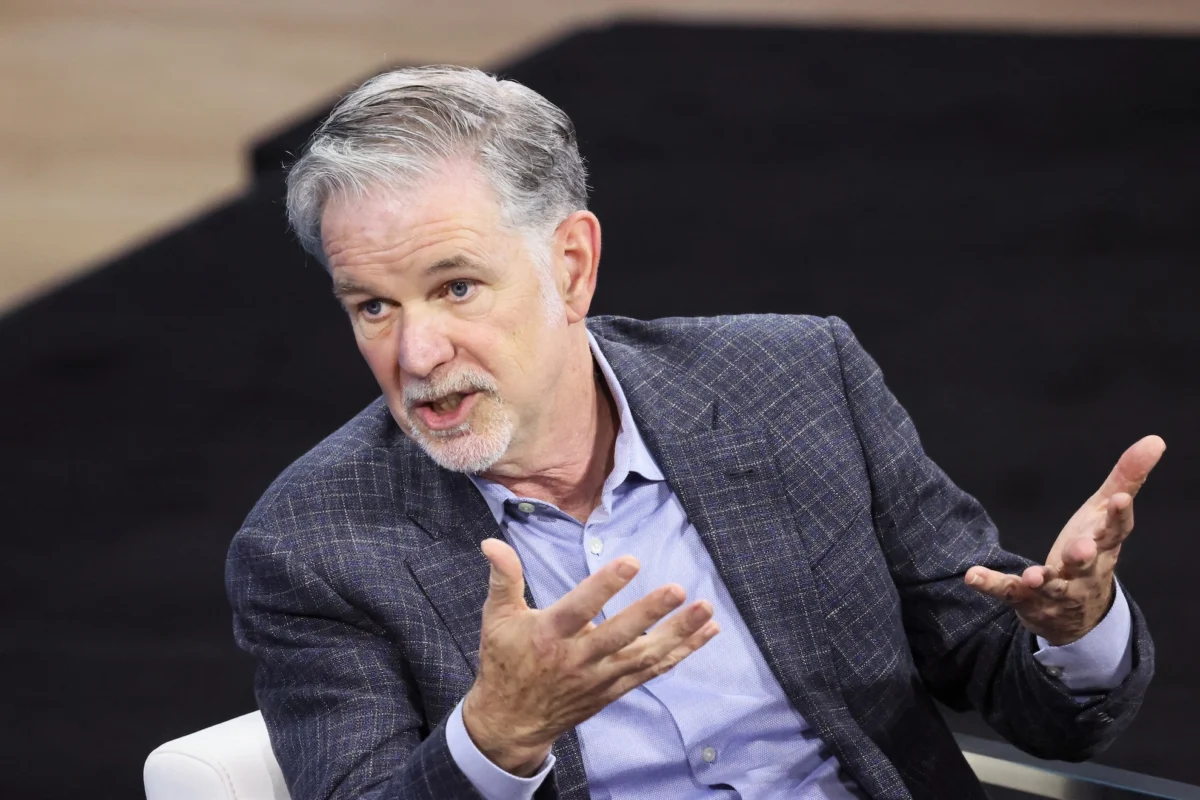
Reed Hastings, the visionary co-founder and long-time chairman of Netflix, is set to depart the company’s board of directors when his current term concludes this summer. This significant transition marks the end of an era for the streaming giant, with Hastings announcing his intention to dedicate his time and energy to philanthropic endeavors and other personal pursuits. The news was disclosed in Netflix’s first-quarter earnings report, released on Thursday, signaling a pivotal moment in the company’s storied history. His official departure from the board is slated for June, concluding over two decades of instrumental leadership.
A Legacy of Disruption and Innovation
Hastings’ departure from the board is more than just a change in leadership; it represents the closing chapter of a remarkable journey that began in 1999. At a time when video rental stores, both independent "mom-and-pop" shops and the dominant Blockbuster chain, were ubiquitous, Hastings, alongside co-founder Marc Randolph, launched Netflix as a subscription-based DVD-by-mail service. This innovative model fundamentally altered how consumers accessed movies and television shows, eventually leading to the demise of traditional rental formats and the very concept of physical media for home entertainment. The company officially retired its disc-delivery service in 2023, a testament to its continuous evolution.
Under Hastings’ guidance, Netflix not only revolutionized content distribution but also pioneered the streaming industry. This shift from physical discs to digital delivery laid the groundwork for the on-demand entertainment landscape that defines the modern media ecosystem. The company’s success spurred a wave of competition, with major players like Amazon, HBO, Disney, and Hulu launching their own streaming services, all in response to Netflix’s groundbreaking model.
Reflecting on a Transformative Tenure
In a statement accompanying the earnings report, Hastings expressed profound gratitude for his time at Netflix, describing the company’s impact on his life as immeasurable. He reminisced about a particularly cherished memory: January 2016, when Netflix achieved near-global availability, enabling "nearly the entire planet to enjoy our service." This milestone underscores the company’s ambitious expansion and its commitment to reaching a worldwide audience.
Hastings attributed his lasting contribution not to a single strategic decision, but to a sustained focus on "member joy," fostering a culture that encouraged continuous improvement, and building an organization designed for enduring success. "My real contribution at Netflix wasn’t a single decision," Hastings stated. "It was a focus on member joy, building a culture that others could inherit and improve, and building a company that could be both beloved by members and wildly successful for generations to come." He also extended his appreciation to current Netflix leadership, including CEO Ted Sarandos and Co-CEO Greg Peters, acknowledging their roles in the company’s ongoing success.
Netflix’s Enduring Culture and Future Trajectory
The company itself lauded Hastings’ indelible mark on Netflix’s identity. In the earnings report, Netflix stated, "Reed built a culture of innovation, integrity and high performance that defines who we are today. His vision and leadership pioneered how the world is entertained, and his legacy and impact are not only felt by all of us at Netflix, but by audiences around the world." This sentiment highlights the deep-rooted influence of Hastings’ leadership philosophy on the company’s operational ethos and its global reach.
As Hastings transitions away from the board, Netflix is actively charting a course for the future, signaling a strategic pivot towards emerging technological frontiers, particularly in the realm of generative artificial intelligence. The company’s recent acquisition of InterPositive, the AI filmmaking company founded by Ben Affleck, underscores this commitment. This move suggests Netflix’s intent to leverage AI for content creation and potentially other aspects of its business, positioning itself at the forefront of technological advancements in the entertainment industry.
Financial Performance Amidst Leadership Transition
The announcement of Hastings’ departure coincides with a robust financial performance for Netflix. The company reported a substantial $12.25 billion in revenue for the first quarter, representing a significant 16.2% increase compared to the same period in the previous year. Net income saw an even more dramatic surge, rising by nearly 83% to $5.28 billion. These impressive figures demonstrate Netflix’s continued financial strength and its ability to drive growth even as it navigates significant leadership changes.
The sustained financial success provides a stable backdrop for Hastings’ transition and allows the company to focus on its strategic objectives. The increasing profitability, coupled with a clear vision for technological integration, suggests a company well-positioned to adapt to the evolving media landscape.
A Look Back: The Genesis of a Global Phenomenon
The story of Netflix is inextricably linked to Reed Hastings’ pioneering spirit. From its humble beginnings as a DVD-by-mail service, the company underwent a dramatic transformation. The initial concept was to offer a wider selection of films than physical stores could stock, coupled with the convenience of home delivery and a revolutionary no-late-fees policy. This disruptive model quickly gained traction, chipping away at the market share of established players like Blockbuster, which famously declined an opportunity to acquire Netflix in its early days.
The critical pivot to streaming was a bold gamble that paid off handsomely. By investing heavily in internet infrastructure and content licensing, Netflix paved the way for a new era of entertainment consumption. The company’s early adoption of streaming technology, while met with skepticism by some, ultimately proved prescient. This foresight allowed Netflix to establish a dominant position in the market before competitors could fully grasp the potential of the digital revolution.
The expansion of original content production further solidified Netflix’s market leadership. Investments in critically acclaimed series and films, such as "House of Cards," "Orange Is the New Black," and "Stranger Things," not only attracted new subscribers but also garnered numerous awards and critical praise, establishing Netflix as a major content producer in its own right. This strategy of original programming became a key differentiator, allowing Netflix to control its content pipeline and reduce reliance on third-party licensing.
Broader Implications and the Future of Entertainment
Hastings’ departure signifies the end of an era for a founder who not only built a company but fundamentally reshaped an industry. His emphasis on a strong corporate culture, characterized by transparency, accountability, and a focus on employee empowerment, has been widely studied and emulated. This culture is often credited with fostering the innovation that has driven Netflix’s success for decades.
The implications of Hastings stepping down from the board are multifaceted. While his direct day-to-day involvement will cease, his influence is expected to continue through his philanthropic work and his ongoing role as a significant shareholder. The company’s future direction, particularly its embrace of AI, suggests a continued commitment to innovation and adaptation. This strategic focus on emerging technologies is crucial for maintaining a competitive edge in an increasingly dynamic entertainment landscape.
The success of Netflix under Hastings’ leadership serves as a case study in disruptive innovation and strategic foresight. His vision transformed how billions of people consume entertainment, moving from physical media to on-demand digital streaming, and establishing a new paradigm for content creation and distribution. As Netflix continues to evolve, the foundation laid by Reed Hastings will undoubtedly continue to shape its trajectory, even as the company embarks on new technological frontiers. The transition to a post-Hastings board era will be closely watched as a measure of the company’s ability to maintain its innovative spirit and market leadership.
The company’s financial health, as evidenced by its first-quarter earnings, provides a strong foundation for this new chapter. The substantial increases in revenue and net income indicate that Netflix remains a dominant force in the streaming market, capable of adapting to changing consumer behaviors and technological advancements. The strategic investments in areas like artificial intelligence signal a forward-looking approach, ensuring that Netflix remains at the vanguard of the entertainment industry.
Hastings’ legacy extends beyond the boardroom and financial statements. He is remembered for challenging conventional wisdom, for his relentless pursuit of innovation, and for creating a company that has profoundly impacted global culture. His decision to step down to focus on philanthropy underscores a desire to contribute to society in new ways, a testament to a life dedicated to impact, both within and beyond the business world. The coming years will reveal how Netflix continues to innovate and lead under its current leadership, carrying forward the spirit of disruption and member-centricity that Reed Hastings so profoundly instilled.
About the Author





