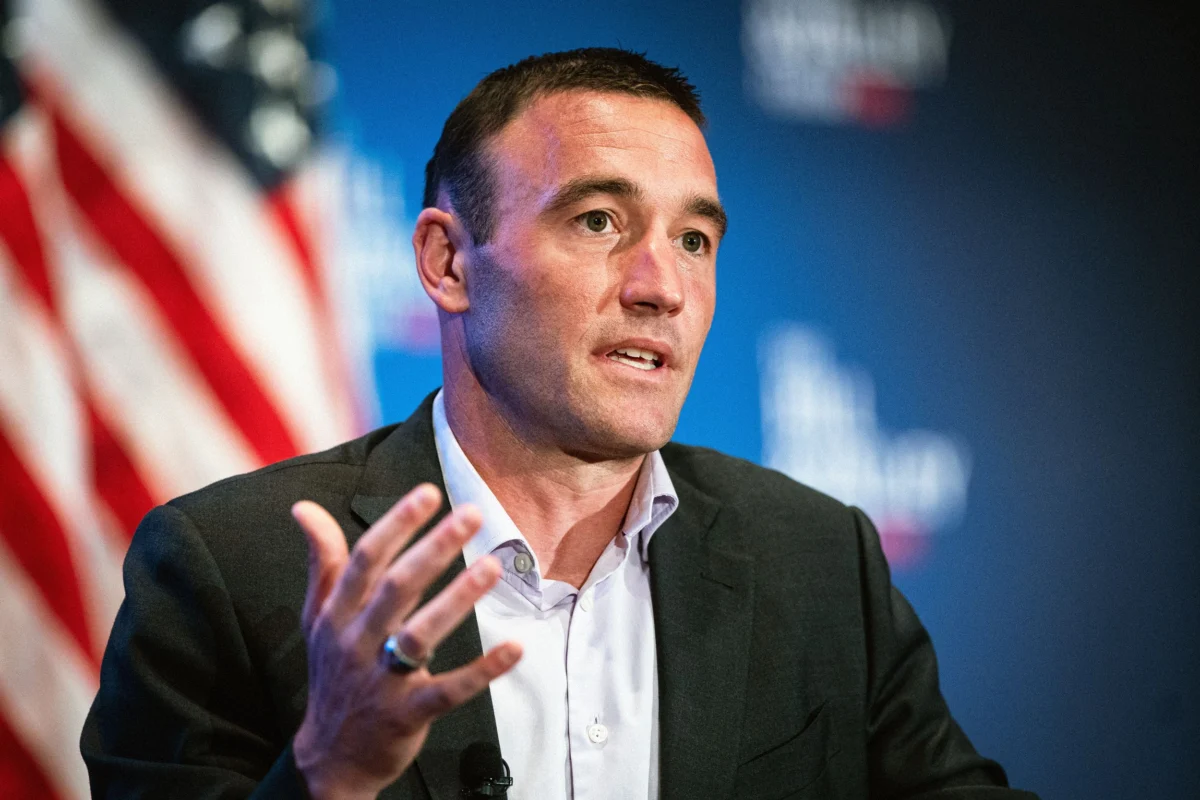
The landscape of leadership at OpenAI has undergone another significant transformation as Kevin Weil, the company’s former Chief Product Officer and the architect of its recent scientific initiatives, announced his departure. The move comes as OpenAI shutters Prism, a specialized artificial intelligence workspace designed for the scientific community, and reorganizes its internal research divisions. This departure is not an isolated event but part of a broader exodus of high-level talent and a fundamental shift in corporate strategy as the San Francisco-based AI giant prepares for a highly anticipated initial public offering (IPO) later this year.
Kevin Weil, a seasoned Silicon Valley executive known for his previous leadership roles at Instagram and Twitter, joined OpenAI in June 2024. Initially serving as Chief Product Officer, he eventually transitioned to lead the "OpenAI for Science" initiative in September 2024. His exit was confirmed following internal communications and a subsequent public statement on social media, where he noted that his final day coincided with the decentralization of the science-focused teams into other core research departments. The dissolution of the specialized science unit and the sunsetting of the Prism web application signal a move toward a more unified, streamlined product roadmap aimed at maximizing commercial utility and operational efficiency.
The Sunsetting of Prism and the Rise of the Codex Everything App
Prism was launched in January 2026 as a dedicated web-based application intended to provide researchers and scientists with a tailored interface for leveraging large language models in laboratory and data-intensive environments. Despite its recent debut, OpenAI has decided to discontinue the standalone product. The decision reflects a broader mandate from leadership to reduce product fragmentation. According to internal sources, the approximately 10-person team responsible for Prism will now report to Thibault Sottiaux, OpenAI’s head of Codex.
The capabilities previously housed within Prism are expected to be integrated into the Codex desktop application. This consolidation aligns with OpenAI’s stated ambition to transform Codex—originally a tool focused primarily on software engineering and code generation—into a versatile "everything app." By folding scientific tools into the coding platform, OpenAI aims to create a centralized hub for technical professionals across various disciplines. A spokesperson for the company characterized this move as a strategic effort to unify the business and product strategy, ensuring that resources are concentrated on the most impactful platforms rather than spread across niche applications.
A Growing List of Executive Departures
The departure of Kevin Weil is compounded by the exit of two other prominent leaders within the organization. Srinivas Narayanan, the Chief Technology Officer of Enterprise Applications, announced his resignation on the same day. Narayanan, who initially joined the firm as Vice President of Engineering, indicated that he is leaving to spend more time with his family. His departure is particularly notable given OpenAI’s increasing reliance on enterprise revenue and the critical role he played in scaling the company’s corporate offerings.
Simultaneously, Bill Peebles, the head of the Sora video-generation project, announced his resignation via social media. Peebles was instrumental in the development of OpenAI’s generative video technology, which had initially been positioned as a revolutionary step in creative AI. However, the Sora project has faced its own share of internal scrutiny. Recent reports indicate that OpenAI has discontinued the standalone Sora video-generation app, choosing instead to divert those resources toward more "consequential efforts" such as enterprise tools and the development of more advanced reasoning models.
Chronology of Organizational Change and Leadership Shifts
The current wave of exits follows a period of intense restructuring that began in early 2025. The timeline of these shifts illustrates a company in the midst of a profound cultural and operational transition:
- June 2024: Kevin Weil joins OpenAI as Chief Product Officer, bringing experience from high-growth environments like Instagram.
- September 2024: Weil transitions from CPO to lead the newly formed "OpenAI for Science" initiative, focusing on the intersection of AI and scientific discovery.
- January 2026: OpenAI launches Prism, a web application for scientists, signaling a commitment to specialized research tools.
- March 2026: Fidji Simo, the CEO of AGI Deployment, informs staff of the necessity to simplify product offerings to achieve profitability and operational clarity.
- Early 2026: Major reorganization announced as Fidji Simo takes a medical leave. Cofounder and President Greg Brockman assumes interim oversight of product development. Chief Marketing Officer Kate Rouch also takes a medical leave, and COO Brad Lightcap moves to a "special projects" role.
- May 2026: OpenAI announces the GPT-Rosalind series, specialized models for life sciences, while simultaneously decentralizing the "OpenAI for Science" team and confirming the exits of Weil, Narayanan, and Peebles.
This sequence of events highlights a move away from the "scrappy startup" mentality that defined OpenAI’s early years. CEO Sam Altman acknowledged this transition in a recent blog post, stating that the company must now operate as a "major platform" with more predictability. He described the past few years as "extremely intense, chaotic, and high-pressure," suggesting that the current consolidation is a necessary step toward long-term stability.
Strategic Pivot Toward Enterprise and Life Sciences
Despite the decentralization of the dedicated science team, OpenAI maintains that it remains committed to accelerating scientific discovery. The company views AI’s contribution to science as one of the primary ways the technology can provide a tangible benefit to humanity. To this end, the company recently unveiled GPT-Rosalind, a new series of models specifically optimized for life sciences.
The shift appears to be one of methodology rather than mission. Instead of maintaining a siloed "Science" department, OpenAI is integrating these specialized capabilities into its broader research and infrastructure teams. This allows the company to apply scientific reasoning breakthroughs across its entire model suite, including the flagship GPT series and the Codex platform. By doing so, OpenAI hopes to maintain its competitive edge against rivals like Anthropic, whose "Claude Code" tool has emerged as a direct competitor to Codex in the lucrative developer and enterprise markets.
Financial Pressures and the Path to IPO
The reorganization is heavily influenced by OpenAI’s financial trajectory and its impending IPO. As the company gears up for a public listing, investors are looking for a clear path to profitability and a cohesive product ecosystem. The "everything app" strategy centered around Codex is a direct response to this demand. By simplifying the product line and cutting underperforming or niche projects like the Sora app and Prism, OpenAI is attempting to present a more disciplined corporate structure.
Market analysts suggest that the departure of executives like Weil and Narayanan may be a natural byproduct of this maturation process. In many tech giants, the transition from a research-led organization to a product-led enterprise often leads to friction and the exit of leaders who were more aligned with the initial, more experimental phase of the company. However, the loss of high-level engineering and product talent remains a risk, especially as competition for AI expertise reaches an all-time high.
Implications for the AI Industry
The decentralization of OpenAI’s science efforts and the focus on a unified "everything app" could set a new precedent for the industry. If OpenAI successfully integrates high-level scientific reasoning into a general-purpose coding and productivity tool, it could lower the barrier to entry for complex research, potentially accelerating breakthroughs in drug discovery, materials science, and climate modeling.
Conversely, the decision to sunset specialized tools like Prism and the Sora app might be viewed by some as a retreat from the creative and purely academic frontiers of AI. It signals that for the market leaders, the immediate future of AI lies in its ability to generate revenue through enterprise efficiency and software development.
As Greg Brockman takes a more active role in product oversight during this interim period, the industry will be watching closely to see how the "new" OpenAI balances its original mission of developing safe AGI with the commercial realities of being a multi-billion dollar platform. The coming months will likely see further refinements to the company’s lineup as it seeks to stabilize its leadership ranks and finalize its pitch to public market investors.
The departure of Kevin Weil marks the end of a specific chapter for OpenAI—one defined by the rapid expansion of specialized initiatives. The new chapter, it seems, will be defined by consolidation, commercial focus, and the pursuit of a unified AI ecosystem that can serve as the foundational infrastructure for the next generation of global industry.
About the Author