Iran announced Saturday the immediate reimposition of the closure of the Strait of Hormuz, a critical global maritime chokepoint, barely a day after signaling its reopening to international shipping traffic. The swift reversal followed accusations from Tehran that the United States had failed to uphold its commitments under a fragile ceasefire agreement, escalating an already fraught geopolitical standoff. President Donald Trump, reacting to the development, issued a stern warning that the U.S. would not be blackmailed by Iran’s actions concerning the strategic waterway.
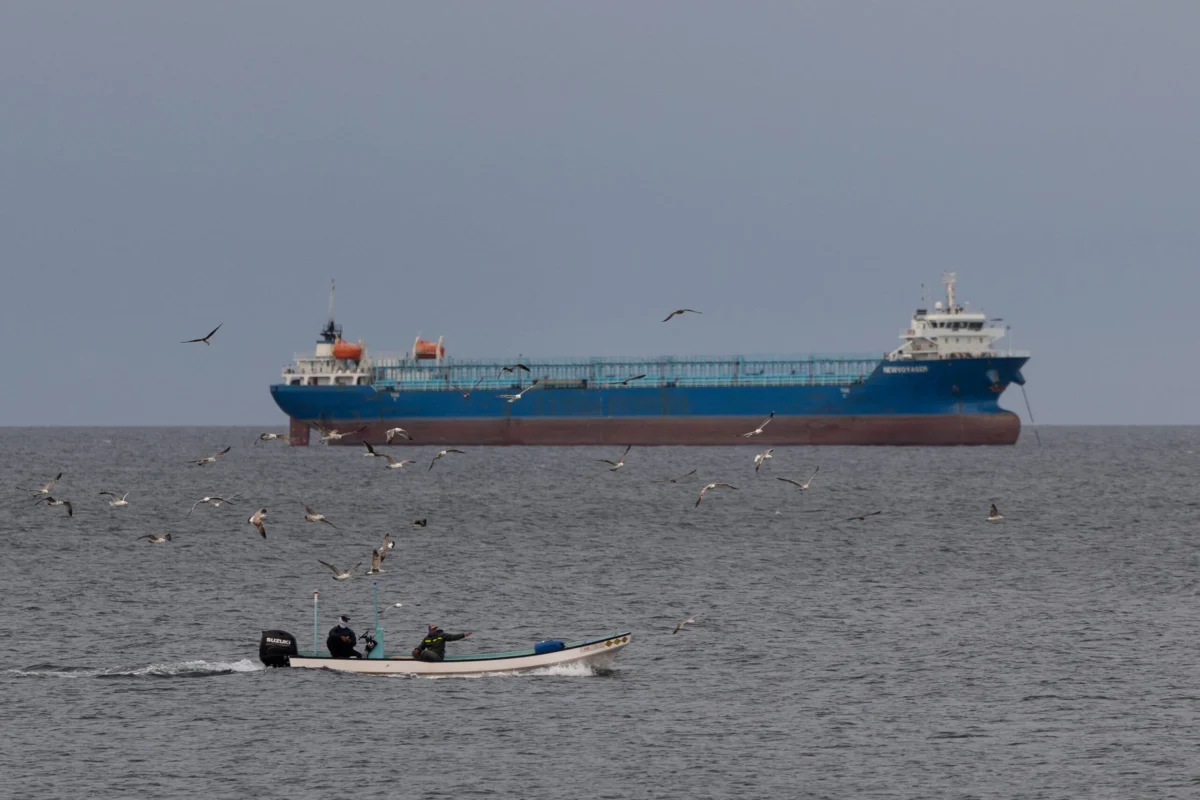
The dramatic turn of events unfolded rapidly, highlighting the volatile nature of the U.S.-Iran relationship and its profound implications for international trade and energy security. The British military’s United Kingdom Maritime Trade Operations (UKMTO) center reported an immediate incident following the closure, stating that two gunboats from Iran’s Revolutionary Guard had opened fire on a tanker transiting the strait. While the tanker and its crew were reported safe, the incident underscored the heightened risk to maritime navigation in the region. The vessel’s identity and destination were not immediately disclosed, adding to the climate of uncertainty.
The Strategic Significance of the Strait of Hormuz
The Strait of Hormuz, a narrow sea lane connecting the Persian Gulf to the Arabian Sea and beyond, is arguably the world’s most vital oil transit chokepoint. Approximately one-fifth of the world’s total petroleum liquids consumption, or about 21 million barrels per day (b/d), passed through the strait in the years leading up to the current conflict. This includes nearly all the liquefied natural gas (LNG) from Qatar, a major global supplier. Its closure, or even the threat of it, sends immediate shockwaves through global energy markets, impacting oil prices, shipping insurance premiums, and the broader global economy. The current situation has already triggered what analysts describe as the largest oil supply disruption in history, with prices having plunged over 10% on Friday to below $90 per barrel, reflecting the market’s extreme sensitivity to supply certainty.
Historically, the Strait has been a flashpoint in regional conflicts, particularly between Iran and the West. Its strategic importance stems from its geography: at its narrowest point, it is only 21 nautical miles wide, with the shipping lane itself a mere two miles wide in either direction. This makes any attempt to close it a direct challenge to international maritime law and freedom of navigation, principles vehemently defended by global powers, especially the United States.
A Tumultuous Timeline of Escalation and Failed De-escalation
The current crisis has roots in a series of escalations following the U.S. withdrawal from the Joint Comprehensive Plan of Action (JCPOA) – the Iran nuclear deal – in 2018 and the subsequent re-imposition of crippling sanctions. This led to a spiral of retaliatory measures, including Iranian enrichment activities beyond agreed limits and attacks on tankers in the Gulf, which Tehran denied.
The immediate backdrop to the latest closure is a ceasefire agreement brokered on April 7, intended to de-escalate a conflict that began on February 28 with a joint U.S. and Israeli aerial campaign against Iranian targets. Under the terms of this two-week ceasefire, which is due to expire on Wednesday, April 23, Iran had ostensibly agreed to fully reopen the Strait of Hormuz.

On Friday, Iranian Foreign Minister Seyed Abbas Araghchi announced on social media that "In line with the ceasefire in Lebanon, the passage for all commercial vessels through Strait of Hormuz is declared completely open for the remaining period of ceasefire." This statement, however, was immediately qualified by a requirement for vessels to transit through a "coordinated route" announced by Iranian maritime authorities, raising questions about potential new restrictions, including the imposition of tolls.
Confusion quickly ensued, as video footage from ship-tracking firm Kpler showed several tankers and cargo ships attempting to exit the waterway on Friday but being forced to turn back. Matt Smith, director of commodity research at Kpler, commented, "They’ve clearly not been given approval to pass through." This directly contradicted Araghchi’s public declaration, indicating a lack of unified messaging or a deliberate ambiguity from Tehran.
By Saturday, the Iranian state media, including the Islamic Republic of Iran Broadcasting (IRIB) service, definitively confirmed the strait’s closure. A post on X by IRIB stated, "Iran agreed to allow a limited number of ships to pass through the Strait of Hormuz according to agreements. But U.S. did not fulfill their obligations. So, the Strait of Hormuz is now closed again and passage requires IRAN approval." This was further corroborated by a statement aired on state media from Islamic Revolutionary Guard Corps (IRGC) Spokesperson Lieutenant Colonel Ebrahim Zolfaghari, detailing the reimposition of vessel restrictions. Zolfaghari asserted that "control of the Strait of Hormuz has returned to its previous state… under strict management and control of the armed forces," warning that Iran would continue to block transit as long as a U.S. blockade of Iranian ports remained in effect.
U.S. Accusations and Iranian Demands
The core of the renewed dispute lies in Iran’s accusation that the U.S. has not honored its part of the ceasefire bargain, specifically regarding the lifting of the blockade on Iranian ports. While the U.S. has not officially acknowledged a "blockade" in the military sense, its comprehensive sanctions regime effectively restricts Iran’s ability to conduct international trade, particularly in oil, by targeting financial transactions, shipping, and port operations. Tehran views these ongoing economic pressures as a violation of the spirit, if not the letter, of any de-escalation agreement.
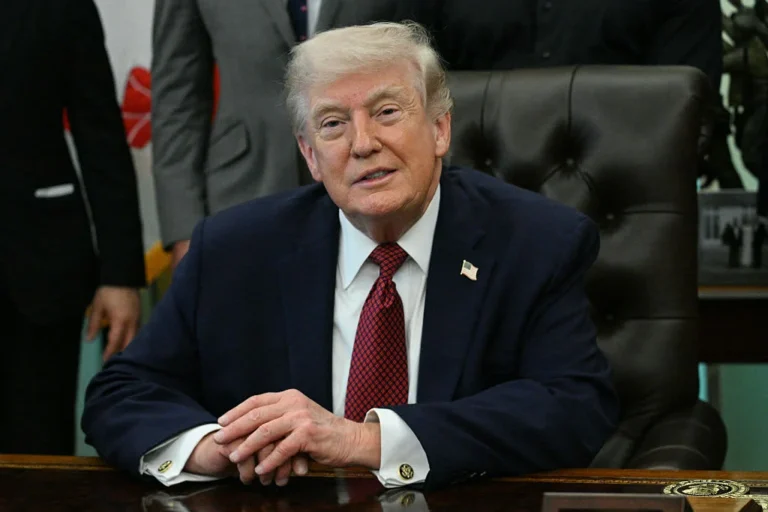
President Trump, speaking from a White House event where he signed an executive order directing the Food and Drug Administration to expedite review of certain psychedelic drugs for mental illness, acknowledged ongoing talks with Iran, stating they were "going well" and that he expected more information "by the end of the day." However, he adopted a stern tone regarding Iran’s actions in the Strait. "They got a little cute," Trump remarked, adding, "They wanted to close up the strait again. They can’t blackmail us."
Trump’s comments also reiterated his previous threat not to extend the two-week ceasefire, which is set to expire shortly. He warned, "Maybe I won’t extend it, but the blockade is going to remain. But maybe I won’t extend it, so you have a blockade, and unfortunately, we’ll have to start dropping bombs again." This stark warning underscores the high stakes and the potential for a rapid re-escalation of military conflict.
Diplomatic Deadlock and Nuclear Contentions
The recent closure of the Strait follows the failure of critical peace talks in Islamabad last weekend. A U.S. delegation led by Vice President JD Vance and Iranian negotiators headed by parliamentary speaker Mohammad Bagher Ghalibaf were unable to reach an agreement, signaling deep-seated disagreements that continue to plague any path to de-escalation.

Iran’s Supreme National Security Council confirmed on Saturday that it is reviewing new proposals put forward by the U.S. through an intermediary, Pakistan’s army chief, who recently visited Tehran. However, the council stated that Iran has yet to respond and that further talks would require the U.S. to abandon "excessive demands and adjust its requests to the realities on the ground." Crucially, the council reiterated that Iran would maintain "full control over traffic through the Strait of Hormuz until the war fully ends and lasting peace is achieved in the region," and that it would collect detailed information on passing vessels, issue transit certificates, and impose tolls. It explicitly declared the U.S. naval blockade a violation of the ceasefire and a precondition for the strait’s reopening.
Adding another layer of complexity to the already tense negotiations is the contentious issue of Iran’s nuclear program. President Trump on Friday claimed that Iran had agreed to hand over its stockpile of enriched uranium, stating the U.S. would "go in with Iran and we will take it together, and we will bring it back, 100% of it back to the United States." He further elaborated on recovering "all the nuclear dust," referring to an estimated 970 pounds (440 kilograms) of enriched uranium believed to be buried under nuclear sites damaged by previous U.S. military strikes.
However, Iranian Deputy Foreign Minister Saeed Khatibzadeh swiftly dismissed Trump’s claims as "baseless," asserting that Iranians were not ready for a new round of face-to-face talks with the U.S. because the Americans "have not abandoned their maximalist position." This direct contradiction on such a sensitive issue highlights the vast chasm between the two sides and the difficulty of finding common ground. Iran’s enrichment activities have been a major point of contention since the U.S. withdrawal from the JCPOA, with international observers expressing concern over Tehran’s expanding uranium stockpiles and enrichment levels.
Global Repercussions and Future Outlook
The reinstatement of the Strait of Hormuz closure represents a significant escalation, with profound global implications. Beyond the immediate impact on oil prices and maritime logistics, it challenges the fundamental principle of freedom of navigation in international waters. Major oil-importing nations, particularly in Asia like China and India, which rely heavily on Middle Eastern crude, will be watching developments closely. Any sustained disruption will necessitate alternative, often more expensive, supply routes or drawdowns from strategic reserves.
The shipping industry faces immediate challenges, including surging insurance premiums for vessels operating in the Gulf and increased operational risks. The incident involving the Iranian Revolutionary Guard gunboats further highlights the physical dangers to commercial shipping. International maritime organizations are likely to issue new advisories, and navies of major powers may increase their presence in the region, raising the specter of accidental or intentional confrontations.
The broader geopolitical implications are equally grave. The breakdown of the ceasefire and the renewed tensions over the Strait risk plunging the region back into full-scale conflict. The involvement of Israel and Lebanon in the initial ceasefire, particularly Israel’s military campaign against Hezbollah, a close Iranian ally, adds another layer of regional complexity. Any renewed U.S. or Israeli military action against Iranian targets would almost certainly provoke a significant response from Tehran, potentially expanding the conflict beyond current geographical limits.
As the situation stands, the ball appears to be in Iran’s court regarding the review of new U.S. proposals, but Tehran’s public stance suggests little willingness to compromise on its core demands, particularly the lifting of what it perceives as an illegal blockade. President Trump’s firm rhetoric and veiled threats of renewed military action indicate that Washington is equally unwilling to yield to what it terms "blackmail." The coming days, particularly leading up to the ceasefire’s expiration, will be critical in determining whether diplomacy can avert a deeper crisis or if the region is poised for further escalation, with the Strait of Hormuz remaining a dangerous flashpoint.
About the Author