The landscape of digital discovery is undergoing its most significant transformation since the inception of the modern search engine. For over two decades, Search Engine Optimization (SEO) served as the primary bridge between content creators and their audiences, governed by the algorithms of Google and Bing. However, the rapid ascent of generative artificial intelligence (AI) has introduced a new paradigm known as AI Optimization (AIO). This emerging field focuses on ensuring content is not just indexed by search engines, but actively synthesized and cited by Large Language Models (LLMs) such as ChatGPT, Claude, and Perplexity. As millions of users shift from scanning "ten blue links" to receiving direct, conversational answers, the ability to appear within AI-generated responses has become a critical metric for digital visibility.
The Evolution of Search Behavior
The shift in user behavior is rooted in the efficiency of information retrieval. Traditional search requires a multi-step journey: entering a query, evaluating a list of results, clicking through to various websites, and manually synthesizing an answer. In contrast, AI search tools perform this synthesis on behalf of the user. By querying models like OpenAI’s ChatGPT or Perplexity AI, users receive a comprehensive summary that aggregates data from across the web, often accompanied by specific citations.
This behavioral change is no longer restricted to early tech adopters. Market data indicates that ChatGPT reached the 100-million-user milestone within two months of its launch, the fastest growth for any consumer application in history. By early 2025, ChatGPT alone was processing more than 10 million web-connected queries daily. Similarly, Perplexity AI has seen its user base swell to millions of daily active users who utilize the platform as a primary research tool. This transition signifies a move away from traditional navigational search toward "answer-engine" search, where the goal is the final information rather than the source website.
A Chronology of the AI Search Revolution
The timeline of this shift highlights the speed at which the industry has pivoted toward AIO:
- November 2022: OpenAI releases ChatGPT, introducing the public to the capabilities of conversational AI.
- January 2023: ChatGPT becomes the fastest-growing app in history, sparking a "code red" at Google.
- Late 2023: Perplexity AI gains significant traction, positioning itself as the world’s first "answer engine" with real-time web citations.
- Early 2024: Google begins testing Search Generative Experience (SGE), later rebranded as AI Mode, to integrate synthesized answers directly into its search results.
- Q1 2025: Google reports a 10% increase in search-related revenue, totaling $50.7 billion, largely attributed to the successful rollout of AI-powered search features across 180 countries.
This timeline demonstrates that AI-driven discovery is not a passing trend but a structural change in the internet’s infrastructure.
Understanding the Mechanics of AI Optimization (AIO)
While SEO relies on signals such as backlink authority, keyword density, and page load speed, AIO focuses on the interpretability and reliability of content for language models. LLMs do not "rank" pages in the traditional sense; instead, they select sources that provide the most accurate, clear, and contextually relevant answers to natural language prompts.
Industry analysts have identified several core pillars of AIO that differ from traditional SEO. First among these is the emphasis on "Semantic Authority." AI models prioritize content that demonstrates a deep understanding of a topic through the use of specific data, statistics, and verifiable proof. Furthermore, the way content is structured plays a vital role. AI models are highly efficient at parsing structured data, such as comparison tables, numbered lists, and JSON-LD markup. These formats allow the AI to extract and present information to the user with higher confidence.
Seven Strategic Tactics for AI Visibility
As the competition for "citations" replaces the competition for "rankings," several proven tactics have emerged as standard practice for AIO:
1. Data Density and Verifiable Proof
AI models exhibit a measurable preference for factual, data-backed content. Claims supported by specific numbers, such as "a 15% increase in efficiency" rather than "a significant increase," are more likely to be cited. This specificity signals to the model that the source is grounded in primary research or credible reporting.
2. Community and Forum Integration
Strategic engagement on platforms like Reddit and Quora has become essential. LLMs are trained on massive datasets that include these community discussions. When a brand or resource is frequently and naturally mentioned in human-led discussions, it creates a "credibility signal" that AI models recognize. This was further solidified by Google’s high-profile data-sharing partnership with Reddit in 2024.
3. Natural Language Alignment
Unlike keyword-stuffing, AIO requires content to be written in a conversational tone that mirrors how users phrase questions to AI assistants. Structuring content around "Long-Tail Conversational Queries"—such as "What is the most cost-effective way to scale a WordPress SaaS?"—aligns the content with the input prompts of the user.
4. Structured Data and Parsing Efficiency
The use of comparison tables and step-by-step guides makes content "digestible" for AI. When an AI model needs to provide a summary of pros and cons, it will naturally gravitate toward sources that have already organized that information in a clear, tabular format.
5. Multi-Platform Consistency
AI models often cross-reference information to verify its accuracy. Maintaining a consistent message and factual record across a website, social media, and third-party publications increases the "Trust Score" the model assigns to a source.
6. Explicit Freshness Signals
Models with real-time web access, such as Perplexity and Google’s AI Mode, prioritize current information. Including "Last Updated" dates and referencing recent industry events are vital signals that the content remains relevant for current queries.
7. Technical Schema Implementation
JSON-LD (JavaScript Object Notation for Linked Data) remains a critical technical component. By providing machine-readable descriptions of what a page contains (e.g., FAQ schema, Article schema, or How-To schema), creators help AI models categorize and retrieve their content more accurately.
The Economic Impact and Market Responses
The shift toward AI search is already impacting the bottom line of major technology firms and digital publishers. Google’s Q1 2025 earnings report provided empirical evidence that AI integration is driving higher engagement and revenue. However, for smaller publishers, the transition presents a challenge. Traditional SEO provided a predictable flow of traffic through clicks; AIO often results in "zero-click" searches, where the user gets their answer without ever visiting the source website.
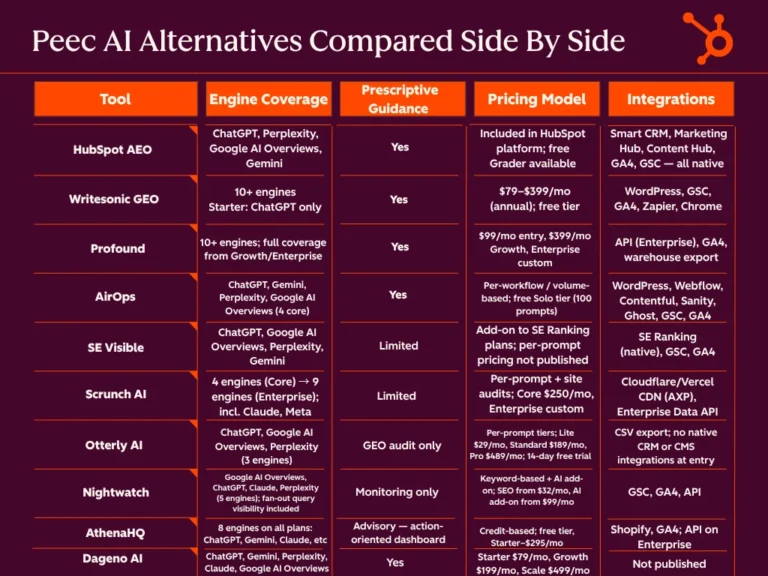
This has led to a growing demand for AIO tracking tools. Established SEO platforms like Ahrefs and SE Ranking have introduced AI visibility modules, with prices ranging from $95 to over $300 per month. These tools monitor how often a website is cited in ChatGPT or Google AI Mode responses. For many small-to-medium enterprises (SMEs), these costs are prohibitive, leading to a rise in DIY automation strategies using platforms like Make.com to monitor AI citations at a lower cost.
Official Reactions and Regulatory Environment
The rise of AIO has not been without controversy. Several major news organizations and content creators have expressed concern over "data scraping" by AI companies, leading to a wave of copyright litigation. In response, some AI firms have begun offering revenue-sharing models or "opt-out" mechanisms for publishers.
Regulators in the European Union and the United States are currently examining the implications of AI-generated search. The primary concern is whether AI models are unfairly siphoning traffic from original creators without adequate compensation. As of early 2025, the legal framework remains in flux, with many expecting new "Fair Use" definitions to emerge specifically for AI synthesis.
Future Implications: The End of Traditional SEO?
Experts agree that while SEO is not dead, it is no longer sufficient on its own. The future of digital marketing lies in a hybrid approach that satisfies both traditional search algorithms and generative AI models. As AI continues to integrate into every facet of the digital experience—from mobile browsers to smart home assistants—the importance of being "AI-readable" will only grow.
The democratization of AIO offers a unique window of opportunity for early adopters. Currently, the "AI citation space" is less crowded than the traditional search results page. Companies that successfully implement AIO strategies today are likely to establish a dominant presence in the AI-driven discovery ecosystem of the future. The transition from "searching" to "asking" is complete; the task for content creators now is to ensure they are the ones providing the answers.
About the Author