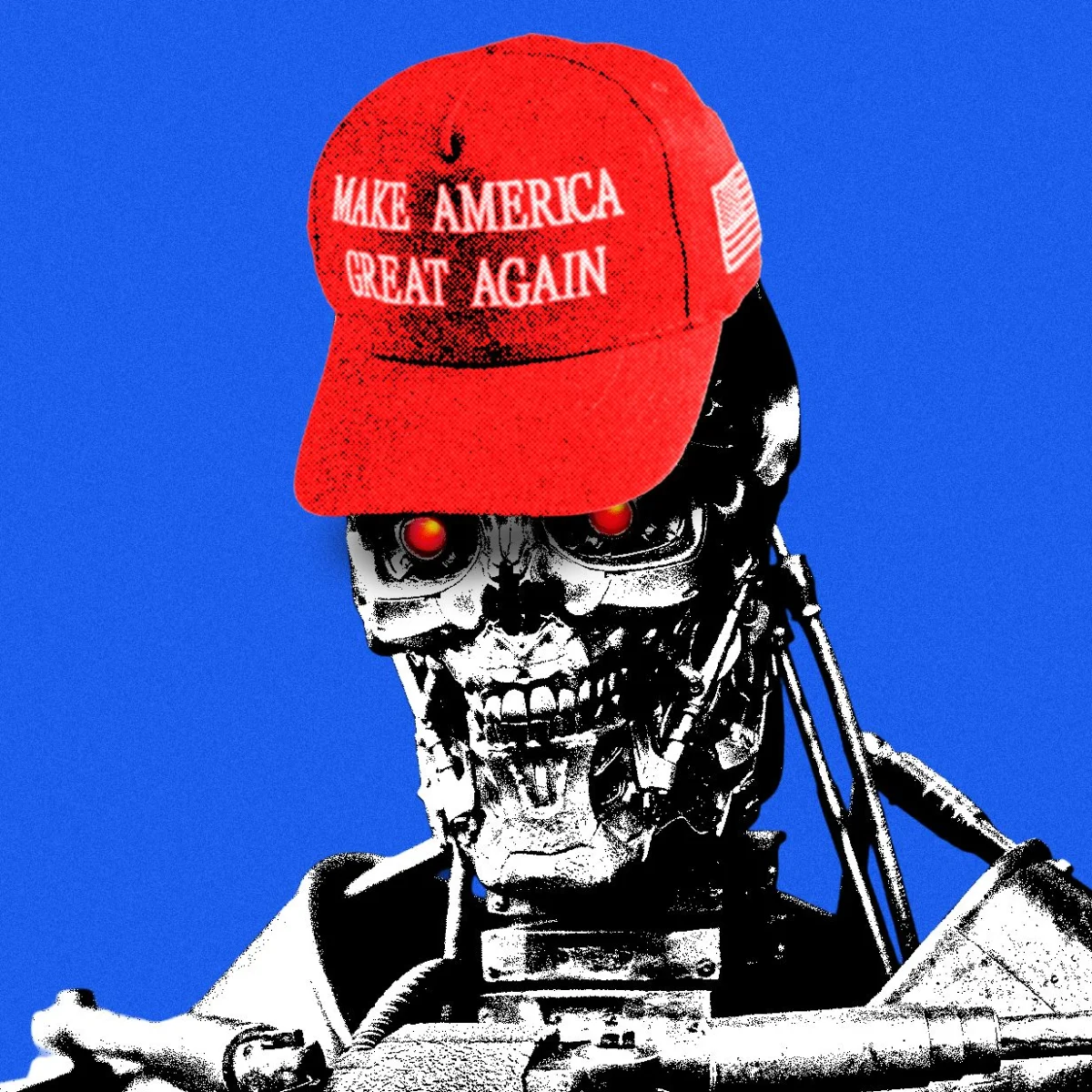
While the burgeoning field of humanoid robotics has largely focused on domestic assistance and industrial automation, a new American startup is pivoting toward a more aggressive application for bipedal machines. Foundation Future Industries, led by CEO Sankaet Pathak, has emerged with a mandate to develop what it describes as an "all-American robot supersoldier." This strategic shift marks a departure from the "helpful assistant" narrative popularized by companies like Tesla and Figure AI, placing Foundation at the center of a growing debate regarding the militarization of autonomous systems and the future of urban warfare.
Pathak has been transparent about his company’s intentions to move beyond reconnaissance and logistics into the realm of active combat. In recent statements, the CEO confirmed that Foundation plans to integrate "lethal capabilities" into its humanoid platforms in the near future. While specifics regarding the hardware remain under wraps, Pathak indicated that the company is currently exploring "kinetic systems"—a term typically used in defense circles to describe weapons that use motion and impact to destroy targets. The company expects to unveil these developments within the next several months, signaling a rapid acceleration in the timeline for armed bipedal robots.
The Evolution of the Militarized Humanoid
The pursuit of a humanoid soldier is not a new ambition for the United States Department of Defense. Between 2012 and 2015, the Defense Advanced Research Projects Agency (DARPA) hosted the DARPA Robotics Challenge (DRC), a high-profile competition designed to spur the development of robots capable of assisting in disaster relief. While the DRC focused on search-and-rescue tasks, it laid the foundational software and hardware architecture required for bipedal movement in complex environments.
Following the DRC, the U.S. Army established programs such as xTechHumanoids. This initiative specifically funds technologies that contribute to "militarized humanoid capabilities," recognizing that the human form factor is uniquely suited to navigating environments designed by and for humans. Unlike wheeled or tracked vehicles, humanoid robots can climb stairs, open doors, and navigate the rubble of destroyed urban centers—tasks that are essential for modern infantry operations.
Foundation Future Industries entered this landscape in early 2024, quickly making a strategic acquisition of Boardwalk Robotics. Boardwalk was a spin-off from the Institute for Human and Machine Cognition (IHMC), a prestigious Florida-based research institute known for its pioneering work on bipedal balance and gait. By acquiring Boardwalk, Foundation inherited years of intellectual property and research data, effectively leapfrogging the initial R&D hurdles that often stymie new robotics firms.
Strategic Alliances and Political Influence
The rise of Foundation Future Industries is as much a story of political networking as it is of engineering. The company has secured high-profile backing, most notably from Eric Trump, the son of the former U.S. President. Trump serves as both an investor and the company’s chief strategy adviser. His involvement has provided the startup with significant visibility, including segments on major news networks where he has championed the potential of AI-driven robotics to transform both the military and industrial sectors.
During a media appearance in April 2024, Trump described the robots as highly responsive to human commands, capable of social interactions like "fist-bumps" while maintaining the potential for high-stakes military applications. He framed the technology as a "beautiful thing" that would redefine hospitality, industry, and warfare alike. This intersection of high-level political influence and defense technology has raised eyebrows among industry watchdogs, particularly concerning the company’s claims regarding government contracts.
Public reports have suggested that Foundation holds approximately $24 million in Pentagon contracts. However, investigative inquiries have revealed a more nuanced reality. The majority of these contracts appear to be legacy agreements inherited through the acquisition of Boardwalk Robotics or channeled through the IHMC. While Foundation is currently operating on government funds, it has yet to secure a massive, independent contract for its specific vision of a "supersoldier." Nevertheless, the company’s existing financial runway and political connections position it as a formidable player in the burgeoning defense-tech sector.
The Tactical Rationale for Humanoid Soldiers
The primary argument for the deployment of humanoid robots in combat is the preservation of human life. Military analysts often point to "the first entry through a door" as the most dangerous moment for an infantry soldier. In historical conflicts such as the Battle of Fallujah or the urban skirmishes of the first Gulf War, U.S. troops were required to clear thousands of buildings door-to-door, often facing insurgents in close-quarters combat.
A humanoid robot like Foundation’s Phantom MK1 is designed to assume these high-risk roles. If a robot can navigate a staircase, identify a threat, and neutralize it—all while being controlled remotely or operating through semi-autonomous AI—the necessity of putting human soldiers in the line of fire diminishes. Proponents argue that bipedal robots are the only viable solution for these scenarios because the terrain is too tight for tanks and too complex for traditional drones.
Furthermore, the ongoing conflict in Ukraine has served as a global laboratory for autonomous systems. Foundation has stated that it has already tested its Phantom MK1 platform with Ukrainian forces, providing real-world data on how these machines perform in active war zones. The rapid iteration of drone technology in Ukraine has proven that relatively low-cost, autonomous systems can effectively counter much larger, traditional military assets. Foundation aims to apply this logic to ground-based robotics.
Technical Hurdles and the Reality of Autonomy
Despite the optimistic projections from Foundation’s leadership, many in the scientific community remain skeptical about the immediate viability of a fully autonomous robot soldier. Robert Griffin, a senior research scientist at IHMC and a former technical adviser to Boardwalk Robotics, has noted that there is a significant gap between the "potential" of the technology and its current "state of the art."
The challenges of building a humanoid soldier are multifaceted:
- Power Density: Humanoid robots require immense amounts of energy to move heavy actuators and maintain balance. Current battery technology often limits operational time to less than an hour of high-intensity movement.
- Environmental Perception: While AI has improved object recognition, the ability of a robot to distinguish between a combatant and a civilian in a chaotic, dust-filled urban environment remains a significant technical and ethical hurdle.
- Locomotion on Uneven Terrain: While robots can walk on flat surfaces, navigating the shifting rubble of a collapsed building requires a level of proprioception and balance that is still being perfected.
- Communication Latency: In a combat scenario, even a millisecond of delay in a remote-control signal can result in the loss of the platform. Full autonomy would solve this, but it introduces the "black box" problem of AI decision-making in lethal contexts.
Griffin emphasizes that while the industry is moving closer to these goals, the idea of a robot that can replace a human soldier in all capacities remains a "distant dream."
Ethical Implications and the Global Arms Race
The development of "lethal humanoid capabilities" by a private U.S. firm adds a new layer to the international debate over Lethal Autonomous Weapons Systems (LAWS). Organizations like Human Rights Watch and various United Nations committees have long called for a preemptive ban on "killer robots"—systems capable of selecting and engaging targets without human intervention.
Foundation’s approach—explicitly targeting the military market with a lethal humanoid—challenges the unofficial industry standard. Many leading robotics firms, including Boston Dynamics, have signed pledges promising not to weaponize their general-purpose robots. By breaking this taboo, Foundation Future Industries may trigger a "robotics arms race," where international competitors in China and Russia feel compelled to accelerate their own militarized humanoid programs.
The geopolitical implications are significant. If one nation successfully deploys a fleet of humanoid soldiers, the threshold for entering a conflict may lower, as the political cost of human casualties is reduced. This shift could fundamentally alter the nature of deterrence and international diplomacy.
Future Outlook: A New Frontier in Defense
Foundation Future Industries stands at a controversial crossroads. Its mission to build a robot supersoldier is either a visionary leap toward more humane warfare—where machines take the risks—or a dangerous step toward an era of automated violence.
In the coming months, as Foundation prepares to unveil its "kinetic" systems, the defense industry will be watching closely. The success of the Phantom MK1 will depend not just on its ability to walk and shoot, but on its ability to integrate into the existing military infrastructure of the United States and its allies. With millions of dollars in backing and the strategic guidance of high-profile investors, the company is betting that the future of the American military is not just high-tech, but humanoid.
As the lines between science fiction and modern warfare continue to blur, the emergence of Foundation Future Industries serves as a reminder that the next generation of combatants may not be made of flesh and blood, but of steel, silicon, and code. Whether these machines will bring stability to the battlefield or introduce a new era of unpredictable conflict remains the defining question for the next decade of defense innovation.
About the Author