The artificial intelligence sector, led by industry titan OpenAI, is currently navigating a period of unprecedented legal and internal volatility that could redefine the relationship between hardware manufacturers and software developers. This week, a series of developments—ranging from a landmark intellectual property lawsuit filed by Apple Inc. to a grassroots political movement within OpenAI’s own ranks—highlight the growing pains of an industry racing toward an uncertain future. These events coincide with broader national debates regarding the environmental impact of data centers, government transparency in the age of automation, and a significant public health crisis linked to the nation’s food supply chain.
The Apple-OpenAI Legal Conflict: A Battle for Hardware Supremacy
On Friday, Apple Inc. initiated a major legal action against OpenAI, alleging the systematic theft of confidential hardware secrets and proprietary intellectual property. The lawsuit claims that OpenAI has engaged in a coordinated effort to acquire sensitive information regarding unreleased iPhone components, secret project designs, and internal prototypes. At the heart of the litigation is Tang Tan, OpenAI’s Chief Hardware Officer, who previously spent 24 years at Apple as a high-ranking executive.
Apple’s legal team alleges that Tan and other former employees encouraged departing Apple staff to bring proprietary documents and technological secrets to OpenAI. This legal maneuver marks a return to Apple’s historically litigious defense of its "walled garden" and secretive product development cycle. Industry analysts suggest that while Apple may seek financial damages, the primary objective is likely to stifle OpenAI’s burgeoning hardware ambitions. As OpenAI explores the development of "audio-first" AI devices—potentially moving computing away from traditional screens—Apple views these efforts as a direct threat to the iPhone’s dominance as the primary interface for the AI era.
The scale of the talent migration is significant; court documents indicate that OpenAI has hired more than 400 former Apple employees. Furthermore, OpenAI recently completed a $6.5 billion acquisition of IO Products, a startup co-founded by several Apple veterans, including Tan and Scott Cannon, with reported involvement from legendary designer Jony Ive. This influx of hardware expertise suggests OpenAI is positioning itself to compete directly with consumer electronics giants, a move that has clearly triggered Apple’s defensive protocols.
Internal Ideological Fractures: The Rise of the Guardrails Alliance
While OpenAI defends itself in the courtroom, it is simultaneously facing an internal ideological revolt. A group of current and former OpenAI employees has launched a Super PAC named the "Guardrails Alliance." The organization debuted with $5 million in initial funding and a stated goal of raising $15 million during the current election cycle. The PAC’s mission is to advocate for stringent federal regulations on "Frontier AI Labs," acting as a direct counterweight to the "Leading the Future" fund—a $100 million pro-AI political vehicle supported by OpenAI executives like Greg Brockman.
This development underscores a deepening rift within Silicon Valley. While leadership figures often lean toward a "growth at all costs" approach, frequently aligning with political movements that favor deregulation, a significant portion of the technical workforce remains concerned about the societal risks of unbridled AI development. One of the PAC’s primary donors is Juan Felipe Cerón Uribe, an OpenAI research engineer who contributed $200,000 of his own capital. Uribe has spent years working on strategies to mitigate the potential harms caused by AI models, reflecting a growing sentiment among researchers that safety must be prioritized over rapid commercialization.
The Guardrails Alliance intends to focus on down-ballot races and local campaigns where small expenditures can yield high impact. By targeting state-level legislation and specific congressional committees, the PAC aims to ensure that "human-centric" AI policies remain on the legislative agenda, regardless of the industry’s lobbying efforts in Washington, D.C.
Transparency Concerns: DOGE and the HUD AI Implementation
The Department of Government Efficiency (DOGE), an initiative led by Elon Musk to streamline federal operations, has come under scrutiny following reports of its activities at the Department of Housing and Urban Development (HUD). Investigative findings suggest that DOGE members utilized AI tools to influence significant policy decisions, including the identification of agency rules for potential rescission and the cancellation of federal contracts.
However, efforts to gain clarity on these actions have been met with "stonewalling" from federal agencies. In response to Freedom of Information Act (FOIA) requests filed by the nonprofit legal organization Democracy Forward, HUD has reportedly denied access to documents, citing a novel and legally questionable "AI exemption." The agency argues that communications generated or mediated by AI constitute privileged information, a claim that legal experts assert has no basis in current U.S. law.
The lack of transparency is particularly concerning given the backgrounds of the individuals involved. Christopher Sweet, then a third-year university student, and Scott Langmack, a former executive at a property technology startup, were among those empowered to use AI to audit massive government contract lists. Critics argue that allowing automated systems to dictate federal policy without human oversight or public accountability risks baking systemic biases into housing and urban development for decades to come.
Infrastructure and Environment: New York’s Data Center Moratorium
As the demand for AI computing power surges, the physical infrastructure required to support it is facing a backlash. New York Governor Kathy Hochul recently signed a first-in-the-nation executive order imposing a one-year moratorium on the construction of new large-scale data centers (defined as facilities requiring 50 megawatts or more). The pause is intended to allow the state to develop comprehensive environmental and energy grid standards.
The moratorium addresses a growing tension between national economic goals and local community impacts. Data centers are notorious for their massive water consumption for cooling and their tendency to strain local power grids, which can lead to increased utility bills for residents. "Progress shouldn’t arrive with a higher utility bill, depleted water supply, or noise pollution," Governor Hochul stated during the signing.
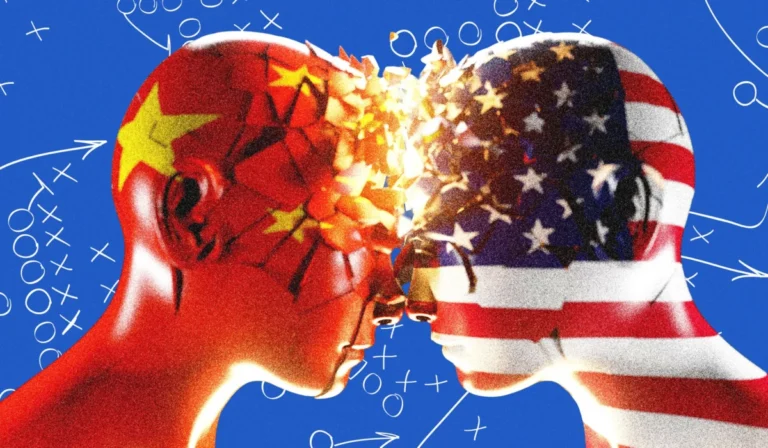
The move drew a swift and critical response from former President Donald Trump, who took to social media to label the decision a "terrible mistake." Trump argued that data centers represent "liquid gold" for state economies and expressed concern that New York’s restrictions would allow China to take the lead in the AI space race. Despite the political rhetoric, the moratorium includes carve-outs for projects already under construction, suggesting the move is a tactical pause rather than a permanent ban.
Public Health Crisis: The Cyclosporiasis Outbreak
Amidst these technological and political shifts, the United States is grappling with its most severe outbreak of cyclosporiasis on record. The Centers for Disease Control and Prevention (CDC) has confirmed cases in more than 30 states, with the total count suspected to be near 7,000. Michigan has emerged as the epicenter of the crisis, reporting over 3,700 cases.
Cyclosporiasis is caused by a microscopic parasite, Cyclospora cayetanensis, which is typically transmitted through contaminated food or water. The illness is characterized by severe, prolonged intestinal distress, often lasting several weeks. Public health officials have identified raw produce, specifically bagged lettuce and leafy greens, as the most likely source of the infection. Unlike many other pathogens, the cyclospora parasite is resistant to standard cleaning agents such as bleach, chlorine, and vinegar.
Experts point to significant staffing and funding cuts at the CDC as a contributing factor to the slow response and difficulty in identifying the exact origin of the contaminated products. Approximately one-quarter of the CDC’s workforce has been reduced over the past year, hampering real-time outbreak detection and investigation. For consumers, the current guidance remains focused on rigorous food safety: even "pre-washed" greens should be thoroughly scrubbed, and individuals with compromised immune systems are advised to exercise extreme caution when consuming raw vegetables.
Conclusion: The Path Forward
The convergence of these events illustrates the multifaceted challenges of the modern era. As OpenAI navigates high-stakes litigation and internal political shifts, the broader implications for the AI industry are clear: the period of unregulated, rapid expansion is meeting the reality of legal, social, and environmental constraints. Whether through the courts, the ballot box, or state-level environmental policy, the "uncanny valley" of AI development is being filled with the necessary—if uncomfortable—mechanisms of oversight and accountability.
About the Author