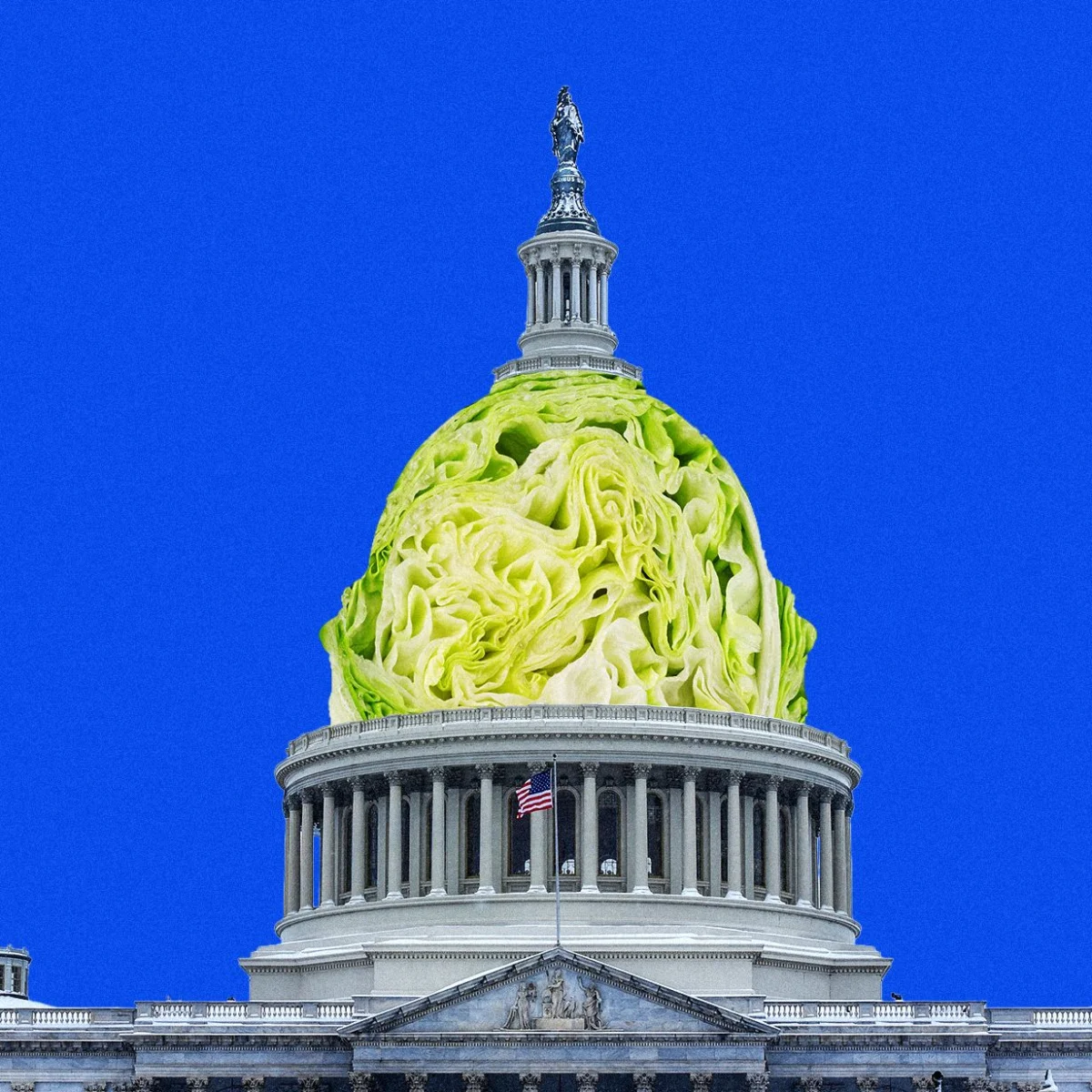
The intersection of corporate political contributions and federal regulatory oversight has come under intense scrutiny as Taylor Farms, a primary lettuce and vegetable supplier for major American food chains, faces a massive outbreak of cyclosporiasis. Public filings and investigative reports reveal that the company and its leadership have directed millions of dollars toward conservative political organizations and lobbying efforts aimed at reshaping food safety regulations. This financial activity coincides with one of the most significant foodborne illness outbreaks in recent years, raising questions about the relationship between industry influence and public health protections.
Financial Contributions to Political Action Committees
According to Federal Election Commission (FEC) filings, Taylor Farms has significantly escalated its political spending in the 2025 election cycle. The company has donated more than $2 million to conservative political groups, a figure that underscores its position as a major player in the political landscape. A centerpiece of this spending is a $1 million contribution to MAGA Inc., the primary super PAC supporting the political agenda of Donald Trump. An additional $1.1 million has been distributed among various other super PACs dedicated to electing Republican candidates to federal office.
This surge in spending is not an isolated event but rather an acceleration of a long-term strategy. From 2020 through the conclusion of 2024, the company funneled more than $1.6 million into conservative PACs. Notably, this included $850,000 to AFP Action, a super PAC with deep ties to the Koch network. AFP Action is widely recognized for its advocacy of deregulation across multiple sectors, including environmental standards and labor laws, which often overlap with the interests of large-scale agricultural producers.
Beyond corporate-level donations, the company’s leadership has been equally active. Bruce Taylor, the Chairman and CEO of Taylor Farms, has a well-documented history as a prolific donor to Republican causes. Since 2020, Taylor has personally contributed over $900,000 to various Republican PACs and individual candidates. His list of beneficiaries includes high-ranking federal officials such as Senator John Cornyn of Texas and Senator Marsha Blackburn of Tennessee, both of whom serve on committees with significant influence over agricultural policy and trade.
Strategic Lobbying and Regulatory Advocacy
In addition to direct campaign contributions, Taylor Farms has invested heavily in professional lobbying. In early 2025, the company retained the services of Sidley Austin, a prominent global law firm, to represent its interests in Washington, D.C. Disclosure documents indicate that the primary focus of this engagement is the "regulation of food safety." Since hiring the firm, Taylor Farms has spent approximately $810,000 on targeted lobbying efforts.
The timing and nature of these hires have drawn attention from ethics watchdogs. Recently, the company brought on Trent Morse, the former deputy director of the White House Presidential Personnel Office during the Trump administration. Morse, who transitioned to the private sector to establish a government relations firm, provides Taylor Farms with a high-level conduit to executive branch decision-makers. Reports indicate that shortly after Morse was retained, Taylor Farms executives secured meetings with White House and Food and Drug Administration (FDA) officials to discuss perceived "shortfalls" in the government’s response to foodborne illness investigations.
A Chronology of Food Safety Incidents and Regulatory Violations
Taylor Farms, which generates approximately $7 billion in annual revenue, has a history with federal regulators that spans more than a decade. The current cyclosporiasis outbreak is the latest in a series of incidents that have triggered federal investigations and product recalls.
The 2013 Cyclospora Outbreak
In 2013, the FDA identified Taylor Farms de Mexico as the source of a Cyclospora outbreak that affected hundreds of consumers across Iowa and Nebraska. The investigation led to a temporary halt in the shipment of leafy greens from the facility to the United States.
The 2015 E. coli Recall
In 2015, the company initiated a voluntary recall of numerous products containing celery after potential contamination with E. coli O157:H7 was detected. The recall affected major retailers and grocery chains, highlighting the reach of the company’s supply chain.
The 2024 McDonald’s Quarter Pounder Outbreak
More recently, in late 2024, Taylor Farms was linked to an E. coli outbreak associated with yellow onions served on McDonald’s Quarter Pounder sandwiches. The FDA’s subsequent inspection of the company’s Colorado facility revealed dozens of sanitation violations. Inspectors documented instances of inadequate handwashing by staff and the use of dirty equipment, raising concerns about the baseline hygiene standards maintained at the plant.
2025-2026: Recent Regulatory Findings
Since the start of 2025, the FDA has conducted inspections at 18 domestic plants affiliated with Taylor Farms. While the majority of these plants met standard requirements, three facilities were flagged for "voluntary action indicated" (VAI). This designation signifies that while inspectors found violations of federal safety standards, the agency did not deem them severe enough at the time to warrant immediate mandatory enforcement or a shutdown.
Workplace Safety and Labor Violations
The company’s regulatory challenges extend beyond food safety into the realm of worker protection. The Occupational Safety and Health Administration (OSHA) has recorded at least 21 violations at Taylor Farms facilities across the United States since the beginning of 2025.
One of the most severe incidents occurred at a facility in New Jersey in May 2025. Following a Department of Labor investigation, the facility was fined $1.1 million. The inspection was triggered by the death of an employee who sustained fatal injuries while cleaning an industrial blancher. The Department of Labor’s findings pointed to systemic failures in safety protocols, specifically regarding the lockout/tagout procedures intended to prevent machinery from activating during maintenance.
The Current Cyclospora Crisis and Government Response
The ongoing cyclosporiasis outbreak has sickened thousands of individuals across multiple states. Cyclospora cayetanensis is a microscopic parasite that causes an intestinal illness known as cyclosporiasis. It is typically transmitted through the consumption of fresh produce contaminated with fecal matter. Symptoms include prolonged and severe gastrointestinal distress, which can last for weeks or even months if left untreated.
The investigation into the current outbreak has been marked by friction between Taylor Farms and federal health agencies. The company recently publicly claimed that the FDA had "apologized" for a false-positive test result on a sample of its lettuce. However, FDA officials have explicitly denied that any such apology was issued, maintaining that their testing protocols are rigorous and based on established scientific methodology.
In response to allegations of potential conflict of interest due to political donations, the U.S. Department of Health and Human Services (HHS) issued a statement on the social media platform X. The department asserted that its decisions are driven exclusively by science and public safety, dismissing claims of collusion as "fake news."
Analysis of Industry Influence on Food Policy
The financial resources deployed by Taylor Farms represent a broader trend within the multibillion-dollar food industry. Marion Nestle, a professor of nutrition, food studies, and public health, emerita, at New York University and a noted food policy expert, suggests that these donations are part of a calculated effort to minimize accountability.
"The FDA has regulations in place for what food producers are supposed to be doing, but nobody wants to do it—because it’s expensive and difficult," Nestle stated. She noted that when companies spend millions on political contributions and lobbying, they are often seeking to create a regulatory environment where the burden of proof is higher for the government and the penalties for outbreaks are lower for the producer.
The argument for deregulation often centers on reducing operational costs and increasing the efficiency of the food supply chain. Proponents argue that excessive federal oversight can stifle innovation and lead to higher food prices for consumers. However, public health advocates argue that the cost of foodborne illness—both in terms of healthcare expenses and human suffering—far outweighs the costs of rigorous compliance.
Broader Implications for the American Food Supply
The situation involving Taylor Farms highlights the complexities of the modern global food system. As a dominant supplier to fast-food giants and grocery chains, any lapse in safety at a Taylor Farms facility has the potential to impact millions of consumers almost instantaneously.
The reliance on a few large-scale processors means that the "centralization of risk" is a growing concern for food safety experts. When one supplier dominates a significant percentage of the market, a single contaminated batch of produce can lead to a nationwide crisis. This reality places a premium on the independence and efficacy of the FDA and CDC.
As the 2026 election cycle approaches, the debate over the role of corporate money in shaping safety standards is likely to intensify. The outcome of the current investigations into the Cyclospora outbreak will serve as a critical test of whether federal agencies can maintain their oversight role in the face of significant political and financial pressure from the industries they regulate.
For now, the thousands of Americans affected by the recent outbreak remain a testament to the high stakes of food safety policy. While Taylor Farms continues to expand its political footprint, the focus of public health officials remains on tracing the source of contamination and preventing further illness in a food system that remains vulnerable to both biological and political influences.
About the Author