In a strategic maneuver designed to consolidate its dominance over the global artificial intelligence infrastructure market, Nvidia has intensified its promotional efforts for the Vera Rubin chip system. During a series of high-level technical workshops held at the company’s Santa Clara headquarters, Nvidia executives unveiled new performance benchmarks and architectural details for the GPU-CPU hybrid, positioning it as the definitive solution for the next generation of "agentic" AI. The timing of these disclosures is particularly significant, occurring just days before rival Advanced Micro Devices (AMD) is scheduled to host its annual product showcase in San Francisco, where it is expected to reveal competing hardware designed to challenge Nvidia’s market share.
The Vera Rubin system represents a pivotal evolution in Nvidia’s business model. While the company has historically been synonymous with Graphics Processing Units (GPUs), it is increasingly pivoting toward becoming a comprehensive provider of integrated AI systems. This shift is driven by the industry’s transition from simple large language models (LLMs) to more complex AI agents—autonomous systems capable of reasoning, planning, and executing multi-step tasks. These agentic systems require not only the massive parallel processing power of GPUs for inference but also the sophisticated orchestration capabilities of Central Processing Units (CPUs) to manage data flows, networking, and software logic.
The Architecture of Vera Rubin: A Monolithic Approach to Performance
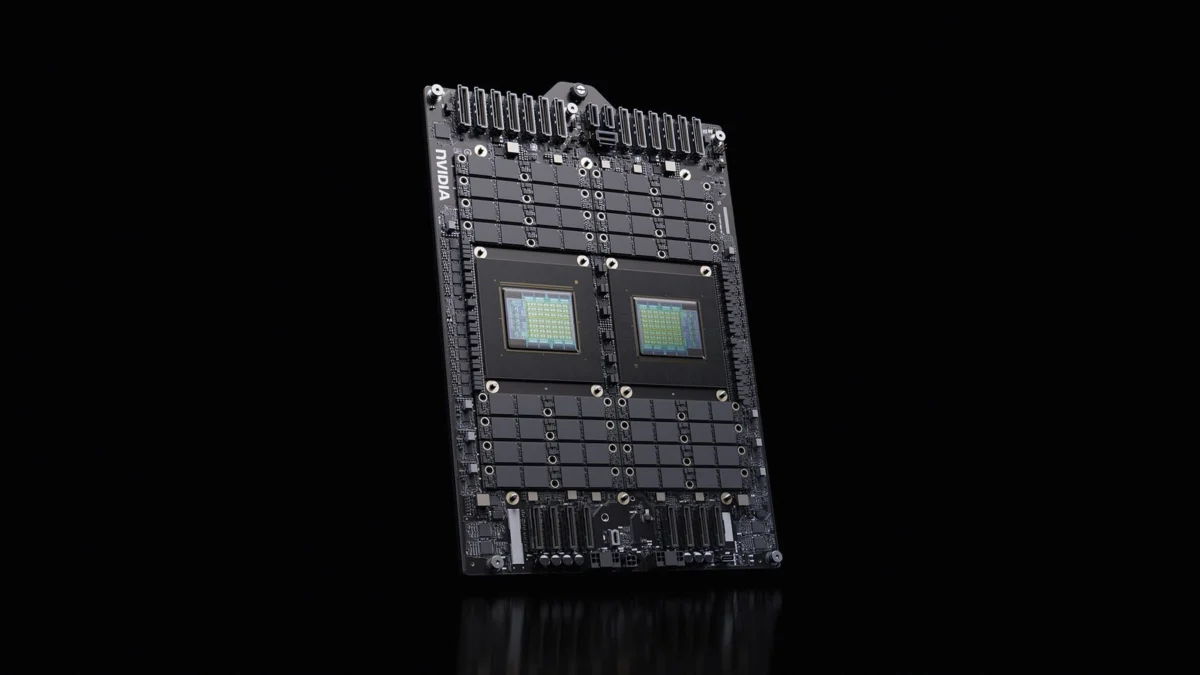
The Vera Rubin system serves as the successor to the Grace Blackwell "superchip" and is engineered to function as the primary engine for high-scale AI data centers. At the heart of the system is the Vera CPU, which Nvidia is pairing with its next-generation Rubin GPUs in a specific 1:2 ratio. In the flagship Vera Rubin NVL72 configuration—a massive, liquid-cooled rack system—Nvidia integrates 36 Vera CPUs alongside 72 Rubin GPUs.
One of the most significant technical departures in the Vera Rubin architecture is Nvidia’s commitment to a monolithic chip design. While many competitors, most notably AMD, have embraced "chiplet" architectures—which involve stitching together multiple smaller dies to improve yields and flexibility—Nvidia executives have argued that this approach introduces latency and bandwidth bottlenecks. Hannah Coutand, who leads Nvidia’s CPU product marketing, noted during the technical briefings that chiplet designs impose a "heavy tax" on memory bandwidth and data movement. By contrast, the monolithic design of the Vera CPU allows data to traverse a single integrated circuit at significantly higher speeds, which is critical for the low-latency requirements of real-time AI agents.
The Vera CPU is built on the ARM architecture, a departure from the x86 standard that has dominated data centers for decades. This choice allows Nvidia to focus on power efficiency and deep integration with its own proprietary software stack, most notably CUDA. Ian Buck, Nvidia’s vice president of accelerated computing and the architect of CUDA, emphasized that the company’s roadmap now treats CPU innovation with the same urgency as GPU development. "We’re on a road map to crank out new architectures, not just GPUs but CPUs," Buck told reporters. "We’re going to keep innovating, because it’s do this or die in Silicon Valley."
.jpg)
Benchmarking Efficiency and the Pivot to Liquid Cooling
Nvidia’s internal benchmarks suggest that the Vera Rubin system offers a generational leap in efficiency. The company claims the NVL72 system can process up to 10 times as many tokens per watt as the previous Grace Blackwell generation. This metric is increasingly vital as hyperscale data center operators—such as Microsoft, Google, and Meta—grapple with the soaring energy costs and power constraints associated with AI expansion.
Beyond raw processing power, Nvidia has addressed the physical challenges of deploying massive AI clusters. The Vera Rubin racks are designed to be "plug-and-play," a response to the logistical hurdles faced during the rollout of earlier systems. Andrew Bell, Nvidia’s senior vice president of hardware engineering, highlighted that the new system is essentially "cable-free," utilizing a backplane design that allows for "hot-swappable" components. This engineering choice reportedly reduces the time required to install or service a rack from several hours to just a few minutes.
Furthermore, the Vera Rubin system is 100 percent liquid-cooled. This is a critical development following reports that the previous Blackwell chips experienced overheating issues when configured in high-density server racks. By moving away from energy-intensive air cooling, Nvidia aims to offer a more sustainable and reliable platform for the massive compute clusters required by organizations like OpenAI, which is already reportedly testing an early Vera Rubin rack in its development environment.
Market Dynamics and the AMD Rivalry
The aggressive promotion of Vera Rubin serves as a preemptive strike against AMD, which has been gaining significant ground in the data center CPU market. AMD’s EPYC processors, based on the x86 architecture, currently hold a substantial share of the market, and the company is now looking to replicate that success in the AI space with its Instinct line of GPUs and the recently teased Helios AI chip rack.
AMD’s strategy centers on the flexibility of chiplets and the broad compatibility of the x86 ecosystem. However, Nvidia is betting that the vertical integration of its ARM-based CPUs, Rubin GPUs, and CUDA software will provide a performance "moat" that competitors cannot easily cross. The battle for dominance is being fought over multiyear, multibillion-dollar contracts with "hyperscalers" and elite AI labs like Anthropic and SpaceXAI.
The competitive landscape is also shaped by global supply chain constraints, particularly the ongoing shortage of high-bandwidth memory (HBM). Nvidia claims that the localized memory subsystems in the Vera Rubin chips offer nearly three times the memory bandwidth of the Blackwell generation, potentially mitigating some of the bottlenecks caused by the HBM shortage.
.jpg)
Timeline and Global Strategy
Nvidia CEO Jensen Huang has maintained a rigorous schedule to ensure the Vera Rubin system remains on track for its promised delivery window. While technical briefings were held in California, Huang spent the week in Japan, securing partnerships with major robotics firms to integrate Vera Rubin technology into industrial and humanoid robots. This highlights Nvidia’s broader vision: AI is moving from the cloud to the physical world, and the Vera Rubin system is intended to power both.
According to the company’s current timeline, the Vera Rubin system is ramping toward full production and is expected to begin shipping to lead customers in the second half of 2025. Standalone Vera CPUs may be available even earlier; reports suggest that Nvidia has informed customers in China that these chips could be ready for delivery as soon as August, provided they meet the stringent export control regulations imposed by the U.S. Department of Commerce.
The presence of Taiwanese snacks in the executive briefing center—souvenirs from Huang’s recent trip to the Computex trade show in Taipei—serves as a reminder of Nvidia’s deep ties to the global semiconductor supply chain. As the company prepares to move from the Blackwell era to the Rubin era, it is operating with the awareness that any delay or technical flaw could provide an opening for AMD or other emerging competitors like Intel and specialized AI chip startups.
Analysis of Implications: The Era of Agentic AI
The industry-wide shift toward "agentic AI" represents a fundamental change in how compute resources are allocated. Traditional AI models are largely reactive; they provide a response to a prompt. AI agents, however, are proactive. They require a constant loop of reasoning and action, which places a unique stress on the CPU. By positioning the Vera CPU as a peer to the GPU, Nvidia is acknowledging that the future of AI is not just about raw math, but about sophisticated system management.
If Nvidia successfully executes the rollout of Vera Rubin, it will further entrench its ecosystem within the world’s most powerful data centers. The move to a monolithic, ARM-based design is a bold bet on performance over the modularity offered by competitors. However, the reliance on liquid cooling and the complexity of the NVL72 racks suggest that the barrier to entry for managing this hardware is rising. Only the largest tech giants may have the infrastructure necessary to fully utilize Nvidia’s latest innovations.
As the AI industry matures, the focus is shifting from "how large can we build a model" to "how efficiently can we run an agent." Nvidia’s Vera Rubin system is a direct answer to that question, combining massive throughput with a redesigned architectural philosophy. Whether this will be enough to stave off the surging competition from AMD’s x86-based Helios systems remains the central question for the semiconductor industry heading into 2026. For now, Nvidia is moving at a "do or die" pace, ensuring that it remains the architect of the hardware upon which the future of artificial intelligence is being built.
About the Author