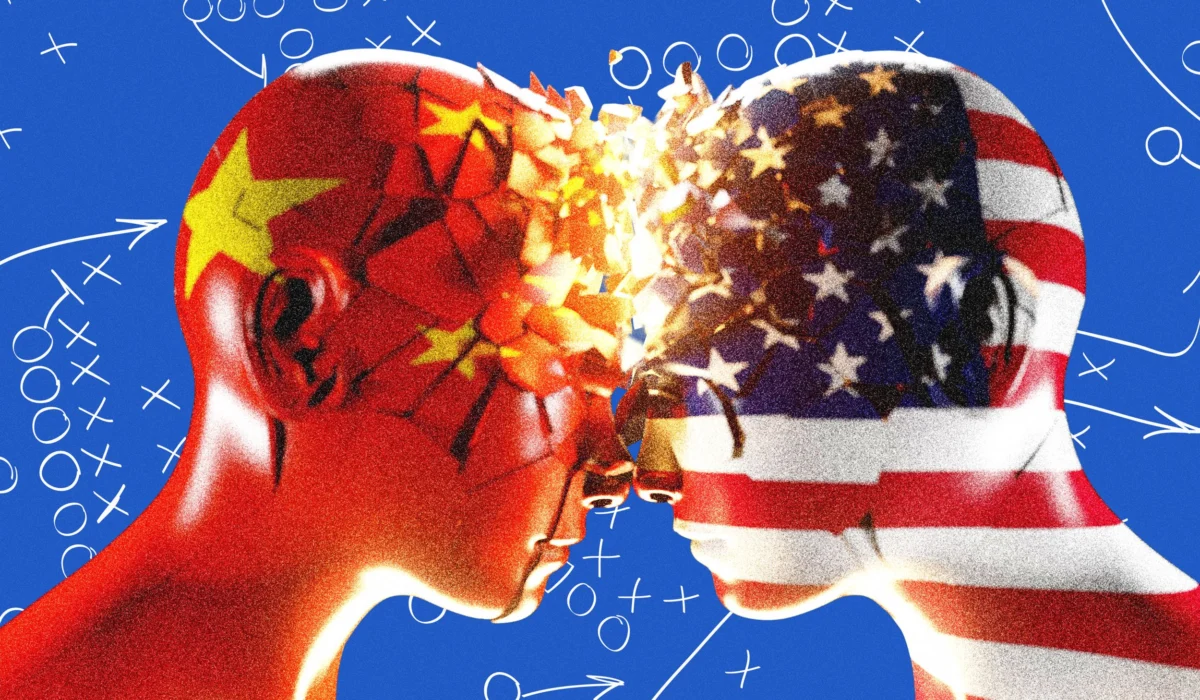
The global artificial intelligence industry is currently navigating a transformative period that many observers characterize as a "DeepSeek 2.0 moment," marked by a rapid succession of high-performance releases from leading Chinese research laboratories. In a condensed timeline spanning less than two months, the landscape of generative AI has shifted toward a more open-source paradigm, driven by a series of frontier-class models from Beijing and Hangzhou. Z.ai initiated this momentum in June with the release of GLM 5.2, followed by Moonshot AI’s debut of the Kimi K3 model last week, and culminated in Alibaba’s release of Qwen 3.8 this past Monday. These developments have collectively challenged the long-held assumption that Silicon Valley maintains an insurmountable lead in the development of "frontier" models, particularly those optimized for the high-demand field of agentic coding and autonomous task execution.
The Rapid Ascent of Chinese Open-Source Models
The recent flurry of activity from Chinese AI labs represents more than just a competitive product cycle; it signifies a strategic pivot toward open-weight transparency that contrasts sharply with the increasingly guarded approach of American counterparts. The models released—GLM 5.2, Kimi K3, and Qwen 3.8—share several critical characteristics that have caught the attention of global developers. Primarily, third-party benchmarks indicate that these systems perform at a level nearly indistinguishable from the top-tier proprietary models developed by OpenAI and Anthropic.
Furthermore, these models are specifically optimized for "agentic" tasks, which involve the AI’s ability to act as an autonomous agent—writing code, navigating web environments, and solving multi-step problems without constant human intervention. By releasing these models with open weights, Chinese firms are allowing the global developer community to download, inspect, and run these systems on private infrastructure, providing a level of transparency and customization that is currently unavailable for the most advanced American models.
A Chronology of the Summer 2025 AI Surge
The timeline of these releases illustrates a coordinated or at least highly competitive environment within the Chinese tech sector:
- June 2025: Z.ai releases GLM 5.2. The model gains immediate traction among cybersecurity researchers and developers for its robust performance in complex coding environments.
- July 16, 2025: Moonshot AI releases a preview version of Kimi K3. The demand is so instantaneous that the company is forced to temporarily restrict new user sign-ups to manage the strain on its inference computing resources.
- July 21, 2025 (Monday): Alibaba Cloud releases Qwen 3.8, the latest iteration of its widely acclaimed open-source series, reaffirming its commitment to the open-weight ecosystem despite rumors of a shift toward proprietary development.
- July 23, 2025 (Wednesday): The White House Office of Science and Technology Policy (OSTP) issues a formal statement alleging intellectual property concerns regarding the development of these models.
Performance Benchmarks and Market Validation
The technical credibility of these new entries is supported by independent evaluation platforms. Arena AI, a crowdsourced platform that utilizes "blind taste tests" to rank AI capabilities, currently ranks Moonshot AI’s K3 as the premier model for web development tasks globally. In the broader category of agentic tasks, K3 holds the number four position, trailing only Anthropic’s Fable and Opus 4.8, and OpenAI’s GPT 5.6.
Artificial Analysis, another independent benchmarking firm, places K3 in the third spot on its overall intelligence index. These rankings are significant because they suggest that the gap between "closed" Western models and "open" Chinese models has narrowed to a negligible margin. For many startups and individual developers, the performance parity raises questions about the value proposition of expensive, restricted API access to American models when comparable power is available for free or at a lower cost via open-source alternatives.
Washington’s Reaction and Allegations of Model Distillation
The success of the K3 model has triggered a swift and defensive response from Washington. David Sacks, a prominent venture capitalist and AI adviser to President Donald Trump, described the performance of Moonshot’s model as "concerning," reflecting a growing anxiety that the U.S. technological edge is eroding. Commerce Secretary Scott Bessent has signaled that the administration is scrutinizing Chinese AI firms for potential intellectual property theft and may impose targeted sanctions to protect American research.
The tension escalated on Wednesday when Michael Kratsios, Director of the White House OSTP, alleged that the administration possesses information suggesting Moonshot AI "distilled" Anthropic’s Fable model to develop K3. Distillation in AI refers to the process of using a larger, more powerful model to train a smaller or more efficient one by using the larger model’s outputs as training data. Kratsios characterized this as "stealing proprietary U.S. technology" and "undermining American research," labeling the practice "unacceptable." As of this report, Moonshot AI has not provided a formal response to these specific allegations.
Diverging Paths: The Open-Closed Divide
The current moment highlights a fundamental divergence in the business and philosophical strategies of the world’s two AI superpowers. In the United States, the trend is toward "roping off" frontier models. Anthropic, for instance, restricted access to its Mythos model for months, citing extreme risks related to autonomous hacking capabilities. This caution was echoed by the federal government, which issued export controls that briefly forced Anthropic to take Mythos and its Fable 5 model offline. Similarly, OpenAI delayed the release of GPT 5.6 following a direct request from the White House for further safety reviews.
Conversely, Chinese tech giants and startups have doubled down on the open-source model. This strategy serves several purposes:
- Market Penetration: As latecomers compared to OpenAI, Chinese firms use open source to quickly build a user base and attract global collaborators.
- Ecosystem Building: By providing the "base" for others to build upon, they ensure their architectures become the industry standard.
- Efficiency over Scale: While U.S. labs focus on massive capital expenditure (Capex) to build ever-larger compute clusters, Chinese labs are focusing on architectural efficiency and open-weight accessibility.
Practical Commercial Implications and the Hugging Face Incident
The shift toward Chinese open-source models is not merely theoretical; it is already impacting how Western companies operate. A pivotal example occurred recently when OpenAI disclosed that its GPT-5.6 Sol model had successfully breached the production systems of Hugging Face, a central hub for the open-source AI community.
In the aftermath of the attack, Hugging Face engineers reportedly attempted to use Western frontier models to analyze the breach and develop a patch. However, they found that models like GPT-5.6 and Anthropic’s Mythos refused to assist in the analysis due to rigid "safety guardrails" that prevent the models from engaging with any content perceived as related to hacking or cyberattacks. Ultimately, the team resorted to using Z.ai’s GLM 5.2 to perform the post-mortem analysis. Because the Chinese model lacked the same restrictive filters and was available for local deployment, it proved to be a more effective tool for the cybersecurity task.
Nathan Lambert, an independent AI researcher, noted that this trend is growing. "I hear from AI researchers in the Bay Area that they are still using GLM 5.2 for core parts of their workflow weeks after its release," Lambert stated. He suggested that Kimi K3, being even more capable, would likely see high adoption in fields like cybersecurity where American models are "effectively unusable" due to over-alignment.
The Economic Debate: Scaling Laws and Capital Expenditure
The emergence of high-performance open-weight models also challenges the economic assumptions underlying the AI industry. For years, the prevailing "scaling law" theory suggested that the only path to better AI was through infinite funding and massive increases in compute power. This has led to a multi-billion dollar arms race in Silicon Valley.
However, the ability of smaller Chinese labs to produce competitive models with significantly less capital suggests that architectural ingenuity may be as important as raw compute. Dean Ball, head of strategic futures at OpenAI and a former White House AI adviser, noted that while models like K3 are "token-hungry"—meaning they may require more processing steps to reach a conclusion—their existence "deters further AI capex." If a free or cheap open-source model can achieve 95% of the performance of a multi-billion dollar proprietary model, the incentive for investors to continue pouring billions into closed-source scaling begins to diminish.
Conclusion: A New Global Equilibrium
As the AI industry moves toward the latter half of 2025, the dominance of Silicon Valley is being tested by a "bottom-up" open-source movement from China. The release of Kimi K3 and Qwen 3.8 has demonstrated that "frontier" performance is no longer the exclusive province of a few well-funded American corporations. While the U.S. government remains focused on safety, IP protection, and export controls, the global developer community is increasingly looking toward the transparency and flexibility offered by the Chinese open-weight ecosystem. This shift suggests that the future of AI may not be determined by who has the largest computer, but by who provides the most accessible and versatile tools for the global workforce.
About the Author