
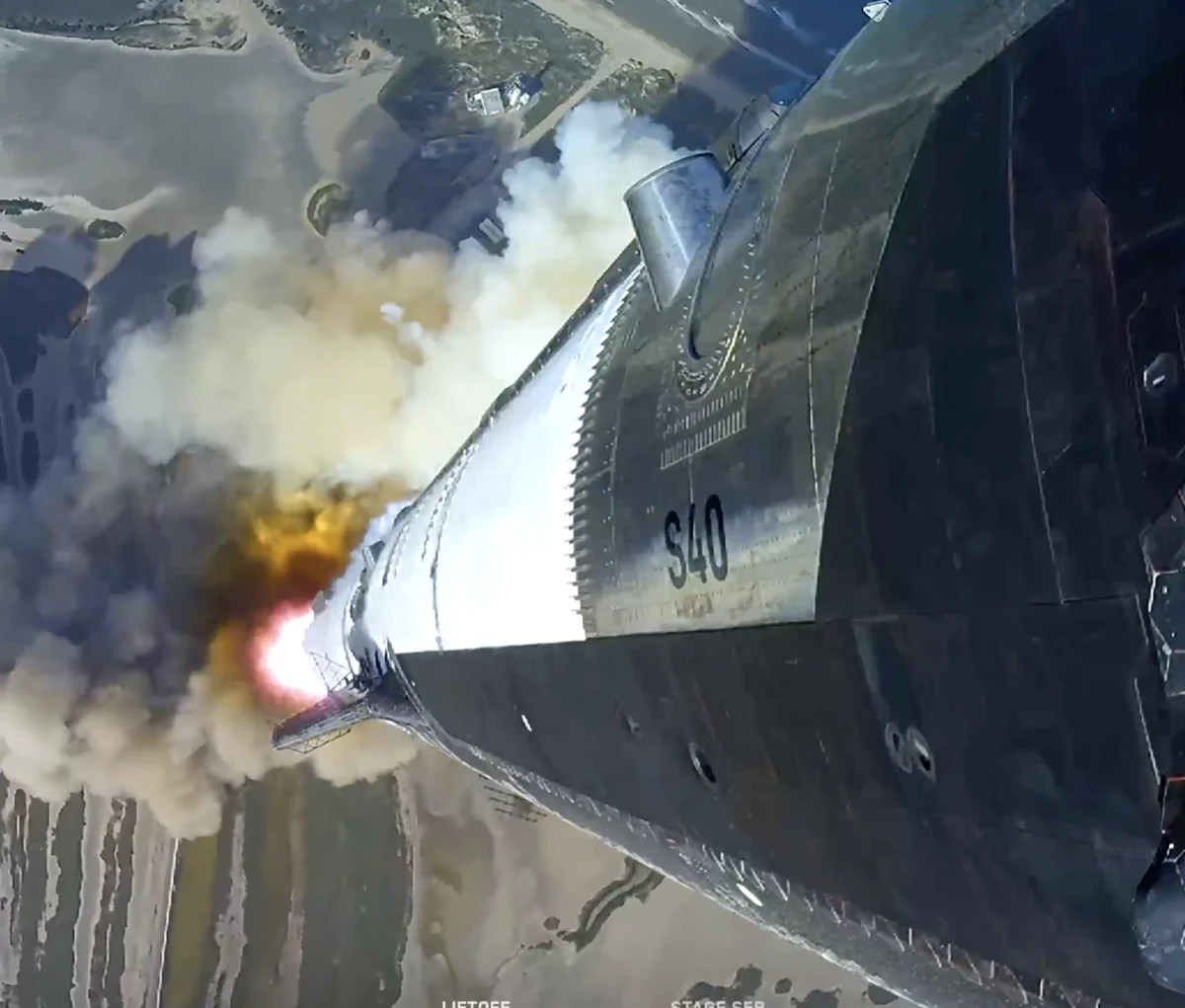
SpaceX successfully deployed the first third-generation Starlink satellites on Friday using an upgraded version of its prototype Starship, marking the 13th test flight of its ambitious mega-rocket. However, the mission encountered a significant setback as the Super Heavy booster experienced a failure during its planned simulated landing in the Gulf of Mexico. This incident, occurring less than a week after a previous launch abort, casts a renewed spotlight on the ongoing developmental challenges of the Starship program and its impact on the recently public SpaceX.
A Complex Mission: Starlink Deployment and Booster Recovery
The primary objective of Friday’s launch, designated as Starship Flight 13, was the successful deployment of a batch of next-generation Starlink satellites. These third-generation satellites represent a crucial step forward for SpaceX’s broadband constellation, promising enhanced capabilities and increased capacity. The Starship V3 upper stage, a refined iteration of the company’s spacecraft, performed commendably, carrying its valuable payload to the intended deployment altitude. The deployment process itself appeared to be nominal, with the satellites separating as planned.
However, the success of the upper stage was juxtaposed with the dramatic failure of the Super Heavy booster. Designed to return to Earth for a controlled splashdown in the Gulf of Mexico, the booster’s landing burn sequence was compromised. Reports indicate that not all of the required engines for the deceleration burn ignited correctly, leading to an accelerated descent and a more violent impact with the water than anticipated. The booster was observed to explode upon contact, a stark visual of the persistent challenges in mastering propulsive landing maneuvers for such a massive vehicle.
This is not the first instance of trouble with the Super Heavy booster on the V3 iteration of Starship. During the initial V3 flight in May, a Super Heavy booster also experienced a failure, occurring during the stage separation phase. While the upper stage in that mission managed to complete its flight, the booster’s trajectory was compromised. The recurrence of booster-related issues, even with modifications, underscores the complexity of managing the immense forces and precise control required for these demanding flight profiles.
A Week of Technical Hurdles and Market Volatility
Friday’s launch followed a turbulent period for SpaceX, both technically and financially. Just over a week prior, on July 16th, a scheduled 13th Starship launch had to be aborted mere moments after ignition due to a series of rocket engine failures on the Super Heavy booster. This abort necessitated significant post-flight analysis and rapid hardware remediation. SpaceX publicly stated that six engines were replaced on the booster in preparation for Friday’s flight to address the issues that led to the abort.
The launch abort on July 16th had a tangible effect on SpaceX’s stock performance. Following the abort, the company’s share price saw a decline in the subsequent trading day. This dip occurred within a broader downward trend that has characterized SpaceX’s stock performance since its landmark Initial Public Offering (IPO) in June. The IPO, the largest in history at the time, saw the company’s valuation soar. However, since reaching a peak of over $200 per share, the stock had fallen to $115 by the close of trading on Friday. The news of the booster failure after Friday’s launch led to a further 2% drop in after-hours trading, although some of those losses were later pared.
Starship V3: Progress and Persistent Challenges
Despite the booster’s fate, the Starship V3 upper stage demonstrated marked improvement in Friday’s flight compared to its previous outing. In the May V3 flight, the upper stage lost a rocket engine during its ascent. This critical issue did not reoccur on Friday. The successful deployment of the Starlink satellites, even without achieving full orbital velocity (Starship is not yet capable of reaching Earth orbit, with the satellites expected to burn up in the atmosphere approximately 20 minutes after deployment), represents a significant step forward for the Starship program. The ability of the upper stage to perform its primary payload delivery function without major anomalies is a testament to the iterative design and engineering process SpaceX employs.
The "fly, fail, fix" approach that has defined Starship’s development is clearly in effect. Each test flight, regardless of its outcome, provides invaluable data that informs subsequent design modifications and operational adjustments. The recurrence of booster issues, while frustrating, is an expected part of this high-risk, high-reward development strategy. The company’s willingness to proceed with test flights, analyze failures rigorously, and implement rapid fixes is central to its ambition of developing a fully reusable launch system capable of transporting significant payloads to Earth orbit, the Moon, and Mars.
Broader Implications for SpaceX and Space Exploration
The Starship program is foundational to SpaceX’s long-term vision. Its successful development is not only critical for the expansion of the Starlink constellation but also for enabling ambitious crewed missions to Mars and establishing a lunar presence. The commercial success of Starlink has provided a significant revenue stream, enabling SpaceX to invest heavily in the Starship program. However, the market’s reaction to technical setbacks, particularly in the wake of its IPO, highlights the heightened scrutiny and investor expectations placed upon the company.
The ability of SpaceX to navigate these developmental challenges while maintaining investor confidence will be a key factor in its future trajectory. The successful deployment of the third-generation Starlink satellites, even with the booster failure, demonstrates progress in the upper stage’s capabilities. The continued pursuit of propulsive landing for the Super Heavy booster, a notoriously difficult engineering feat, remains a critical milestone. The data gathered from this latest flight, particularly concerning the booster’s engine performance during the landing burn, will undoubtedly be meticulously analyzed to inform the design and operation of future Starship missions.
As SpaceX continues its rapid iteration and testing of Starship, the lessons learned from each flight are crucial. The company’s ability to overcome these persistent technical hurdles will ultimately determine the pace at which it can achieve its ambitious goals of revolutionizing space access and enabling humanity’s expansion beyond Earth. The public markets will be watching closely as SpaceX strives to balance innovation with consistent operational success.
About the Author





