The global marketing industry is undergoing a fundamental transformation as artificial intelligence (AI) moves from a niche experimental technology to the backbone of modern data strategies. Current industry data suggests that approximately 61% of marketing professionals now identify AI software as the most critical component of their data strategy, a shift driven by the urgent need for hyper-personalization and operational efficiency in an increasingly crowded digital marketplace. As brands face the dual challenges of "attention fatigue" among consumers and the deprecation of traditional tracking cookies, AI-driven tools have emerged as the primary solution for executing smarter, more targeted campaigns that resonate on an individual level.
The Historical Context and Chronology of AI in Marketing
The integration of AI into the marketing stack did not occur overnight. The chronology of this evolution can be traced back to the early 2010s, when basic machine learning algorithms were first used for simple A/B testing and basic email segmentation. By 2015, the "Predictive Era" began, with platforms offering early-stage predictive analytics to forecast customer churn. However, the true inflection point occurred around 2020-2021, as Natural Language Processing (NLP) and Generative AI reached a level of maturity that allowed machines to not only analyze data but also create content, interact with customers, and optimize budgets in real-time.
Today, the market for AI in marketing is projected to grow at a compound annual growth rate (CAGR) of nearly 30% over the next decade. This growth is fueled by a shift in consumer expectations; modern buyers no longer tolerate generic advertising, demanding instead that brands understand their specific needs, timing, and preferred communication channels.
Content Generation and Linguistic Optimization
In the realm of content creation, the transition from manual drafting to AI-assisted generation has significantly reduced the time-to-market for complex campaigns.
1. Jasper AI: The Rise of Generative Content
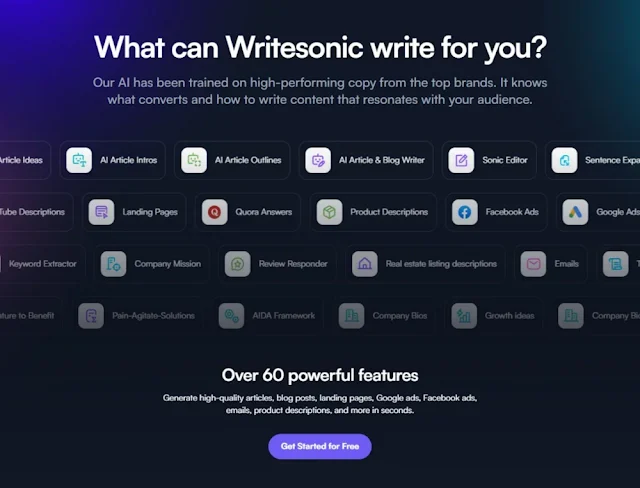
Formerly known as Jarvis, Jasper AI represents the vanguard of generative writing tools. By utilizing sophisticated language models, Jasper identifies the optimal syntax and vocabulary for specific brand voices across various mediums, from blog posts to social media captions. The tool’s significance lies in its ability to maintain stylistic consistency while operating at a speed that human writers cannot match. In the current landscape, Jasper has evolved to include "Brand Voice" features, allowing enterprises to upload their style guides so the AI remains "on-brand" across all outputs.
2. Phrasee: Science-Backed Copywriting
While Jasper focuses on long-form and general content, Phrasee specializes in the "micro-copy" that drives conversions. Using a specialized Natural Language Generation (NLG) system, Phrasee analyzes historical data to generate email subject lines and push notifications. Its end-to-end model is designed to be self-learning; as consumers interact with the generated copy, the results are fed back into the system to refine future predictions. This creates a feedback loop that continually improves open rates and engagement metrics without human intervention.
3. Acrolinx: Enterprise-Level Content Governance
For global enterprises like Google and Amazon, maintaining a unified voice across thousands of contributors is a logistical challenge. Acrolinx serves as a content alignment platform that uses AI to score content against pre-set parameters of style, grammar, and tone. Unlike basic spell-checkers, Acrolinx provides real-time guidance to ensure that every piece of content—regardless of who wrote it—adheres to the corporate identity and linguistic standards of the organization.
Search Engine Optimization and Strategic Planning
As search engine algorithms become more sophisticated, the tools used to navigate them must follow suit. The shift from "keyword stuffing" to "topic authority" is now managed almost entirely by AI.
4. HubSpot SEO: The Move Toward Topic Clusters
HubSpot has integrated machine learning into its SEO suite to help marketers move beyond individual keywords. The tool analyzes how search engines categorize content and suggests "topic clusters"—groups of related content that signal to search engines that a website is an authority on a specific subject. This strategic shift is crucial in an era where Google’s algorithms prioritize expertise, authoritativeness, and trustworthiness (E-E-A-T).
5. MarketMuse: Algorithmic Content Strategy
MarketMuse takes SEO a step further by using AI to conduct automated content audits. By comparing a brand’s website against thousands of other pages on the same topic, the algorithm identifies "content gaps"—subjects the brand has failed to cover but which are essential for ranking. This allows marketing teams to prioritize their editorial calendars based on the predicted impact on search engine results page (SERP) rankings.
Hyper-Personalization and Behavioral Analytics
The modern consumer interacts with brands across multiple touchpoints. AI tools are now used to synthesize these interactions into a coherent picture of individual intent.
6. Personalize: Real-Time Interest Tracking
Personalize operates on the principle that a customer’s interests are fluid. By tracking site activity in real-time, the platform’s algorithm identifies the top three products or services a contact is interested in at any given moment. This allows for "segmentation of one," where marketing emails and offers change dynamically based on what the user looked at five minutes ago, rather than what they bought five months ago.
7. Seventh Sense: Optimizing the "When" of Marketing
Email fatigue is a significant barrier to ROI. Seventh Sense addresses this by using behavioral analytics to determine the optimal "send time" for every individual on an email list. Rather than sending a blast at 9:00 AM on a Tuesday, the AI staggers delivery based on when each specific recipient historically opens their mail. This tool is particularly integrated with major platforms like HubSpot and Marketo, providing a layer of intelligence to existing CRM systems.
8. Yotpo: Sentiment Analysis and Social Proof
Yotpo leverages deep learning to extract meaning from customer reviews. Beyond just displaying star ratings, the AI identifies recurring themes and sentiments within text reviews. It can automatically flag negative sentiment for customer service intervention while highlighting positive mentions of specific features to convert new shoppers. This turns raw feedback into actionable business intelligence.
Autonomous Campaign Management and Testing
The final frontier of AI in marketing is the move toward autonomous systems that can run entire campaigns with minimal human oversight.
9. Evolv AI: Multivariate Testing at Scale
Traditional A/B testing is limited by human bandwidth; a team can only test a few variables at a time. Evolv AI uses genetic algorithms to test hundreds of variables simultaneously—from button colors to headlines to layout structures. The system identifies winning combinations in real-time, allowing websites to evolve and optimize their conversion rates much faster than human-led experimentation.
10. Albert AI: The Autonomous Marketer
Albert AI acts as a self-learning engine that plugs into a brand’s existing tech stack. It analyzes vast datasets to identify "lookalike" audiences and autonomously runs trial campaigns across search, social, and programmatic channels. Albert’s strength lies in its ability to allocate budgets between channels based on performance, effectively acting as a high-speed media buyer that operates 24/7.
11. Copilot: Conversational Commerce
In the e-commerce sector, Copilot provides a suite of tools designed to maintain real-time communication throughout the sales funnel. By utilizing AI-driven chatbots and automated Messenger updates, Copilot handles everything from product promotion to cart recovery. This ensures that the "conversation" with the customer never stops, even when human agents are offline.
Industry Implications and the Path Forward
The rapid adoption of these tools has sparked a broader debate within the industry regarding the future of the marketing profession. Industry analysts suggest that while AI will not replace marketers, marketers who use AI will inevitably replace those who do not. The implications are twofold: a significant increase in productivity and a shift in the required skill set for marketing professionals, moving away from manual execution and toward "prompt engineering" and strategic oversight.
Data privacy remains a central concern. As AI tools become more adept at tracking and predicting behavior, the industry is facing increased scrutiny from regulators. The challenge for brands in the coming years will be to balance the efficiency of AI-driven personalization with the ethical requirements of data transparency and consumer consent.
Furthermore, the democratization of these tools means that small and medium-sized enterprises (SMEs) can now compete with global corporations. Tools like Jasper and HubSpot SEO provide high-level capabilities at a fraction of the cost of a traditional large-scale agency.
As the marketing landscape continues to evolve, the integration of artificial intelligence is no longer an optional luxury but a strategic necessity. The tools outlined above represent the current state of the art, providing a roadmap for brands looking to navigate the complexities of the digital age with precision and scale. The transition to an AI-first marketing strategy is well underway, and its impact on consumer engagement and corporate ROI is expected to intensify as these technologies continue to mature.
About the Author