For A.G. Sulzberger, the publisher of The New York Times, the current era of journalism is defined by a paradox of unprecedented reach and existential vulnerability. While the Times has successfully navigated the digital transition to reach a historic 13 million subscribers, the broader industry faces a triad of threats: aggressive government litigation against reporters, the disruptive rise of generative artificial intelligence, and the continued collapse of local news ecosystems. Sulzberger, who assumed the publisher role in 2018, has increasingly positioned the Times not merely as a news provider but as a legal and ethical bulwark for the profession at large. His recent disclosures regarding a $20 million legal battle with AI giants and a confrontation with the Department of Justice underscore a pivotal moment in the history of the American press.
The High Cost of Defending Intellectual Property
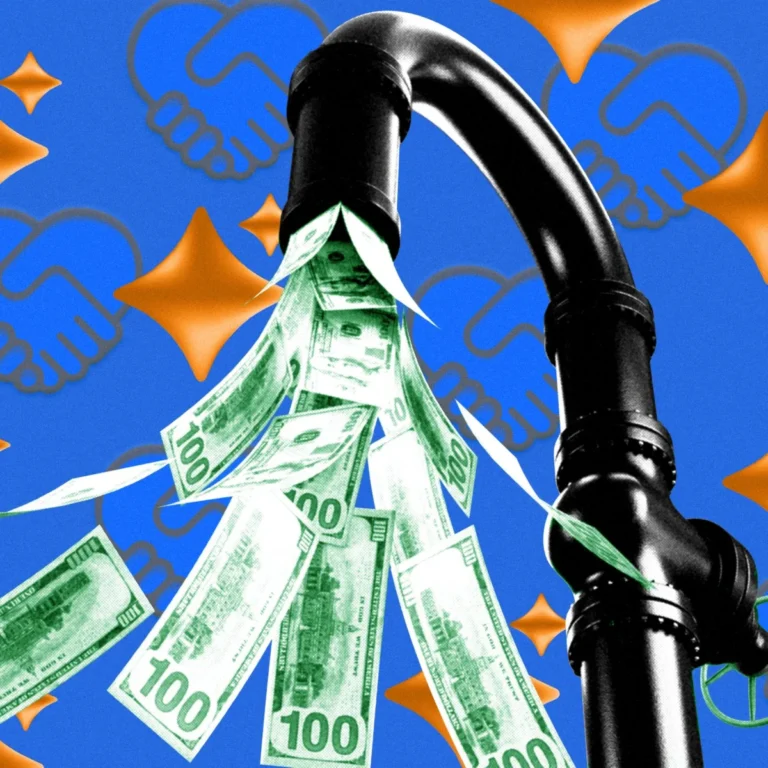
At the center of Sulzberger’s current priorities is a landmark copyright infringement lawsuit filed by The New York Times against OpenAI and Microsoft. The litigation, which has been active for over two years, alleges that these technology companies utilized millions of the Times’ copyrighted articles without permission or compensation to train their large language models (LLMs). According to Sulzberger, the Times has already expended upwards of $20 million on the case, a figure that covers discovery requests, motions, and the complex technical analysis required to prove that AI products can reproduce Times reporting almost verbatim.
Sulzberger characterizes the unauthorized use of journalistic content as the "original sin" of the AI industry. He argues that while AI companies invest billions in specialized chips (compute), electricity, and elite coding talent, they have treated the fourth essential ingredient—content—as a free resource. This represents a massive wealth transfer from content creators to trillion-dollar tech firms. The legal challenge is not merely about recouping lost revenue; it is about establishing a sustainable framework where the "theft" of intellectual property does not gut the financial models of the news industry.
The implications of this case extend far beyond the Times. While a major metropolitan daily might have the resources to litigate against Microsoft, smaller local outlets are often forced to accept "pennies on the dollar" in licensing deals or simply allow their work to be scraped without recourse. Sulzberger asserts that the Times is fighting a "winnable case" to set a precedent that protects the entire creative economy, including authors, musicians, and researchers.
Government Intimidation and the Qatar Jet Subpoenas
Parallel to the technological battle is a resurgence of legal pressure from the federal government. Sulzberger recently highlighted a "disturbing escalation" in the use of subpoenas against Times journalists. The most recent instance involves reporting on a high-value jet gifted by the Qatari government to the Trump administration for use as Air Force One. The Justice Department issued subpoenas not only to the journalists involved but also to third-party service providers to obtain phone records and text messages—including communications between reporters and their family members.
This move has been widely condemned by press freedom advocates as a gross overreach intended to intimidate whistleblowers and chill investigative reporting. Sulzberger noted that such tactics are the most aggressive seen from a White House in over a century, drawing comparisons to the restrictive environment of the Woodrow Wilson era. The Times has responded by providing full legal support to its staff, emphasizing that the right to report on matters of public interest—particularly those that are unflattering to the executive branch—is a cornerstone of democracy.
The history of the Times is inextricably linked to such battles. Sulzberger referenced the 1971 Pentagon Papers case, where his grandfather, then-publisher Arthur Ochs Sulzberger, faced the threat of imprisonment to publish classified documents regarding the Vietnam War. That case established the principle of "prior restraint," preventing the government from stopping publication in advance. The current subpoenas represent a different but equally dangerous tactic: the use of the judicial system to hunt for sources and punish journalists after the fact.
A Chronology of the Modern Media Crisis
To understand the stakes Sulzberger describes, one must look at the timeline of the industry’s transformation over the last two decades:
- 2004–2024: The U.S. experiences an 80% decline in the number of working journalists at the local level. Thousands of local newspapers close, leading to "news deserts" across the country.
- 2018: A.G. Sulzberger succeeds his father as publisher, doubling down on a "subscription-first" digital model.
- 2022: The launch of ChatGPT accelerates the debate over AI and copyright, as publishers notice significant drops in referral traffic from search engines.
- December 2023: The New York Times files its formal lawsuit against OpenAI and Microsoft, marking the first major legal challenge of its kind by a legacy news organization.
- July 2024: The Times surpasses 13 million subscribers, yet warns of the "existential" threat posed by AI "Overviews" in search results, which provide summaries that discourage users from clicking through to the original source.
Supporting Data: The Scale of the Challenge
The disparity between the news industry and the technology sector is starkly illustrated by market data. While the Times is often viewed as a "behemoth" within journalism, its scale is dwarfed by the platforms it competes with for attention.
- Subscription Metrics: The New York Times’ 13 million subscribers, while a record for news, is small compared to entertainment platforms. Sulzberger noted that even Crunchyroll, an anime-focused streaming service, has a larger subscriber base. Netflix, by comparison, boasts over 300 million.
- Newsroom Investment: The Times newsroom has grown to 2,400 journalists, covering 150 countries. However, this growth is an anomaly. Nationally, the industry has lost tens of thousands of reporting jobs, resulting in a lack of oversight for local governments and school boards.
- Economic Impact: Studies cited by the Times indicate that the loss of local journalism correlates with lower voter turnout, increased government corruption, and higher levels of civic distrust.
Official Responses and Industry Reactions
The tech industry has largely framed the Times’ legal actions as "anti-tech" or an attempt to hinder the development of artificial intelligence. OpenAI has argued in various filings that its use of public data for training constitutes "fair use" under U.S. copyright law, asserting that the technology creates something transformative rather than merely copying existing work.
Conversely, other media organizations have begun to align with the Times’ position. While some outlets, such as the Associated Press and News Corp, have signed licensing agreements with AI firms, others have joined in litigation. Sulzberger advocates for a "team up and compete" strategy. He argues that while the Times, The Washington Post, and The Wall Street Journal should compete fiercely for scoops and talent, they must form a united front when the fundamental rights of the press are attacked.
This solidarity was evident during the first Trump administration when several major outlets collectively protested the expulsion of American journalists from China. Sulzberger maintains that the survival of the profession depends on this collective enforcement of rights.
Broader Impact and the Future of the Open Web
The outcome of the Times’ battle with AI companies and the Justice Department will likely dictate the "sustainable framework" for information in the 21st century. If AI companies are permitted to scrape content without payment, the financial incentive to produce high-quality, boots-on-the-ground investigative journalism may evaporate. Sulzberger points out that AI cannot go to the front lines in Ukraine, spend years cultivating sources to uncover tax fraud, or attend a local city council meeting. If the "data" that feeds AI disappears because the creators can no longer afford to work, the AI itself will eventually suffer from a lack of fresh, factual information.
Furthermore, the shift toward "intermediate" platforms—where Google or AI bots answer queries directly using a publisher’s data—threatens the "open web." For decades, the internet functioned on a reciprocal relationship: publishers provided content, and search engines provided traffic. That contract is currently being rewritten in favor of the platforms.
Despite these challenges, Sulzberger remains optimistic, citing the enduring public demand for independent, reliable information. He views the Times’ current strength not as a reason for complacency, but as a mandate to lead the defense of the industry. The $20 million spent on legal fees is, in his view, a necessary investment in the infrastructure of truth. As the legal cases move toward discovery and potentially to the Supreme Court, the results will determine whether journalism remains a viable private enterprise or becomes a casualty of the digital age’s most disruptive shift.
About the Author