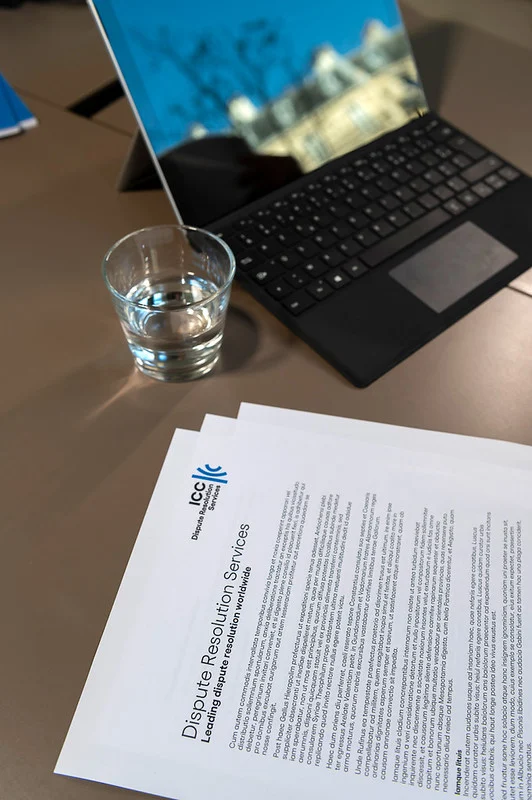
The International Chamber of Commerce (ICC) has formally announced a strategic initiative to support the economic recovery of Syria by implementing a 20% reduction in administrative expenses for eligible arbitration cases related to the country’s reconstruction. This measure, directed by the ICC International Court of Arbitration, represents a targeted effort to facilitate the resolution of commercial disputes in a region that has faced over a decade of severe economic and infrastructural disruption. By lowering the financial barriers to high-quality dispute resolution, the ICC aims to provide a stable legal framework for international and domestic investors, thereby de-risking the flow of private capital into essential recovery projects.
This initiative follows a programmatic expansion of the ICC’s global support strategy, building upon similar frameworks previously established for Ukraine and Lebanon. As Syria enters a complex phase of potential reconstruction, the ICC’s intervention is designed to address the unique challenges of operating in a high-risk environment where legal certainty is often the deciding factor for institutional investment. The reduction in fees applies specifically to administrative costs, which cover the ICC’s management of the arbitration process, ensuring that parties can access the institution’s globally recognized legal standards at a more accessible price point.
A Strategic Framework for Post-Conflict Economic Recovery
The decision to offer discounted arbitration services is rooted in the ICC’s broader mission to promote international trade and the rule of law. ICC Secretary General John W.H. Denton AO emphasized the necessity of reintegrating Syria into the global marketplace after years of isolation. According to Denton, the initiative is not merely a financial discount but a tool for economic stabilization. By ensuring that disputes—particularly those in the infrastructure, energy, and transport sectors—can be resolved through a trusted, neutral mechanism, the ICC provides the "legal infrastructure" necessary for physical infrastructure to be built.
The move is strategically timed as various international stakeholders and private entities begin to assess the long-term requirements for Syrian reconstruction. Estimates for the total cost of rebuilding Syria vary widely, but international bodies such as the World Bank and the United Nations have previously suggested figures ranging from $250 billion to over $400 billion. Given the scale of this financial requirement, the ICC recognizes that public funding alone will be insufficient and that private sector participation is mandatory. However, private investors typically require robust dispute resolution clauses to protect against the risks of contract frustration, regulatory changes, or payment defaults in volatile jurisdictions.
Chronology of ICC Support for Economies in Crisis
The Syria-specific initiative is the third major intervention of its kind by the ICC in recent years, signaling a trend toward "humanitarian commercial law." The timeline of these interventions reflects the ICC’s evolving role in global crisis management:
- August 2020 – Beirut Port Explosion: Following the catastrophic explosion in Beirut and Lebanon’s subsequent economic collapse, the ICC introduced measures to support Lebanese businesses. This included fee reductions and capacity-building efforts to help the Lebanese legal community navigate the country’s unprecedented financial crisis.
- March 2022 – Ukraine Reconstruction Task Force: Shortly after the escalation of the conflict in Ukraine, the ICC established a dedicated task force. In 2023, it announced a formal reduction in administrative fees for cases related to Ukraine’s reconstruction, aimed at supporting the "Build Back Better" initiative and ensuring that the influx of foreign aid and investment was protected by international legal standards.
- Present Day – Syria Recovery Initiative: Recognizing the stagnation of the Syrian economy and the emerging needs for large-scale rehabilitation of power grids, water systems, and transportation networks, the ICC has now extended this model to Syria.
This chronology demonstrates a systematic approach by the ICC to use its institutional weight to mitigate the "conflict premium" that often prevents capital from entering recovering markets.
Supporting Data and the Economic Necessity of Arbitration
The economic data surrounding Syria highlights the urgency of the ICC’s intervention. Since the onset of the conflict in 2011, Syria’s Gross Domestic Product (GDP) has contracted by more than 50%. The country’s energy sector, once a cornerstone of the national economy, has seen its production capacity decimated, while the transport network—vital for trade with neighbors like Jordan, Lebanon, and Turkey—remains fragmented.
In such an environment, the risk of legal disputes is statistically higher. Large-scale reconstruction projects often involve "turnkey" contracts, joint ventures between foreign and local firms, and complex financing arrangements involving multiple stakeholders. In the absence of a reliable dispute resolution mechanism, a single disagreement over a supply chain delay or a payment milestone can freeze a multi-million dollar project indefinitely.
By providing a 20% reduction in administrative expenses, the ICC lowers the "threshold of entry" for small and medium-sized enterprises (SMEs) and larger contractors who might otherwise be deterred by the costs of international arbitration. While the 20% figure applies to the ICC’s administrative fees, the impact is significant when considering that these fees fund the oversight, appointment of arbitrators, and scrutiny of awards that ensure an outcome is enforceable under the New York Convention.
Sector-Specific Implications: Infrastructure, Energy, and Transport
The ICC has identified three primary sectors where the need for arbitration services is expected to be most acute during Syria’s recovery:
1. Infrastructure and Urban Rehabilitation
Rebuilding destroyed urban centers requires massive procurement contracts for cement, steel, and machinery. These contracts are often subject to price volatility and logistical disruptions. The ICC’s expedited procedures and reduced costs will allow parties to resolve these commercial frictions without resorting to local courts, which may lack the specialized expertise or the perceived neutrality required by international participants.
2. Energy and Utilities
Restoring the power grid is a priority for any economic recovery. This involves complex agreements between state-owned entities and private technology providers. Disputes in the energy sector are often high-value and technically dense. The ICC Court’s ability to appoint expert arbitrators with specific experience in energy law provides a level of technical competence that is essential for these cases.
3. Transport and Logistics
As a traditional crossroads for trade in the Levant, Syria’s recovery depends on the restoration of its ports, railways, and highways. These projects often involve cross-border elements, making international arbitration the preferred method of dispute resolution. The ICC initiative ensures that as these networks are rebuilt, the legal disputes arising from their construction and operation are handled efficiently.
Capacity Building and Local Stakeholder Engagement
Beyond the financial incentives, the ICC has committed to a long-term strategy of capacity building within the Syrian legal and business communities. This involves engaging with local legal professionals, public institutions, and chambers of commerce to provide training on international arbitration standards.
The goal is to create a sustainable "legal ecosystem" where Syrian lawyers are equipped to represent clients in international forums and where local institutions understand the requirements of modern commercial law. This engagement is crucial for the "long-term capacity building" mentioned by the ICC, as it ensures that the country’s reintegration into the global economy is supported by a domestic workforce that is fluent in international best practices.
The ICC also plans to explore avenues of cooperation with national and institutional stakeholders involved in reconstruction. This could include collaborating with development banks or non-governmental organizations (NGOs) that are overseeing specific recovery projects to ensure that arbitration clauses are standardized and effective.
Analysis of Implications for Private Capital and Global Trade
The broader implication of the ICC’s initiative is the "de-risking" of private capital. For a country like Syria, which has been largely excluded from international financial markets, the primary hurdle to investment is the perception of risk. Institutional investors, such as pension funds or private equity firms, are often legally or internal-policy-bound to avoid jurisdictions that do not offer clear legal recourse.
By positioning itself as the guardian of contract enforcement in Syria, the ICC provides a "safety net." If a contract is breached, the investor knows they can turn to an ICC tribunal in a neutral location (such as Paris, Dubai, or Geneva) and obtain an award that is enforceable in over 160 countries under the 1958 New York Convention. The 20% fee reduction acts as a "signal" to the market that the ICC is actively monitoring and supporting the jurisdiction, which can lead to lower insurance premiums and better financing terms for projects in the region.
Furthermore, this initiative reflects a shift in the role of international organizations in the 21st century. The ICC is increasingly acting not just as a service provider, but as a proactive participant in global economic stabilization. By aligning its fee structures with the needs of recovering nations, the ICC is demonstrating that the rule of law is a prerequisite for peace and prosperity.
Official Responses and Prospective Outlook
While the immediate reaction from the legal community has been positive, experts note that the success of the initiative will depend on the broader political and security environment in Syria. Legal practitioners specializing in the Middle East have noted that while the ICC’s move is a significant step, it must be complemented by continued efforts to harmonize regional trade laws and ensure the physical safety of project sites.
International legal observers suggest that the ICC’s model for Syria may eventually be applied to other post-conflict or post-disaster zones, such as parts of North Africa or Southeast Asia. The "Syria Recovery Initiative" sets a precedent for how the global legal community can contribute to the UN Sustainable Development Goals, particularly Goal 16 (Peace, Justice, and Strong Institutions) and Goal 17 (Partnerships for the Goals).
In conclusion, the ICC’s decision to reduce administrative expenses for Syria-related arbitration is a pragmatic and principled intervention. It acknowledges the harsh reality of the Syrian economy while providing a sophisticated tool for its improvement. By lowering the cost of justice and increasing the accessibility of neutral dispute resolution, the ICC is helping to pave the way for a more stable, integrated, and prosperous future for the Syrian people and the wider region. As reconstruction efforts begin to take shape, the presence of the ICC Court will serve as a critical pillar of the country’s new economic foundation.
About the Author