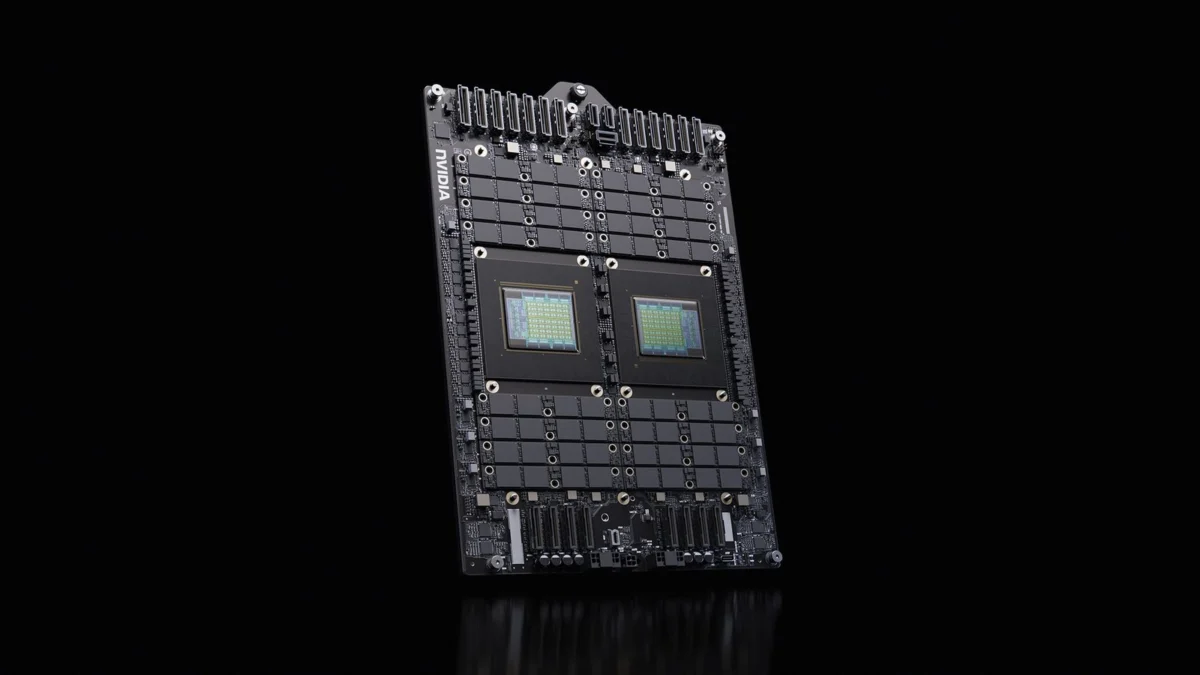
In a calculated move to solidify its lead in the global semiconductor race, Nvidia has released a comprehensive suite of performance benchmarks for its next-generation Vera Rubin chip system. The announcement, delivered during a technical workshop at the company’s Santa Clara headquarters, serves as a preemptive strike against rival AMD, which is scheduled to host its own annual product showcase in San Francisco this week. The Vera Rubin architecture, which succeeds the Grace Blackwell platform, represents a significant evolution in Nvidia’s strategy, transitioning the firm from a specialized GPU manufacturer to a holistic provider of integrated AI supercomputing systems.
As the artificial intelligence industry shifts its focus from static large language models (LLMs) toward "agentic" AI—autonomous systems capable of reasoning, planning, and executing multi-step tasks—the demand for high-performance Central Processing Units (CPUs) has surged. While Graphics Processing Units (GPUs) remain the workhorses for massive parallel processing and model training, CPUs are increasingly required to handle complex data orchestration, networking protocols, and sequential software logic. Nvidia’s Vera CPU is the company’s direct response to this shift, designed to operate in a tight, high-bandwidth symbiotic relationship with the Rubin GPU.
The Architecture of the Vera Rubin NVL72 System
The centerpiece of Nvidia’s new offering is the Vera Rubin NVL72, a liquid-cooled rack-scale system that integrates 36 Vera CPUs and 72 Rubin GPUs. Unlike previous generations that often treated the CPU as a secondary component, the Vera Rubin architecture treats the CPU as a critical orchestrator for agentic workflows. Nvidia executives revealed that the system is designed to provide one CPU for every two GPUs, a ratio optimized for the high-intensity data movement required by modern AI agents.
A defining characteristic of the Vera CPU is its monolithic design. While competitors like AMD and Intel have leaned heavily into chiplet architecture—where multiple smaller silicon dies are stitched together to increase yields and flexibility—Nvidia has opted for a single, integrated circuit. Hannah Coutand, Nvidia’s head of CPU product marketing, argued during the workshop that the chiplet approach imposes a "heavy tax" on memory bandwidth and data movement. By utilizing a monolithic design, Nvidia claims the Vera CPU can facilitate faster internal data transfers, reducing the latency that often bottlenecks complex AI inferences.
The NVL72 system also introduces significant advancements in physical infrastructure. Nvidia is marketing the platform as "cable-free compute," featuring a "plug-and-play" design that utilizes hot-swappable components. According to Andrew Bell, Nvidia’s senior vice president of hardware engineering, these innovations can reduce the installation time of a server rack from several hours to a matter of minutes. Furthermore, the system is 100 percent liquid-cooled, a necessity driven by the extreme thermal output of high-density AI clusters and a strategic choice to improve energy efficiency in hyperscale data centers.
.jpg)
Comparative Benchmarks and Efficiency Gains
Data presented by Nvidia suggests that the Vera Rubin system offers a generational leap in efficiency. The company claims the NVL72 can process 10 times as many tokens per watt as the preceding Grace Blackwell system. This metric is particularly vital as global energy consumption by data centers becomes a primary concern for regulators and environmental advocates.
In terms of raw performance, Nvidia asserts that the Vera CPU outperforms current offerings from AMD and Intel in tasks specifically related to agentic AI. However, industry analysts note that Nvidia’s internal tests were conducted against slightly older generations of competing hardware, a common practice in the industry that necessitates cautious interpretation.
Beyond raw speed, the Vera Rubin system addresses the ongoing global shortage of High-Bandwidth Memory (HBM). The new chips feature localized memory subsystems that offer nearly three times the memory bandwidth of the Blackwell generation. By increasing the efficiency of data movement between the processor and memory, Nvidia aims to mitigate the performance degradation that occurs when AI models outgrow the available on-chip storage.
Strategic Timing and the Competitive Landscape
The timing of these revelations is inextricably linked to the broader competitive landscape of Silicon Valley. AMD is currently preparing to unveil its Helios AI chip rack, which is positioned as a direct competitor to Nvidia’s integrated solutions. AMD has historically dominated the x86 CPU market for data centers, leveraging its chiplet architecture to gain significant market share over the past two years.
Nvidia, by contrast, has built its data center CPUs on the ARM architecture. ARM designs are renowned for their power efficiency, a trait that Nvidia is leveraging to appeal to "hyperscalers" like Microsoft, Amazon, and Meta, who are desperate to lower the total cost of ownership (TCO) for their massive AI infrastructures.
The pressure to deliver is immense. Nvidia is particularly sensitive to concerns regarding product delays following reports that its Blackwell chips experienced overheating issues when connected in high-density configurations. Those design hurdles forced Nvidia to implement revisions, pushing back some shipment schedules. By aggressively promoting the Vera Rubin roadmap, Nvidia is signaling to investors and customers that it has addressed these engineering challenges and remains on track for a mid-to-late 2026 production ramp.
.jpg)
Chronology of Development and Global Partnerships
The development of Vera Rubin has been a global endeavor, reflecting the interconnected nature of the semiconductor supply chain.
- Spring 2025: Nvidia officially unveils the Vera Rubin architecture, naming it after the pioneering astronomer who provided evidence for the existence of dark matter.
- June 2026: Reports emerge that Nvidia has begun pitching the Vera CPU as a standalone product to Chinese clients, aiming for an August release of the individual chips to maintain a foothold in the region despite tightening export controls.
- July 2026: CEO Jensen Huang visits Taiwan for Computex, securing supply chain commitments for the mass production of the Rubin GPU. Simultaneously, Huang travels to Japan to announce partnerships with Japanese robotics firms, focusing on integrating Vera Rubin chips into edge-AI and industrial robotics.
- Last Week: Ian Buck, the architect of Nvidia’s CUDA software and VP of accelerated computing, leads technical briefings in Santa Clara. He emphasizes that the company is now on a "do or die" innovation cycle, moving toward a yearly release cadence for both GPU and CPU architectures.
During the Santa Clara workshop, it was confirmed that OpenAI has already taken delivery of an early Vera Rubin rack for testing and development. This early adoption by the world’s leading AI lab underscores the industry’s reliance on Nvidia’s hardware to push the boundaries of model capabilities.
Market Implications and the Future of Data Centers
The shift toward integrated systems like the Vera Rubin NVL72 marks a turning point for data center economics. Traditionally, data center operators would purchase CPUs, GPUs, and networking gear from different vendors and integrate them. Nvidia is now challenging this model by offering a "system-in-a-box" approach.
This vertical integration allows Nvidia to optimize the entire stack—from the silicon to the cooling and the software (via CUDA). However, it also raises concerns about vendor lock-in. If companies build their entire infrastructure around Nvidia’s proprietary interconnects and liquid-cooling designs, switching to a competitor like AMD or Intel becomes exponentially more difficult and expensive.
The focus on agentic AI also suggests a maturation of the market. The industry is moving beyond the "gold rush" phase of training larger and larger models and is now entering the "deployment phase," where the goal is to make AI models useful, autonomous, and cost-effective. The Vera CPU’s role in orchestrating these agents will likely be the metric by which Nvidia’s future success is measured.
As AMD prepares to take the stage in San Francisco, the semiconductor industry finds itself in a state of hyper-competition. Nvidia’s preemptive strike with the Vera Rubin benchmarks has set a high bar for performance and efficiency. For now, Nvidia remains the dominant force, but the rapid pace of innovation means that today’s benchmarks are merely the starting point for the next generation of computing. The "do or die" mentality described by Ian Buck is not just a corporate slogan; it is the current reality of a Silicon Valley locked in a race to define the infrastructure of the AI era.
About the Author