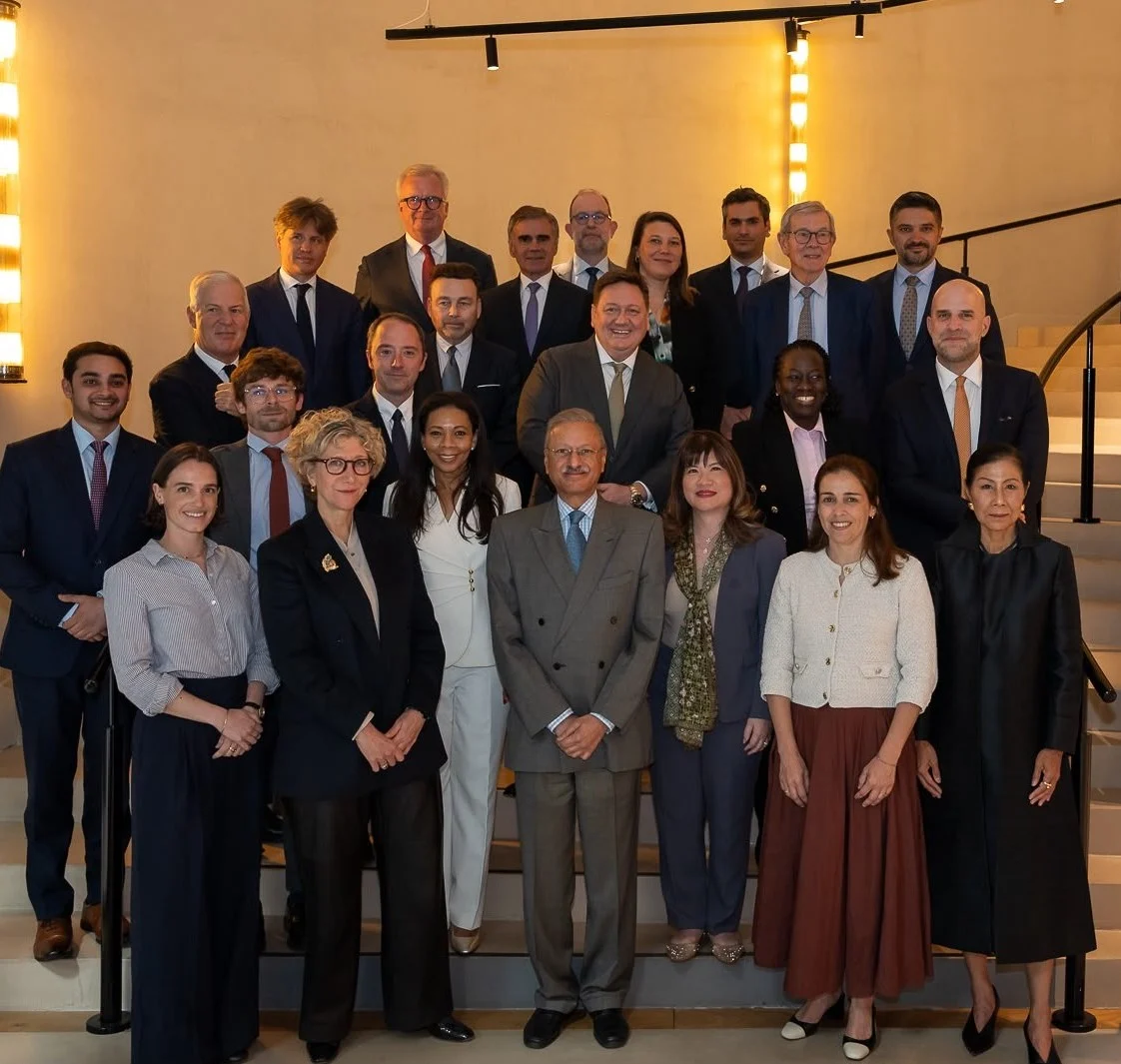
The International Chamber of Commerce (ICC), the institutional representative of more than 45 million companies in over 170 countries, has officially announced the appointment of Harsh Pati Singhania as its new Chair. Mr. Singhania, a distinguished Indian industrialist who previously served as the ICC First Vice-Chair, succeeds Philippe Varin, the prominent French business executive who has led the organization since June 2024. This leadership transition, confirmed during the ICC World Council meeting, marks a significant moment for the world’s largest business organization as it seeks to navigate a period of unprecedented volatility in global trade, rapid technological advancement, and shifting geopolitical dynamics.
Mr. Singhania brings to the role a wealth of experience from both the private sector and the international policy arena. As the Director of the JK Organisation and the Chairman and Managing Director of JK Paper Ltd, he has been a pivotal figure in India’s industrial landscape for decades. His elevation to the helm of the ICC is seen by many analysts as a strategic move to integrate the perspectives of emerging economies more deeply into the global trade discourse. The ICC’s leadership has emphasized that his appointment reflects a continued commitment to a governance model that blends global expertise with private-sector credibility and a steadfast dedication to international cooperation.
A Legacy of Industrial Leadership
To understand the significance of Mr. Singhania’s appointment, one must look at his professional trajectory within the JK Organisation, one of India’s oldest and most respected industrial conglomerates. Under his leadership, JK Paper Ltd has evolved into a market leader, known for its focus on sustainable practices and technological innovation. His experience in managing complex supply chains and navigating the regulatory environments of a major emerging market provides him with a unique vantage point on the challenges facing modern enterprises.
Beyond his corporate responsibilities, Mr. Singhania has been a tireless advocate for the Indian business community on the global stage. He has previously served as the President of the Federation of Indian Chambers of Commerce and Industry (FICCI) and has held various leadership roles within the ICC’s Indian National Committee. This dual experience—managing a large-scale industrial enterprise while engaging in high-level policy advocacy—positions him as a leader capable of bridging the gap between the practical needs of businesses and the complexities of international trade governance.
The Mandate for a New Era
Upon his election, Mr. Singhania expressed a profound sense of responsibility toward the 105-year-old institution. He noted that the ICC has stood for over a century as a foundational force for open markets, trusted rules, and human progress. In his acceptance speech, he articulated a vision of "humility and conviction," stating that his primary purpose would be to ensure the ICC remains a "force for confidence in an uncertain world."
The "uncertain world" to which Mr. Singhania refers is characterized by several converging pressures. Global trade, which reached a record value of approximately $32 trillion in recent years, is currently facing headwinds from protectionist policies, fragmented supply chains, and the urgent need for a green transition. Furthermore, the rapid rise of artificial intelligence and digital commerce has necessitated a complete rethinking of international trade rules. Mr. Singhania’s mandate will involve championing the power of business to make the world more open, resilient, and prosperous, even as these external pressures mount.
Governance and Regional Diversity
The ICC’s governance framework is designed to ensure that its leadership reflects the global nature of its membership. The election process is overseen by the ICC World Council, which represents national committees and members from more than 90 countries. This democratic and transparent process is intended to produce a leadership team that can speak with authority on behalf of businesses of all sizes—from small and medium-sized enterprises (SMEs) to multinational corporations.
The recent leadership transitions also included the appointment of three new members to the ICC Executive Board. These individuals are responsible for overseeing the organization’s governance and institutional direction. ICC Secretary General John W.H. Denton AO highlighted that these appointments underscore the organization’s commitment to "regionally diverse leadership." By bringing together leaders from Africa, Asia, and beyond, the ICC aims to leverage deep expertise across industry, technology, finance, and international law. This diversity is not merely symbolic; it is a functional requirement for an organization that seeks to set global standards for everything from banking rules to environmental sustainability.
Transition and Continuity: The Role of Philippe Varin
While Mr. Singhania takes the lead, the outgoing Chair, Philippe Varin, will continue his engagement with the ICC as Honorary Chair. Mr. Varin’s tenure was marked by a focus on the decarbonization of industry and the strengthening of global value chains. His transition to an honorary role ensures that the ICC retains his extensive experience in the European industrial sector and his insights into the energy transition.
The "Chairmanship" at the ICC functions as a collaborative unit, ensuring continuity in policy and strategy. The transition from Varin to Singhania represents a seamless handoff from a leader rooted in the established industrial powerhouses of Europe to one representing the dynamic growth engines of Asia. This shift is reflective of the broader "rebalancing" of the global economy, where the Global South is playing an increasingly central role in driving trade volumes and innovation.
The ICC’s Strategic Priorities for 2025 and Beyond
Under Mr. Singhania’s chairmanship, the ICC is expected to double down on several key strategic pillars. These priorities are designed to fulfill the organization’s mission: "to make business work for everyone, every day, everywhere."
-
Digital Transformation and Trade Digitization:
One of the ICC’s most significant current initiatives is the Digital Standards Initiative (DSI). With global trade still heavily reliant on paper-based documentation—a process that is estimated to cost the global economy billions in inefficiencies—the ICC is pushing for the adoption of digital trade laws. Mr. Singhania’s background in the paper and manufacturing sectors gives him a practical understanding of why this transition is necessary and how to mitigate the hurdles to adoption. -
Strengthening Multilateralism and the WTO:
At a time when the World Trade Organization (WTO) faces challenges regarding its dispute settlement mechanism and the proliferation of bilateral trade agreements, the ICC remains a staunch defender of the multilateral trading system. Mr. Singhania will likely focus on advocating for WTO reforms that reflect the modern realities of e-commerce and environmental standards. -
Climate Action and Sustainability:
The ICC has been vocal about the role of business in achieving the goals of the Paris Agreement. This includes promoting carbon pricing mechanisms that are fair and do not create unnecessary trade barriers. For a leader from India—a country balancing rapid industrial growth with ambitious climate targets—this will be a particularly delicate and important area of focus. -
Supporting MSMEs:
Micro, Small, and Medium Enterprises (MSMEs) constitute over 90% of all businesses globally and provide the majority of employment. However, they often face the highest barriers to entering international markets. The ICC’s leadership has pledged to work on reducing these barriers, providing SMEs with the tools and legal frameworks needed to compete globally.
Expert Analysis: The Significance of an Indian Chair
Industry analysts suggest that Mr. Singhania’s appointment is a recognition of India’s ascending role in the global economic order. As India moves toward becoming the world’s third-largest economy, its influence on international standard-setting is growing. By having an Indian national at the helm of the ICC, the organization is better positioned to engage with the G20 and other international forums where India is a key player.
Furthermore, Mr. Singhania’s leadership is expected to bring a "pragmatic industrialist" approach to the ICC. Unlike career diplomats or academics, his perspectives are shaped by the day-to-day realities of manufacturing, logistics, and labor management. This practical expertise is crucial for an organization that produces the Incoterms® rules, which define the responsibilities of buyers and sellers in international trade, and the UCP 600 rules, which govern trillions of dollars in letters of credit annually.
Chronology of Leadership and Institutional Evolution
The ICC has a long history of adapting its leadership to meet the needs of the times. Founded in 1919 in the aftermath of World War I, the organization was created by a group of entrepreneurs who called themselves "the merchants of peace." They believed that strong trade ties were the best deterrent to conflict.
- 1919: ICC founded in Atlantic City, USA, with its headquarters later established in Paris.
- Post-WWII: The ICC played a key role in the creation of the General Agreement on Tariffs and Trade (GATT), the predecessor to the WTO.
- 1990s-2000s: The organization expanded its focus to include digital commerce and global environmental standards.
- 2020-2024: During the COVID-19 pandemic and the subsequent supply chain crises, the ICC became a primary advocate for keeping borders open for essential goods and vaccines.
- June 2024: Philippe Varin takes over as Chair, focusing on industrial resilience.
- Present: Harsh Pati Singhania assumes the Chairmanship, signaling a focus on regional diversity and the integration of emerging markets into the global rules-based system.
Concluding Remarks from Leadership
The transition has been met with widespread support within the international business community. John W.H. Denton AO, the ICC Secretary General, summarized the sentiment by stating that the new appointments "underscore ICC’s continued commitment to excellence and regionally diverse leadership." He expressed gratitude to Philippe Varin for his "outstanding service" while looking forward to the "deep expertise across industry, technology, finance, and international law" that the new board members and Mr. Singhania bring to the table.
As Mr. Singhania begins his term, the global business community will be watching closely. The challenges are significant: geopolitical tensions in Europe and the Middle East, the ongoing "de-risking" of supply chains, and the ethical dilemmas posed by artificial intelligence. However, with a leadership team that combines the industrial heritage of the JK Organisation with the global reach of the ICC, the organization appears well-equipped to champion the cause of open, rules-based trade in the years to come. Mr. Singhania’s vision of the ICC as a "force for confidence" may be exactly what the global economy needs to navigate the complexities of the mid-21st century.
About the Author