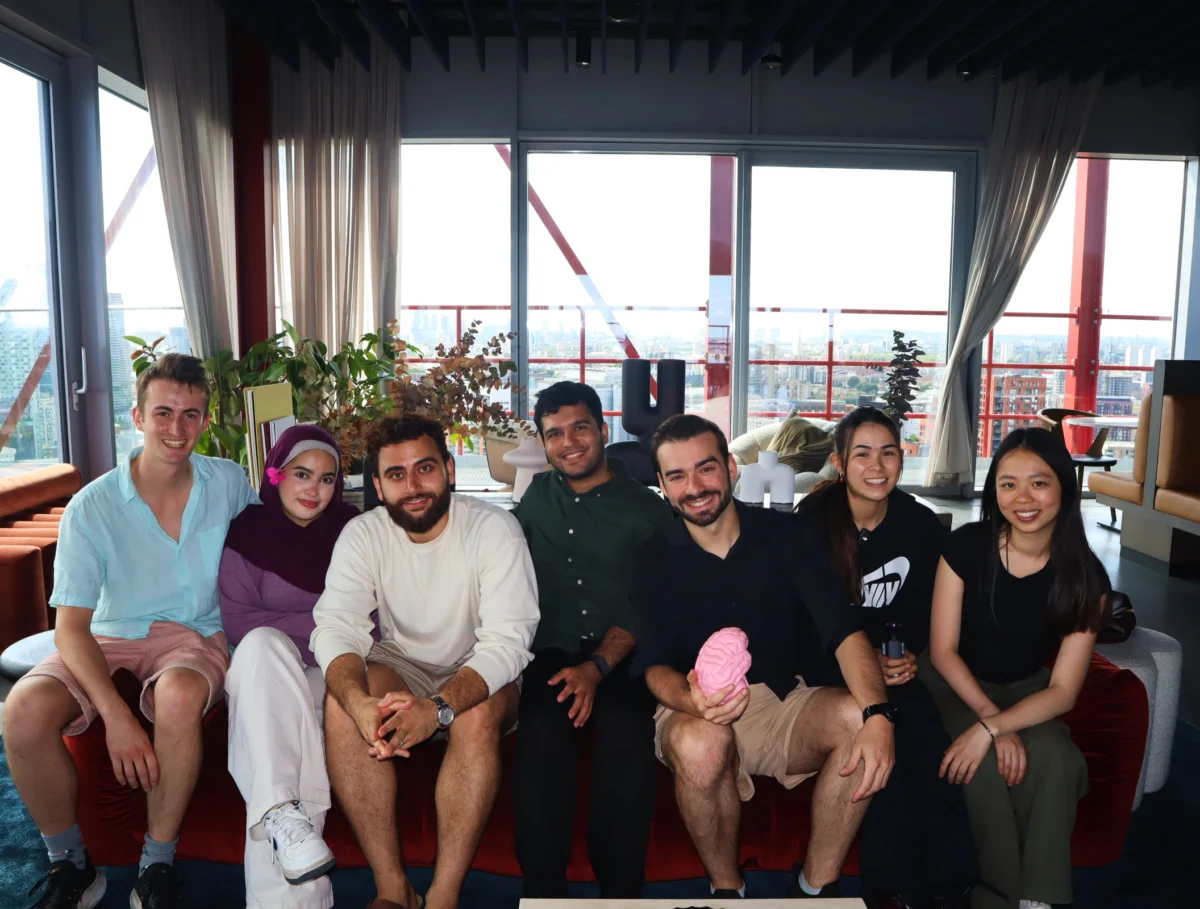
In the bustling tech landscape of East London, a different kind of entrepreneurial hub has emerged, offering a stark contrast to the high-octane, often burnout-inducing culture synonymous with Silicon Valley’s hacker houses. Six twentysomethings have established the London Island Founder House, affectionately known as "Lift House," with a mission that prioritizes holistic life improvement over the relentless pursuit of immediate funding and rapid exits. This innovative co-living and co-working space is pioneering a more balanced, sustainable approach to building tech companies, challenging the prevailing dogma of "hustle culture."
The genesis of Lift House can be traced back to Rowan Aldean, 26, a successful entrepreneur who, after selling his previous company for millions, channeled his vision into an applied AI startup. Alongside his wife, Zahraa, 22, a promising pharmaceutical research PhD candidate, Aldean launched Lift House in March, moving in just a few months later. The six-story building, situated in a contemporary East London development overlooking the water, serves as both a residence and a incubator for ambitious founders. The name "Lift House" cleverly alludes to both its literal elevator and its aspirational goal: to uplift tech founders. This initiative represents a significant bet on the viability of U.K. founders building world-class companies without adopting the hyper-competitive and often unhealthy practices prevalent in the U.S. tech scene.
A Glimpse into the Lift House Philosophy
A visit to Lift House reveals an environment intentionally designed to foster well-being alongside innovation. Unlike the often chaotic and secretive operations of some San Francisco hacker houses—which have been known to operate in unconventional spaces like warehouses, host lavish parties, or adopt punishing work schedules reminiscent of the "996" culture—Lift House cultivates a more measured and intentional atmosphere. "I don’t expect the performative and over-the-top events will be a thing here," Rowan Aldean stated, drawing a parallel to the success of London-based AI giant DeepMind, which achieved groundbreaking innovation and even Nobel Prize recognition without resorting to ostentatious displays.
This philosophy aligns with the emerging trend of "Londonmaxxing," a movement characterized by founders seeking to optimize their experience within the London tech ecosystem. While the London scene may appear less flashy and confrontational than its San Francisco counterpart, its founders share an equally potent drive for success, wealth accumulation, and market dominance. The city’s tech sector, particularly in artificial intelligence, has seen remarkable growth. In 2026 alone, London AI startups secured $12 billion in funding, contributing significantly to the $14.7 billion raised by all London startups during the same period, according to data from Dealroom. Six companies—Wayve, Superintelligence, ElevenLabs, Recursive, Ineffable Intelligence, and Isomorphic Labs (the latter three founded by DeepMind alumni)—each raised over $500 million, underscoring the vibrancy and potential of the U.K. AI landscape. This surge in AI investment has injected a palpable sense of optimism into the U.K. tech scene, inspiring a new generation of entrepreneurs to pursue ambitious ventures.

A Balanced Approach to Entrepreneurship
The operational model at Lift House eschews rigid timelines, allowing residents to stay for durations ranging from a month to over six months. The residents manage their own living expenses, including groceries, though communal cooking and ingredient sharing are common. Household chores are divided equitably, and specific details regarding rent remain private. The overarching aim is to foster a sustainable work-life integration, a concept that often seems alien in the hyper-competitive Silicon Valley environment.
A key element of the Lift House ethos is its emphasis on personal development and well-being. Sundays, for instance, are dedicated to group journaling sessions, a practice initiated by David Amor, 28, who runs a brain coaching and training company. This ritual encourages residents to reflect on their engagement with nature, nutrition, and physical activity, fostering a conscious approach to health. Luke, 27, founder of an AI marketing company, attested to the positive impact: "I’m eating healthier, working out more, and sleeping more. I always make sure to have lunch now, which is something that is simple, but I wasn’t doing before I lived here." (Luke requested his last name be withheld.)
Beyond journaling, the house fosters a sense of community and shared experience. Tuesdays are reserved for a friendly volleyball match, with residents forming a house team to compete in a local league. Evenings are often filled with shared activities, from Wan Ying L., 25, a founder exploring a new AI idea, playing the piano in the living room to group board game sessions or visits to art exhibitions. Presence Plumb, 25, a tech strategist, enhances the social fabric by hosting rooftop dinner parties. These gatherings showcase the diverse culinary traditions of the house’s residents, reflecting nationalities from Iraq to Spain, and serve as informal networking events where founders, researchers, investors, and operators can exchange insights on tech trends and investment opportunities. "It’s a bit calmer, balanced, authentic in a way," Plumb observed about the London ecosystem. "They don’t want too much of that only startup tech bro vibe. They want a bit of balance."
Daily Rhythms and Cultural Nuances
The daily routines at Lift House reflect a commitment to focused work while respecting personal time. David Amor, for example, rises by 8 a.m. and dedicates the initial hours to focused work, minimizing distractions. He incorporates a cold shower into his morning routine, citing its purported ability to boost dopamine levels and enhance motivation. Luke, typically starting his day around 8:30 a.m., collaborates with his co-founder, Varun, 27 (who also requested anonymity), beginning their workday with a team call at 9 a.m. Rowan Aldean, on the other hand, often begins his day later, around 10 a.m., unless urgent investor calls necessitate an earlier start.

When asked about what distinguishes Lift House as uniquely British, Aldean humorously quipped about the shared ritual of drinking tea, contrasting it with the filtered coffee culture of San Francisco. More seriously, he elaborated on the distinct pressures faced by British founders. They often navigate a cultural aversion to risk, an ingrained inclination towards humility, and a societal discomfort with failure. Instead of embracing a relentless "hustle and grind" mentality, they contend with the "tall poppy syndrome," where individuals who achieve significant success can face public scrutiny and criticism. This cultural dynamic can make some founders hesitant to overtly display their achievements.
Despite these challenges, London remains an attractive launchpad for early-stage startups. Luke highlighted the city’s robust network, accessible early-stage capital, and the availability of a fulfilling life beyond the confines of the tech industry, drawing parallels to New York City’s cultural offerings. David Amor further emphasized London’s diversity, suggesting that the city offers a wealth of opportunities for engagement, from founder-led clubs and wellness events to jazz nights, catering to a wide range of interests.
Financial Strategies and Ecosystem Differences
Luke and Varun, for instance, have leveraged the U.K.’s Seed Enterprise Investment Scheme (SEIS) and Enterprise Investment Scheme (EIS) to attract angel investment, circumventing the need for extensive venture capital funding. These government initiatives are designed to incentivize investment in early-stage U.K. startups. Luke explained the appeal: "There’s people who will pay basically the same rate of tax if they give us the money versus if they pay income tax." This financial advantage further solidifies London’s appeal for nascent ventures.
Aldean also perceives the London ecosystem as less cutthroat than Silicon Valley. He recalled his experience in a Bay Area hacker house where the intense focus on product development led to an environment where "everyone’s desk had to face the wall." He noted that the U.S. ecosystem sometimes fosters an environment prone to gossip and internal politics, a dynamic he finds less prevalent in the U.K. "There’s nothing like ‘oh my god did you hear that the CTO just, like, did this’," Aldean commented, alluding to a perceived culture of suspicion and self-preservation in some U.S. tech circles. He further suggested that London startups often target slow-moving, large corporations for their clientele, a model that allows for building without the pressure of constant peer validation.
Varun and Luke echoed this sentiment, highlighting a key difference in market dynamics between the U.S. and U.K. "It’s a relatively fleeting market," Varun stated regarding the U.S. "You get quick wins. Here, it’s hard to close a customer, but if they close, they stay with you longer." This suggests a market where customer loyalty and long-term relationships are prioritized, aligning with the more measured approach championed by Lift House.

The Transatlantic Trajectory
While London offers a fertile ground for innovation, the ultimate destination for many U.K. startups often lies across the Atlantic. The U.K. provides access to a highly skilled talent pool from prestigious universities and a time zone conducive to global collaboration. However, the U.S. market boasts the world’s largest economy and a deep well of investors willing to deploy significant capital at all stages of growth. This dynamic creates a "factory line" effect, as Varun described, where companies may begin their journey in the U.K. and expand to the U.S., or vice versa.
The influence of American investors is undeniable, often acting as a catalyst for U.K. founders to consider relocation. One founder shared an anecdote about an investor who made relocation to the U.S. a prerequisite for funding, a common practice that prompts difficult decisions for entrepreneurs. Luke recounted a similar experience with a Miami-based investor who urged him and Varun to move to the U.S. While they have initiated their U.S. expansion, the duo acknowledges the possibility of relocating to be closer to their customer base, even while expressing their affection for London.
This transatlantic pull represents a significant tension within the U.K. and broader European tech ecosystems. "I work with a lot of people trying to support the European ecosystem more," said Presence Plumb. Yet, as Rowan Aldean observed, "founders talk about London; everyone is bullish on the country until they get the opportunity to leave." This highlights the ongoing challenge of retaining talent and capital within Europe.
The Future of Lift House and London’s Tech Scene
With approximately a year remaining on its current lease, there is a strong sentiment among Lift House residents to extend its operations. The scarcity of dedicated, long-term co-living hacker houses in London, despite the city’s frequent short-term tech gatherings like Solana Hacker House meet-ups, underscores Lift House’s unique position. While global chains like The Residency have established a presence in London, and BaseJump is slated to launch a similar program, Lift House represents a distinct, locally driven initiative.

This contrasts with "The London Founder House," which operated in 2024 with a stated focus on demanding work ethics and a requirement for founders to have raised at least half a million dollars. Though that venture has since wound down, it left an imprint on the ecosystem. In contrast, Lift House actively seeks residents with hobbies outside their companies and a commitment to fitness, embodying its philosophy of holistic development. This approach is central to the "Londonmaxxing" narrative, aiming to demonstrate that sustained success and a fulfilling life are not mutually exclusive.
"The culture is to build something that lasts," Aldean concluded, emphasizing the long-term vision over the fleeting allure of rapid success. Lift House stands as a testament to this ethos, offering a blueprint for a more sustainable and human-centered approach to entrepreneurship in the global tech landscape.
About the Author