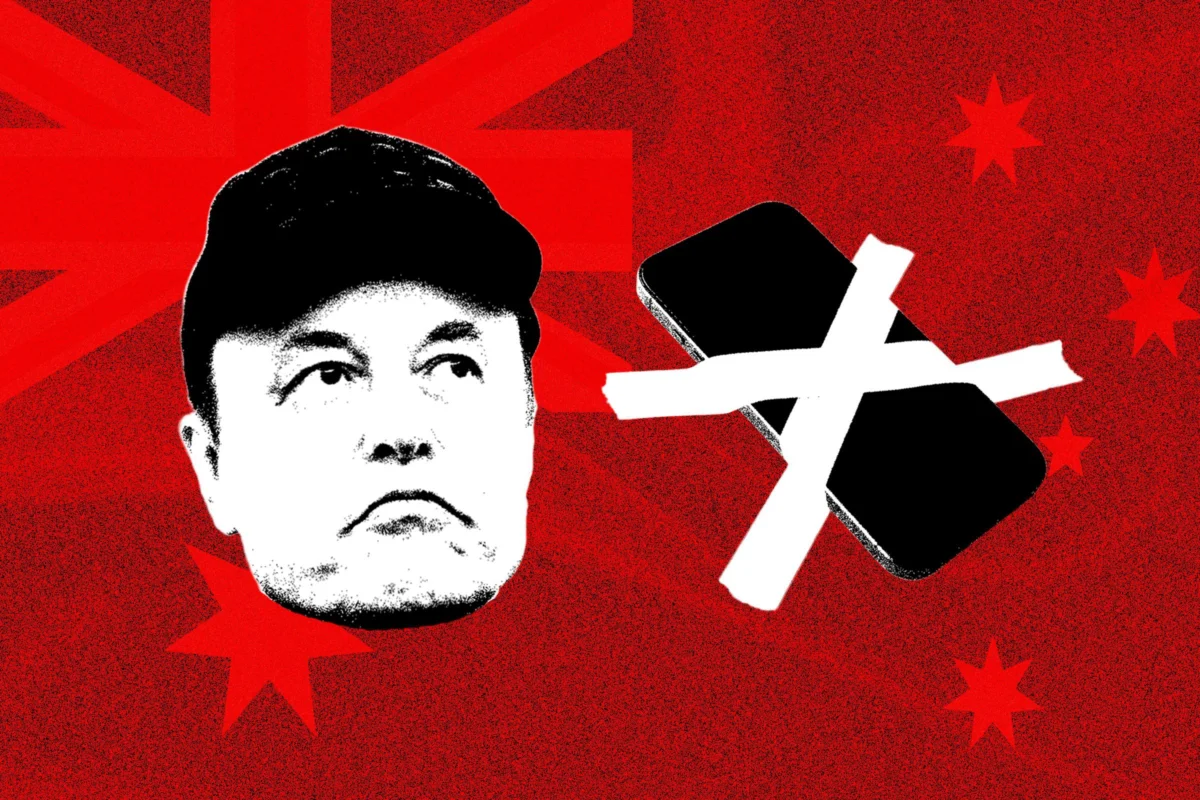
X, the social media platform owned by Elon Musk, has formally escalated its opposition to Australia’s landmark legislation aimed at banning children under the age of 16 from social media platforms. In a comprehensive submission to the Australian parliament published this week, the company argued that the proposed regulations not only lack technical feasibility but also represent a significant overreach that could violate international law and infringe upon global privacy standards. The submission marks a critical flashpoint in the ongoing conflict between the tech billionaire and the Australian government, as the nation moves forward with some of the world’s most stringent digital age restrictions.
The core of X’s argument rests on the principle of the "comity of nations," a legal concept involving the mutual recognition of legislative, executive, and judicial acts between countries. X contends that the Australian government’s efforts to compel non-Australian entities to provide sensitive data and compliance evidence could trigger diplomatic and legal friction. By demanding documentation from employees and offices located outside Australian jurisdiction, X suggests that the Australian eSafety Commissioner is overstepping traditional sovereign boundaries.
The Legislative Context and Australia’s Global Precedent
Australia has positioned itself at the vanguard of a growing international movement to regulate the digital lives of minors. In December 2024, the Australian Parliament passed the Online Safety Amendment (Social Media Minimum Age) Bill, which mandates a minimum age of 16 for users to access social media platforms including X, TikTok, Instagram, and Snapchat. The law places the "duty of care" on the platforms themselves, requiring them to take reasonable steps to prevent underage access or face fines upward of AUD 50 million (approximately USD 33 million).
The government’s rationale is rooted in public health concerns, specifically the correlation between heavy social media usage and rising rates of anxiety, depression, and body dysmorphia among adolescents. Prime Minister Anthony Albanese has frequently characterized the ban as a necessary intervention to protect children from the "harms" of algorithmic feeds and online bullying. However, the implementation of such a ban requires robust age-verification mechanisms—a technical hurdle that has become the primary battleground between regulators and tech firms.
X’s Submission: A Critique of Regulatory Power
In its latest filing, X characterized the Australian government’s proposed enforcement powers as "highly invasive." The company specifically targeted the expanded information-gathering authorities granted to the eSafety Commissioner, Julie Inman Grant. X argued that these powers lack sufficient safeguards for confidential and commercially sensitive information.
According to the submission, the Australian regulator appears to have "seemingly no understanding" of the operational realities of global social media platforms. X asserted that the requirement to provide exhaustive data on internal processes and non-Australian personnel is "unnecessary, ill-suited, and unfair." Furthermore, the platform warned that the push for age verification would inevitably lead to a "privacy nightmare," as users of all ages might be forced to provide government-issued identification or undergo biometric scanning to prove they are over 16.
This pushback is consistent with Elon Musk’s broader ideological stance on internet freedom. Musk has previously described the Australian legislation as a "backdoor way to control access to the internet by all Australians." His criticisms have not been limited to Australia; when Spain proposed similar age-restriction measures in early 2024, Musk labeled the Spanish leadership as "totalitarian."
A Chronology of Conflict: X vs. the eSafety Commissioner
The tension between X and Australian regulators did not begin with the age ban. The relationship has been characterized by a series of legal and rhetorical skirmishes over the past two years:
- October 2023: The eSafety Commissioner issued a fine of AUD 610,500 (USD 463,000) against X, alleging that the company failed to provide adequate information regarding its efforts to combat online child sexual abuse material (CSAM).
- April 2024: A major legal battle erupted when the eSafety Commissioner ordered X to remove footage of a stabbing at a Sydney church. X refused to implement a global takedown, arguing that one nation’s laws should not dictate what users in other countries can see. Musk called the Commissioner an "online safety apparatchik."
- May 2024: An Australian court upheld the fine related to child safety reporting. X continued to label the penalty regime as "excessive" and "disproportionate."
- November 2024: The Australian government introduced the Social Media Minimum Age Bill to Parliament, sparking a fierce debate over digital rights and parental responsibility.
- January 2025: X’s latest submission to the Senate Environment and Communications Legislation Committee outlines its legal objections to the strengthening of the ban and the associated information-gathering powers.
Expert Perspectives on Human Rights and Jurisdiction
The debate over the age ban has divided legal scholars and digital rights advocates. While many agree that children need protection online, the method of a "blanket ban" is highly controversial.
Stefania Di Stefano, a researcher specializing in international law and emerging technologies, noted that the ban could be seen as a violation of the United Nations Convention on the Rights of the Child. "The complete ban of children from social media is problematic from an international human rights perspective," Di Stefano stated. "It is disproportionate with respect to the right of children to exercise their freedom of expression, their right to access information, and their right to association."
Conversely, some legal experts believe X’s concerns regarding international law are overstated. Julia Hörnle, a professor of internet law at Queen Mary University of London, argues that regulators have a legitimate right to oversee companies doing business within their borders. "A regulator in Australia ordering X to disclose a document in relation to their business activities in Australia is perfectly fine," Hörnle told reporters. She suggested that because social media companies possess sophisticated geolocation data, they can distinguish between Australian and non-Australian users, thereby keeping the regulation strictly within domestic bounds.
Supporting Data: The Scope of the Problem
The Australian government’s push is supported by data suggesting a significant "digital saturation" among youth. According to research from the Australian Institute of Family Studies:
- Approximately 91% of Australian teens aged 14–15 use social media daily.
- Over 50% of children aged 12–13 have at least one social media profile, despite most platforms currently having a self-reported age limit of 13.
- The eSafety Commissioner reported a 20% increase in cyberbullying complaints involving minors over the last reporting period.
From the platforms’ perspective, the financial implications are significant. While X does not disclose specific Australian revenue, industry analysts estimate that the Australian social media advertising market is worth billions. A total ban on users under 16 would not only reduce the current user base but also limit the platforms’ ability to build brand loyalty with the next generation of consumers.
Implications for Tech Giants and Global Digital Policy
The outcome of this standoff will likely set a precedent for how other democratic nations handle the intersection of child safety and digital sovereignty. If Australia successfully enforces its ban and survives legal challenges from X, it could provide a roadmap for the United Kingdom, Canada, and several U.S. states that are considering similar measures.
However, if X’s argument regarding the "comity of nations" gains traction, it could complicate the ability of mid-sized powers to regulate multinational tech conglomerates. The challenge for the Australian government remains the technical enforcement of the law. Without a mandatory national digital ID system—which the government has stated it wishes to avoid—enforcing a 16+ age limit remains a daunting task.
X’s submission suggests that the platform is prepared to fight the legislation in both the court of public opinion and through formal legal channels. By framing the issue as a matter of international law and privacy rights, X is attempting to shift the narrative from "child safety" to "government overreach."
As the Australian Parliament continues its inquiry into the Strengthening Online Safety Bill, the global tech industry remains watchful. The conflict highlights a fundamental tension of the modern era: the struggle between sovereign states attempting to protect their citizens and borderless digital platforms that view local regulations as an impediment to a global, open internet. For now, X remains a vocal holdout, warning that Australia’s path could lead to a fragmented internet where privacy is sacrificed in the name of security.
About the Author