The global landscape of digital media production is undergoing a seismic shift as generative artificial intelligence moves from an experimental novelty to a foundational pillar of the creative economy. As of early 2025, the integration of AI into content workflows is no longer a competitive advantage but a baseline requirement for efficiency and scale. Market analysts project that the generative AI market will exceed $1.3 trillion by 2032, with a significant portion of this growth driven by tools that democratize high-end video production, graphic design, and linguistic modeling. For creators, marketers, and enterprises, the current year represents a turning point where "agentic" AI—tools that can plan and execute complex sequences of tasks—has become the standard.
The Evolution of Content Technology: A Brief Chronology
The journey to the sophisticated ecosystem of 2025 began in earnest in late 2022 with the public release of large language models (LLMs). By 2023, the industry witnessed the "Visual Explosion," where tools like Midjourney and DALL-E 3 moved from surrealist imagery to photorealism. The following year, 2024, was defined by the "Multimodal Integration" phase, where platforms began merging text, image, and video capabilities into single interfaces.
As we enter 2025, the focus has shifted toward "Refinement and Personalization." Current AI models are characterized by reduced latency, higher factual accuracy, and the ability to maintain consistent brand voices across various media formats. This chronological progression has led to the emergence of ten specific platforms that define the modern creator’s toolkit.
Analysis of the Top 10 AI Tools for 2025
1. ChatGPT: The Central Nervous System of Ideation
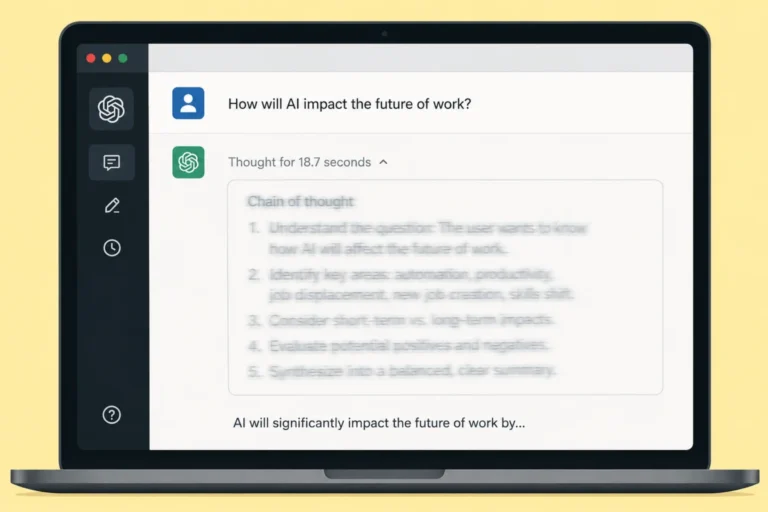
OpenAI’s ChatGPT remains the dominant force in the industry, having transitioned from a simple chatbot to a comprehensive research and execution engine. In 2025, its utility lies in "Chain-of-Thought" reasoning, allowing creators to map out entire content calendars, draft complex scripts, and perform deep-dive SEO research in seconds. Its ability to maintain context over long-form projects makes it the primary tool for narrative structuralization.
2. Canva Magic Studio: The Democratization of Professional Design
Canva has successfully integrated AI to bridge the gap between amateur and professional design. The Magic Studio suite utilizes generative fill and automated layout adjustments to allow users to convert a single brand concept into hundreds of platform-specific assets. This "design-at-scale" capability is critical for social media managers who must maintain a presence across a dozen different digital channels simultaneously.
3. RunwayML: The Future of Generative Cinematography
RunwayML has revolutionized the video sector by introducing Gen-3 Alpha and subsequent models that allow for granular control over physics, lighting, and motion. In 2025, it is used not just for generating clips from text, but for "video-to-video" transformations, enabling creators to turn smartphone footage into cinematic masterpieces. This has significantly lowered the overhead costs for independent filmmakers and commercial agencies.
4. Midjourney: Precision in Artistic Generation
Midjourney V6 and its successors have set the gold standard for aesthetic quality. In the current market, its "Style References" and "Character Consistency" features solve the long-standing problem of maintaining visual continuity in AI art. It is now a staple for creating high-fidelity concept art, book covers, and advertising imagery that rivals traditional photography.
5. Synthesia: The Scale of Human Presentation
For corporate training and educational content, Synthesia provides a solution to the "filming bottleneck." By utilizing hyper-realistic AI avatars that support over 120 languages, organizations can produce presenter-led video content without the need for studios, cameras, or actors. The 2025 updates have introduced "Expressive Avatars" that can convey nuanced emotions, further blurring the line between human and synthetic performance.
6. Descript: The Text-Based Media Editor
Descript has redefined post-production by treating audio and video as text. Its "Underdub" and "Overdub" features allow creators to edit out "ums" and "ahs" or even change spoken words by simply typing new ones. This tool has become indispensable for the podcasting industry, where it reduces editing time by an estimated 60% to 80%.
7. ElevenLabs: High-Fidelity Auditory Synthesis
ElevenLabs has mastered the "emotional prosody" of human speech. In 2025, its voice cloning technology is used for global dubbing, allowing a creator’s original voice to be translated into dozens of languages while retaining the original tone and inflection. This has opened up international markets for creators who were previously limited by language barriers.
8. Tribescaler: Algorithmic Hook Optimization
As organic reach on social platforms becomes increasingly difficult to capture, Tribescaler has emerged as a vital tool for "attention engineering." By analyzing millions of high-performing hooks and headlines, it assists creators in crafting content that is mathematically optimized for platform algorithms, specifically on text-heavy networks like X (formerly Twitter) and LinkedIn.
9. Clickable: Data-Driven Advertising Automation
Clickable addresses the intersection of creativity and conversion. By utilizing AI to analyze real-time ad performance data, the platform automatically adjusts visual elements and copy to maximize Return on Ad Spend (ROAS). For digital marketers, this represents a shift from "guessing" what works to "knowing" based on predictive modeling.
10. Copy.ai: Enterprise-Grade Marketing Workflows
Copy.ai has evolved beyond a simple copywriting tool into a "Workforce Automation" platform. It allows marketing teams to build automated workflows that handle everything from product descriptions to long-form white papers, ensuring that brand guidelines are strictly adhered to across all outputs.
Supporting Data and Performance Metrics
The adoption of these tools is backed by compelling economic data. According to a 2024 McKinsey Global Institute report, generative AI could add the equivalent of $2.6 trillion to $4.4 trillion annually to the global economy. In the creative sector specifically:
- Productivity: Content teams using AI tools report a 40% reduction in the time required for the initial drafting phase.
- Cost Efficiency: Small to medium enterprises (SMEs) have seen a 50% decrease in outsourced graphic design and video editing costs by bringing these functions in-house via AI.
- Volume: The total volume of digital content produced globally has increased by an estimated 300% since 2022, a phenomenon directly attributed to AI-assisted workflows.
Official Responses and Industry Perspectives
The rise of these tools has prompted diverse reactions from industry leaders. Sam Altman, CEO of OpenAI, has frequently stated that AI will act as a "multiplier for human intent," rather than a replacement for human creativity. Conversely, labor organizations like the Screen Actors Guild (SAG-AFTRA) have expressed concerns regarding the "digital replicas" produced by tools like Synthesia and ElevenLabs, leading to landmark negotiations regarding "informed consent and fair compensation" for performers whose data is used to train these models.
Furthermore, regulatory bodies such as the European Union, under the EU AI Act, have begun requiring "watermarking" and clear labeling for AI-generated content to prevent the spread of misinformation. This has forced companies like Runway and Midjourney to implement robust metadata standards to ensure transparency.
Broader Impact and Implications
The long-term implications of these 10 tools extend beyond mere convenience. We are witnessing a "democratization of production" where the barriers to entry for high-quality media have effectively collapsed. A single individual with a subscription to these services now possesses the production power that previously required a mid-sized creative agency.
However, this shift also brings structural challenges. The "Content Paradox" suggests that as the volume of high-quality content increases, the value of any single piece of content may decrease, leading to an "attention economy" where strategy and distribution become even more critical than the production itself.
Additionally, the ethical considerations surrounding "AI-washing" and the authenticity of the human-creator relationship remain at the forefront of public discourse. In 2025, the most successful creators are those who use AI to handle the "heavy lifting" of production while doubling down on unique, human-centric storytelling that machines cannot yet replicate.
Conclusion
The integration of ChatGPT, Canva, Runway, and the other aforementioned tools represents a fundamental change in the creative process. As these technologies continue to mature, the focus will likely shift from "how to use AI" to "how to best direct AI." For the modern content creator, the challenge of 2025 is not the lack of tools, but the mastery of an ever-expanding digital arsenal.
Data Accuracy Note: Pricing and feature sets for the platforms mentioned are based on market data as of February 2025. Corporate users are advised to verify enterprise-level licensing agreements, as terms of service regarding AI-generated intellectual property continue to evolve in various jurisdictions.
About the Author