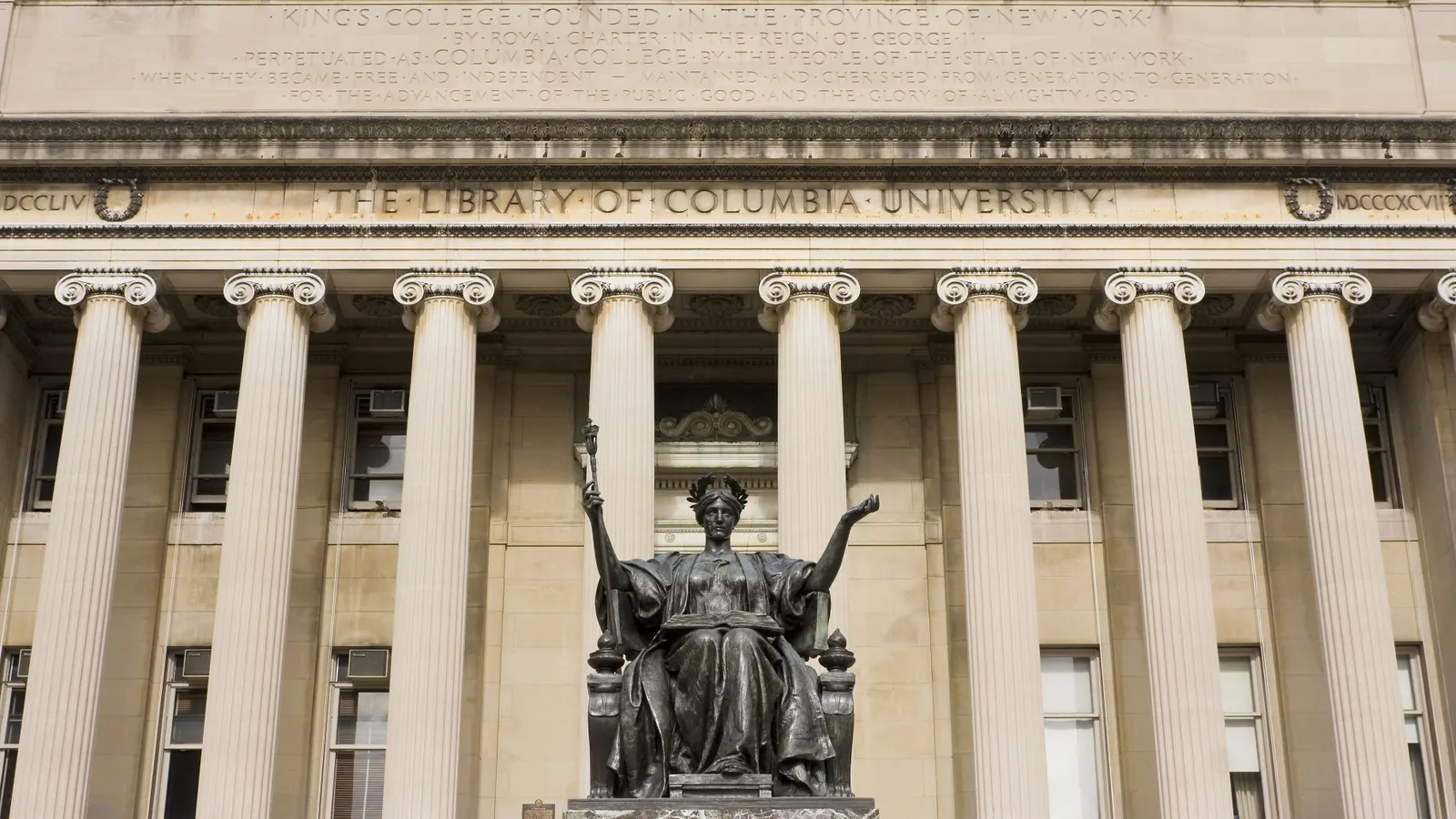
Columbia University is embroiled in a significant civil rights lawsuit brought forth by a coalition of current and former students and employees. The plaintiffs contend that the prestigious Ivy League institution has demonstrated "deliberate indifference" to the pervasive harassment experienced by Palestinians on campus. The complaint, filed in the New York County Supreme Court, further alleges that Columbia University, far from intervening to protect its Palestinian community members, has instead "actively participated in and amplified the racially, ethnically, and politically motivated targeting of Palestinian students, staff, and faculty." The plaintiffs are seeking judicial intervention and substantial damages.
This legal challenge casts a spotlight on a series of controversies and criticisms Columbia University has faced regarding its handling of discrimination and harassment allegations. The lawsuit comes on the heels of a February settlement where the university resolved a lawsuit filed by Jewish students who claimed insufficient action was being taken to combat antisemitism on campus. Previously, in the summer of 2023, Columbia had agreed to implement a wide array of policies to end federal civil rights investigations into antisemitism and secure the restoration of its federal research funding, a move prompted by the Trump administration. The university, when reached for comment on Wednesday, declined to provide a statement on the ongoing litigation, citing pending legal proceedings.
The Role of the Office of Institutional Equity
A central pillar of the plaintiffs’ grievances revolves around the operations of Columbia’s Office of Institutional Equity (OIE), an office established in August 2024. According to the lawsuit, many Palestinian students and employees began receiving notifications from the OIE informing them that they were under investigation. Crucially, the plaintiffs assert that the conduct prompting these investigations often constituted "protected speech and lawful advocacy," such as op-eds advocating for divestment from Israel.
The lawsuit details a problematic policy within the OIE that required individuals accused of discrimination to sign non-disclosure agreements (NDAs) before they could access evidence against them or engage with investigators. This practice, the plaintiffs argue, "operates to suppress the speech of Palestinian community members who are disproportionately subjected to OIE investigation, and to prevent them from seeking support, legal counsel, or community assistance in connection with those proceedings." Furthermore, the complaint alleges that the evidence presented in many of these disciplinary investigations against Palestinian students and employees was notably scant.
One named plaintiff, Layla Saliba, a prospective 2025 graduate of Columbia’s School of Social Work, recounted her experience. In October 2024, she was notified by the OIE of an investigation into alleged discriminatory behavior. However, the lawsuit states that this investigation was initially "premised on an opinion piece on Palestine that Saliba did not write." Despite this questionable foundation, the OIE reportedly expanded its probe to encompass "her published writing, her social media, and her communications as a student leader." Although Saliba was eventually cleared by the OIE seven months later, the university placed a hold on her academic transcript, preventing her from submitting it to potential employers or applying for further graduate studies.
Allegations of Unequal Treatment and Viewpoint Discrimination
The lawsuit further contends that Columbia University has engaged in viewpoint discrimination and unequal treatment through its disparate responses to pro-Palestinian student groups and the prevalence of anti-Palestinian harassment on campus. The suspension of two prominent pro-Palestinian organizations, Students for Justice in Palestine and Jewish Voice for Peace, following campus demonstrations is cited as evidence. The plaintiffs argue that these groups were subjected to restrictions while other student organizations involved in advocacy were "allowed to operate without comparable restriction," highlighting a perceived imbalance.
The lawsuit also points to the university’s establishment of an antisemitism task force, contrasting it with what it describes as Columbia’s "deliberate refusal" to create a similar body dedicated to addressing the concerns of its Palestinian campus members. The plaintiffs allege that the antisemitism task force ultimately contributed to the perpetuation of anti-Palestinian harassment.
Initially, the lawsuit claims, the antisemitism task force "resisted defining the term ‘anti-Semitism’ in any principled or legally coherent manner." The task force eventually recommended that Columbia adopt a formal definition of antisemitism formulated by the International Holocaust Remembrance Alliance (IHRA). According to the lawsuit, university leadership then leveraged this definition to conflate criticism of Israel and Zionism with antisemitism.
The IHRA definition itself has been a subject of debate. While it states that criticism of Israel "similar to that leveled against any other country" does not constitute antisemitism, it includes examples of antisemitism such as comparing "contemporary Israeli policy" to Nazi Germany. While favored by some Jewish advocacy groups and the former Trump administration, civil liberties and free speech organizations have raised concerns that the IHRA definition can be misapplied to stifle protected speech critical of Israel and its policies. Kenneth Stern, the lead drafter of the IHRA definition and head of Bard College’s Center for the Study of Hate, has publicly expressed reservations about its use in enforcing antidiscrimination laws on campuses, warning of its potential for misapplication in restricting academic discourse.
The lawsuit asserts that the adoption and application of the IHRA definition subjected the plaintiffs to "false accusations of antisemitism" and cultivated "a pervasive climate of fear and self-censorship with respect to their academic work." Consequently, the plaintiffs allege they modified or suppressed their research, coursework, and professional collaborations "out of a well-founded fear of being subjected to OIE investigation and institutional discipline."
Alleged Doxxing, Harassment, and Unanswered Calls for Help
Beyond institutional policies, the plaintiffs also allege that Columbia University failed to adequately support students who were subjected to repeated doxxing campaigns. These campaigns, allegedly carried out by individuals employed by or affiliated with Columbia, specifically targeted Palestinian students and employees. The lawsuit claims that requests for aid and intervention from university administrators were frequently met with silence.
One plaintiff, Maryam Alwan, a 2025 graduate, reportedly sought university support amidst ongoing doxxing and harassment from Columbia affiliates. According to the lawsuit, many of her communications with university officials went unanswered. However, the complaint notes that multiple administrators reportedly reached out with offers of support shortly after Alwan was interviewed by CBS News about her experiences on campus. When she followed up on these offers, her requests for assistance were allegedly ignored once more.
Despite these alleged instances of inaction, Alwan reportedly faced six disciplinary investigations and actions, five of which were ultimately dismissed or rescinded. The most recent investigation, initiated by the OIE after her graduation, placed her on "conditional disciplinary probation" for emails she sent to administrators detailing the harassment she had experienced on campus.
The lawsuit criticizes Columbia’s response to doxxing, arguing that the university did not take formal action swiftly enough. While a doxxing task force was announced in November 2023, a formal anti-doxxing policy was not adopted until March 2025. Crucially, the lawsuit states that this new policy was not applied retroactively, leaving students who had been targeted in the interim without recourse.
A central figure implicated in the lawsuit is Shai Davidai, a former Columbia business professor. The plaintiffs allege that Davidai was a driving force behind the harassment and doxxing of Palestinian students and employees. During his tenure at Columbia, Davidai, an Israeli national and vocal critic of pro-Palestinian demonstrators, frequently named and criticized protesters on social media.
Columbia launched an investigation into Davidai’s conduct in February 2024. The following October, the university temporarily revoked his access to campus, with a spokesperson citing that he had "repeatedly harassed and intimidated University employees." Davidai’s faculty status and salary remained unaffected during this period. However, the lawsuit claims that Columbia abruptly closed the case the subsequent summer without disclosing its findings. Davidai ultimately departed from the university in July 2025.
In response to the lawsuit, Davidai vehemently denied the allegations, calling the lawsuit "lie-riddled" and part of "an anti-Jewish, anti-Israeli, and anti-American campaign" waged by the plaintiffs. He stated on social media, "I have never doxxed anyone, and I never would." He urged the plaintiffs to "look up what that word actually means."
The lawsuit further details the profound psychological toll on the plaintiffs, who allege suffering from PTSD, panic attacks, sleep disturbances, nightmares, significant weight loss, and hospitalization as a direct result of the doxxing and harassment campaigns. Bahia Munem, a former lecturer at Columbia’s Center for the Study of Ethnicity and Race, is cited as another instance of alleged institutional indifference. The lawsuit claims she was forced to resign two years before her contract concluded due to protracted harassment and the university’s failure to provide protection. "A scholar who had been recognized, promoted, and extended by Columbia was forced to leave the institution she had served for four years because Columbia refused to protect her," the lawsuit states.
External Influences and Federal Scrutiny
Columbia University has been under intense public scrutiny, particularly following the pro-Palestinian student encampments that emerged in the spring of 2024 and the university’s subsequent handling of the fallout. The plaintiffs allege that external political influences, including those from federal lawmakers and former President Donald Trump, improperly shaped Columbia’s responses to pro-Palestinian protests and the harassment faced by Palestinian students.
In August 2024, the House Committee on Education and the Workforce, then chaired by Representative Virginia Foxx, demanded that Columbia produce extensive internal documentation related to antisemitism on campus. The lawsuit asserts that the university voluntarily submitted this information, including student disciplinary records and files on both closed and ongoing investigations, "in violation of Columbia’s own policies and applicable privacy protections." The complaint further alleges that Columbia failed to properly redact these disciplinary files, leading to the "unlawful disclosure of their personally identifying information." This disclosure, the lawsuit argues, contravened the Family Educational Rights and Privacy Act (FERPA), which generally prohibits colleges from sharing student educational records without explicit written consent.
The implications of this lawsuit are far-reaching, potentially impacting not only Columbia University’s reputation and financial standing but also setting a precedent for how educational institutions navigate complex issues of free speech, discrimination, and institutional responsibility in an increasingly polarized academic environment. The legal proceedings are expected to scrutinize the university’s policies, enforcement mechanisms, and its commitment to fostering an inclusive and safe environment for all members of its community.
About the Author