The burgeoning field of Answer Engine Optimization (AEO) presents marketers and RevOps professionals with a critical strategic decision: how to best leverage artificial intelligence to enhance brand visibility in an era of AI-generated answers. Two prominent players, HubSpot AEO and Profound, offer distinct approaches to this challenge, catering to different operational needs and analytical depths. This comparison delves into their core functionalities, pricing structures, ease of use, and ultimate actionability, providing a framework for organizations to determine which solution aligns best with their strategic objectives.
The fundamental divergence between HubSpot AEO and Profound lies in their operational focus: execution versus in-depth analysis. HubSpot AEO is engineered to streamline the workflow from identifying AI visibility insights to implementing content and campaign adjustments directly within the HubSpot ecosystem. Conversely, Profound prioritizes a more granular examination of brand perception, citation sources, and competitive positioning across a wider array of AI platforms, demanding a subsequent step for action. For many marketing leaders and SEO strategists, the choice hinges on whether the immediate need is for rapid insight-to-execution cycles or for a comprehensive understanding of AI’s perception of their brand.
Understanding the Core Offerings: Execution-Focused HubSpot AEO vs. Analysis-Rich Profound
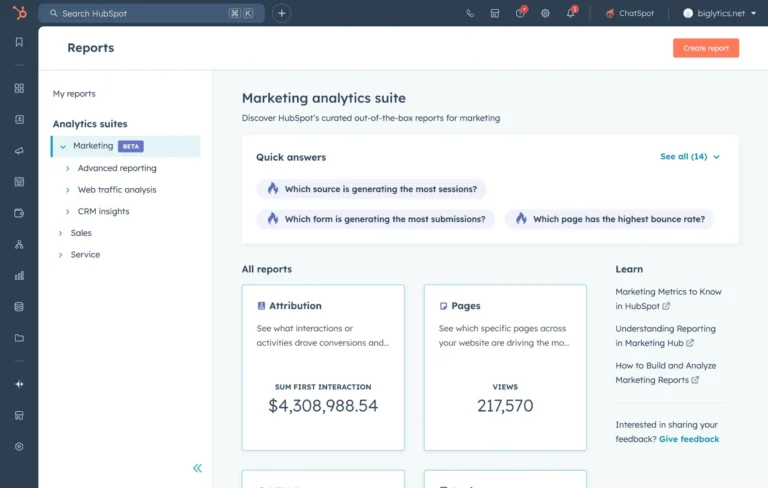
HubSpot AEO, an integral component of HubSpot’s broader suite of marketing and sales tools, is designed to track a brand’s presence in AI-generated answers across key platforms like ChatGPT, Gemini, and Perplexity. Upon identifying areas for improvement, it generates prioritized recommendations that are directly actionable within HubSpot’s integrated environment. This seamless integration is a key differentiator. For instance, a marketing team can discover that a competitor is outperforming them for a specific prompt, identify the customer segments most relevant to that prompt via HubSpot’s Smart CRM, and immediately initiate content creation or campaign optimization without ever leaving the platform. This integrated workflow is powered by HubSpot’s Marketing Hub for content publishing, Content Hubs for asset creation, and Smart CRM for audience context, ensuring that recommendations are not generic but tailored to specific business needs and audience segments.
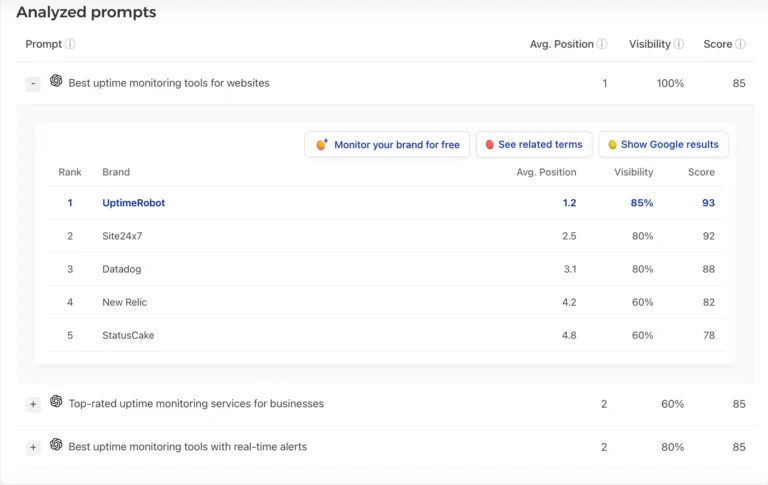
Profound, on the other hand, offers a more extensive analytical lens. It monitors a broader spectrum of AI platforms, often including Google AI Overviews and Claude, in its base offerings. Profound’s strength lies in its ability to conduct deeper dives into brand perception, tracking visibility, share of voice, sentiment, and critically, citation sources. This allows organizations to understand not just if they appear in AI answers, but why and how they are being described. For example, Profound can map out which domains are most influential in shaping AI responses to specific queries, offering a sophisticated understanding of the AI’s informational ecosystem. While Profound provides a wealth of analytical data and optimization opportunities, it necessitates a separate workflow for implementing suggested changes, requiring users to export insights and integrate them into their existing content management systems or marketing execution tools.
The Operational Question: Speed of Execution vs. Depth of Analysis
The decision between HubSpot AEO and Profound often boils down to an organization’s existing infrastructure and operational bottlenecks. For teams that prioritize agility and aim to minimize the time between identifying an AI visibility gap and publishing a response, HubSpot AEO’s integrated execution layer offers a significant advantage. The ability to leverage existing CRM data to inform content strategy, for example, allows for highly targeted optimization efforts. This is particularly beneficial for small to medium-sized businesses (SMBs) and mid-market companies that may have leaner teams and need to maximize the efficiency of their marketing efforts.
Conversely, larger enterprises or organizations with dedicated data science or SEO teams might find Profound’s in-depth analytical capabilities more compelling. The granular insights into brand perception, sentiment, and competitive citation networks can be invaluable for long-term strategic planning, brand reputation management, and understanding complex AI-driven narratives. This deeper understanding of how AI systems interpret and present information allows for more sophisticated SEO strategies, especially in industries where brand perception is paramount.
A Timeline of AI Search Visibility Tools
The emergence of AI-powered search has been rapid, with significant advancements occurring over the past few years. Early approaches to optimizing for AI-generated content were often manual, relying on best practices for factual accuracy and comprehensive coverage. The development of dedicated AEO tools represents a maturation of this field.
HubSpot introduced its Answer Engine Optimization (AEO) capabilities as part of its ongoing commitment to helping businesses adapt to evolving search behaviors. The AEO Grader, a free diagnostic tool, was launched to provide a baseline understanding of a brand’s AI search visibility, serving as an entry point for businesses before committing to paid solutions. The full HubSpot AEO product was then developed to bridge the gap between insight and action, integrating directly into their established marketing automation platform.
Profound emerged as a specialized platform focused on providing deep analytics for AI visibility. Its development has been driven by the increasing complexity of AI-generated content and the need for organizations to understand the nuances of their presence across multiple AI models. Profound’s emphasis on citation tracking and brand perception analysis reflects a growing understanding that visibility in AI answers is not just about keyword inclusion but also about the credibility and context of the information provided.
Data and Demonstrable Performance: Quantifying the Difference
While both platforms aim to improve AI search visibility, their approaches to data reporting and analysis differ. HubSpot AEO presents data in a way that is easily digestible and directly links to actionable tasks within the HubSpot platform. For instance, recommendations are often framed in terms of content creation or campaign adjustments, with clear visibility scores and competitor benchmarks. The platform’s historical trend dashboards allow users to track changes over time and correlate them with content updates, providing a measure of impact. However, it’s crucial to note that AI visibility metrics are indicators, not direct pipeline measures. Meaningful impact measurement requires correlating these scores with downstream signals such as organic traffic, lead quality, and assisted conversions, a practice facilitated by HubSpot’s integrated CRM.
Profound, with its enterprise focus, offers a more extensive dataset. Users can delve into detailed reports on sentiment analysis, citation networks, and competitive share of voice across various AI platforms. This allows for a more forensic examination of AI outputs. For example, an enterprise brand might use Profound to audit AI-generated narratives around their company, identifying specific sources that consistently influence AI responses and understanding how their brand positioning shifts across different prompts and competitors over time. This depth of data is particularly valuable for PR and brand management teams seeking to understand and shape the AI-driven conversation about their organization.
Pricing and Accessibility: Democratizing AI Optimization
The pricing models for HubSpot AEO and Profound reflect their target markets and feature sets. HubSpot AEO offers a compelling entry point with its free AEO Grader, a one-time diagnostic tool that requires no subscription. The paid standalone HubSpot AEO plan begins at $50 per month, with an annual billing option of $45 per month, and includes tracking for 25 prompts with a 28-day free trial. For teams looking to fully integrate AEO workflows with content creation and campaign execution, an upgrade to Marketing Hub Professional is necessary, with pricing starting at approximately $800 per month. This tier unlocks the full integration layer, providing CRM-informed recommendations and automated workflows. This tiered approach makes HubSpot AEO accessible to a wide range of businesses, from startups to larger organizations.
Profound’s pricing starts with a free one-time AEO report. Their paid plans begin at $99 per month for the Starter edition ($82.50 per month billed annually) and $399 per month for the Growth/Standard tier ($332.50 per month billed annually). Enterprise pricing is custom. Agency plans are also available from $99 per month. This structure positions Profound as a more significant investment, aligning with the needs of larger organizations that require its extensive analytical capabilities. For SMBs and mid-market teams operating on a budget, HubSpot AEO’s lower entry point and integrated ecosystem can represent a more cost-effective solution by potentially reducing the need for additional specialized tools.
Ease of Use and Adoption: Bridging the Technical Divide
HubSpot AEO is engineered with user-friendliness in mind, particularly for marketing teams that may not possess deep technical expertise in AEO. The setup process is designed to be quick, often taking just minutes to enter a brand’s name, select relevant prompts, and begin tracking. The dashboard presents visibility scores, competitor benchmarks, and recommendations in clear, accessible language. Guided workflows are integrated to facilitate the transition from insight to action, minimizing the learning curve and making it easier for cross-functional teams, including content strategists, SEO leads, and RevOps managers, to interpret and act on the data.
Profound, while featuring a clean and modern interface, is built for users who are comfortable working with detailed visibility data. Its platform rewards a deeper understanding of concepts like citation analysis, prompt-level tracking, and competitive share-of-voice metrics. For teams with a dedicated SEO or data analysis function, this depth can be a significant advantage. However, for teams lacking such specialization, the learning curve might be steeper, potentially leading to longer onboarding times and slower adoption. For stakeholder sharing, HubSpot AEO benefits from its existing reporting infrastructure, allowing for seamless dashboard sharing within the platform. Profound supports CSV exports and API-based reporting, but these require additional configuration steps to align with standard stakeholder workflows.
Actionability and Workflow Integration: The Critical Link
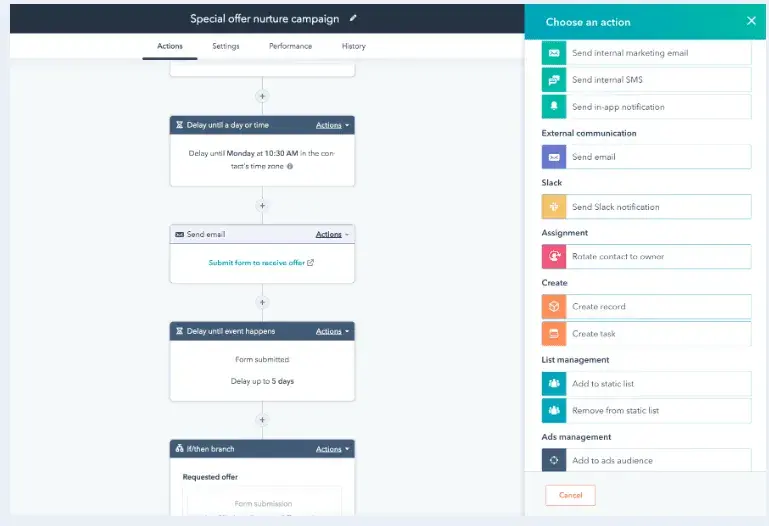
The most significant operational divergence between HubSpot AEO and Profound lies in their actionability and workflow integration. HubSpot AEO excels by connecting AI visibility data directly to content and campaign execution within a single platform. When the tool identifies a gap, such as a brand’s absence from AI-generated answers for a specific prompt, it provides a direct pathway to creating or updating relevant content. This seamless integration with Marketing Hub, Content Hubs, and Smart CRM ensures that recommendations are not isolated data points but are immediately woven into the ongoing marketing strategy. This significantly shortens the cycle from identifying an AI visibility gap to publishing content that addresses it, a critical operational challenge in AI SEO.
-2.png)
Profound, while offering robust improvement recommendations and tools like FAQ generation, lacks an inherent content execution layer. Acting on Profound’s insights necessitates exporting the data and manually integrating it into a separate CMS or briefing a content team. This process, while manageable for teams with dedicated content operations, introduces friction and potential delays for those where analysts and content creators are the same individuals or where rapid iteration is essential. The transition from insight to execution is a complex operational problem, and HubSpot AEO is structurally designed to streamline this process, making it a more potent tool for teams focused on consistent and timely content deployment.
Data Depth and Intelligence: Unpacking the AI’s Understanding
In terms of raw data depth, Profound generally holds an advantage. It tracks a wider array of AI platforms in its base edition and offers more flexible custom prompt configurations. Its granular insights into brand perception, including how AI systems describe a brand, which sources influence these descriptions, and how positioning shifts over time, are invaluable for enterprise-level brand, PR, and data teams. This allows for in-depth auditing of AI-generated narratives and investigation into competitive citation patterns.
HubSpot AEO reliably tracks AI visibility across ChatGPT, Gemini, and Perplexity with daily updates and historical trend dashboards. Its citation analysis identifies key sources and content types driving AI answers, which is sufficient for most content optimization decisions. The data is structured for clarity and ease of action, prioritizing efficiency over exhaustive analytical complexity. The trade-off is clear: Profound offers more data, while HubSpot AEO makes that data more immediately actionable. For most marketing and RevOps teams, the advantage of actionability often outweighs the benefit of deeper analytical depth. However, for enterprise teams with the resources to support deep analysis, Profound’s data layer can provide significant strategic value.
Integrations and Ecosystem: A Structural Advantage
HubSpot AEO’s primary integration advantage is structural. Being built into the HubSpot platform means AI visibility data connects natively with CRM records, campaign workflows, contact segments, and content tools. This eliminates the need for API setup, middleware, or complex configuration to route insights into execution. For teams already invested in the HubSpot ecosystem, this is a compounding advantage, as AEO becomes another data source within a familiar system, rather than an isolated tool requiring its own distinct workflow.
Profound offers API access for custom integrations and can connect with external CMS and marketing platforms, providing flexibility for enterprise teams with established data infrastructures. However, this flexibility often requires technical setup and ongoing maintenance, introducing operational complexity that HubSpot AEO bypasses. Profound integrates well into custom stacks but does not offer pre-built execution workflows. When evaluating both tools through a competitive intelligence lens, integration often becomes the deciding factor, prompting teams to consider where they already operate and which tool minimizes the distance between insight and implementation.
Use Cases and Decision Framework: Tailoring the Choice
Choose HubSpot AEO if:
- Your primary bottleneck is the speed of execution for AI visibility insights.
- You are already a HubSpot user and want seamless integration with your existing CRM, content, and campaign tools.
- Your team needs clear, actionable recommendations that can be implemented directly without significant external workflow management.
- You are an SMB or mid-market company looking for a cost-effective solution that consolidates multiple marketing functions.
- Ease of use and rapid adoption across a marketing team are priorities.
Choose Profound if:
- You require in-depth analysis of brand perception, citation networks, and competitive positioning across a wide range of AI platforms.
- Your organization has dedicated SEO or data analysis teams capable of leveraging granular data for strategic insights.
- Understanding the "why" behind AI visibility is more critical than immediate execution speed.
- You are an enterprise-level organization with a complex content operations stack and the resources to manage external workflow integrations.
- Auditing AI-generated narratives and understanding subtle shifts in brand perception are key objectives.
Best for execution-focused teams: HubSpot AEO
Best for analysis-focused enterprises: Profound
Can Both Tools Be Used Together?
Yes, it is possible for enterprise teams to leverage both HubSpot AEO and Profound synergistically. Profound can serve as the strategic intelligence layer, providing deep analysis of brand perception, influential sources, and competitive weaknesses. This strategic framing can then inform the execution layer handled by HubSpot AEO. HubSpot AEO can translate these high-level insights into concrete content updates, campaign triggers, and CRM-aligned optimization priorities, turning strategic understanding into tangible marketing actions.
In practice, however, most organizations will find that one platform sufficiently addresses their primary operational bottleneck. If the main challenge is acting on AI visibility data, HubSpot AEO covers the full workflow. If deep brand perception analysis is a standalone priority, particularly for large brands managing complex AI narratives across numerous platforms, Profound adds a layer of strategic value that HubSpot AEO does not replicate.
Free Options and Getting Started Quickly
For organizations looking to establish a baseline understanding of their AI search visibility without immediate financial commitment, the HubSpot AEO Grader offers a free, one-time diagnostic. This tool generates a composite score across sentiment, presence quality, recognition, share of voice, and market position for key AI engines like ChatGPT, Perplexity, and Gemini. While it doesn’t provide continuous monitoring or custom prompt tracking, it serves as an excellent initial step for any team that has not yet assessed its AI visibility.
Profound also offers a free one-time AEO report, providing a useful starting point for deeper analysis before committing to a paid plan. Both free options require no credit card, allowing users to gain valuable insights and inform their decision-making process. Once a baseline score is established, teams can better assess whether their visibility gaps warrant the ongoing monitoring and execution capabilities of HubSpot AEO or the detailed analytical depth of Profound. A strategic tip for teams considering paid tools is to use the AEO Grader to benchmark a competitor before starting a paid trial, providing valuable context that can refine prompt selection and maximize the utility of ongoing monitoring.
Frequently Asked Questions About HubSpot AEO vs. Profound
Do I need a HubSpot subscription to use AEO?
No, HubSpot AEO is available as a standalone product. The core AEO product does not require an existing HubSpot subscription. The free AEO Grader also requires no subscription. However, teams aiming to connect AEO recommendations with content workflows and CRM data will benefit from a Marketing Hub subscription.
Can I run a one-time analysis before I commit?
Yes, both platforms offer free entry points for one-time analysis. The HubSpot AEO Grader provides a free, one-time brand visibility score, and Profound offers a free one-time AEO report. These diagnostics are valuable for establishing a baseline and evaluating which platform’s output best suits a team’s workflow.
When should I use both HubSpot AEO and Profound together?
Using both tools is most beneficial for enterprise teams where distinct departments handle brand perception analysis and content execution. Profound can provide the strategic intelligence for SEO or brand teams, while HubSpot AEO can serve as the execution layer for marketing and content teams acting on those insights. For most teams, one platform will be sufficient, depending on whether execution or analysis is the primary bottleneck.
How do I measure impact across channels?
AI visibility metrics are indicators, not direct pipeline measures. They should be used as a research and prioritization layer, integrated with conversion data, Google Search Console data, and sales feedback. In HubSpot AEO, historical trend dashboards help track visibility changes over time and correlate them with content updates. To measure impact effectively, teams must meticulously record when changes are made, compare periods, and link visibility shifts to downstream signals like organic traffic, lead quality, or assisted conversions, rather than treating score improvements as standalone success metrics.
About the Author