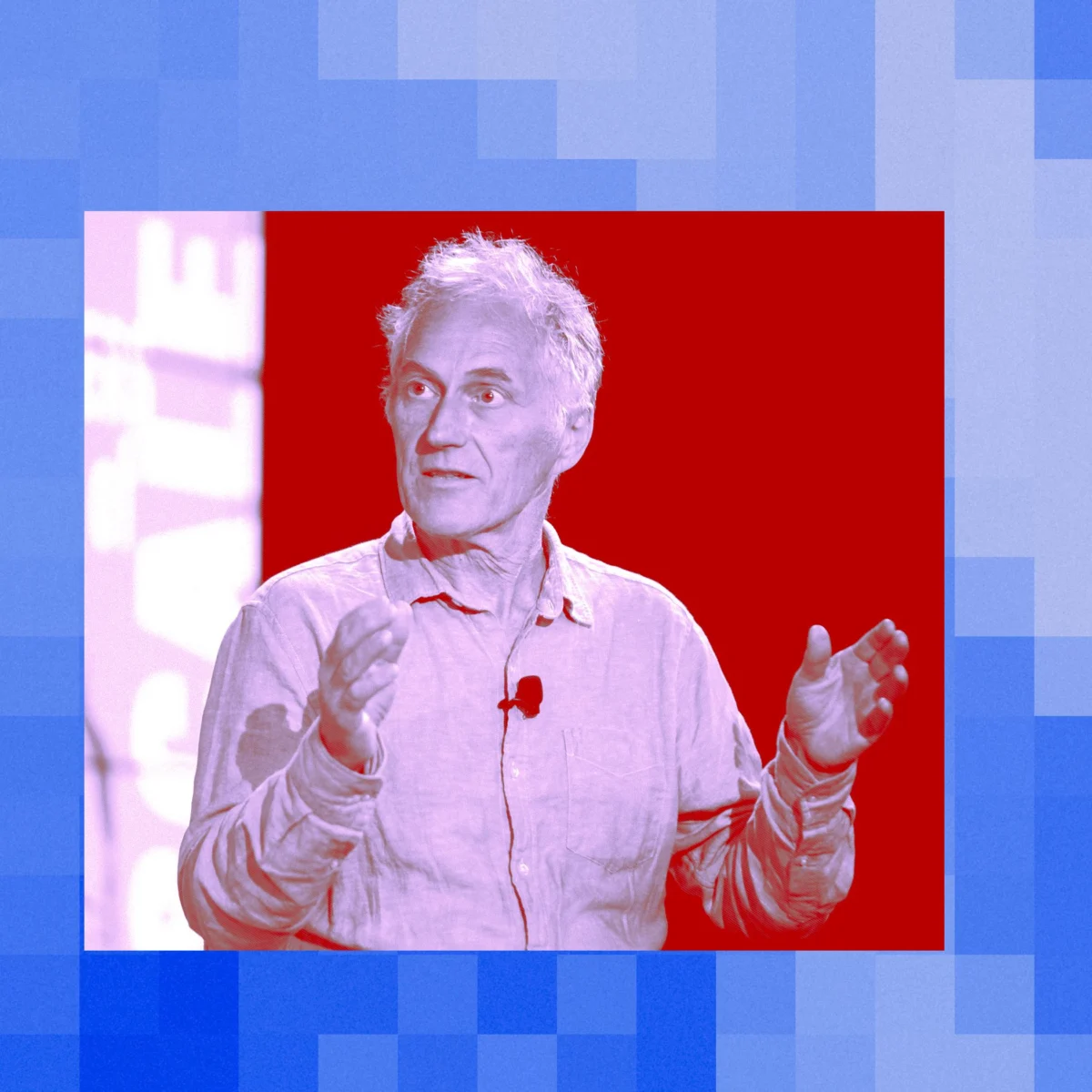
Tim O’Reilly, the renowned publisher, internet pioneer, and venture capitalist who famously coined the term "Web 2.0," has long advocated for a fundamental yardstick in measuring the success of any entity: the ability to create more value than one captures. In the current era of generative artificial intelligence, O’Reilly is applying this ethos to a burgeoning technological landscape he fears is being prematurely enclosed by corporate interests. As the tech industry grapples with the dominance of "hyperscalers" like Microsoft, Google, and Amazon, O’Reilly is championing a shift toward a truly open-source AI architecture—one that transcends mere "open-weight" models to empower a broader spectrum of designers and users.
The Philosophical Shift: From Extraction to Participation
The core of O’Reilly’s argument rests on the "architecture of participation," a concept he popularized during the early days of the open-source movement. In his view, the current trajectory of AI development mirrors the proprietary battles of the 1990s, where companies sought to lock users into closed ecosystems. Today’s frontier models, such as OpenAI’s GPT-4 or Anthropic’s Claude, are often criticized by O’Reilly for being built as architectures of control rather than freedom. While these models offer unprecedented capabilities, they often function as "black boxes" that track user data and limit the ability of independent developers to embed their own proprietary "special sauce" into the system.
O’Reilly argues that the industry’s focus on building the largest, most powerful models may be a strategic miscalculation. He suggests that while frontier models are optimized for specific high-end use cases, they may not align with the practical, daily needs of the general population. The push for open-source AI is, therefore, not just a technical preference but a democratic necessity. By unlocking the entire stack—from neural-net weights to the application harness—the industry can foster a "ferment of innovation" similar to the early days of the World Wide Web, which flourished outside the immediate control of venture capital and corporate gatekeepers.
A Chronology of Open Source and Market Evolution
To understand O’Reilly’s current stance, one must examine the historical context of technological shifts over the last three decades. The 1990s were defined by the rise of open-source software like Linux and the Apache HTTP Server, which provided the foundational infrastructure for the modern internet. During this period, the industry’s focus was on breaking the Microsoft monopoly by promoting interoperability and shared standards.
By the mid-2000s, the "Web 2.0" era shifted the focus toward platforms that harnessed collective intelligence. However, O’Reilly notes that a significant shift occurred around 2010. This period saw the rise of venture-capital-subsidized "blitzscaling," exemplified by companies like Uber and Lyft. In this model, billions of dollars in capital were used to subsidize services, effectively allowing VCs to pick market winners rather than letting the marketplace decide through organic competition. O’Reilly characterizes this as a form of "anti-capitalism," where the desires of a few tech leaders and their financiers determine market strategy.
The current AI boom, which began in earnest with the release of ChatGPT in late 2022, represents the latest chapter in this chronology. While massive investment is flowing into a handful of "frontier" labs, O’Reilly observes that the real action is increasingly moving toward open-source alternatives. This mirrors the early 90s, when the web emerged as a disruptive force while the industry was distracted by the "PC wars."
Supporting Data: The Performance Gap and Economic Realities
The debate between open-source and closed-source AI is increasingly supported by empirical data. Recent benchmarks show that open-weight models are rapidly closing the performance gap with their proprietary counterparts. For instance, Meta’s Llama 3 has demonstrated performance levels that rival GPT-4 in several key reasoning and coding benchmarks. Furthermore, the cost of training and deploying smaller, specialized models is plummeting. According to industry reports, the cost of training high-performing models has decreased significantly as techniques like Parameter-Efficient Fine-Tuning (PEFT) and Quantization have become mainstream.
O’Reilly’s own business interests provide a stark data point on the shifting value of information. At its peak, O’Reilly Media’s book publishing business generated approximately $70 million in annual revenue. Today, that figure has declined to roughly $30 million. This 57% decrease reflects a broader 25-year decline in traditional publishing, driven by the digital democratization of knowledge. As AI models "hoover up" vast quantities of written content, O’Reilly emphasizes the need for new tools that compensate creators while allowing users to invoke the "superpower" of expert knowledge.
The Geopolitical Context: The China Factor
A critical component of O’Reilly’s analysis is the geopolitical competition between the United States and China. While the U.S. currently leads in "frontier" AI—the development of the largest, most computationally expensive models—O’Reilly warns that this lead may be illusory. He points out that China is focusing on the wide diffusion of lower-level, highly efficient models throughout its society and industrial sectors.
By fostering an environment where AI is integrated into the fabric of everyday life and manufacturing, China may achieve a level of societal innovation that the U.S. misses by focusing solely on centralized, high-end power. This "bottom-up" approach to AI deployment suggests that the ultimate winner of the AI race may not be the nation with the biggest model, but the one that most effectively democratizes the technology’s use.
Security Concerns and the "Frontier Risk" Argument
Critics of open-source AI often cite security risks, arguing that making powerful models accessible allows bad actors to bypass safety guardrails. These concerns include the potential for AI to assist in creating biological pathogens or conducting large-scale cybersecurity attacks. However, O’Reilly counters this narrative by noting that nearly all significant AI-related security incidents to date have originated from frontier models, not open-weight ones.
He argues that the risks associated with "super-intelligence" or catastrophic misuse are actually arguments for slowing down the development of frontier models rather than restricting open-source innovation. In O’Reilly’s view, open source provides a "security through transparency" advantage, allowing a global community of developers to identify and patch vulnerabilities more quickly than a closed team within a single corporation.
AI as a New Creative Medium
Beyond the technical and economic implications, O’Reilly views AI as a transformative creative medium. He rejects the notion that AI-generated content is inherently inferior or "unoriginal." Instead, he draws a historical parallel to the invention of the camera. Initially, photography was viewed with skepticism by the art world, with many claiming that a machine could not produce "true" art. Over time, however, the camera became a tool for masters like Ansel Adams to express unique visions.
O’Reilly uses AI as a "thought partner" and "functional writer," employing it to brainstorm and synthesize long interviews into usable formats. He predicts that the current resistance to AI-assisted writing will eventually be seen as a "legacy" mindset. Just as society transitioned from horses to automobiles, the mastery of "summoning words from Large Language Models (LLMs)" will become a standard skill for expressing complex ideas.
Broader Impact and Implications for the Future
The shift toward open-source AI has profound implications for corporate strategy and individual privacy. O’Reilly is currently involved with the AI Disclosures Project and advocates for an "open-memory consortium." This initiative aims to counter the "lock-in" strategies of companies like Meta, which seek to own the "AI that knows you best." An open-source vision for AI memory would allow users to switch between different models and providers while maintaining their personal context and data history.
The broader impact of O’Reilly’s vision is a move away from the "mainframe" era of AI—where intelligence is centralized in a few massive clusters—toward a distributed intelligence model. If the future of AI follows the path of the internet, the most significant value will be created not by those who own the models, but by those who use them to build new applications, services, and societal solutions.
As the industry stands at this crossroads, the tension between value capture and value creation remains the defining conflict. O’Reilly’s advocacy for an open-source "architecture of freedom" serves as a reminder that the ultimate worth of a technology is measured by how much it enables the world to do, rather than how much profit it extracts for its owners. The coming decade will determine whether AI becomes a tool for universal empowerment or a refined instrument of corporate control.
About the Author