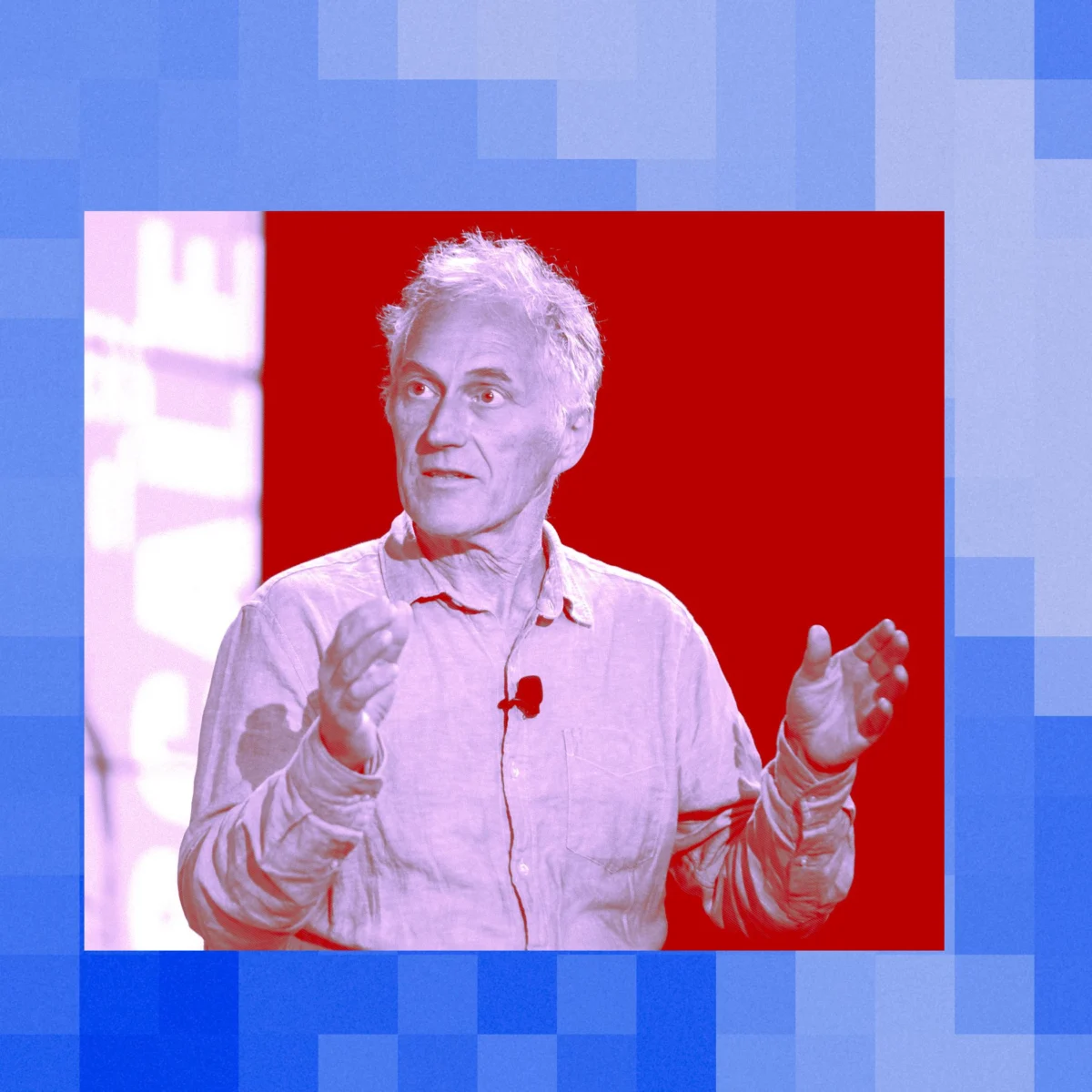
The rapid evolution of artificial intelligence has sparked a fundamental debate over the ownership, accessibility, and architectural philosophy of the next generation of computing. Tim O’Reilly, a seminal figure in the development of the commercial internet and the open-source movement, argues that the current trajectory of AI development—dominated by a handful of "hyperscale" corporations—threatens to repeat the monopolistic patterns of the 1990s. O’Reilly’s central thesis, which has guided his career as a publisher, venture capitalist, and tech theorist, remains steadfast: a company or person’s true worth is measured by whether they create more value than they capture. In the context of AI, O’Reilly posits that the industry must shift toward an "architecture of participation" to ensure that the technology remains a tool for broad societal innovation rather than a mechanism for corporate lock-in.
The Shift from Open-Weight Models to Open-Source Ecosystems
A critical distinction in O’Reilly’s vision is the definition of open-source AI. While much of the contemporary discourse focuses on "open-weight" models—where the pre-trained parameters of a neural network are made public—O’Reilly argues that this is an insufficient metric for true openness. Drawing parallels to his work in the 1990s during the rise of Linux and the World Wide Web, he suggests that true open source requires transparency and accessibility across the entire "stack."
This stack includes not only the model weights but also the training data, the "harness" (the software infrastructure that runs the model), and the application layer. O’Reilly observes that current industry leaders, such as OpenAI, Google, and Anthropic, are building architectures of control. These systems are designed to track user behavior and create proprietary ecosystems that make it difficult for developers to switch providers or maintain data sovereignty. By contrast, an architecture of freedom would allow for a clean separation between the model and the application, enabling users to "embed their own special sauce" into the technology.
Historical Chronology: From the Web to the AI Frontier
The current tension in the AI sector reflects a historical cycle that O’Reilly has documented for over three decades. To understand the present moment, one must look at the chronology of technical "disruptions" and the subsequent attempts to centralize them:
- The Early 1990s (The Browser Wars): During this period, Microsoft attempted to dominate the personal computer landscape by bundling its browser and controlling the desktop. The industry’s focus was on proprietary software licenses.
- The Rise of the Web (1993–2000): While the market was fixated on the PC, the World Wide Web emerged as an open, decentralized platform. It was not funded by venture capital in its infancy but grew through a "ferment of innovation" and open standards like HTML and HTTP.
- The Era of Web 2.0 (2004–2010): O’Reilly coined this term to describe the transition to the web as a platform, characterized by user-generated content and the "architecture of participation."
- The Venture Capital Pivot (2010–Present): The rise of "blitzscaling" companies like Uber and Lyft marked a shift. Rather than the market picking winners, massive infusions of venture capital were used to subsidize services and artificially crown market leaders, a model O’Reilly describes as anti-capitalist.
- The AI Frontier (2022–Present): The release of ChatGPT and subsequent large language models (LLMs) has led to a massive concentration of capital in a few "frontier" labs, mirroring the early 1990s’ focus on centralized control.
Supporting Data: The Economics of AI and the "Winner-Takes-All" Fallacy
The financial landscape of AI development provides a stark backdrop to O’Reilly’s concerns. According to market analysis data, the cost of training "frontier" models has increased exponentially. Training GPT-4 is estimated to have cost over $100 million, while some projections suggest that training the next generation of models could exceed $1 billion in compute costs alone. This high barrier to entry has led to a concentration of power:
- Microsoft and OpenAI: Microsoft has committed over $13 billion to OpenAI, securing a significant portion of its future profits and integrating its models into the Azure cloud ecosystem.
- Alphabet (Google): The company consolidated its AI efforts into Google DeepMind to compete with the Microsoft-OpenAI alliance.
- Amazon and Anthropic: Amazon has invested up to $4 billion in Anthropic, ensuring that its models are optimized for Amazon Web Services (AWS).
O’Reilly argues that this "winner-takes-all" model is fundamentally flawed. He points to data suggesting that while frontier models are becoming more powerful in general tasks, they are not necessarily improving for specific, "ordinary" use cases. In some instances, users have reported that newer versions of models, such as Anthropic’s Claude or OpenAI’s GPT-4, are "worse writers" or more prone to restrictive guardrails than their predecessors. While the labs often dispute these claims, the perception of "model degradation" highlights a growing gap between what the labs are building and what the public requires.
Global Competitiveness: The Case of the United States vs. China
A significant portion of O’Reilly’s analysis centers on the geopolitical implications of AI strategy. He suggests that the United States’ focus on "winning" the frontier AI race—building the largest, most complex models—may be a strategic error. In contrast, China’s approach has been characterized by the wide diffusion of lower-level, efficient models throughout its society and economy.
"The goal is to give people the ability to innovate freely," O’Reilly notes. He warns that if the U.S. restricts open-weight models under the guise of security, it may inadvertently stifle the grassroots innovation that historically gave the American tech sector its edge. If China successfully diffuses AI technology across its manufacturing and service sectors while the U.S. keeps its most advanced tools locked behind corporate paywalls, the long-term economic advantage may shift toward the more "diffused" model.
Addressing Security Risks and the Open-Source Debate
Critics of open-source AI often cite security as a primary concern. The argument is that "bad actors" could use open-source models to jump guardrails, potentially facilitating cyberattacks or the development of biological pathogens. O’Reilly challenges this narrative by pointing out that most high-profile cybersecurity incidents involving AI have actually originated from the use of frontier, closed-source models.
He posits that the risks associated with frontier models—specifically their ability to reason through complex, dangerous tasks—are an argument for slowing down the development of the frontier itself, rather than restricting the distribution of open-weight models. In his view, the transparency of open source allows for a more robust, community-driven approach to security, where vulnerabilities can be identified and patched by a global network of researchers rather than a single corporate entity.
AI as a Creative Medium: The Future of Content and Writing
The debate over AI’s role in creative fields is perhaps the most personal aspect of O’Reilly’s current work. As a long-time publisher, he has seen the traditional book business decline, with his own company’s book revenue dropping from $70 million to $30 million over the last 25 years. However, he views AI not as a replacement for human creativity, but as a new medium.
O’Reilly compares AI to the camera. When photography was first introduced, many argued that it could not be "art" because the machine was doing the work. Today, photography is recognized as a profound medium of expression. O’Reilly uses AI as a "thought partner" and for "functional writing," such as summarizing long interviews. He envisions a future where "prompt engineering" and AI collaboration are viewed as essential skills, similar to how master painters used different brushes or photographers used different lenses to express their unique visions.
Official Responses and Industry Reactions
The industry’s reaction to O’Reilly’s call for openness is mixed. Mark Zuckerberg, CEO of Meta, has recently pivoted toward an open-source strategy with the Llama series of models. Zuckerberg’s thesis is that by providing the industry standard for open models, Meta can prevent other hyperscalers from locking users into proprietary ecosystems—a rare alignment between O’Reilly’s philosophy and a Big Tech leader’s strategy.
Conversely, OpenAI and Anthropic maintain that the "frontier" approach is necessary to achieve Artificial General Intelligence (AGI). They argue that the safety risks inherent in powerful models require a centralized, controlled environment. These companies have lobbied for regulatory frameworks that would impose licensing requirements on large-scale AI development, a move that O’Reilly and other open-source advocates characterize as "regulatory capture" designed to prevent smaller competitors from entering the market.
Broader Impact and Implications for the Future
The outcome of the struggle between architectures of control and architectures of participation will define the next era of the digital economy. If O’Reilly’s vision prevails, AI will become a decentralized utility, much like the internet itself, fueling a new "ferment of innovation" across every sector of society. This would involve the creation of "open-memory consortiums" where users can maintain their personal data and context while switching between different AI providers.
If, however, the hyperscale model dominates, AI may become a "mainframe" technology—powerful and transformative, but ultimately controlled by a few gatekeepers who capture the vast majority of the value the technology creates. For O’Reilly, the path forward is clear: the industry must prioritize the empowerment of the user and the developer over the interests of the shareholder. As the "early days" of the AI revolution unfold, the focus must remain on creating more value than is captured, ensuring that the most powerful tool ever created by humanity remains accessible to all.
About the Author