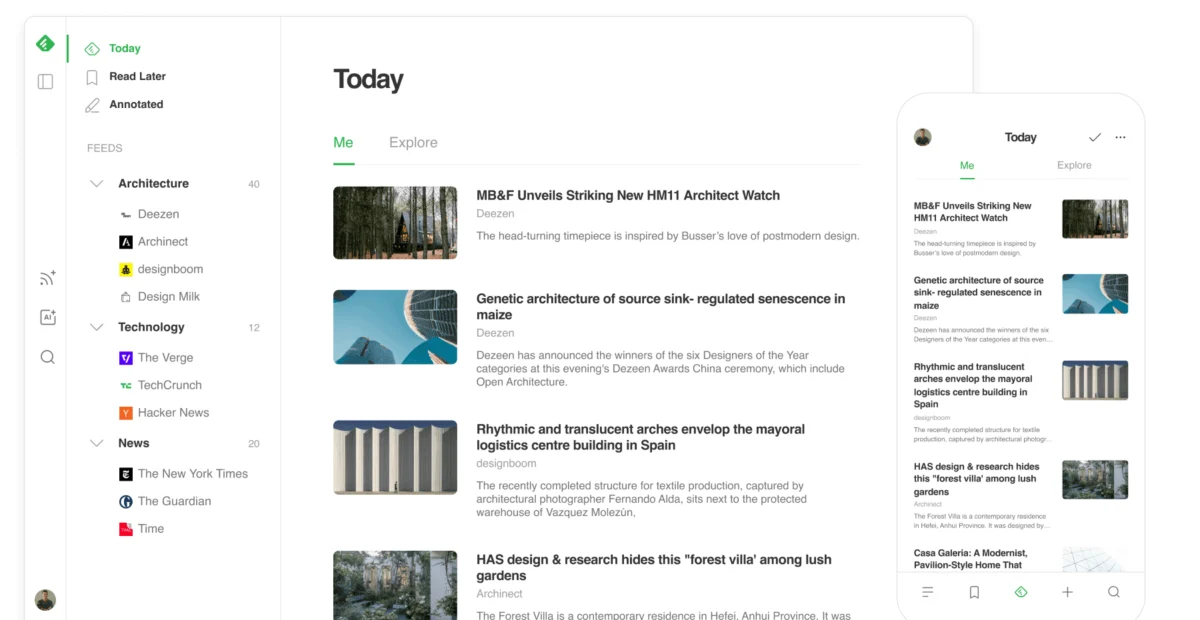
The largest standalone RSS reader worldwide, Feedly, is currently grappling with significant technical issues that have persisted for over a week, igniting frustration among its user base, particularly its paying subscribers. Reports indicate that the web application has become "unusably slow," and some users claim their support requests have gone unanswered, raising concerns about the company’s commitment to its core service as it diversifies its offerings.
A Legacy Built on RSS, Now Facing Scrutiny
Feedly emerged as a dominant force in the RSS reader market following Google’s decision to sunset its popular Google Reader service in 2013. This pivotal event propelled Feedly into a leading position, attracting a substantial user base that now numbers approximately 15 million individuals, according to the company’s own data. This user count significantly outpaces competitors such as Inoreader and various desktop applications like NetNewsWire and Reeder, solidifying Feedly’s status as the preeminent RSS aggregator.
However, this leadership position is currently being challenged by a series of persistent technical problems that have begun to affect users across the board, including those who subscribe to Feedly’s premium services. The most prominent and disruptive issue is the severe degradation in performance of its web application. Users have taken to online forums, most notably Reddit, to voice their exasperation, describing the browsing experience as "extremely" slow and, in many cases, rendering the platform effectively "unusable." This slowdown directly impedes the core functionality of an RSS reader: the efficient and timely consumption of news and information.
A Cascade of Technical Failures
Beyond the sluggish web interface, other critical components of Feedly’s service have also experienced disruptions. Reports indicate that the company’s primary iOS application has been malfunctioning, with some users encountering complete inability to load content. This issue has been observed even on beta versions of iOS, suggesting a deeper-seated problem within the application’s architecture. Compounding the frustration, Feedly’s "classic" mobile app, a version favored by a smaller but dedicated segment of its user base, was abruptly shut down without prior notification weeks ago. This sudden discontinuation, coupled with the ongoing issues in the main app, has left a portion of its mobile users without a functional service.
The market for dedicated RSS readers, while niche, has historically served a crucial role for individuals and professionals seeking to curate and consume information efficiently. In an era where news consumption is increasingly fragmented across social media feeds, aggregator apps like Apple News, and direct website browsing, the value proposition of an RSS reader lies in its ability to centralize and streamline information flow. Feedly’s prominence in this space has been largely attributed to its user-friendly interface and robust feature set, which have allowed it to capture the audience left by Google Reader.
The AI Pivot and Its Potential Impact on Core Users
Feedly has, in recent years, been strategically pivoting its focus towards artificial intelligence (AI), aiming to offer businesses advanced solutions for threat intelligence, market analysis, and tailored information monitoring. The company’s homepage and marketing materials prominently feature these AI-driven services, leading to questions about whether the core RSS reader functionality, which has been the bedrock of its success, is receiving the necessary attention and resources. This strategic shift, while potentially lucrative, has raised concerns among long-time users that their needs might be taking a backseat to the company’s new ventures. The current technical instability further fuels this anxiety, suggesting a potential strain on the company’s engineering resources or a prioritization misalignment.
Addressing the Crisis: A CEO’s Reassurance and Explanation
In light of the widespread user discontent and the significant technical disruptions, TechCrunch reached out to Feedly for an official statement and an update on the situation. The company’s CEO, Edwin Khodabakchian, provided insights into the ongoing issues and reassured users about the continued importance of the RSS reader functionality.
"Despite the pivot to cyber threat intelligence, fixing the basic RSS functionality is still a priority because our CTI community uses the news-reading capability," Khodabakchian stated. "Our goal has been to maintain the Feedly News Reader as fast and streamlined as possible."
The CEO acknowledged the widespread performance issues affecting the web app, attributing them to a specific bug. He explained that the front-end development team had been actively testing a solution and believed the problem was linked to the "Mark as Read" function when used on accounts with a large number of folders. A fix for this particular issue was reportedly deployed on Friday, and the company is currently in the process of verifying whether this resolution has successfully addressed the problem for all affected users.
Regarding the abrupt shutdown of the Feedly Classic app, Khodabakchian confirmed that it was retired approximately two weeks prior. He cited that the app "no longer met some iOS and Android requirements," a common reason for older applications to be phased out. He also noted that the Classic app had been removed from app stores long before its final retirement and had a relatively small active user base, numbering in the "few hundred." It was also confirmed that existing users of the Classic app were not explicitly notified before its final shutdown, a point that has likely contributed to user dissatisfaction.
Furthermore, Khodabakchian stated that he was not aware of the specific iOS app issues that prevent content from loading. However, he pledged that Feedly would investigate these reports thoroughly and committed to a swift resolution. He emphasized that the company continues to invest actively in its main iOS and Android applications, underscoring their ongoing commitment to these platforms.
A Deeper Look at the Implications
The current technical turmoil at Feedly presents a critical juncture for the company. For over a decade, Feedly has been the de facto standard for RSS aggregation, inheriting the mantle from Google Reader and cultivating a loyal user base. The recent spate of performance degradations and service disruptions, however, risks eroding this hard-earned trust.
The timing of these issues, coinciding with Feedly’s strategic push into AI-powered threat intelligence, inevitably leads to questions about resource allocation and company priorities. While the CEO’s assurances are encouraging, the perception among some users is that the core RSS product, which underpins the company’s very existence, may be suffering from a lack of dedicated attention. This is particularly concerning given that the AI services, while promising, cater to a different market segment and may not directly benefit the millions of individual RSS readers who rely on Feedly for their daily news consumption.
The financial model of RSS readers has always been a challenge. While Feedly offers a freemium model with paid tiers for enhanced features and business solutions, the ongoing technical problems can impact revenue, especially if paying subscribers begin to churn due to the perceived unreliability of the service. The investment required to maintain a robust and performant RSS reader infrastructure is significant, and balancing this with the development of new, potentially more lucrative AI ventures requires careful management.
The lack of proactive communication regarding the shutdown of the Feedly Classic app also highlights a potential area for improvement in customer relations. While the user base for this specific version was small, the abrupt discontinuation without prior notice can create a sense of being disregarded, particularly for users who had a preference for that particular interface.
Moving forward, Feedly faces the challenge of not only resolving the immediate technical glitches but also of reassuring its long-standing user base of its continued commitment to the RSS reader experience. Transparency in communication, timely updates on fixes, and a clear demonstration of ongoing investment in the core product will be crucial in rebuilding confidence. The company’s success in navigating this period will likely depend on its ability to strike a delicate balance between its ambitious AI expansion and the fundamental needs of the millions of users who have made it the world’s leading RSS reader. The coming weeks will be a critical test of Feedly’s operational resilience and its dedication to the community that has supported it for so long.
About the Author