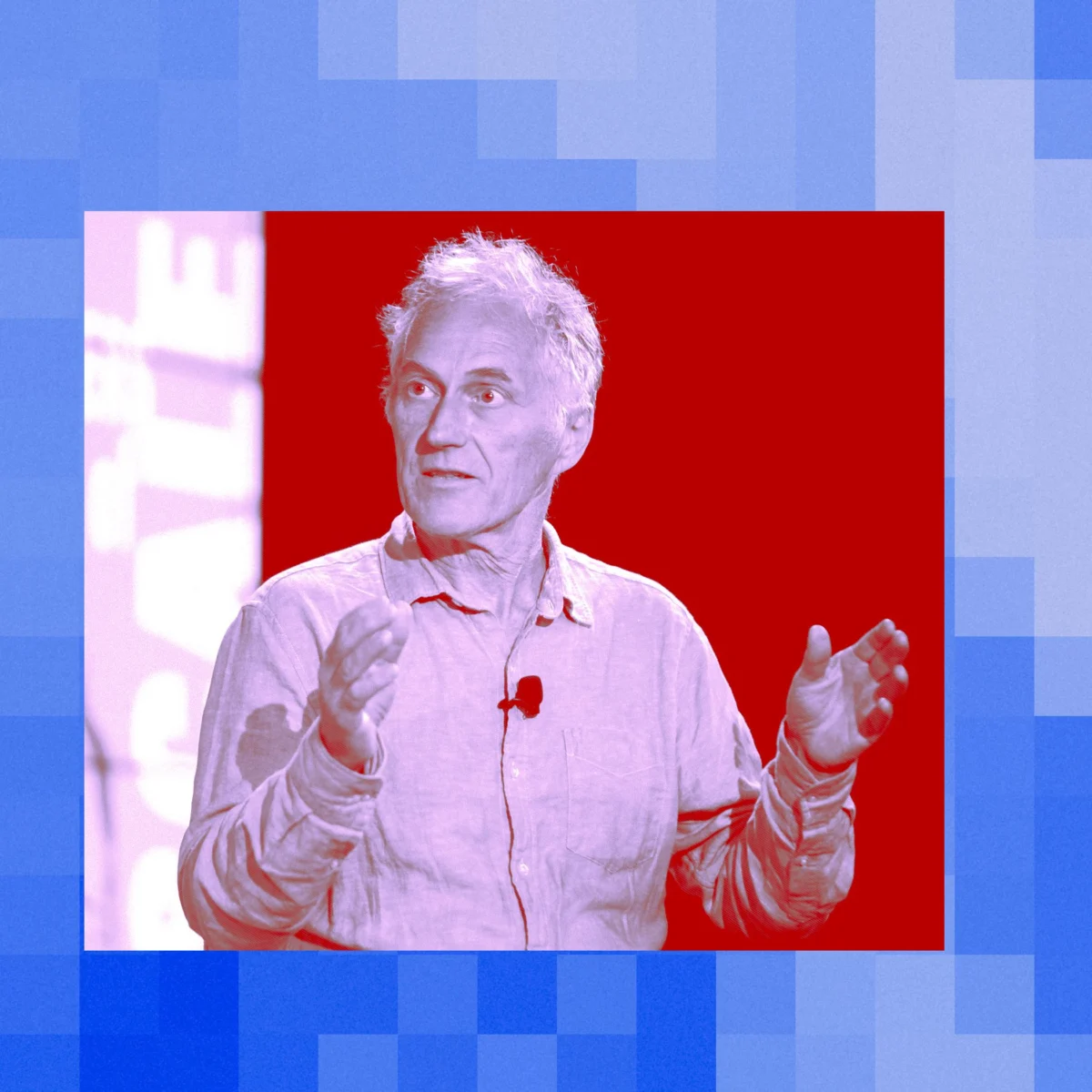
The trajectory of the technology industry has reached a critical juncture where the battle between proprietary control and open-source accessibility is being refought in the realm of artificial intelligence. Tim O’Reilly, the internet pioneer who coined the term "Web 2.0" and has served as a central figure in the open-source movement for decades, is sounding an alarm regarding the current direction of AI development. O’Reilly argues that the industry’s "hyperscalers"—companies like Microsoft, OpenAI, and Anthropic—are inadvertently recreating the restrictive ecosystems of the 1990s. His primary thesis rests on a long-standing philosophical yardstick: companies and individuals should strive to create more value than they capture. In the context of AI, O’Reilly asserts that the current "frontier models" are being built as "architectures of control" rather than "architectures of freedom," a shift that he believes threatens the long-term health of the global innovation economy.
The Evolution of Open Source and the Architecture of Participation
To understand O’Reilly’s critique, it is necessary to examine the historical context of the open-source movement. In the late 1990s, the tech industry was largely defined by the dominance of Microsoft’s Windows operating system. The open-source movement, which O’Reilly helped popularize through his publishing house and conferences, provided an alternative that allowed for what he calls the "architecture of participation." This model allowed developers to build upon existing code, fostering an ecosystem that eventually birthed the modern web.
In the current AI landscape, a similar tension has emerged. While companies like Meta have released "open-weight" models such as Llama, O’Reilly argues that this is an insufficient definition of open source. For a system to be truly open, he contends, there must be a clean separation between the model, the "harness" (the software that manages the model’s interactions), and the application. Currently, the major AI labs tend to bundle these components, creating a vertical integration that makes it difficult for third-party developers to "paint outside the lines."
O’Reilly’s concern is that by focusing on massive, proprietary frontier models, the U.S. tech sector may be missing the broader opportunity for societal diffusion. He points to China as a potential competitor that could "kick our ass" not by having the single most powerful model, but by diffusing lower-level, accessible AI models more widely through its society and industrial sectors. This diffusion allows for grassroots innovation that a centralized, high-cost model cannot replicate.
The Chronology of Modern AI and the Shift in Capitalist Models
The development of AI can be viewed through a timeline of increasing centralization and capital intensity. The release of ChatGPT in late 2022 sparked a "gold rush" that saw venture capital (VC) investment reach unprecedented levels. However, O’Reilly views this influx of capital as a departure from traditional market-driven capitalism.
- 1993–2004: The era of the early web and the rise of search engines. Innovation was largely organic and driven by the utility of the technology rather than massive VC subsidies.
- 2010–2020: The rise of the "Uber model." VCs began spending billions to subsidize user growth, effectively picking winners before the market could decide. O’Reilly describes this as "anti-capitalist" because it uses capital to choke out competition rather than letting the best product win.
- 2022–Present: The AI Frontier era. Massive investments—such as Microsoft’s $13 billion partnership with OpenAI—have created a landscape where only a handful of companies can afford the compute power required to train the largest models.
O’Reilly suggests that this model is already showing signs of failure. He notes that while "frontier AI" focuses on solving the hardest problems, it is often moving further away from what ordinary users actually need. There is growing evidence that lower-level models are often more efficient and better at specific tasks, such as writing, than their massive counterparts.
Supporting Data: The Economic Reality of AI and Publishing
The economic stakes of this shift are visible in the data regarding the publishing and tech industries. O’Reilly Media, once a powerhouse in technical book publishing, has seen its book business decline from a peak of $70 million to approximately $30 million over the last 25 years. This decline reflects a broader trend in how information is consumed and how knowledge is shared.
In the AI sector, the cost of training frontier models is skyrocketing. Training GPT-4 is estimated to have cost over $100 million, while future models are expected to require billions in hardware and electricity. This high barrier to entry reinforces the "architecture of control." Conversely, the growth of platforms like Hugging Face, which hosts hundreds of thousands of open-source models, suggests a massive demand for decentralized alternatives.
O’Reilly’s nonprofit, the AI Disclosures Project, is currently advocating for an "open-memory consortium." This initiative aims to ensure that users can maintain their personal data and context—their "memory"—even if they switch between different AI providers. This would prevent the "lock-in" effect that companies like Meta are pursuing, where the AI that "knows you best" becomes a cage from which the user cannot escape.
Official Stances and Industry Reactions
The debate over open-source AI has drawn varied responses from the industry’s major players.
- The Proprietary Camp: Companies like OpenAI and Anthropic argue that frontier models are too dangerous to be fully open-sourced. They cite risks related to cybersecurity and the potential for bad actors to use AI to develop pathogens. They maintain that "guardrails" are easier to enforce in a closed system.
- The Open-Source Camp: Meta, led by Mark Zuckerberg, has positioned itself as a champion of open weights, arguing that open models allow for better security through community scrutiny. However, O’Reilly argues that even Meta’s approach is strategic, aimed at creating a new form of user lock-in through personal data.
- The Regulatory Response: Governments in the U.S. and EU are currently grappling with how to regulate AI. O’Reilly’s perspective suggests that regulation should focus on transparency and the ability for users to control their own data (the "harness" and "memory") rather than just restricting the power of the models themselves.
Analysis of Implications: AI as a New Creative Medium
Beyond the economic and structural arguments, O’Reilly views AI as a transformative creative medium. He likens the current skepticism toward AI-generated content to the historical skepticism toward photography. Just as the camera did not replace the painter but rather created a new way to express reality, O’Reilly believes AI will become a "thought partner" for writers and artists.
This perspective challenges the traditional journalistic and academic insistence on "human-only" creation. O’Reilly admits to using AI for brainstorming and "functional writing," such as summarizing long interviews. He posits that the ability to "summon words from Large Language Models (LLMs)" will eventually be seen as a skill as legitimate as mastering a paintbrush or a musical instrument.
However, this shift also carries risks for the labor market. As AI hoovers up the knowledge of experts to provide "superpowers" to users, the traditional methods of compensating those experts are being eroded. O’Reilly emphasizes that the challenge for the next decade is to build tools that help people monetize their expertise in an AI-driven world, rather than just allowing a few large corporations to capture the value of human knowledge.
Strategic Outlook and Future Ferment
O’Reilly’s outlook is one of cautious optimism, provided the industry shifts toward a more decentralized model. He compares the current state of AI to the early 1990s, when the world was focused on the battle for PC dominance while the web was quietly emerging from the "left field." He believes the real future of AI will not be determined by the most well-funded VC-backed labs, but by a "ferment of innovation" occurring in the open-source community.
The success of this vision depends on three key factors:
- Technical Decoupling: The ability for developers to separate the model from the application layer.
- Data Sovereignty: The creation of standards like the open-memory consortium that allow users to own their digital history.
- Global Diffusion: Moving away from a focus on "frontier" benchmarks toward practical, widely distributed AI tools that solve everyday problems.
In conclusion, Tim O’Reilly’s critique serves as a reminder that the "architecture" of a technology determines who benefits from it. If AI remains a centralized tool controlled by a few hyperscalers, it may fail to reach its full potential as a driver of global progress. If, however, the industry embraces a true open-source model—one that prioritizes value creation over value capture—AI could indeed become the "elixir for the masses" that O’Reilly envisions. The coming years will determine whether AI follows the path of the open web or the path of the proprietary mainframe, a decision that will have profound implications for the future of capitalism and human creativity.
About the Author