Answer Engine Optimization (AEO) is fundamentally reshaping the search engine landscape, moving beyond the established practices of traditional Search Engine Optimization (SEO). What was once a predictable formula—integrating keywords, cultivating high-quality backlinks, and boosting domain authority—has evolved into a complex new paradigm where established metrics are no longer the sole arbiters of success. Brands appearing prominently in AI-generated answers are increasingly those that have meticulously built content engines trust, rather than solely those with the largest digital footprints or most extensive backlink profiles. This shift necessitates a strategic re-evaluation of content creation and distribution for businesses aiming to maintain and enhance their online visibility.
The disruption stems from the rise of generative AI in search, a phenomenon that has accelerated rapidly over the past year. Major search engines and AI assistants are now capable of synthesizing information from various sources to provide direct answers to user queries. This capability has altered user behavior, with a growing preference for immediate, concise answers over navigating through a list of traditional search results. Consequently, the focus for digital marketers has begun to pivot from simply being discoverable to being demonstrably quotable and trustworthy.
A comprehensive analysis of citation data across leading answer engines, coupled with insights from HubSpot’s "State of AEO report," which surveyed over 4,000 global marketers and analyzed thousands of data points, reveals a discernible pattern in how brands are achieving visibility in these new AI-driven search environments. The research indicates that success is not attributed to a single "magic bullet" tactic but rather to a consistent application of specific content strategies and a commitment to building enduring trust.
As AJ Ghergich, VP of AI & Consulting Services at Botify, articulated on the "Found in AI" podcast, "You don’t rank in AI. It’s stochastic." This statement underscores the inherent unpredictability of AI-generated answers. Unlike traditional search where ranking position is a tangible goal, AI responses are emergent, drawing from a vast pool of information. The objective for brands is not to "rank" in a specific position but to become an authoritative and reliable source that AI engines consistently select when a user poses a question. This distinction is critical: traditional SEO rewards findability, while AEO rewards quotability—the ability for an AI to confidently extract a clean, accurate, and attributable piece of content to incorporate into a generated answer.
The research identified five key behaviors consistently demonstrated by brands earning a significant volume of citations in AI-generated answers. These behaviors represent a foundational shift in how content should be approached in the current search ecosystem.
The Pillars of Answer Engine Optimization
1. Consistent Content Structure: Building for Extraction
A primary characteristic of content that frequently earns citations is its inherent structure, designed for easy parsing and extraction by AI algorithms. Unlike human readers who engage with content holistically, answer engines process information in discrete chunks. Content that is disorganized or lacks clear segmentation presents a significant challenge for these engines.
HubSpot’s "State of AEO" report highlighted a strong correlation between the use of headings and heading depth (including H3s and H4s) and higher citation rates. Specifically, pages featuring between seven and fifteen H2 headings demonstrated peak citation performance. This indicates that a greater number of clearly defined headings creates more distinct, self-contained answer units that AI can readily lift.
Brands achieving high citation rates prioritize scannable content formats. This includes employing clear H2 and H3 headings, front-loading definitions, utilizing short paragraphs, incorporating bulleted and numbered lists, and segmenting content with labeled sections. The objective is to minimize the effort required for a machine to locate and extract the precise information needed to answer a user’s query. This structured approach ensures that essential data points are readily accessible and easily digestible by AI.
2. Robust E-E-A-T Signals: The Foundation of Trust
The principles of Experience, Expertise, Authoritativeness, and Trustworthiness (E-E-A-T), long emphasized by Google, have become even more critical in the realm of answer engines. AI systems are inherently cautious about the information they present, as their credibility is directly linked to the accuracy and reliability of their sources. Consequently, they heavily rely on E-E-A-T signals to vet content.
Cited pages consistently exhibit visible trust markers. These include detailed author biographies that clearly outline credentials, outbound links to authoritative sources and data repositories, original research that offers unique insights, and consistent brand signals across the web. The underlying question AI engines are implicitly asking is, "Can we confidently vouch for this information and its source?"
Brands that excel in AEO actively integrate E-E-A-T signals into their websites, blogs, and social media content. The more frequently AI engines associate a brand’s name or entity with a particular topic, the greater their confidence in recognizing that brand’s authority. This builds a reservoir of trust that makes content more likely to be selected for AI-generated answers.
-What-We-Learned-from-Analyzing-10+-Brands-With-High-AI-Search-Citations-1-20260826-304258.webp)
3. Multi-Format, Multi-Channel Presence: Amplifying Authority
Answer engines do not limit their information gathering to a brand’s own website. They actively seek answers across the broader internet, including social media platforms and online communities. The "State of AEO" data revealed that social channels particularly conducive to citations are those that support text-heavy content and long-form video. LinkedIn and YouTube emerged as leading platforms in this regard.
Krista Doyle, Founder at Fan Out, noted in the report that "LinkedIn signals practitioner authority, and YouTube signals demonstrated expertise." These platforms serve as external validation, proving a brand’s existence and subject matter expertise beyond its proprietary domain.
The influence extends beyond major platforms. Doyle also highlighted that AI engines often draw information from niche, industry-specific communities, sometimes indirectly. For instance, a recap of a Slack community discussion published as a blog post, or a niche Substack newsletter that gets indexed, can contribute to a brand’s perceived authority. For B2B organizations, in particular, a mention within a tightly-knit industry community can carry more weight in AI retrieval than a generic, high-authority backlink.
Therefore, high-citation brands cultivate a presence not only on their own platforms but also in the places that corroborate and amplify their expertise, demonstrating their authority to AI engines from multiple vantage points.
4. Regular Publish and Refresh Cadence: Signaling Currency
AI engines favor content that signals it is current and actively maintained. Freshness serves as a crucial trust signal. This does not imply a need for excessive daily posting, but rather a commitment to the ongoing maintenance and updating of existing content.
The "State of AEO" report found that including the publication year in H1s and meta titles correlated with increased citation rates, especially for Google AI Overviews and Microsoft Copilot. The presence of visible "last updated" dates also contributes to this perception of currency. Brands that are successful in earning citations treat their most valuable pages as living assets, revisiting them, updating them with new data, and re-stamping them with the current year.
This practice communicates to AI engines that the content is actively managed and therefore more likely to be accurate and relevant. Even if no significant changes have occurred on a page, adding a brief note such as "What’s next" or "As of [year]" can signal to the engine that the content is being actively monitored and cared for, reinforcing its trustworthiness.
5. Schema Markup and Technical Hygiene: Enabling Clarity
Structured data, implemented through schema markup, acts as a labeled map for AI engines, providing explicit context about the content’s meaning and structure, thereby eliminating guesswork. The use of FAQ schema, in particular, demonstrated a strong association with higher citation rates in the analyzed data.
Descriptive FAQ headings, when paired with FAQ schema, provide AI engines with pre-packaged question-and-answer pairs that are exceptionally well-suited for direct inclusion in AI-generated answers. This format makes it almost effortless for an engine to extract and present the requested information.
Brands that achieve high citation volumes consistently maintain strong technical hygiene. This includes implementing basic schema types such as article schema, author schema, and FAQ schema where appropriate. By ensuring their technical infrastructure is sound and their data is clearly structured, these brands remove ambiguities, making it easier for AI engines to process and cite their content.
The Nuances of Platform-Specific Optimization
It is imperative to recognize that AEO is not a monolithic strategy; it is a nuanced approach that must account for the distinct characteristics and citation appetites of different answer engines. While foundational SEO principles—such as ranking and authority—still play a role, particularly in Google AI Overviews, each platform presents unique opportunities and challenges.

Google AI Overviews: This feature demonstrates a strong preference for structured, authoritative content and shows the highest correlation with existing Google organic rankings. Blog posts and informative articles are consistently the most cited content types. This implies that established SEO investments directly translate into AI Overview visibility. Pages that already perform well in traditional Google search are thus prime candidates for surfacing in AI Overviews.
Gemini: Google’s Gemini exhibits a conversational and multi-step interaction style. While it leverages Google’s trust signals, it cites a broader spectrum of content types, including blog posts, product pages, and listicles. Gemini rewards content that can facilitate an ongoing dialogue and support follow-up queries, rather than just a single, standalone answer.
ChatGPT: ChatGPT has shown a particular inclination towards comparison content, citing it at the highest rate among all content types analyzed. It also favors user reviews, public relations materials, and content with clear sourcing. Well-known brands and original research are also highly valued. For brands adept at creating comparison tables or authoritative, well-sourced pages, ChatGPT offers significant citation potential.
Perplexity: Perplexity distinguishes itself by surfacing recent, specific, and niche content. It is highly inclined to link out to sources, making citations on this platform particularly valuable for driving referral traffic. Product pages and blog content are frequently cited. For Perplexity, the key levers are freshness and specificity.
The practical implication of these platform differences is clear: generic "AI optimization" is inefficient. A more effective strategy involves segmenting efforts and mapping priority content formats to the specific engines that reward them. For example, comparison content should be strategically developed for ChatGPT, while highly structured, informative articles should be optimized for Google AI Overviews.
Query Intent: A Driver of Citation Strategies
The type of query a user poses significantly influences which brands are cited. Understanding query intent is crucial for tailoring AEO strategies. Queries can broadly be categorized into several types:
- Informational: Seeking knowledge or understanding (e.g., "What is X?", "How does Y work?"). These queries often lead to definitions, guides, and explanatory content.
- Navigational: Aiming to find a specific website or brand (e.g., "Log in to [brand name]"). While less direct for AEO, strong brand signals across channels can influence these.
- Transactional: Intent to purchase or engage in a commercial activity (e.g., "Buy [product]", "Best [service]"). This involves product pages, reviews, and comparison content.
- Investigational: Researching options before a purchase (e.g., "X vs. Y", "Pros and cons of Z"). Comparison content and detailed reviews are vital here.
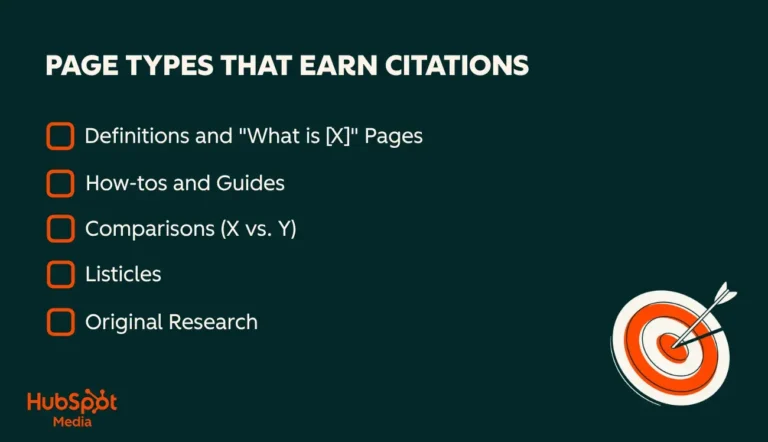
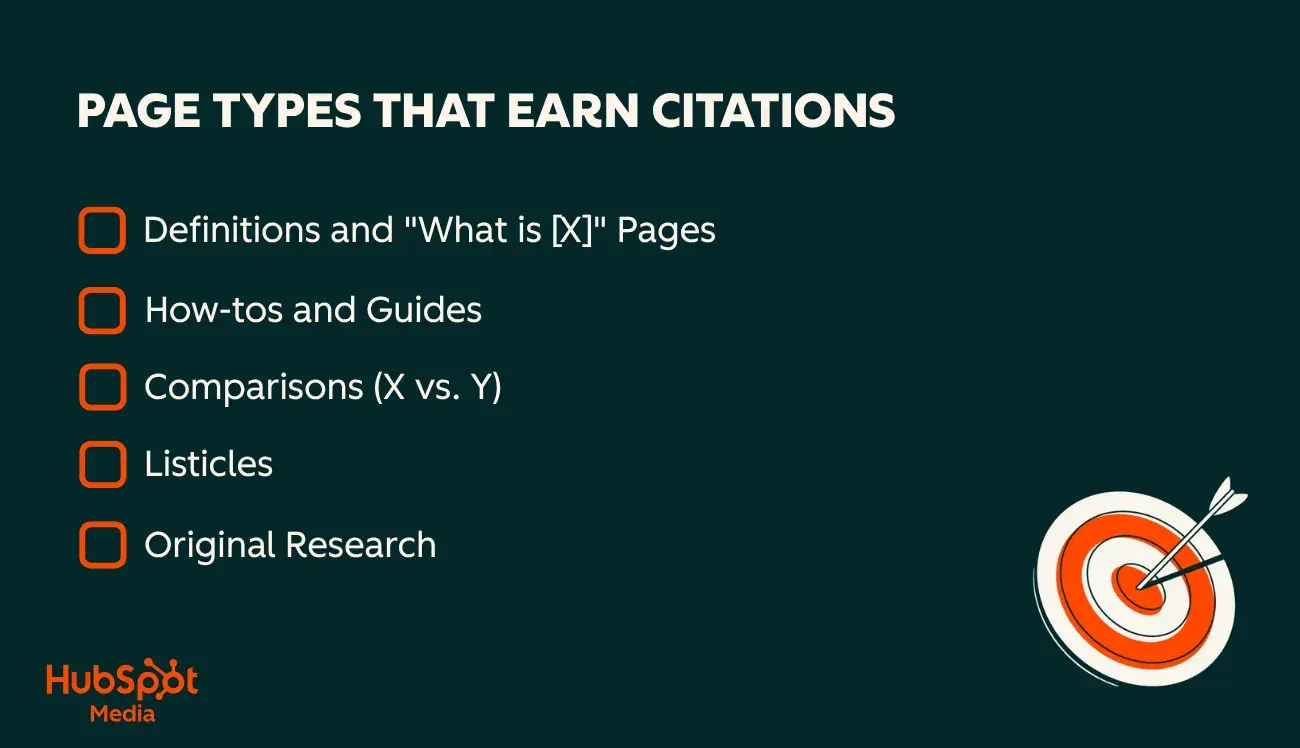
This breakdown highlights how different intents necessitate different content formats and strategies. For instance, informational queries often drive citations for definition pages and comprehensive guides, while investigational queries favor comparison articles and detailed product analyses.
A 90-Day Action Plan for Enhanced Citation Visibility
For businesses seeking to systematically improve their citation visibility, a structured 90-day action plan can be highly effective:
Week 1: Audit and Setup
The initial phase involves establishing a baseline for current AI search visibility. This requires utilizing tools to measure how AI engines currently represent the brand and identifying existing citation patterns. Tools like HubSpot’s AI Search Grader can provide a snapshot of current visibility. This audit provides the foundation for all subsequent optimization efforts, ensuring that improvements are measurable.
Weeks 2-6: Build and Refresh Priority Pages
With a clear understanding of the current landscape, the focus shifts to creating or updating content that directly addresses target queries. This involves:
- Identifying High-Potential Pages: Prioritizing pages that are already receiving some AI visibility or rank well in traditional search.
- Content Refinement: Enhancing content structure for optimal AI extraction, incorporating E-E-A-T signals, and ensuring technical hygiene through schema markup.
- Refreshing Existing Content: Updating older, authoritative content is often more efficient for earning citations than creating entirely new pages from scratch, as it leverages existing domain authority.
Weeks 7-12: Distribute and Reinforce
Citations are not confined to a brand’s website. An active presence on relevant social media platforms, particularly LinkedIn, YouTube, and niche forums, plays a significant role in influencing AI search visibility. This phase involves:
- Strategic Social Media Engagement: Sharing optimized content on platforms where AI engines actively source information.
- Community Participation: Engaging in relevant online communities to build authority and generate mentions.
- Cross-Promotion: Amplifying content across various channels to reinforce brand presence and expertise.
By the end of this 90-day period, businesses should have moved from guesswork to a data-driven approach, with a clear understanding of their AI visibility, optimized priority pages, and a robust distribution strategy that feeds AI engines the signals they value.
Measurement and "One-View" Visibility
A significant challenge in AEO has been the difficulty in accurately measuring its impact. Traditional dashboards, designed for click-based metrics, are often misleading in the context of AI-driven search, where direct answers can satisfy user intent without a click. The "State of AEO" report identified measurement as a major blocker for marketers.
AJ Ghergich noted on the "Found in AI" podcast that AI crawlers interact with websites at a significantly higher rate than human users. This discrepancy can inflate impression metrics and create a false impression of performance. Consequently, relying on click-centric metrics for AEO measurement is akin to applying outdated paradigms to a new reality.
-What-We-Learned-from-Analyzing-10+-Brands-With-High-AI-Search-Citations-2-20260826-1137108.webp?width=700&height=403&name=(non-organic)-What-We-Learned-from-Analyzing-10+-Brands-With-High-AI-Search-Citations-2-20260826-1137108.webp)
HubSpot’s AEO tools are designed to address this measurement gap by focusing on metrics that directly reflect AI visibility. These include:
- Brand Visibility Score and Share of Voice: Quantifying a brand’s presence and prominence in AI answers relative to competitors.
- Sentiment Analysis: Gauging the overall tone and perception of a brand within AI-generated responses.
- Prompt Tracking: Understanding the specific queries that trigger AI answers and how the brand appears in response.
- Citation Analysis: Identifying where and how often a brand’s content is cited by AI engines.
- Pipeline and Assisted Conversions: Measuring the impact of AI visibility on lead generation and sales, recognizing that AI can drive conversions without traditional click-throughs.
By providing these targeted metrics, HubSpot AEO aims to transform AI visibility gaps into actionable recommendations, guiding marketers on specific steps to take, such as creating new pages, addressing technical issues, or engaging on social platforms. This data-driven approach enables marketers to demonstrate the tangible business impact of AEO to stakeholders.
Governance and Quality Over Time
Maintaining citation visibility is an ongoing process, not a one-time project. AI engines continuously re-crawl and re-rank content, meaning that a citation earned today can be lost tomorrow if content becomes stale or if competitors implement superior optimization strategies. To sustain AI search visibility, brands must treat citations as a continuously managed portfolio.
This involves a cyclical approach, often encapsulated by frameworks like Loop Marketing: Express, Tailor, Amplify, Evolve. This means consistently expressing expertise, tailoring content to specific engine requirements, amplifying presence across channels, and evolving strategies based on new data and platform changes.
Furthermore, a critical governance layer is emerging around how AI engines access and represent brand information. Many organizations currently treat AI bot governance as an IT issue, focusing on blocking or allowing access. However, the accuracy of brand data in AI answers has profound implications for brand reputation, making it a strategic concern that requires collaboration between marketing, IT, and legal departments. Establishing clear guidelines on what brand data is used, ensuring its accuracy, and developing a proactive stance on AI representation are essential for winning and retaining citations.
Frequently Asked Questions About AEO Brand Visibility
How do I pick the first three to five pages to optimize?
Prioritize pages where user intent intersects with existing traction. Focus on pages already receiving some AI visibility or performing well in Google organic search. Tailor your choices to the formats your industry most commonly gets cited for—comparisons and definitions for B2B, reviews and listicles for B2C. Refreshing existing authoritative pages often yields faster citation results than launching new ones.
Can I win citations without ranking on page one?
While ranking, especially for Google AI Overviews, enhances your chances, a well-structured, sourced, and schema-marked page can out-cite a higher-ranking competitor. Extractability and trust signals can often supersede raw position.
How often should I update content to maintain citations?
Update content frequently enough to ensure it remains genuinely current. A quarterly refresh is a reasonable benchmark for priority pages, with more frequent updates needed if your industry is rapidly evolving or your data changes. Regularly updating titles with the current year, refreshing statistics, and maintaining visible "last updated" dates signal active maintenance to AI engines.
Do branded mentions and off-site content (LinkedIn, YouTube, forums) truly matter?
Yes, significantly. LinkedIn and YouTube are consistently among the most cited social sources. Niche community mentions can often hold more weight for B2B than generic backlinks. AI engines evaluate a brand’s entire online footprint, making your distribution strategy an integral part of your AEO strategy.
How can I prove AEO impact to executives in language they understand?
Demonstrate AEO impact by linking it to pipeline growth and revenue, not just vanity metrics. AI-sourced visitors often convert at higher rates and exhibit stronger buying intent. Report share of voice and citation growth as leading indicators, then connect them to assisted conversions and revenue-qualified pipeline to justify budget allocation.
The brands that proactively adapt to the evolving search landscape are the ones that will secure visibility in the age of AI. Earning citation visibility is not about employing arcane tactics; it is about cultivating trust, ensuring structural clarity, and maintaining consistency, all reinforced over time. While many businesses are still experimenting with AEO, those that adopt a deliberate approach—establishing baselines, implementing strategic plans, and utilizing effective measurement systems—are poised to capture high-intent traffic and earn coveted citations. The journey begins with selecting key pages, structuring them effectively, distributing them strategically, and diligently measuring the results.
About the Author