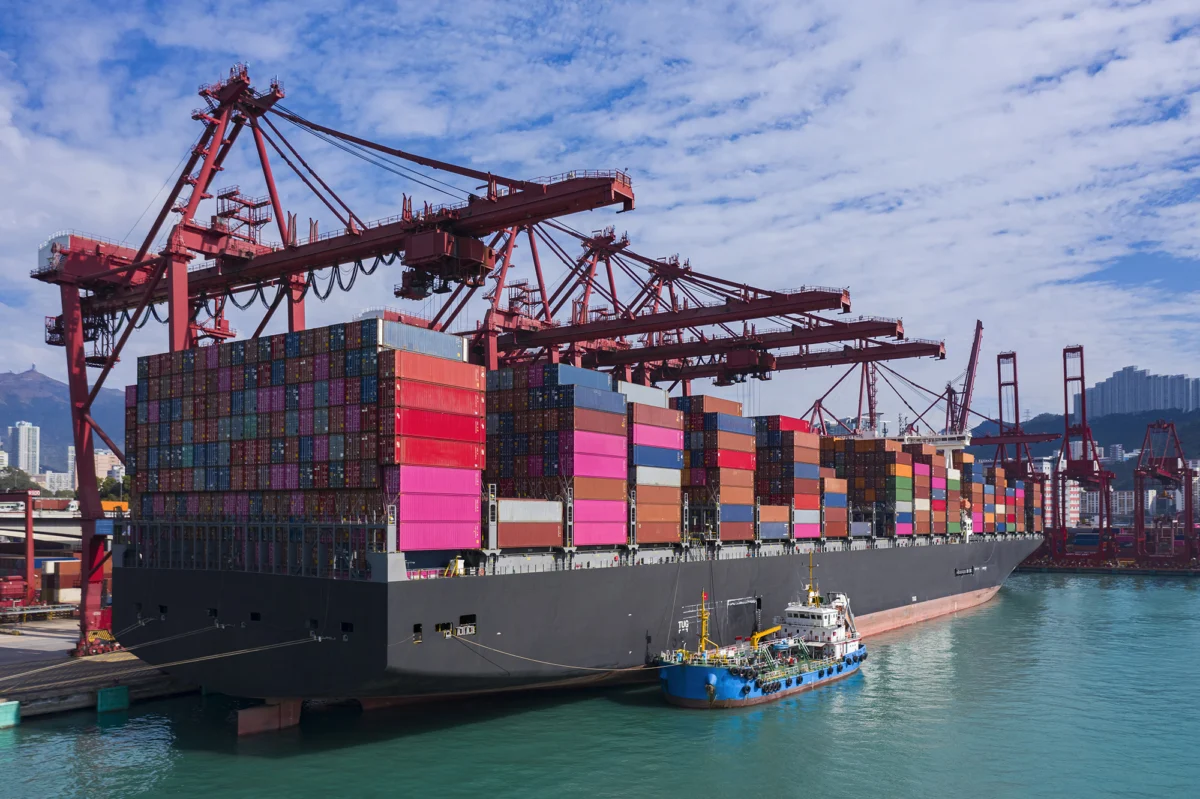
The global maritime industry, responsible for transporting over 80% of the world’s trade by volume, has become a primary frontier in the battle against financial crime and sanctions evasion. As geopolitical tensions escalate and international sanctions regimes expand in scope and complexity, financial institutions (FIs) find themselves at the center of an increasingly sophisticated landscape of deceptive shipping practices. While technological advancements have provided new tools for monitoring, the sheer volume of global trade—estimated at over 11 billion tons of cargo annually—makes the detection of illicit activity a daunting and resource-intensive endeavor. Financial institutions are now being called upon to move beyond traditional "Know Your Customer" (KYC) protocols toward a more comprehensive "Know Your Vessel" (KYV) framework, reflecting the growing regulatory expectation that banks must serve as the gatekeepers of the global supply chain.
The complexity of ocean-borne trade finance provides both a challenge and a unique opportunity for oversight. Unlike many other banking products, trade finance transactions often involve a wealth of documentation, including bills of lading, certificates of origin, and insurance papers. This visibility allows institutions to peer into the physical movement of goods, offering a vantage point that is often unavailable in standard wire transfers or retail banking. However, as bad actors adopt more advanced methods to mask the origin of goods and the identity of vessels, the burden of proof and the necessity for sophisticated screening have reached unprecedented levels.
The Evolving Landscape of Deceptive Shipping Practices
The modern era of sanctions evasion is characterized by a "cat and mouse" game between regulators and illicit networks. Deceptive shipping practices (DSPs) have evolved from simple document forgery to complex, multi-layered technological and physical maneuvers. One of the most prevalent tactics is the manipulation of the Automatic Identification System (AIS). Originally designed for safety and collision avoidance, AIS is now frequently disabled—a practice known as "going dark"—to hide a vessel’s location during unauthorized port calls or ship-to-ship (STS) transfers.
Beyond simply turning off transponders, sophisticated actors now employ "AIS spoofing," where a vessel broadcasts a false location, sometimes appearing to be thousands of miles away from its actual position. This is often coupled with "false flag" operations, where ships are registered in "open registries" with lax oversight, or frequently change their names and flags (a process known as "flag hopping") to evade detection. Furthermore, the rise of the "shadow fleet"—a collection of aging tankers with opaque ownership structures—has created a parallel shipping economy specifically designed to transport sanctioned oil and commodities outside the reach of Western financial systems.
A Chronology of Maritime Sanctions and Enforcement
The regulatory pressure on financial institutions has intensified over the last decade, marked by several key milestones that have shaped current compliance standards.
In 2014, the annexation of Crimea led to a wave of sanctions targeting Russian entities, forcing banks to scrutinize trade involving Black Sea ports. This was followed in 2018 and 2019 by a significant ramp-up in U.S. sanctions against the Iranian and Venezuelan oil sectors. During this period, the U.S. Department of the Treasury’s Office of Foreign Assets Control (OFAC) began issuing specific advisories to the maritime industry, warning that financial institutions could be held liable for facilitating illicit trade even if they were not directly involved in the shipping logistics.
The landscape shifted dramatically in May 2020, when OFAC, alongside the U.S. State Department and the U.S. Coast Guard, issued a comprehensive global advisory on deceptive shipping practices. This document set a new benchmark for "due diligence," explicitly naming AIS manipulation and STS transfers as red flags that financial institutions must monitor.
The most significant turning point occurred in February 2022, following the invasion of Ukraine. The subsequent implementation of the G7 price cap on Russian oil created a dual-tier market. Financial institutions were tasked with verifying that the oil they were financing was sold at or below the price cap, a requirement that necessitated a level of transparency into pricing and shipping costs that had never before been required. By 2023 and 2024, the focus shifted to the "shadow fleet," with the U.S., UK, and EU imposing direct sanctions on specific vessels and their managers, signaling a move toward "vessel-centric" enforcement.
Data and the Scale of the Global Challenge
The scale of the problem is reflected in the data surrounding the global merchant fleet. Industry analysts estimate that the "shadow fleet" or "dark fleet" now comprises over 600 to 1,000 vessels, representing approximately 10% to 15% of the global tanker capacity. These vessels are typically older—often over 15 years of age—and operate without traditional Western insurance (P&I clubs), increasing the risk of environmental disasters in addition to financial crime.
From a financial perspective, the stakes are equally high. In the last five years, global regulators have levied billions of dollars in fines against financial institutions for sanctions violations, many of which were linked to trade finance and the failure to identify deceptive shipping patterns. According to industry reports, the cost of compliance for a Tier 1 global bank can exceed $1 billion annually, with a significant portion of that budget dedicated to screening the millions of containers and thousands of vessels that traverse the oceans daily.
The volume of data that must be analyzed is staggering. A single voyage can generate hundreds of data points, from port logs and satellite imagery to ownership records and commodity pricing. For financial institutions, the challenge lies in "connecting the dots" between a seemingly legitimate trade document and a vessel that may have engaged in a dark STS transfer three weeks prior in the middle of the Atlantic Ocean.
Industry and Regulatory Responses
The response from the international community has been a mixture of increased regulation and a call for greater public-private partnership. Regulatory bodies like the Financial Action Task Force (FATF) have updated their guidance to emphasize the importance of identifying the "beneficial ownership" of vessels, targeting the shell companies that often own single ships to shield their true operators.
In the private sector, industry groups such as the Wolfsberg Group and the International Chamber of Commerce (ICC) have worked to standardize the information required in trade finance transactions. There is a growing consensus that banks cannot be expected to act as "maritime police." Instead, the focus is on a "risk-based approach."
"Financial institutions are not equipped to track every vessel in real-time via satellite," noted a senior compliance officer at a major European bank in a recent industry forum. "Our role is to ensure that the documentation we receive matches the physical reality of the trade. If a ship claims to have been in a port that it never visited, or if the weight of the cargo doesn’t match the vessel’s capacity, that is where we must intervene."
Recent guidance also emphasizes that responsibility for compliance vetting extends beyond banks. Port authorities, commodity traders, and maritime insurance providers are increasingly being held to similar standards of due diligence, creating a "web of compliance" intended to make it more difficult for illicit actors to find a weak link in the chain.
Strategic Recommendations for Financial Institutions
To navigate these complexities, a new report on maritime financial crime suggests several key pillars for a robust compliance framework.
First, institutions must leverage "visibility through documentation." Documentary trade transactions provide a unique window into the specifics of a shipment. Banks are encouraged to scrutinize the Bill of Lading and the Certificate of Origin not just for sanctions hits on names, but for inconsistencies in routes and timelines.
Second, there must be a heightened focus on identifying deceptive shipping practices. This includes investing in third-party maritime data providers that track AIS movements and provide "risk scores" for vessels. Institutions should be particularly wary of "dark activity" in known transshipment hubs or high-risk corridors.
Third, a risk-based approach is essential. Not all trade is created equal. Crude oil, refined petroleum products, and dual-use technology require far more rigorous screening than consumer electronics or agricultural products. By focusing resources on higher-risk commodities and jurisdictions, institutions can maintain efficiency without compromising security.
Finally, the report stresses the need for collaboration. The fragmented nature of shipping data is one of the greatest assets for criminals. Increased information sharing between banks, and between the public and private sectors, is critical. The "standardization of shipping data"—ensuring that vessel names, IMO numbers, and ownership records are consistent across all platforms—is a necessary step toward a more transparent system.
Analysis of Broader Implications and Future Outlook
The implications of these developments extend far beyond the compliance departments of global banks. The crackdown on deceptive shipping is a matter of international security and environmental protection. The "dark fleet," operating outside of standard regulations, poses a significant risk of oil spills that could devastate coastal ecosystems, with no clear entity to hold accountable for cleanup costs.
Furthermore, the integrity of the global financial system depends on the ability of banks to distinguish between legitimate commerce and the financing of proliferation, terrorism, or sanctioned regimes. As the world moves toward a more fragmented geopolitical order, the use of trade as a tool of statecraft—and the subsequent use of deceptive shipping to bypass that statecraft—will only increase.
Looking forward, the integration of Artificial Intelligence (AI) and Machine Learning (ML) will likely play a pivotal role. AI can analyze vast datasets of vessel movements to identify patterns of "abnormal behavior" that a human analyst might miss, such as subtle changes in a ship’s draft (indicating a secret loading or unloading of cargo) or "pattern spoofing" where AIS data is manipulated to mimic a standard commercial route.
However, technology is not a panacea. The human element of due diligence remains the final line of defense. As the maritime industry and financial institutions move closer together, the goal is to create a transparent, data-driven environment where the high seas are no longer a "black box" for financial crime, but a well-regulated corridor for global prosperity. The transition is complex and resource-intensive, but in an era of global volatility, it is a necessary evolution for the stability of international trade.
About the Author