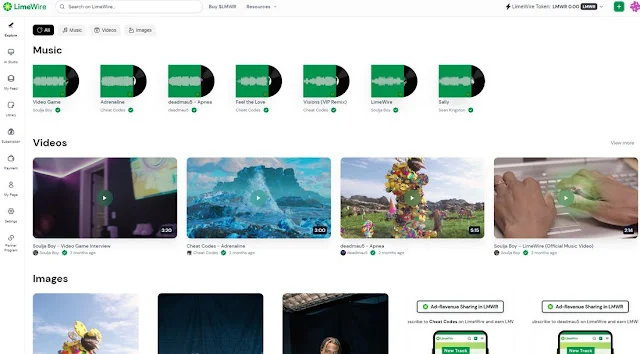
The digital landscape is witnessing a significant paradigm shift as LimeWire, a name once synonymous with the early 2000s peer-to-peer file-sharing era, completes its transformation into a sophisticated AI-driven content publishing platform. This rebirth represents more than a mere rebranding; it is a strategic pivot into the burgeoning fields of generative artificial intelligence and Web3 technology. The new LimeWire AI Studio serves as a multi-faceted hub where creators can generate, publish, and monetize digital assets, effectively bridging the gap between high-tech content creation and decentralized finance. By integrating advanced machine learning models with blockchain-based ownership, the platform aims to redefine the creator economy, offering tools that were previously reserved for high-budget production houses to the general public.
The Historical Context and Strategic Pivot of a Legacy Brand
To understand the significance of LimeWire’s current iteration, one must look back at its turbulent history. Originally launched in 2000 by Mark Gorton, LimeWire became one of the most popular Gnutella-based file-sharing clients in the world, facilitating the exchange of music and software. However, following a protracted legal battle with the Recording Industry Association of America (RIAA), the platform was issued a permanent injunction and shut down in 2010. For over a decade, the brand remained dormant until its intellectual property was acquired by Austrian entrepreneurs Julian and Paul Zehetmayr in 2022.
The Zehetmayr brothers recognized the latent brand equity in the LimeWire name and sought to repurpose it for a new generation of digital consumers. The pivot began with a focus on Non-Fungible Tokens (NFTs) in 2022, aiming to provide a marketplace for music-related digital collectibles. By 2023, the strategy evolved further to incorporate generative AI, reflecting the explosive growth of tools like Midjourney and ChatGPT. This transition marks a move from a platform that once challenged traditional copyright to one that provides creators with the legal and technical frameworks to protect and profit from their original intellectual property.
Technical Architecture of the LimeWire AI Studio
The cornerstone of the current LimeWire offering is its AI Studio, a comprehensive suite designed for the generation of high-fidelity digital imagery. The platform does not rely on a single proprietary model; instead, it integrates several of the industry’s leading open-source and commercial AI engines. Currently, users can utilize Stable Diffusion 2.1, Stable Diffusion XL (SDXL), and OpenAI’s DALL-E 2. This multi-model approach allows for a diverse range of artistic outputs, from photorealistic cinematic captures to stylized digital art, pixel art, and anime.
LimeWire’s interface simplifies the complex process of prompt engineering. Users can input text-based descriptions to generate images, with the platform providing advanced settings for "samplers" and quality fine-tuning. This allows for granular control over the aesthetic density and detail levels of the output. Furthermore, the company has announced that it is in the process of developing its own proprietary AI model, which is expected to offer unique training data sets and stylistic outputs exclusive to the LimeWire ecosystem.
Beyond static imagery, the platform’s roadmap includes the imminent launch of AI-powered music and video generation tools. This expansion is designed to make LimeWire a "one-stop shop" for multimedia creators. The integration of music generation is particularly poignant given the brand’s history, positioning the platform as a tool for artists to create new works rather than a medium for sharing existing ones.
The Monetization Framework: Ad Revenue and LMWR Tokens
One of the most distinctive features of the LimeWire AI Studio is its aggressive monetization model, which seeks to compete with established platforms like YouTube and Instagram. LimeWire has implemented a revenue-sharing system where creators receive up to 70% of the advertising revenue generated by their content. This is a significant departure from the standard 55% offered by platforms like YouTube or the opaque payment structures found on TikTok.
The financial backbone of this system is the LMWR token, LimeWire’s native cryptocurrency. Earnings are distributed monthly in LMWR, which can be traded on major global exchanges including Kraken, ByBit, and UniSwap. This integration of a native token serves several purposes:
- Utility: Users can spend LMWR to purchase "credits" for generating more AI content.
- Liquidity: It provides creators with a direct path to convert their digital labor into tradable assets.
- Incentivization: The tokenomics are designed to reward long-term participation and high-quality content production.
In addition to ad revenue, creators benefit from a 2.5% royalty fee on all secondary market trades of their content. Because every piece of content generated can be minted as an NFT, the creator retains a permanent link to the asset’s value, even as it changes hands within the community.
Blockchain Integration and the NFT Minting Process
A critical differentiator for LimeWire is its seamless integration of blockchain technology. When a creator publishes a piece of content on the platform, LimeWire provides an automated "minting" process. This converts the digital image or file into an NFT on either the Polygon or Algorand blockchains. Both networks were selected for their low environmental impact and minimal transaction (gas) fees, making the process accessible to hobbyists and professionals alike.
The automation of this process removes the technical barriers typically associated with Web3. Creators do not need to understand smart contracts or manually interact with decentralized wallets to secure their work. Once minted, the content is stored on a decentralized ledger, providing proof of authenticity and ownership.
Creators have the autonomy to choose their distribution strategy:
- Public Release: Content is discoverable by the entire LimeWire community, maximizing ad revenue potential and secondary market trading.
- Subscriber-Only: Content is gated behind a premium subscription, allowing creators to build a "fan club" model similar to platforms like Patreon or OnlyFans.
Comparative Analysis of Subscription Tiers and Accessibility
LimeWire has adopted a tiered subscription model to cater to different levels of user engagement. While the platform offers a free entry point, the premium tiers provide significantly higher resource allocations and better revenue-sharing terms.
| Tier | Monthly Cost | Credits/Month | Revenue Share | Additional Benefits |
|---|---|---|---|---|
| Free | $0 | 10 | 50% | Basic access, 20 images/day |
| Basic | $9.99 | 1,000 | 50% | Pro badge, no ads, early AI access |
| Advanced | $29.00 | 3,750 | 60% | Faster generation, full history |
| Pro | $49.00 | 5,000 | 70% | Priority support, 10k images |
| Pro Plus | $99.00 | 11,250 | 70% | Maximum limits, 22.5k images |
This pricing structure suggests that LimeWire is targeting serious digital entrepreneurs and "power users" who require high volumes of content for social media marketing, digital galleries, or commercial projects. The inclusion of a 70% revenue share at the higher tiers creates a compelling ROI (Return on Investment) proposition for professional creators.
Industry Reaction and Celebrity Endorsements
The re-emergence of LimeWire has drawn considerable attention from the entertainment industry. Acclaimed electronic musician Deadmau5, along with artists like Soulja Boy and Sean Kingston, have utilized the platform to release exclusive content. Their involvement serves as a validation of LimeWire’s new direction, signaling to the broader creative community that the platform is a legitimate venue for high-profile intellectual property.
Industry analysts suggest that LimeWire’s pivot is a response to the "democratization of creativity" enabled by AI. By lowering the floor for content production, LimeWire is positioning itself as a primary gatekeeper in the new digital economy. However, the platform also faces scrutiny regarding the ethical implications of AI training data. While LimeWire utilizes established models like DALL-E and Stable Diffusion, the debate over how these models were trained on existing artists’ work remains a point of contention in the wider tech community.
Broader Impact and Future Implications
LimeWire’s transformation is a microcosm of the broader shifts in the technology sector, where legacy brands are being hollowed out and refilled with modern tech stacks like AI and blockchain. The success of this venture will likely depend on its ability to maintain a vibrant community of creators and the stability of the LMWR token.
As the platform expands into music and video generation, it will enter a even more competitive market. However, its unique selling proposition—the combination of AI generation with automated NFT minting and a high ad-revenue split—provides a comprehensive ecosystem that few competitors currently match. For the creator economy, LimeWire represents a move toward "platform-as-a-service," where the tools of production and the means of distribution are unified under a single, monetizable roof.
In conclusion, the new LimeWire is a far cry from the P2P client of the 2000s. It is an ambitious attempt to synthesize the most disruptive technologies of the 2020s into a user-friendly, profitable platform for the digital age. As AI continues to evolve, LimeWire’s commitment to integrating the latest models and expanding its multimedia capabilities suggests it will remain a central player in the ongoing evolution of how we create and value digital content.
About the Author