Inertia Enterprises, a leading fusion energy startup, has announced a significant technological leap in the production of its critical fuel pellets, dramatically reducing the manufacturing time from several days to mere minutes. This accelerated production process addresses one of the ten formidable barriers identified by the company on its ambitious roadmap to deliver the first phase of commercial fusion power. The advancement, exclusively revealed to TechCrunch, marks a pivotal step in transforming laboratory-scale fusion into a commercially viable energy source.
The Bottleneck of Fusion Fuel: From Prototypes to Mass Production
The journey to commercial fusion power is fraught with engineering and scientific challenges, one of the most significant being the precise and rapid manufacturing of fuel pellets. These intricate components, central to inertial confinement fusion (ICF), are designed to ignite a fusion reaction when bombarded by powerful lasers. Historically, at facilities like the National Ignition Facility (NIF) – a highly sophisticated science experiment operated by Lawrence Livermore National Laboratory (LLNL) – the creation of these fuel pellets is an arduous, time-consuming, and costly endeavor, often requiring a week or more for a single pellet. This meticulous, artisanal approach, while effective for groundbreaking scientific research, is fundamentally incompatible with the demands of a commercial power plant, which would necessitate the production of thousands, if not millions, of pellets daily.
Jeff Lawson, co-founder and CEO of Inertia, underscored this dichotomy, stating, "When you really double-click on it, you’re like, wait a minute, they’re only making a handful of them a year. I put on my commercial hat and was like, wait a minute, I know the word for this: Prototypes." This recognition highlighted the chasm between scientific achievement and industrial scalability, a gap Inertia was specifically founded to bridge.
The startup secured $450 million in investor funding based on the premise that it could commercialize the NIF’s breakthrough technology, which famously achieved net energy gain in a fusion experiment in December 2022. The challenge was immense: to adapt a process designed for singular scientific feats into one capable of continuous, high-volume output without compromising the delicate physics required for fusion ignition. Inertia’s strategy has involved recruiting talent from diverse industries, including consumer electronics. Lawson elaborated, "That’s why we’re hiring people from the likes of Apple. There’s a bunch of industrial engineers who are like, ‘Alright, I guess I have to go figure out how to make that a billion times over in a factory.’" This cross-pollination of expertise aims to infuse manufacturing efficiency into the highly specialized world of fusion science.
Anatomy of a Fusion Fuel Pellet and the Precision Challenge
The fuel pellet itself is an engineering marvel. At its core is a spherical diamond shell, within which lies a thin, frozen layer of deuterium and tritium – isotopes of hydrogen that serve as the fusion fuel. Inside this crystalline layer, a mix of gaseous deuterium and tritium is contained. The extreme precision required for these layers, particularly their spherical symmetry, is paramount. Even microscopic imperfections can critically disrupt the implosion process initiated by lasers, preventing the fuel from reaching the conditions necessary for a sustained fusion reaction.
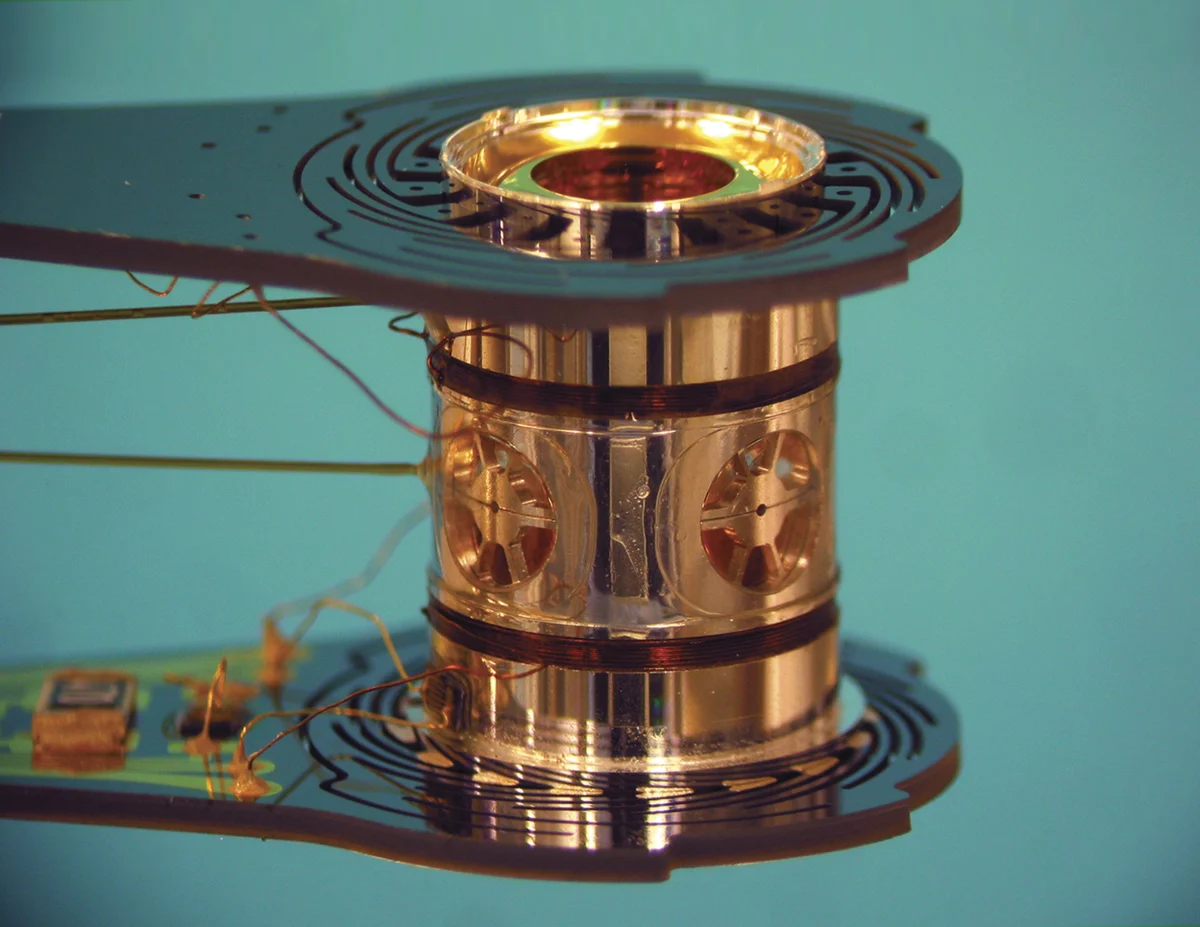
These meticulously crafted pellets are then encased in gold cylinders known as hohlraums. When high-power lasers are directed at the hohlraum, they convert the laser energy into X-rays, which then symmetrically compress the fuel pellet inside. If the compression is perfect and rapid enough, it generates immense temperatures and pressures, causing the deuterium and tritium nuclei to fuse, releasing a burst of energy. The challenge lies in orchestrating this entire sequence with unfathomable precision, demanding near-perfect spherical geometry of the fuel layers to ensure uniform compression and maximum energy yield.
The NIF’s methods, while scientifically validated, involved painstaking cryogenic layering techniques that could take up to a week to form the precise frozen deuterium-tritium layer. Inertia’s breakthrough specifically targets this bottleneck, condensing the intricate crystal growth process to a fraction of its original duration.
Inertia’s Innovative Approach: Speed, Margin, and Partnership
Inertia’s success stems from a multi-faceted approach, combining scientific ingenuity with engineering pragmatism. The core scientific expertise comes from individuals like Annie Kritcher, co-founder and chief scientist at Inertia, who previously designed the NIF experiment that first achieved net energy gain. Her intimate understanding of the physics provided a critical foundation for exploring how to accelerate the process without deviating from fundamental principles. "What happens if you try to do it faster?" Lawson queried, driving the team to challenge conventional timelines.
Through iterative development and leveraging their partnership with the NIF at Lawrence Livermore National Lab (LLNL) – a public-private collaboration aimed at accelerating the commercialization of fusion technology – Inertia has refined the crystal growth phase. What once took a week at NIF can now be accomplished in approximately 30 minutes. The entire manufacturing process for a single fuel pellet, from start to finish, has been reduced to about two to three hours. Crucially, this accelerated process has been designed with industrial scalability in mind, meaning it can be ramped up to meet the high-volume demands of a commercial power plant.
A key strategic advantage for Inertia lies in its planned use of a laser driver four times more powerful than the one currently employed at the NIF. This significant increase in laser power provides a crucial margin for error. As Lawson explained, "We actually have a lot of margin. That’s our strategy, to oversize our driver, our laser, to give us lots of margin to go play with in every other part of the system." This excess power allows Inertia to tolerate slight imperfections in the fuel pellets that would be prohibitive for the NIF, thereby easing manufacturing constraints and contributing to the faster production times. It represents a pragmatic engineering choice: instead of striving for absolute perfection in every component, optimize the overall system to achieve the desired outcome.
The Tritium Imperative: Cost, Scarcity, and Radioactive Management
The implications of this manufacturing breakthrough extend far beyond mere production speed; they profoundly impact the management of tritium, a critical and challenging component of deuterium-tritium fusion. Tritium is a radioactive isotope of hydrogen with a half-life of 12.3 years. Its radioactivity necessitates stringent handling protocols, adding complexity and cost to fusion operations. Furthermore, tritium is exceedingly rare and expensive, currently costing approximately $30,000 per gram. Global stockpiles are severely limited, with estimates suggesting only about 25 kilograms exist worldwide, according to a report in Science journal. This scarcity poses a significant hurdle for any large-scale fusion endeavor.
Inertia, like many other fusion startups, plans to implement a "tritium breeding" cycle, where tritium is produced in situ within the fusion reactor itself, using lithium blankets bombarded by fusion neutrons. This closed-loop system is essential for long-term sustainability and independence from external tritium supplies. However, an initial inventory of tritium is still required to initiate operations. By drastically reducing the fuel pellet manufacturing time, Inertia significantly minimizes the amount of tritium inventory it needs to hold at any given moment. Less tritium in the production pipeline means reduced radioactive material handling, lower inventory costs, and enhanced safety.
The operational scale of a commercial fusion power plant is staggering. Inertia anticipates that its full-scale commercial reactor will require the production and delivery of approximately 10 fuel pellets every second to maintain continuous power generation. Such a rapid consumption rate underscores the absolute necessity of a highly efficient and fast manufacturing process. Lawson summarized the cumulative benefits: "By reducing the latency of this step, you’ve made your facility smaller; you’ve made the whole thing faster, the whole thing more efficient." This efficiency translates directly into lower capital expenditure, reduced operational costs, and a more streamlined pathway to commercialization.
Broader Implications for the Fusion Industry and Energy Future
This advancement by Inertia Enterprises is not merely an isolated technical achievement; it represents a significant validation of the commercialization strategies employed by a growing number of fusion startups. The fusion energy sector has seen a surge in private investment, with companies attracting billions of dollars on the promise of clean, abundant, and safe energy. However, investors and the broader scientific community remain keenly aware of the enormous engineering hurdles that must be overcome to transition from laboratory experiments to grid-scale power generation. Inertia’s demonstration that a critical component of the NIF process can be industrialized is a powerful signal of progress.
The rapid production of fuel pellets directly contributes to overcoming what is often termed the "engineering gauntlet" of fusion. Beyond achieving scientific breakeven, commercial fusion requires solving challenges related to materials science (to withstand extreme temperatures and neutron flux), efficient energy extraction, waste heat management, and, crucially, high-throughput, low-cost manufacturing of components. Inertia’s success in this area suggests that even the most complex, high-precision manufacturing steps can be optimized for industrial scale, offering a blueprint for other elements of a fusion power plant.
For the broader energy landscape, the successful commercialization of fusion energy holds transformative potential. Fusion reactors produce no greenhouse gas emissions, generate minimal long-lived radioactive waste, and utilize readily available fuels (deuterium from seawater and tritium bred from lithium). As global energy demand continues to rise and the imperative to decarbonize intensifies, fusion offers a compelling long-term solution to the world’s energy needs. While still years away from widespread deployment, each technical barrier overcome, like Inertia’s fuel pellet breakthrough, shortens that timeline and strengthens the case for fusion as a viable energy source for the 21st century and beyond.
The fusion industry is characterized by intense research and development across various confinement approaches – magnetic (like tokamaks and stellarators) and inertial (like ICF). Inertia’s breakthrough specifically impacts the ICF pathway, demonstrating a clear path forward for one of its fundamental requirements. Other ICF companies will undoubtedly study Inertia’s methods for potential applicability or inspiration. Moreover, the general principle of taking laboratory-proven science and engineering it for mass production is a lesson that resonates across the entire fusion ecosystem, regardless of the specific confinement method.
Conclusion: A Step Closer to an Abundant Energy Future
Inertia Enterprises’ success in dramatically accelerating the manufacturing of fusion fuel pellets represents a critical milestone in the arduous journey toward commercial fusion power. By transforming a week-long, costly laboratory procedure into a matter of hours, scalable for industrial production, the company has not only de-risked a significant aspect of its own commercial roadmap but also provided a tangible demonstration of progress for the entire fusion industry.
This achievement underscores the importance of a holistic approach to fusion development, one that marries cutting-edge physics with rigorous industrial engineering principles. As the world grapples with climate change and the need for sustainable energy solutions, advancements like Inertia’s bring the promise of clean, virtually limitless fusion energy closer to reality, paving the way for a future powered by the stars. The remaining barriers are formidable, but each breakthrough fuels further innovation and strengthens the resolve of those committed to harnessing the power of fusion for humanity.
About the Author