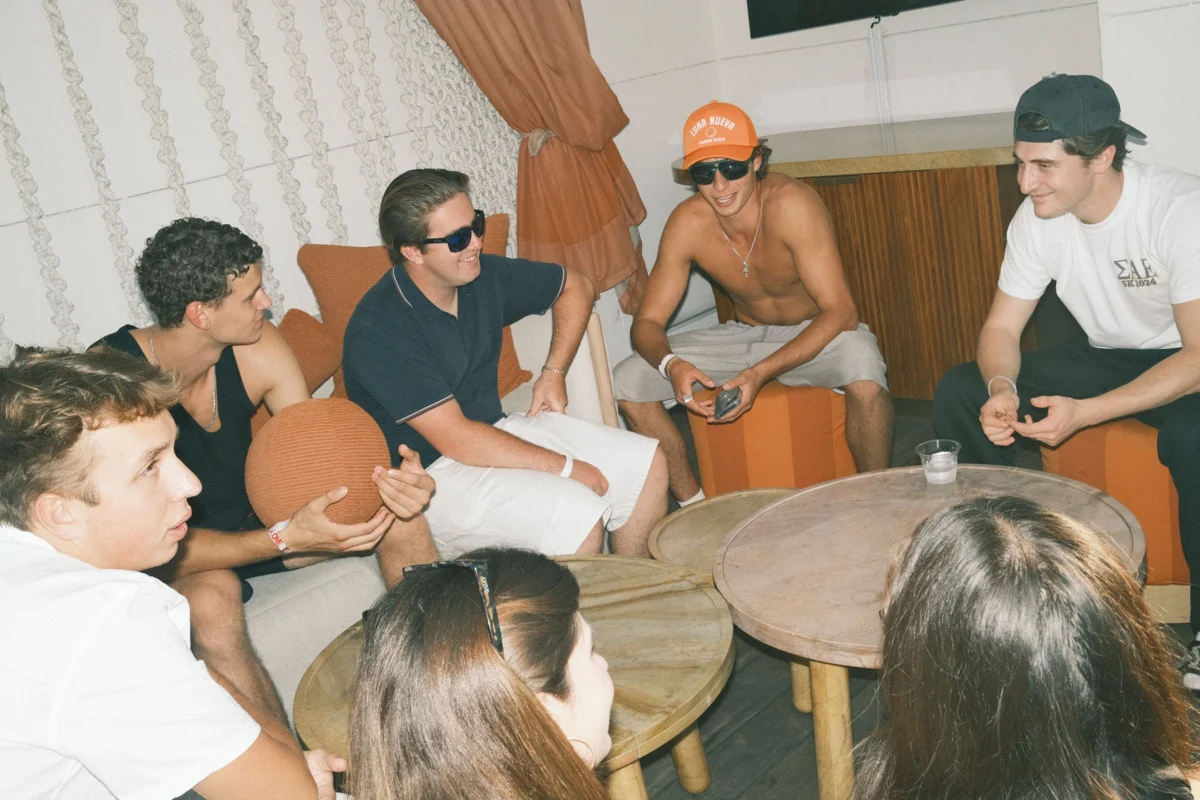
Jack Schwartz, a 21-year-old entrepreneur, recently sat in an office in New York City and produced a white envelope containing $27,500 in cash. Neatly organized into three stacks, the currency represented the price of a single VIP table at an upcoming event in Manhattan. This display of liquidity serves as a tangible metric for the success of MyPlots, a party-promotion and ticketing application that has rapidly transformed the landscape of youth nightlife in Los Angeles and is now aggressively expanding into the East Coast market.

Founded by Schwartz and a cohort of tech-savvy collaborators, MyPlots has evolved from a series of informal high school gatherings into a digital empire. The platform currently boasts over one million users, primarily concentrated in the under-21 demographic in Southern California. By leveraging social media "FOMO" (fear of missing out) and formalizing the financial transactions of the house-party scene, MyPlots has positioned itself as a significant player in the event-tech industry, challenging established competitors like Partiful.
The Genesis of a Modern Party Empire
The trajectory of MyPlots began long before its formal app launch in January 2025. Schwartz’s entrepreneurial journey started at the age of 14 while he was a freshman at Palisades Charter High School, an institution known locally as "Pali." His first venture, Loonar Clothing, involved a high-effort marketing strategy where he would wait outside high-profile Los Angeles restaurants for hours to convince celebrities to wear his gear.

This early exposure to influencer culture provided the blueprint for his transition into event promotion. By the time he was an upperclassman, Schwartz was organizing large-scale events at rented Hollywood venues and private residences. These gatherings were often described by peers as "Gatsby-esque," characterized by luxury settings and exclusive guest lists. The demand for these events highlighted a gap in the market: while teenagers were eager to congregate, the methods for organizing and monetizing these gatherings were disorganized, relying on peer-to-peer payment apps like Venmo and Zelle, which offered little security or scalability.
Technological Infrastructure and Revenue Model
The MyPlots application was designed to solve the logistical "messiness" of the underground party scene. The platform allows hosts to create events, manage guest lists, and send automated text updates. Unlike its competitors, MyPlots integrated a robust ticketing feature from its inception, allowing for tiered pricing based on gender, timing, or VIP status.

The company’s revenue model is straightforward but highly effective, taking a 20 percent commission on all ticket sales processed through the app. To facilitate these transactions, MyPlots utilizes Stripe integration. While the app technically requires users to be 18, the use of Stripe allows for users as young as 13 if they have parental enrollment on the account—a loophole that reflects the reality of the affluent teenage market where parental credit cards are often linked to minors’ devices.
Market data suggests that this formalization is part of a broader trend. The global event ticketing market was valued at approximately $77 billion in 2023 and is projected to grow as Gen Z consumers prioritize "experience-based" spending. MyPlots has successfully captured a niche segment of this market by focusing on high-end, exclusive "plots"—slang for social gatherings—rather than mass-market concerts or festivals.

Chronology of Growth and Market Expansion
The growth of MyPlots can be traced through several key milestones:
- Early 2020s: Schwartz builds a reputation through high school parties in West Los Angeles, utilizing Instagram and Snapchat to generate hype.
- January 2025: The MyPlots app officially launches, providing a centralized platform for ticket sales and event discovery.
- May 2025: The "After-Prom Tour" is launched, targeting high school seniors across Los Angeles with luxury events advertised through exotic car displays and penthouse views.
- Late 2025 – Early 2026: The brand expands into the 18-plus and 21-plus markets, hosting after-parties for major recording artists such as Playboi Carti and Don Toliver.
- July 2026: MyPlots hosts the Daybreak Festival at the W Hollywood, signaling a shift toward large-scale, semi-professional festival production.
This chronological progression shows a clear evolution from rebellious teenage gatherings to a sophisticated business model that interfaces with major venues and professional talent.

The Socio-Economic Context of West Los Angeles
The success of MyPlots is inextricably linked to the unique socio-economic environment of West Los Angeles. Neighborhoods like Pacific Palisades, Beverly Hills, and Bel Air provide the necessary ingredients for this specific brand of entrepreneurship: immense private wealth, high-end real estate, and a culture obsessed with social media status.
According to real estate data, the average home price in Pacific Palisades exceeds $3.8 million. This affluence provides teen promoters with access to "envy-inducing" venues—often their own parents’ homes or those of their peers. Furthermore, the "influencer" culture of Los Angeles serves as a force multiplier for MyPlots’ marketing. When a single video of a luxury mansion party goes viral, it creates a self-sustaining cycle of demand that allows promoters to charge premium prices, such as the $100 entry fees and five-figure table service rates seen in New York.

Regulatory Challenges and Liability Concerns
Despite its financial success, the rise of MyPlots has not been without controversy. The nature of hosting large-scale events for minors and young adults carries significant legal and safety risks. In 2024, Schwartz was featured in the FX documentary series Social Studies, which documented the "debaucherous" turn of some teenage parties, including incidents of underage drinking, fights, and medical emergencies.
Industry experts warn that the liability for these events is immense. William Lemmon, a principal broker at Broadway Insurance Services, notes that while "instant" online insurance policies are available, they are often rendered invalid if the actual use of the space involves minors and alcohol in a venue not zoned for such crowds. "Add minors and alcohol, and no carrier will knowingly touch it," Lemmon stated, describing the situation as a "pile-on" of liability involving promoters, property owners, and parents.

Schwartz has attempted to distance the MyPlots technology from the individual actions of promoters using the platform. He maintains that the app is merely a tool for facilitation and that the company is not legally responsible for the management of the 95 percent of events it does not personally produce. However, veteran event planners like Marley Majcher of The Party Goddess! remain skeptical, suggesting that in the "sue-happy" environment of affluent California, airtight contracts and massive coverage are essential—something young entrepreneurs may be overlooking in their rush to scale.
Official Responses and Stakeholder Perspectives
The reactions to the MyPlots phenomenon vary across different stakeholder groups:

- Promoters: Professional promoters like Daniel Herring have praised the app for its customer service and ability to target specific demographics who have attended previous events.
- Parents: Some local parents express a mix of concern and resignation. Rachel, a mother of two in Culver City, noted that the independence granted by ride-sharing apps and digital payment methods has made it nearly impossible to prevent teens from attending these ticketed events.
- Platforms: Competitors like Partiful have responded to the MyPlots threat by introducing their own in-app ticketing features, indicating a "feature war" in the event-tech space.
- Legal/Insurance: Insurance brokers continue to flag the "intended use" gap, warning that many of these parties are operating in a gray area of legality regarding occupancy permits and alcohol sales.
Future Implications and Strategic Ambitions
Looking ahead, the leadership team at MyPlots—including Schwartz, marketing head Zane Harwin, and CTO Clark Holden—has set its sights on institutional growth. The company is currently seeking $10 million in angel investment to establish a permanent corporate office and hire a dedicated sales team. Plans are also underway for a 10,000-person festival on Santa Monica Beach in the summer of 2027.
Beyond the nightlife industry, Schwartz views MyPlots as a stepping stone. He has expressed interest in eventually exiting the event space to apply his experience in consumer behavior and digital marketing to the field of Artificial Intelligence. This ambition reflects a broader Gen Z trend: using social-media-driven businesses to accumulate capital for high-tech ventures.

The rise of MyPlots signifies a shift in how the "experience economy" is managed for the youngest generation of consumers. By turning the traditional house party into a monetized, data-driven enterprise, Schwartz and his team have proven that "clout" can be converted into significant revenue. However, as the company matures and moves into the 21-plus market, it will likely face increased scrutiny from regulators and established hospitality groups, forcing a transition from an "authentic" teenage hustle to a regulated corporate entity. Whether MyPlots can maintain its "cool" factor while navigating these institutional pressures will determine its long-term viability in the competitive landscape of global nightlife.
About the Author