The global landscape of digital information retrieval is undergoing its most significant structural shift since the inception of the modern search engine. For over two decades, the "ten blue links" model championed by Google defined the relationship between content creators and consumers. However, the rapid ascent of Large Language Models (LLMs) such as OpenAI’s ChatGPT, Anthropic’s Claude, and Perplexity AI has introduced a new discipline: AI Optimization (AIO). This emerging field focuses on ensuring content is not merely indexed by search engines but cited and recommended by generative AI models, which are increasingly becoming the primary gateway for user queries.
The Evolution of Search: A Three-Year Chronology
The transition from traditional Search Engine Optimization (SEO) to AI Optimization has moved with unprecedented speed, driven by milestones in generative technology and consumer adoption.
November 2022 – The Catalyst: The public release of ChatGPT marked the beginning of the generative era. Reaching 100 million monthly active users in just two months, it became the fastest-growing consumer application in history. This phase introduced users to conversational discovery, where direct answers replaced the need to browse multiple websites.
2023 – The Rise of the Answer Engine: Startups like Perplexity AI began to bridge the gap between LLMs and real-time web searching. Unlike static models, these "answer engines" browse the live internet and provide cited sources for their claims. This created the first measurable incentive for publishers to optimize for AI citation.
May 2024 – Google’s Strategic Pivot: Recognizing the threat to its core business, Google introduced "AI Overviews" (formerly Search Generative Experience). This integration signaled that AI-generated summaries would no longer be a niche tool but a central component of the world’s most used search engine, impacting billions of queries daily.
Early 2025 – Commercial Validation: By the first quarter of 2025, Google reported that AI integration contributed to a 10% increase in search revenue, reaching $50.7 billion. This financial success confirmed that AI-driven search was a permanent fixture of the digital economy, prompting a surge in demand for AIO strategies among global enterprises and independent creators alike.
Quantifying the Shift in Consumer Behavior
The move toward AI search is supported by a growing body of data reflecting a fundamental change in how users interact with the internet. Current estimates suggest that ChatGPT alone processes over 10 million web-browsing queries daily. Furthermore, search patterns indicate that users are moving away from fragmented keyword searches (e.g., "best WordPress hosting") toward complex, natural language questions (e.g., "What is the most cost-effective WordPress hosting for a scaling SaaS company with high security needs?").
This behavioral shift presents a "visibility gap" for traditional publishers. Content that ranks in the first position on a standard Google Search Results Page (SERP) may be entirely omitted from an AI-generated response if it lacks the semantic markers and authoritative signals required by LLMs. As AI tools become the default research assistants for students, researchers, and business decision-makers, the inability to appear in these summaries represents a significant loss in high-intent organic traffic.
The Mechanics of AI Optimization: Seven Core Strategies
Unlike traditional SEO, which often prioritizes technical signals like page load speed and backlink volume, AIO focuses on semantic relevance, factual density, and cross-platform authority. Industry analysis has identified seven specific tactics that currently influence AI citation rates.
1. Factual Density and Verifiable Data
AI models exhibit a measurable preference for content grounded in specific statistics and numbers. Generalities are often ignored in favor of precise data points. For example, a statement such as "our software is fast" is less likely to be cited than "our software reduces server latency by 40% for 95% of users." These verifiable facts serve as "hooks" that LLMs use to construct credible answers.
2. Community-Based Authority Signals
LLMs are trained on massive datasets that include community discussions from platforms like Reddit, Quora, and specialized industry forums. Genuine engagement on these platforms creates a "social proof" signal. When a brand or resource is frequently mentioned in helpful, non-promotional contexts within these communities, AI models are more likely to recognize that entity as a trusted authority during the retrieval process.
3. Natural Language Query Alignment
AIO requires a shift toward conversational content structures. This includes the use of FAQ sections that use full-sentence questions as headers. By mirroring the exact phrasing of user prompts, content creators increase the likelihood that an AI will identify their text as a direct match for a specific user intent.
4. Semantic Formatting and Structured Data
While human readers benefit from clear headings, AI models benefit from machine-readable structures. The implementation of JSON-LD (JavaScript Object Notation for Linked Data) is critical. This code provides a standardized way to provide information about a page and classify its content. Additionally, the use of comparison tables and numbered lists allows LLMs to extract information more efficiently, making the content "cite-friendly."
5. Multi-Platform Consistency
AI models often cross-reference information across multiple sources to verify accuracy. Maintaining a consistent message across a website, social media profiles, and guest publications reinforces a brand’s authority. Discrepancies in data or claims across platforms can lead to a "trust penalty," where the AI deems the source unreliable.
6. Temporal Freshness Signals
For queries related to technology, news, or evolving markets, AI models prioritize the most recent information. Explicitly stating "Last Updated" dates and ensuring that statistics reflect the current year are essential signals for models that browse the web in real-time.
7. Technical Schema Markup
Beyond standard metadata, advanced schema types—such as "HowTo," "Article," and "Product"—help AI models categorize content with precision. This technical layer ensures that the model understands not just what the words are, but what the content is in a functional sense.
The Challenge of Performance Measurement
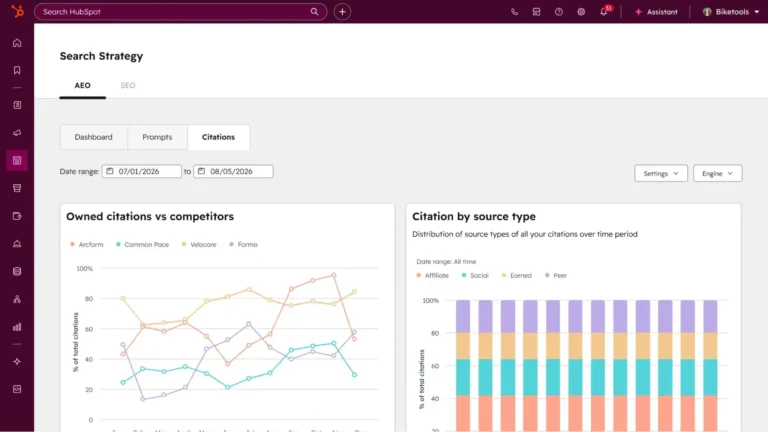
A significant hurdle in the adoption of AIO is the current lack of native analytics. Unlike Google Search Console, which provides transparent data on impressions and clicks, AI platforms like ChatGPT and Claude do not yet offer "Creator Dashboards."
This transparency gap has led to the emergence of a new sector of AIO tracking tools. Commercial offerings from companies like Ahrefs ($129/month) and SE Ranking ($95/month) have begun to include AI visibility metrics. Simultaneously, a movement toward "no-code" monitoring has emerged, where creators use automation platforms like Make.com to systematically query AI models and log mentions of their brands. These custom systems allow users to track "AIO Share of Voice" by automating prompts and parsing the responses for specific URLs or brand names.
Industry Perspectives and Reactions
The rise of AIO has met with a range of reactions from industry stakeholders. Google’s public stance has been one of integration, emphasizing that AI features are designed to "enhance" rather than replace the search experience. However, some publishers have expressed concern over "zero-click" searches, where the AI provides all the necessary information, leaving the user with no reason to visit the original source.
In response, some platforms, such as Perplexity, have begun exploring revenue-sharing models with publishers. Industry analysts suggest that we are entering an era of "citation-based economies," where the value of a website is determined not by how many people visit it, but by how often its data is used to train or inform AI responses.
Broader Implications and Future Outlook
The trajectory of AI search suggests a move toward hyper-personalization. Future iterations of LLMs are expected to tailor search results based on a user’s specific history, professional background, and previous preferences. For content creators, this means that "ranking first" may become a subjective concept, with different users receiving different citations based on their individual needs.
Furthermore, the legal landscape regarding AI and copyright remains in flux. As major publishers enter into licensing agreements with AI companies, a two-tiered system of visibility may emerge: one for "official partners" and another for the open web.
In conclusion, AI Optimization is no longer a speculative field but a necessary evolution for digital visibility. As user behavior continues to shift toward conversational discovery, the creators and businesses that prioritize factual density, structured data, and community authority will be best positioned to capture traffic in an AI-first world. The transition from the "ten blue links" to the "single cited answer" represents a fundamental change in the internet’s architecture, one that requires a new set of skills, tools, and strategic priorities.
About the Author