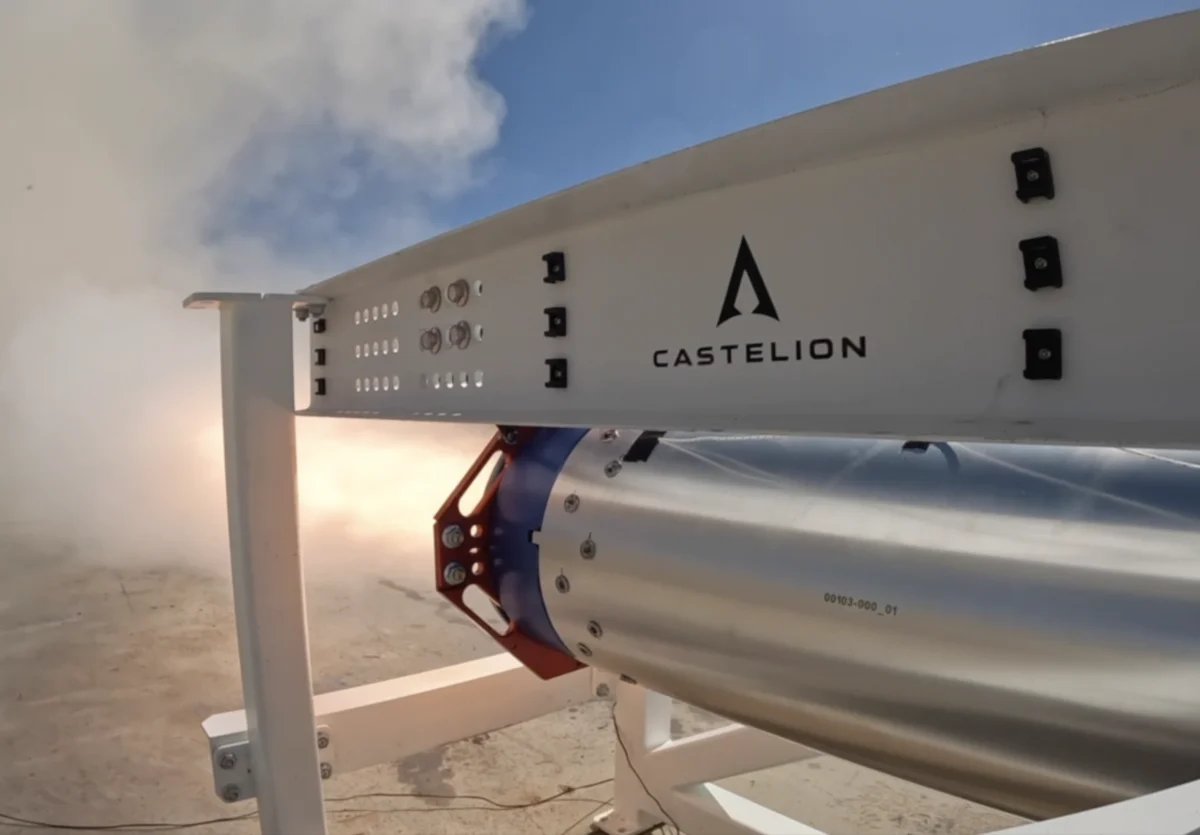
In a monumental development for the burgeoning "New Defense" sector, Castelion, a missile startup spearheaded by former SpaceX executives, has successfully closed a Series C funding round amounting to $1 billion, catapulting its valuation to an impressive $13 billion. This significant capital injection, co-led by an influential trio comprising Andreessen Horowitz, Carlyle, and JPMorgan Chase, positions Castelion at the forefront of the United States’ urgent drive to enhance its hypersonic weapon capabilities and address critical national security imperatives. The funding comprises an $800 million equity component alongside a $250 million revolving credit facility, signifying robust confidence from both venture capital and traditional financial institutions in Castelion’s innovative approach to defense manufacturing.
The substantial investment underscores a pivotal shift in the defense industrial landscape, where agile, technology-driven startups are increasingly challenging the long-standing dominance of traditional defense primes. Castelion, established in 2022, set its ambitious sights on revolutionizing the production of advanced defense hardware, specifically hypersonic weapon systems, by employing a model designed for lower costs and dramatically faster manufacturing speeds than conventionally achieved. This strategy has already yielded tangible results, with the company securing over $500 million in U.S. military contracts to date, demonstrating its capacity to deliver on its promises and meet the stringent requirements of the Department of Defense (DoD).
The Imperative of Hypersonic Dominance
The timing of this funding round is not coincidental; it aligns directly with a critical strategic priority for the Pentagon. The U.S. military has openly acknowledged a significant gap in its hypersonic missile arsenal compared to adversarial nations, particularly China, which has made substantial advancements in this domain. Hypersonic missiles, defined by their ability to travel at speeds exceeding Mach 5 (five times the speed of sound) and their highly maneuverable flight paths, present a formidable challenge to existing air defense systems. Their speed dramatically reduces reaction times, while their unpredictable trajectories make them exceedingly difficult to track and intercept.
For years, the U.S. had a commanding lead in missile technology, but a period of reduced focus allowed competitors to close the gap and, in some areas, surpass American capabilities. Reports from U.S. intelligence agencies and defense think tanks have repeatedly highlighted China’s extensive investment in hypersonic research and development, culminating in successful tests of various hypersonic glide vehicles and cruise missiles. Russia, too, has demonstrated its hypersonic prowess with systems like the Kinzhal air-launched ballistic missile and the Avangard hypersonic glide vehicle. This geopolitical reality has created an urgent mandate for the U.S. to rapidly accelerate its own hypersonic programs to maintain a credible deterrent and ensure its strategic advantage.
Castelion’s value proposition directly addresses this pressing national security need. By leveraging modern manufacturing techniques, rapid prototyping, and a startup ethos—elements often associated with companies like SpaceX, from which its founders originated—Castelion aims to dramatically compress development cycles and scale production in a manner that traditional defense contractors, with their often-cumbersome processes and legacy infrastructure, have struggled to match. The company is betting that its streamlined approach can help the U.S. close the "hypersonic gap" with unprecedented speed and efficiency.
A Chronicle of Rapid Ascent
Castelion’s journey from a nascent startup to a decacorn (a company valued over $10 billion) in just over four years is a testament to the urgency of its mission and the efficacy of its execution.
- 2022: Founding and Vision. Castelion was founded by a team of experienced engineers and executives, many hailing from SpaceX, a company renowned for its disruptive approach to aerospace manufacturing and its ability to achieve ambitious goals rapidly. The founding principle was clear: apply Silicon Valley’s innovation model to the defense sector, starting with the complex challenge of hypersonics. The vision was to build a new type of defense contractor—one that could mass-produce sophisticated hardware with unprecedented agility and cost-effectiveness.
- October 2023: Initial Public Acknowledgment and Seed/Series A Funding. While the specific round size was not disclosed, Castelion garnered early attention and funding, likely a seed or Series A round, signaling confidence in its foundational technology and business model. Early reports highlighted its ambition to tackle the defense industry’s inefficiencies, beginning with hypersonic systems.
- July 2025: Series B Funding – $350 Million. This round provided substantial capital to scale early operations and accelerate research and development. The $350 million investment demonstrated growing investor confidence and enabled Castelion to move beyond conceptual design into more advanced prototyping and testing phases. This period likely saw the expansion of its engineering teams and the initial build-out of its manufacturing capabilities.
- August 2026: Series C Funding – $1 Billion. The latest and largest funding round, co-led by major financial players, marks Castelion’s transition from a promising startup to a critical national asset. The $13 billion valuation reflects not only the potential of its technology but also the perceived strategic importance of its role in the global defense landscape. The inclusion of a $250 million revolving credit facility alongside the equity speaks to the financial stability and operational scale Castelion is expected to achieve, suggesting a move towards significant, sustained production.
This rapid funding trajectory underscores the defense sector’s increasing attractiveness to private capital, driven by geopolitical tensions and the perceived lag in traditional defense procurement processes. Early backers, including prominent venture capital firms like Lightspeed, General Catalyst, and Altimeter, continued their participation in this Series C round, further solidifying their belief in Castelion’s long-term potential.
Blackbeard and the New Mexico Production Hub
The fresh capital will be strategically deployed to significantly ramp up production of Castelion’s flagship hypersonic missile, the "Blackbeard," and other advanced hypersonic weapons in its portfolio. Named after the notorious and feared English pirate, the Blackbeard missile embodies the company’s aggressive approach to technological advancement and its intent to project formidable power.
Castelion’s primary production facility is located in New Mexico, a state that has become a hub for aerospace and defense innovation due to its existing military installations, skilled workforce, and vast testing ranges. The choice of location is strategic, enabling secure domestic manufacturing and close collaboration with government partners. This facility is central to Castelion’s "factory-first" approach, where vertical integration and advanced manufacturing processes are designed to reduce lead times and optimize costs—a stark contrast to the often-fragmented supply chains and assembly-line models of older defense contractors. The New Mexico site is expected to become a cornerstone of U.S. hypersonic missile production, generating high-tech jobs and contributing significantly to the regional economy.

Inferred Industry Responses and Strategic Implications
The massive Series C funding for Castelion sends strong signals across multiple sectors, eliciting both enthusiasm from investors and a renewed sense of urgency from traditional defense players.
From Co-Leading Investors:
- Andreessen Horowitz (a16z): Known for its deep investments in disruptive technologies, a16z’s involvement signifies its belief that Castelion represents a fundamental shift in defense procurement. An inferred statement might be: "We believe Castelion embodies the vanguard of a new era in national security innovation. By fusing Silicon Valley’s rapid development cycles and engineering excellence with the critical demands of defense, Castelion is not just building missiles; it’s rebuilding the industrial base for a safer future. Our investment reflects confidence in their vision to provide essential capabilities faster and more affordably than ever before."
- Carlyle: A global investment firm with extensive experience in the aerospace and defense sector, Carlyle’s participation highlights Castelion’s robust business model and long-term growth potential. An inferred statement could be: "Carlyle’s investment in Castelion underscores our conviction in its proven ability to execute on vital defense programs and its pivotal role in fortifying the nation’s defense industrial capabilities. We see immense value in their innovative manufacturing approach and their direct impact on critical U.S. strategic objectives."
- JPMorgan Chase: As a leading global financial institution, JPMorgan Chase’s involvement, particularly in structuring the credit facility, indicates a strong vote of confidence in Castelion’s financial health, operational stability, and capacity to manage large-scale production. An inferred statement might be: "Our participation in Castelion’s landmark funding round, including the provision of a substantial credit facility, reflects a deep belief in the company’s exceptional leadership, technological prowess, and its strategic importance to national security. We are committed to supporting companies that are shaping the future of defense with innovative and scalable solutions."
From the U.S. Department of Defense (DoD):
While the DoD typically refrains from commenting on specific private company funding rounds, the broader implications of Castelion’s success would undoubtedly be welcomed. An inferred response from a DoD official could be: "The Department of Defense consistently seeks innovative and efficient pathways to accelerate the delivery of critical capabilities to our warfighters. Companies that demonstrate the ability to rapidly develop, test, and produce advanced systems like hypersonics at scale are essential partners in our ongoing efforts to maintain strategic superiority and ensure national security. We continue to prioritize partnerships that strengthen our defense industrial base and provide cutting-edge technology to meet evolving threats."
From Industry Analysts:
Defense and technology analysts view Castelion’s funding as a strong validation of the "New Defense" paradigm. An analyst might comment: "This billion-dollar Series C for Castelion is a clear signal that private capital is increasingly seeing the defense sector as ripe for disruption. It’s not just about a single company; it’s about a fundamental shift where agility, rapid iteration, and modern engineering principles, once exclusive to Silicon Valley, are now being applied to national security. This puts significant pressure on legacy defense contractors to either adapt, acquire, or risk losing market share in these critical, emerging technology areas. It also highlights the growing confidence in startups to handle the complexities and security requirements of defense contracts."
Broader Impact and Future Implications
The ramifications of Castelion’s ascent extend far beyond its immediate financial success, touching upon national security, economic development, and the future competitive landscape of the defense industry.
For U.S. National Security: The most direct impact will be the potential to rapidly enhance the U.S. hypersonic missile stockpile. A robust and diverse arsenal of hypersonic weapons is crucial for deterrence, ensuring that potential adversaries understand the severe consequences of aggression. Castelion’s ability to produce these systems faster and more affordably could significantly accelerate the closing of the "hypersonic gap," thereby strengthening U.S. strategic stability in an increasingly volatile global environment.
For the "New Defense" Ecosystem: Castelion’s meteoric rise provides a powerful proof-of-concept for the viability of venture-backed startups in the defense sector. It validates the model that innovative companies, unburdened by legacy systems and bureaucratic processes, can attract significant capital and compete effectively with established defense primes. This success will likely encourage more entrepreneurs to enter the "New Defense" space, fostering greater innovation and competition, and ultimately benefiting the U.S. military.
Economic Impact: The expansion of Castelion’s New Mexico production facility will lead to substantial job creation, from highly skilled engineers and technicians to manufacturing personnel. This investment in domestic production strengthens the U.S. industrial base, reduces reliance on foreign supply chains, and contributes to regional economic growth in an advanced manufacturing sector.
Competitive Landscape: The success of Castelion will undoubtedly send ripples through the traditional defense industry. Legacy contractors like Lockheed Martin, Raytheon, and Northrop Grumman, while still dominant, will face increased pressure to accelerate their own innovation cycles, streamline their processes, and potentially seek partnerships or acquisitions with agile startups. This competition could lead to overall improvements in efficiency and technological advancement across the entire defense industrial complex.
The Future of Warfare: The proliferation of hypersonic weapons, driven in part by companies like Castelion, signifies a fundamental shift in military capabilities. These weapons challenge existing doctrines of air defense and strategic deterrence, prompting militaries worldwide to rethink their strategies for offense and defense. Castelion is not just building missiles; it is playing a direct role in shaping the future of warfare itself.
In conclusion, Castelion’s $1 billion Series C funding and $13 billion valuation mark a watershed moment for the company and the broader defense industry. It represents a potent convergence of private capital, cutting-edge technology, and urgent national security priorities. As Castelion leverages this unprecedented investment to scale its production of advanced hypersonic weapons, it solidifies its position as a critical player in the United States’ strategy to regain and maintain its technological edge in an era of renewed great power competition. The aggressive pirate moniker of its Blackbeard missile serves as a fitting symbol for a company determined to navigate and conquer the challenging seas of modern defense innovation.
About the Author