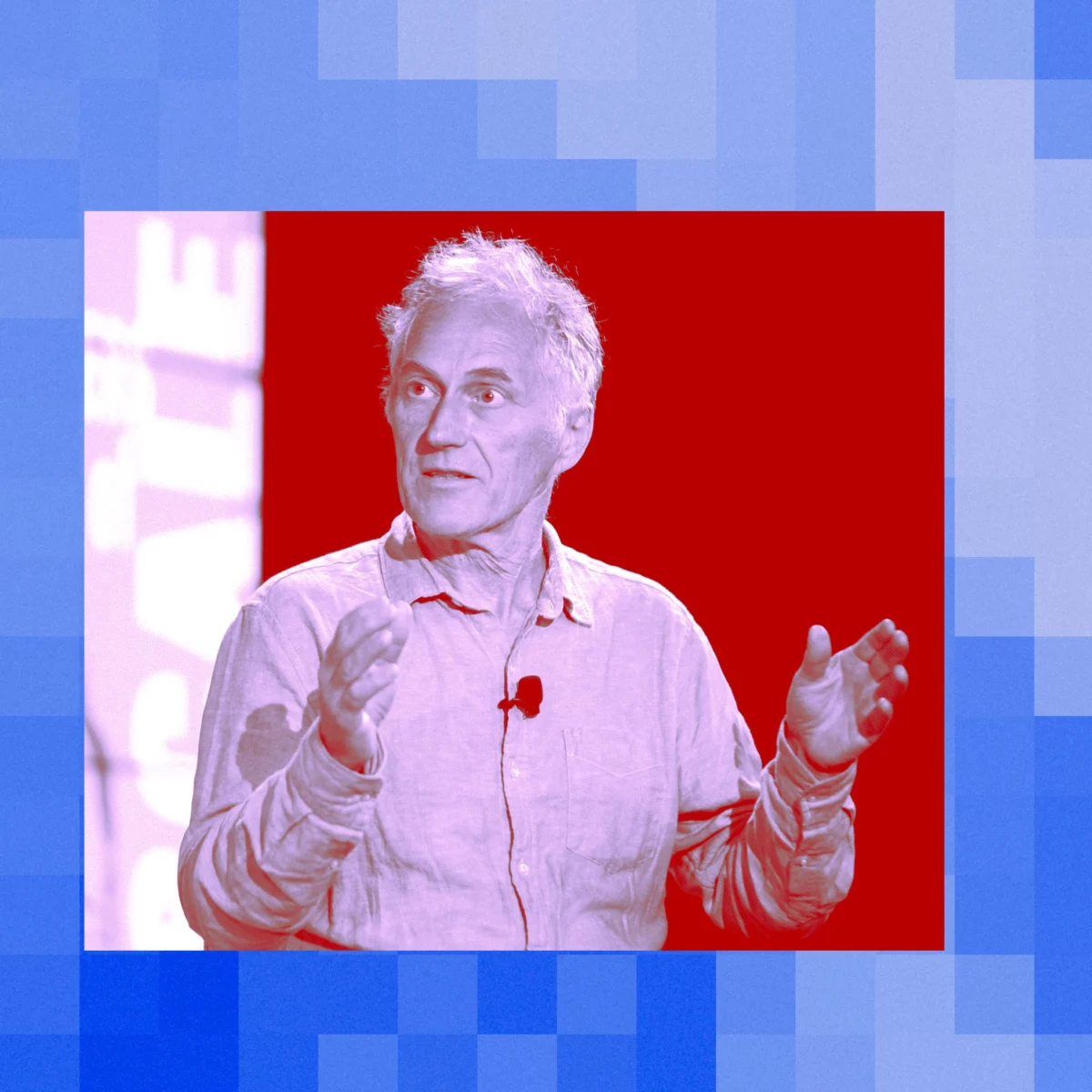
Tim O’Reilly, the publisher, venture capitalist, and internet pioneer who famously coined the term "Web 2.0," is sounding a clarion call for the democratization of artificial intelligence. Long guided by the principle that a company or individual should "create more value than they capture," O’Reilly is now applying this ethos to the rapidly evolving AI landscape. He argues that the current trajectory of AI development, dominated by a handful of "hyperscalers" like Microsoft, Google, and Amazon, threatens to repeat the monopolistic patterns of the 1990s. Instead of a closed ecosystem of proprietary "frontier" models, O’Reilly advocates for a future rooted in open-source AI—not merely as a technical preference, but as a necessary framework for societal innovation and economic freedom.
The Architecture of Participation vs. Control
The debate over open-source AI often centers on "open-weight" models, where companies release the internal parameters of their neural networks. However, O’Reilly contends that true open source is far more expansive. Drawing on his experience from the 1990s software wars, he distinguishes between mere licensing and the "architecture of the system." In O’Reilly’s view, the current leaders in AI are building an architecture of control designed to lock users into specific platforms, mirroring the tactics used by software giants decades ago to stifle competition.
O’Reilly emphasizes that for AI to truly benefit society, there must be a clean separation between three distinct layers: the model itself, the "harness" (the software environment that runs the model), and the application. By maintaining this modularity, developers and users can "embed their own special sauce" into AI systems without being tracked or restricted by the provider of the underlying model. This "architecture of participation" is what O’Reilly believes will drive the next wave of global innovation, allowing individuals to "paint outside the lines" of what big tech companies currently permit.
A Chronology of Technological Shifts and Market Dominance
To understand O’Reilly’s current stance, one must look at the historical context of his influence on the technology sector. In the early 1990s, while the industry was focused on the battle for the personal computer desktop, O’Reilly recognized that the World Wide Web was the true "disruptor from left field." This shift moved the center of gravity from individual software applications to networked systems.
By 2010, O’Reilly observed a shift in how Silicon Valley operated. The rise of companies like Uber and Lyft, fueled by massive venture capital subsidies, marked a departure from traditional market dynamics. Instead of consumers deciding the best product through their purchases, venture capitalists began "picking winners" by funding companies that could afford to lose billions of dollars to undercut competitors. O’Reilly characterizes this as a form of "anti-capitalism," where the desires of a few powerful individuals and investors determine market outcomes rather than the marketplace itself.
In the 2020s, the emergence of Generative AI has brought these tensions to a head. The "frontier models"—the massive, resource-intensive LLMs (Large Language Models) developed by OpenAI, Anthropic, and Google—represent the new "mainframes" of the digital age. O’Reilly warns that if the industry remains focused solely on these high-end models, it will miss the broader "diffusion" of AI that occurs when lower-level, more accessible models are integrated into every facet of society.
Supporting Data: The Concentration of AI Capital and the Rise of Open Source
The urgency of O’Reilly’s message is supported by current market data. According to reports from PitchBook and CB Insights, venture capital investment in AI startups reached record highs in 2023 and 2024, yet a significant portion of this capital is concentrated in a tiny fraction of companies. For instance, Microsoft’s multi-billion-dollar partnership with OpenAI and Amazon’s $4 billion investment in Anthropic illustrate the "piling on" of capital that O’Reilly describes.
Simultaneously, the global landscape is shifting. While the United States leads in frontier model development, China has made significant strides in diffusing open-source and mid-tier models through its economy. Models like Alibaba’s Qwen and the DeepSeek series have demonstrated that high performance can be achieved without the massive overhead of American "frontier" systems. This supports O’Reilly’s concern that the U.S. could "win" the race for the most powerful model but "lose" the broader economic race by failing to foster a decentralized AI ecosystem.
Furthermore, the "open-source" movement in AI is gaining quantitative momentum. Platforms like Hugging Face now host hundreds of thousands of open-source models. Meta’s release of the Llama series has served as a catalyst, providing a high-performance foundation for developers who want to avoid the "walled gardens" of closed-source providers.
Addressing Security Risks and Regulatory Concerns
A primary argument against open-source AI is the potential for "bad actors" to bypass safety guardrails, leading to cybersecurity threats or the development of biological weapons. O’Reilly, however, flips this narrative. He points out that nearly all high-profile cybersecurity incidents involving AI to date have originated from or targeted the frontier models themselves.
He argues that the risks associated with "frontier" capabilities—such as the ability to design pathogens—are actually arguments for slowing down the development of those specific high-end models rather than restricting the distribution of open-weight models. By focusing on the "open-memory" and "open-harness" concepts, O’Reilly suggests that the industry can build more resilient and transparent systems. His nonprofit, the AI Disclosures Project, is currently advocating for an "open-memory consortium" to ensure that users can switch between AI providers while maintaining their own personal data and context, preventing the "lock-in" that Mark Zuckerberg and others are pursuing through personalized AI.
AI as a Creative Medium: The Philosophical Shift
One of the more provocative aspects of O’Reilly’s vision is his view of AI as a creative medium rather than a replacement for human intellect. He compares the current skepticism toward AI-generated content to historical reactions to the camera. Just as 19th-century critics argued that photography could not be "art" because it was a mechanical process, today’s critics argue that AI-generated writing or art lacks human soul.
O’Reilly disagrees, viewing AI as a "thought partner." He utilizes AI for brainstorming, summarizing long interviews, and handling "functional writing." He predicts that the ability to "summon words from LLMs" will eventually be seen as a skill akin to mastering a paintbrush or a musical instrument. In this framework, the human remains the director, using the AI to express ideas that might otherwise remain unarticulated. This perspective challenges the current policies of many media organizations that strictly forbid the use of AI in editorial content, suggesting that such rules will eventually be viewed as "legacy" relics of a pre-AI era.
Impact on the Knowledge Economy and Publishing
The shift toward AI is already having a tangible impact on O’Reilly’s own business, O’Reilly Media. The traditional book publishing industry has been in a steady decline for a quarter-century. O’Reilly notes that his company’s book revenue dropped from a peak of $70 million to $30 million as knowledge-sharing shifted to digital platforms.
The rise of AI "hoovering up" data presents a new challenge: how to compensate human experts for the knowledge they share. O’Reilly is currently focused on building tools that allow users to "invoke the knowledge of experts" through AI interfaces. This represents a pivot from selling physical or digital volumes to selling access to an "expert superpower" facilitated by AI. This transition is a microcosm of the broader shift in the knowledge economy, where the value lies not in the storage of information, but in its intelligent retrieval and application.
Broader Implications and the Path Forward
The implications of O’Reilly’s advocacy are profound for both policy and industry strategy. If the "real AI future" is indeed a "ferment of innovation" outside the reach of venture capital—similar to how the web flourished independently of the software giants of the 90s—then the current focus on regulating large models may be misplaced.
Instead, O’Reilly’s analysis suggests several key priorities for the tech industry and regulators:
- Ensuring Interoperability: Policies should focus on the ability to move data and "memory" between different AI providers to prevent monopolistic lock-in.
- Supporting Open Infrastructure: Encouraging the development of open-source harnesses and frameworks that allow small-scale developers to innovate.
- Redefining Intellectual Property: Finding new ways to reward creators when their work is used to train or inform AI systems, ensuring that the "value created" continues to flow back to the sources of knowledge.
- Global Competitiveness: Recognizing that AI dominance is not just about the largest model, but about how effectively a society can integrate AI into its everyday functions.
As the industry stands at this crossroads, Tim O’Reilly’s "yardstick" remains a vital metric. Whether AI will be an "elixir for the masses" or a tool for further corporate consolidation depends on whether the architects of today’s systems choose to create more value than they capture. By pushing for an architecture of freedom and participation, O’Reilly is betting that the most significant AI breakthroughs will come not from the labs of the hyperscalers, but from the unconstrained creativity of the global open-source community.
About the Author