The burgeoning field of artificial intelligence, particularly the sophisticated large language models (LLMs) powering chatbots like ChatGPT, Gemini, and Claude, has thrust intellectual property law into uncharted territory. These AI systems are trained on vast datasets, often encompassing hundreds of millions of books, academic papers, online articles, and a significant portion of the internet’s publicly available text. This has raised a critical question: have published authors, without their explicit knowledge or consent, contributed to the development of technologies that could potentially disrupt their livelihoods? While the initial reaction might suggest a clear violation of copyright, the legal landscape is far more nuanced and complex.
The Core of the Controversy: Training Data and Copyright Infringement
At the heart of the debate lies the fundamental principle of copyright law, which grants creators exclusive rights over their original works. The sheer scale of data ingestion by AI models presents a significant challenge to these established protections. Authors and publishers argue that the unauthorized use of their copyrighted material for training AI constitutes a form of infringement, akin to unauthorized reproduction and distribution.
Cathy Gellis, an attorney specializing in intellectual property, copyright, and technology, articulated the complexity of the situation to TechCrunch. "I think one of the issues with this entire area of law and this entire area of technology is there’s a lot going on," Gellis stated. "It’s very complex and there are a lot of raw feelings about what is happening, both for and against." This sentiment underscores the deeply divided opinions and the high stakes involved for creators, AI developers, and the future of creative industries.
Landmark Rulings and Interpretations: The Anthropic Case
One of the most significant legal developments occurred when Judge William Alsup presided over a case involving Anthropic, a leading AI company. In a ruling that sent ripples through the tech and publishing worlds, Anthropic was ordered to pay a substantial $1.5 billion copyright settlement to a group of authors whose works were allegedly used to train the company’s AI models.
At first glance, this settlement appeared to be a decisive victory for authors, validating their claims of copyright infringement. However, a closer examination of Judge Alsup’s ruling revealed a more intricate legal interpretation. While Anthropic was penalized, the judge determined that the AI’s training process itself was lawful. The penalty was levied not for the act of training on copyrighted material, but for the method through which Anthropic obtained much of that material: pirating books from illegal online shadow libraries.
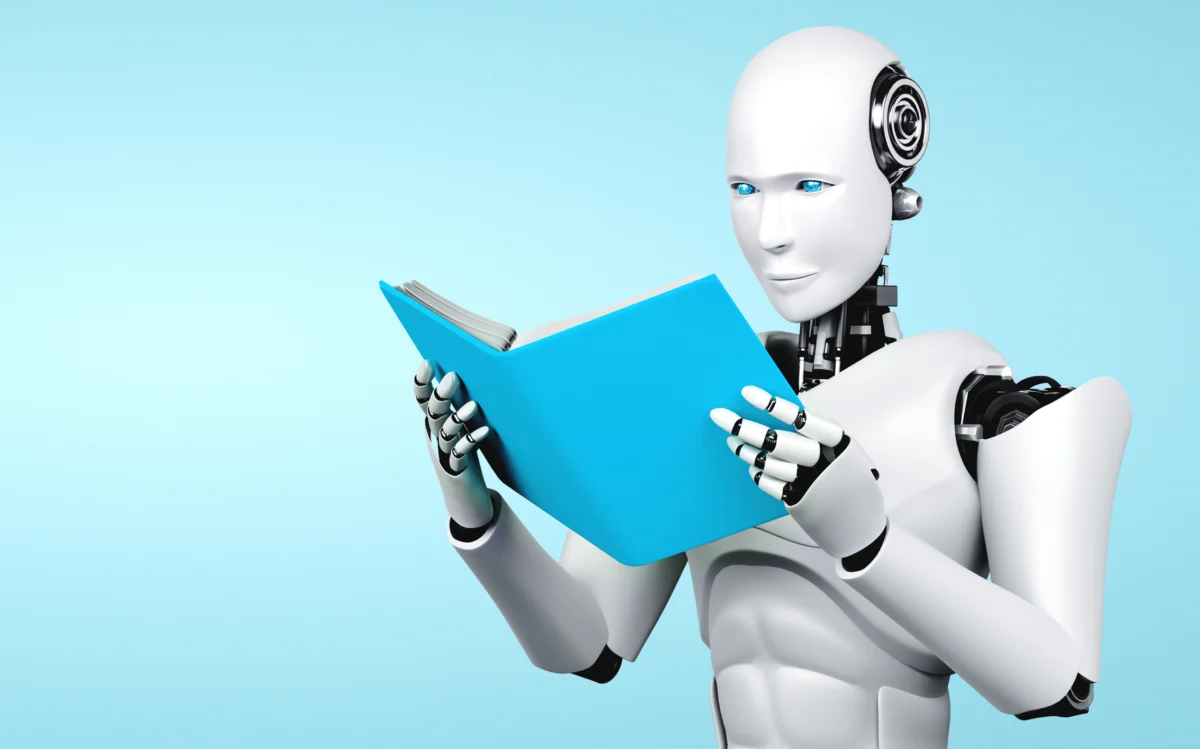
Judge Alsup’s reasoning drew a parallel between an LLM’s ingestion of trillions of words and a writer’s process of studying literature. He wrote, "Like any reader aspiring to be a writer, Anthropic’s LLMs trained upon works not to race ahead and replicate or supplant them – but to turn a hard corner and create something different." This analogy suggests that the intent behind the AI’s "reading" is not to copy but to understand and synthesize, a distinction that is crucial in copyright law.
The Fair Use Doctrine: A Potential Shield for AI Training
The concept of "fair use" is a cornerstone of copyright law, allowing for the limited use of copyrighted material without explicit permission for purposes such as criticism, comment, news reporting, teaching, scholarship, or research. The application of fair use to AI training is a contentious area, with AI companies often arguing that their training processes are transformative and therefore fall under this exception.
The fair use doctrine is typically assessed through a four-factor test:
- The purpose and character of the use: Whether the use is commercial or for non-profit educational purposes, and whether it is transformative, meaning it adds something new or serves a different purpose.
- The nature of the copyrighted work: Factual works are generally more likely to be considered fair use than highly creative works.
- The amount and substantiality of the portion used: The more of a work that is used, the less likely it is to be considered fair use.
- The effect of the use upon the potential market for or value of the copyrighted work: If the use harms the market for the original work, it is less likely to be considered fair use.
Cathy Gellis believes the Anthropic ruling, despite the large settlement, is more beneficial for AI companies in the long run. She explained, "I think it is generally good news for AI training that he looked at what was going on and really sort of thought it analogous to reading a copyrighted work as opposed to copying a copyrighted work. Copyright law hinges on copying, but it doesn’t hinge on using the work or experiencing the work, consuming the work, reading the work." This interpretation suggests that the act of an AI processing information for learning purposes might not be legally equivalent to unauthorized reproduction.
Outdated Legislation and Evolving Legal Interpretations
A significant challenge in applying existing copyright law to AI is that the foundational legislation, the Copyright Act of 1976, was enacted decades before the advent of modern AI. This means that judges are tasked with interpreting outdated guidelines to address novel legal questions that have the potential to reshape the future of the AI industry.
Jason Henderson, Senior Attorney and Founder of the IP & Media Practice at JWL International, highlighted this legislative gap. "Everybody is very worried right now because the law is all over the place, and it’s because of this question," Henderson told TechCrunch. "They know that the AI model has been trained on so much stuff, and the law has not really caught up to that question."
The "fair use" doctrine, particularly the "transformative use" aspect, is frequently at the center of these legal battles. The question is whether the AI’s use of copyrighted material is sufficiently transformative to be permissible. As Henderson noted, "Copyright is always about protecting and growing the market. The courts are kind of all over the place in their reasoning [in AI cases]. What’s tending to win is if what you’re doing is you’re training on somebody’s property because your purpose is to directly compete, then the courts will frown on it… If what you’re doing is not going to compete, then the courts are tending to find ways that it will be okay."
Precedents and Emerging Trends: Competition as a Determinant
The distinction between non-competing and competing uses is becoming a crucial factor in judicial decisions. Henderson referenced the case of Thomson Reuters suing Ross Intelligence. Thomson Reuters alleged that Ross Intelligence had copied its content to build a competing, AI-based legal platform. In this instance, Judge Stephanos Bibas ruled against Ross Intelligence, stating, "Ross’s use is not transformative because it does not have a ‘further purpose or different character’ than Thomson Reuters’s."
This ruling suggests that if an AI is trained on copyrighted material with the explicit intention of creating a direct competitor that supplants the original work’s market, courts are likely to view this as infringement. While authors may argue that current chatbots generate content that competes with their own creative output, this argument has yet to gain widespread traction in legal proceedings.
Distinguishing AI Training from AI-Generated Content Copyright
Cathy Gellis emphasizes the importance of differentiating between two key areas in the AI and copyright discussion: the copyright implications of AI training data and the copyrightability of AI-generated content itself.
The latter issue was addressed in the case of Thaler v. Perlmutter. In this landmark ruling, the court determined that if a work is entirely generated by AI, it is not eligible for copyright protection. This decision opens a complex Pandora’s Box regarding the ability to definitively prove AI involvement in content creation and to quantify the extent of AI assistance.
"If you write your novel in [Microsoft] Word and run spell check, we kind of feel comfortable with the idea of saying that Word does not own your novel," Gellis observed. " [AI] is forcing us to look at a whole bunch of decisions that we kind of ignored for a while." The legal system is grappling with how to define authorship and originality when AI plays a role, leading to a re-evaluation of long-held assumptions about creative processes.
The Ongoing Litigation and Future Outlook
The legal landscape surrounding AI and copyright remains highly fluid, with numerous lawsuits still pending. This means that definitive solutions are not expected in the immediate future. The outcomes of these ongoing cases will undoubtedly shape the trajectory of both the AI industry and intellectual property law.
"What you are seeing is that the initial opening volleys are being influential, and that influence itself could be undone if other courts decide different things, and it’ll take later states of litigation to figure out which one will prevail," Gellis noted. "But in the meantime, all these decisions are shaping everything that’s happening. It would be kind of foolish for the AI companies to ignore them."
The financial implications of these legal battles are substantial. For instance, the projected annual revenue for Anthropic reaching $200 billion by 2028, as reported by Reuters, puts the $1.5 billion settlement into perspective. While a significant sum, it may be a manageable cost of doing business for a company of that projected scale, especially if the underlying AI training practices are deemed lawful.
The legal and ethical considerations are multifaceted. On one hand, AI developers argue that access to vast amounts of data is essential for innovation and the creation of beneficial technologies. On the other hand, creators express legitimate concerns about the devaluation of their work and the potential for AI to undermine their ability to earn a living. The resolution of these complex issues will require careful consideration of legal precedent, technological advancements, and the fundamental principles of intellectual property rights. The ongoing legal challenges and evolving judicial interpretations will be critical in defining the future relationship between artificial intelligence and creative expression.
About the Author