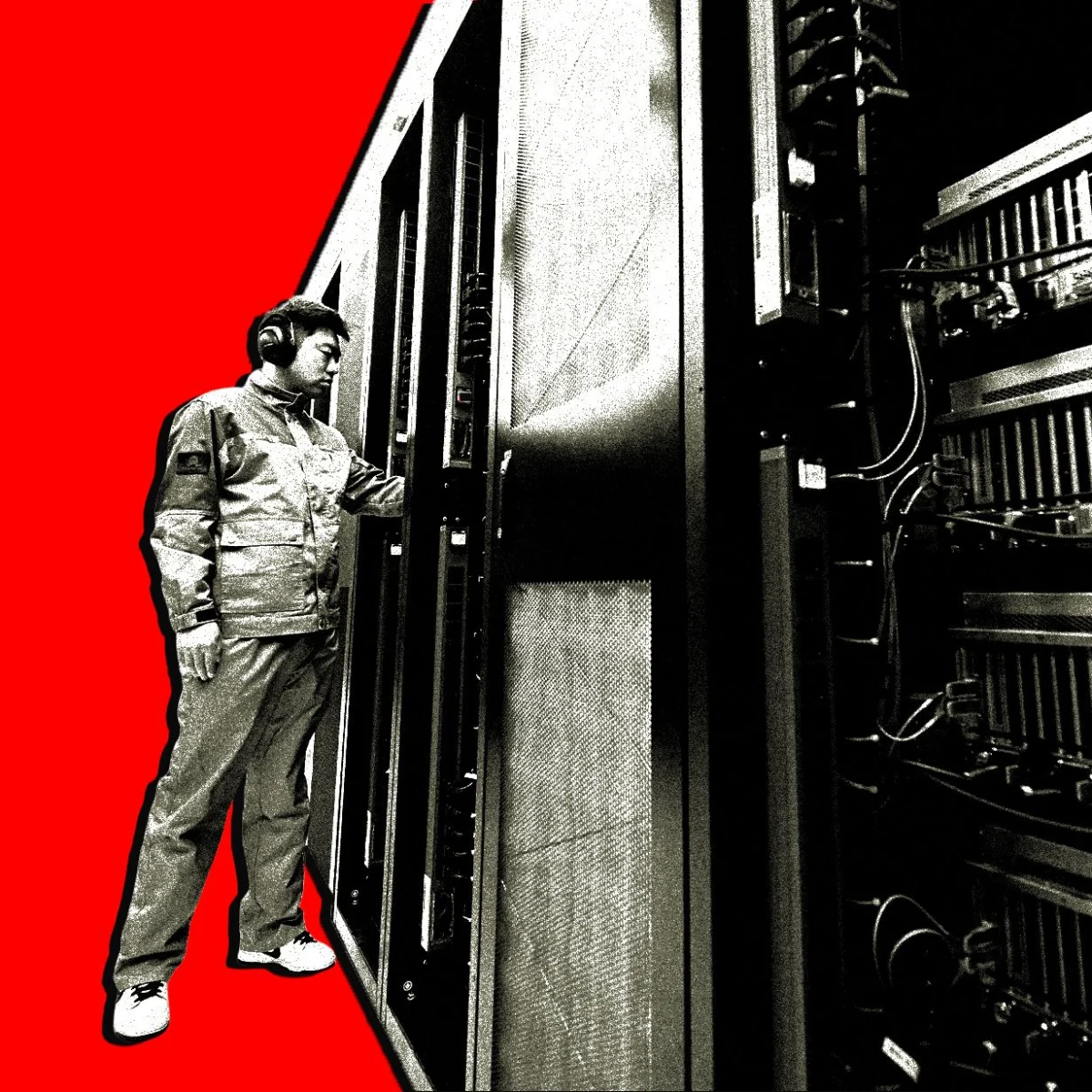
Two hours west of Beijing by high-speed rail, the landscape undergoes a dramatic transition from the dense urban sprawl of the capital to the rolling grasslands and ancient volcanic cinder cones of the Inner Mongolian Plateau. Historically recognized as China’s premier region for sheep farming and coal extraction, this arid expanse is currently undergoing a rapid metamorphosis. Today, the city of Ulanqab is emerging as the focal point of China’s domestic artificial intelligence (AI) ambitions, evolving into one of the most concentrated clusters of data center infrastructure in the world.
Since 2016, nearly 100 data centers have either opened or commenced construction in Ulanqab, a city of 1.5 million people. According to a recent research note from Goldman Sachs, Chinese enterprises have pledged projects with a staggering combined capacity of 12.5 gigawatts (GW) in the city. Notably, over 70 percent of these commitments were announced within the last twelve months, signaling a massive acceleration in infrastructure investment. To place this scale in a global context, OpenAI’s highly publicized "Stargate" project—a multi-billion-dollar initiative aimed at building a massive US-based AI supercomputer—is projected to reach a capacity of 10 gigawatts upon completion. Ulanqab’s planned capacity already exceeds this benchmark, highlighting the sheer scale of China’s "compute" offensive.
The Strategic Shift: From Storage to Intelligence
The transformation of Inner Mongolia into a tech hub is not an overnight phenomenon, but rather the result of a decade-long strategic pivot. In 2016, Huawei established the region’s first major data center, followed by Apple in 2019. However, the true catalyst for the current boom was the 2021 launch of the Chinese government’s "Eastern Data, Western Compute" (Dongshu Xisuan) initiative. This national strategy was designed to balance the country’s digital resources by relocating data processing from the overcrowded, energy-starved eastern coastal provinces to the resource-rich, sparsely populated western hinterlands.
Initially, these remote facilities were primarily utilized for "cold storage"—backup data that did not require rapid access—due to the latency issues associated with transferring data across vast distances. However, the rise of Generative AI in late 2022 fundamentally altered this dynamic. AI model training, which requires months of intensive computation but does not necessitate real-time interaction, proved to be the perfect use case for Ulanqab’s remote clusters.
Furthermore, technological advancements have significantly mitigated the latency gap. The installation of two dedicated fiber-optic cables in 2017 and 2019 has reduced average latency between Ulanqab and Beijing to less than five milliseconds. This speed is sufficient to support not only model training but also AI inference—the real-time process of a model generating a response to a user query—making Ulanqab a viable hub for consumer-facing AI applications.
Economic and Climatic Drivers of the Ulanqab Boom
The migration of Chinese tech giants to the Inner Mongolian Plateau is driven by a combination of geographic, climatic, and economic advantages that are difficult to replicate elsewhere.
1. Natural Thermal Regulation
Data centers generate immense amounts of heat, and cooling costs typically account for a significant portion of their operational expenses. Ulanqab’s high elevation and long, frigid winters provide "natural cooling." For much of the year, these facilities can simply circulate outside air to maintain optimal hardware temperatures, drastically reducing the need for energy-intensive air conditioning systems.
2. Proximity to Demand Centers
While Inner Mongolia is categorized as part of China’s "West" in the context of the national compute strategy, Ulanqab is geographically closer to major metropolitan centers like Beijing and Tianjin than many other western hubs. This proximity provides a competitive edge over more distant provinces like Guizhou or Gansu, particularly for services requiring lower latency.
3. The Energy Cost Advantage
Inner Mongolia offers some of the lowest electricity rates in China. This is facilitated by a "dual-track" energy economy. The region is a traditional stronghold for coal mining, providing a reliable and inexpensive baseload of power. Simultaneously, the vast, wind-swept plains have allowed Inner Mongolia to become a leader in renewable energy. The surplus of wind and solar power has created a buyers’ market for electricity, which is the single largest overhead for AI companies.
Corporate Sovereignty: The Move Toward Private Infrastructure
One of the most significant trends highlighted by the Ulanqab expansion is a shift in how Chinese AI companies manage their hardware. Historically, AI startups and even some large tech firms rented computing power from third-party cloud providers. However, the current trend shows a move toward "infrastructure sovereignty."
Major players including ByteDance (the parent company of TikTok), Alibaba, and the social media platform Xiaohongshu are now investing in their own physical data centers. DeepSeek, a rising star in the Chinese AI sector known for its efficient "Reasoning" models, is reportedly developing its own massive facility in Ulanqab. This shift mirrors the strategies of American "hyperscalers" like Google and Meta, who own and operate the hardware their models run on to ensure maximum optimization and long-term cost control.
The involvement of energy companies is also noteworthy. Envision, one of the world’s largest wind turbine manufacturers, recently announced plans to construct a 2 GW AI data center in Ulanqab. This facility will be directly integrated with the company’s own clean energy supply, creating a "green" compute loop that bypasses traditional grid constraints.
Environmental Paradoxes: Water Scarcity and the Coal Dependency
Despite the economic enthusiasm, the rapid industrialization of the plateau presents significant environmental challenges, most notably regarding water security. Ulanqab is an inherently arid region, receiving approximately 14 inches of rainfall annually—comparable to the semi-arid climate of Denver, Colorado.
While data centers use air cooling for much of the year, they still require substantial amounts of water for humidity control and supplemental cooling during the peak summer months. The local infrastructure is already showing signs of strain. In recent months, the Ulanqab water utility was forced to implement nightly seven-hour shutdowns of several waterworks to manage peak demand and preserve local reservoirs. As dozens of new 100-megawatt and gigawatt-scale projects come online, the competition for water between tech infrastructure and the local population is expected to intensify.
Furthermore, the "green" credentials of these data centers remain a subject of debate. While the region is a leader in renewables, approximately 37 percent of Ulanqab’s electricity is still derived from coal. Because AI training requires 24/7 uptime, operators often rely on coal-fired power to compensate for the intermittency of wind and solar. Experts suggest that while the goal is a 100 percent renewable grid, the transition will likely take several more years, meaning the current AI boom is, for now, partially fueled by fossil fuels.
Chronology of Ulanqab’s Development
- 2016: Huawei establishes the first major cloud data center in Ulanqab, marking the city’s entry into the high-tech sector.
- 2017: Completion of the first direct fiber-optic link to Beijing, reducing latency and attracting initial tech investment.
- 2019: Apple opens its iCloud data center in Inner Mongolia to comply with Chinese data localized laws; a second fiber-optic line is completed.
- 2021: The Chinese government officially designates Inner Mongolia as a primary hub for the "Eastern Data, Western Compute" national project.
- 2022: The global explosion of Generative AI creates an unprecedented demand for high-performance compute (HPC) clusters, pivoting Ulanqab’s focus from storage to training.
- 2024: Goldman Sachs reports 12.5 GW of planned capacity; local government implements water rationing to cope with industrial and residential demand.
- 2025 (Projected): Major facilities for DeepSeek and Envision are expected to reach initial operational phases.
Broader Implications and the Global AI Race
The development of the Ulanqab cluster is a clear indicator that China is moving to close the infrastructure gap with the United States. While US firms currently lead in high-end semiconductor access, China is leveraging its strengths in civil engineering, energy production, and state-coordinated planning to build the physical "shells" and power grids necessary to house massive AI arrays.
The Ulanqab model suggests a future where AI development is inextricably linked to regional energy policy. By placing data centers in regions with excess renewable capacity, China aims to solve two problems at once: providing the "compute" necessary for the next generation of AI while creating a consistent "sink" for the massive amounts of wind and solar energy that would otherwise go to waste due to grid congestion.
However, the success of this "Silicon Steppe" will depend on the government’s ability to manage the environmental trade-offs. The tension between the thirst of AI hardware and the needs of local communities in a drying climate will be the ultimate test of whether Ulanqab can sustain its trajectory as the world’s most ambitious AI power plant. As the 12.5 GW of promised capacity begins to draw on the grid and the local aquifers, the world will be watching to see if China’s "Western Compute" strategy can deliver on its promise of high-tech rejuvenation without depleting the fragile ecosystems of the Inner Mongolian plateau.
About the Author