Enterprise marketing automation represents a critical evolution for large organizations seeking to deliver personalized customer experiences at scale. This sophisticated approach transcends basic automation, enabling cross-team collaboration, robust data governance, and seamless integration across a multitude of channels without compromising data integrity or existing workflows. For businesses evaluating new platforms or struggling to modernize fragmented technology stacks, a comprehensive understanding of enterprise-grade solutions is paramount to making informed decisions.
The pervasive challenge for most enterprise marketing teams lies in their data architecture. When contact databases are scattered across disparate tools, misalignment becomes an almost inevitable outcome. This fragmentation leads to inefficient handoffs between departments, inaccurate campaign attribution, and campaigns that struggle to scale without a disproportionate increase in human resources. The subsequent guide aims to demystify the distinctions between standard marketing automation tools and their enterprise counterparts, providing essential insights into the capabilities required for effective enterprise marketing automation.
What Sets Enterprise Marketing Automation Apart?
Enterprise marketing automation is more than just a suite of tools; it’s a strategic process that empowers large organizations to automate marketing initiatives at scale while upholding stringent governance, ensuring data accuracy, and maintaining a clear, measurable link to revenue generation. The term "automation" alone often fails to capture the fundamental differences that distinguish enterprise-grade platforms from those suitable for smaller teams. This differentiation is rooted in four key dimensions: the data model, governance protocols, scalability, and the capacity for multi-team execution.
| Dimension | Standard Marketing Automation | Enterprise Marketing Automation |
|---|---|---|
| Data Model | Flat contact lists; CRM sync is optional | Unified CRM as the system of record; accounts, contacts, deals, and campaigns share a single data layer |
| Governance | Shared login; no approval workflows | Role-based permissions, partitions, approval chains, and audit logs |
| Scale | Single team; one brand | Multiple business units, regions, languages, and brands |
| Multi-team Execution | Marketing-only workflows | Marketing, sales, and service orchestration with shared pipeline visibility |
The Core Problem: Fragmented Tools and Siloed Data
Discussions with RevOps professionals consistently highlight that the primary pain point is rarely the performance of a single tool, such as an email platform. Instead, the critical issue is the lack of interoperability between essential systems. When an email platform fails to communicate with the CRM, or the CRM doesn’t sync with advertising platforms, critical contextual information is lost as leads transition from marketing to sales. This breakdown in data flow leads to a cascade of inefficiencies.
According to a 2025 study by MarketingOps, a mere 16% of RevOps professionals express confidence in the accuracy of their data, identifying it as the most significant impediment to achieving automation maturity. This deficit in trustworthy data is not a consequence of tool limitations but rather the underlying structure in which data is stored. Consequently, the most effective solution is not to proliferate more connectors between siloed systems but to consolidate tools onto a unified CRM and automation platform. Such a consolidation ensures that segmentation, orchestration, attribution, and compliance all operate from a singular, cohesive data layer. This unified approach fundamentally differentiates scalable enterprise marketing automation from a patchwork of disconnected tools that often create more work than they solve.
A crucial preliminary step before evaluating any enterprise marketing automation platform is a thorough audit of the existing data architecture. This audit should meticulously map the current locations of contact, account, and deal data. If data resides in three or more distinct places, the primary selection criterion for a new platform should be unified data management, not merely a feature count.
Essential Capabilities for Enterprise Marketing Automation
Not all "enterprise-grade" features are created equal. A robust evaluation process requires a checklist of indispensable capabilities:
Cross-Channel Orchestration
Modern enterprise campaigns are inherently multi-channel. The chosen platform must be capable of orchestrating interactions across email, SMS, paid media, in-app messaging, direct mail triggers, and event workflows from a unified interface. When evaluating vendors, it is advisable to request demonstrations of live orchestration flows that incorporate at least three distinct channels and feature conditional logic based on account-level data. This capability is particularly vital for organizations running parallel account-based marketing (ABM) and demand generation programs, where different messages may need to be delivered concurrently to various stakeholders within the same account, such as a CFO and a VP of Engineering.
AI Assistance and Content Optimization
The adoption of AI-powered marketing automation is experiencing significant growth, with a projected Compound Annual Growth Rate (CAGR) of 25% – nearly double that of the broader automation market. This rapid expansion reflects genuine enterprise adoption rather than transient hype. Enterprise-grade AI capabilities should encompass:
- Content generation: Assisting in the creation of campaign copy, subject lines, and social media posts.
- Predictive analytics: Identifying patterns in customer behavior to forecast future actions and needs.
- Personalization at scale: Dynamically tailoring content and offers based on individual and account-level data.
- Workflow optimization: Suggesting improvements to campaign performance and audience segmentation.
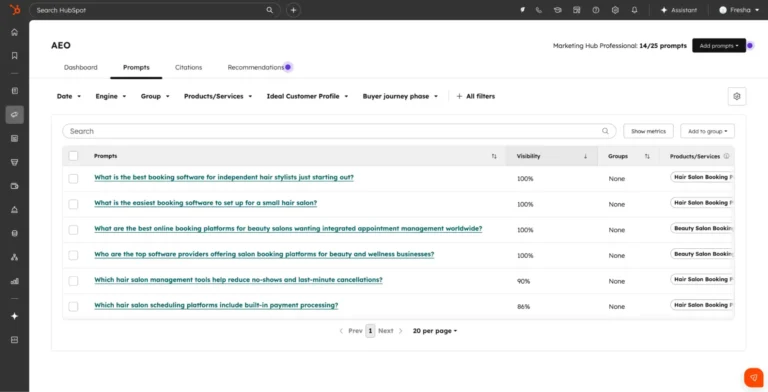
During vendor evaluations, requesting examples of AI-generated outputs and confirming the existence of a human review layer before deployment, especially in regulated or compliance-sensitive sectors, is essential. For instance, HubSpot’s Breeze AI suite integrates AI capabilities across content creation, CRM data enrichment, and sales handoff recommendations directly within the campaign management platform, eliminating the need for separate AI integrations.
Buying-Group Scoring and Orchestration
Enterprise B2B purchasing decisions typically involve an average of 11 decision-makers, each with unique priorities and timelines. Traditional lead-scoring methodologies often fail to account for this complex dynamic. An effective enterprise platform should be capable of identifying buying group members within target accounts, assigning specific roles, scoring the collective engagement of the group, and triggering sales alerts when a buying group reaches a defined qualification threshold. When evaluating platforms, inquire whether scoring is performed at the buying group level natively or if it necessitates a separate ABM tool and custom integration.
Role-Based Permissions and Partitions
The operational reality of enterprise marketing teams precludes the use of shared logins. Essential features include:
- User permissions: Granular control over what each user can access and modify.
- Account partitioning: The ability to segment data and campaigns by business unit, region, or brand.
- Approval workflows: Mandatory review and sign-off processes for campaign elements and deployments.
- Audit logs: Comprehensive tracking of all user activities for accountability and compliance.
During the evaluation process, a live demonstration of a permission-denied scenario, rather than just a screenshot of settings, is highly recommended.
Asset Reuse and Brand Governance
Global marketing teams require the ability to reuse templates and approved assets without the need for constant recreation. Key features include a centralized asset library, enforcement of brand guidelines, and the capability to lock specific template sections to prevent unauthorized modifications by regional teams. Vendors should be able to articulate their approach to brand governance, particularly when regional teams need to translate and localize content.
Multi-Touch Attribution
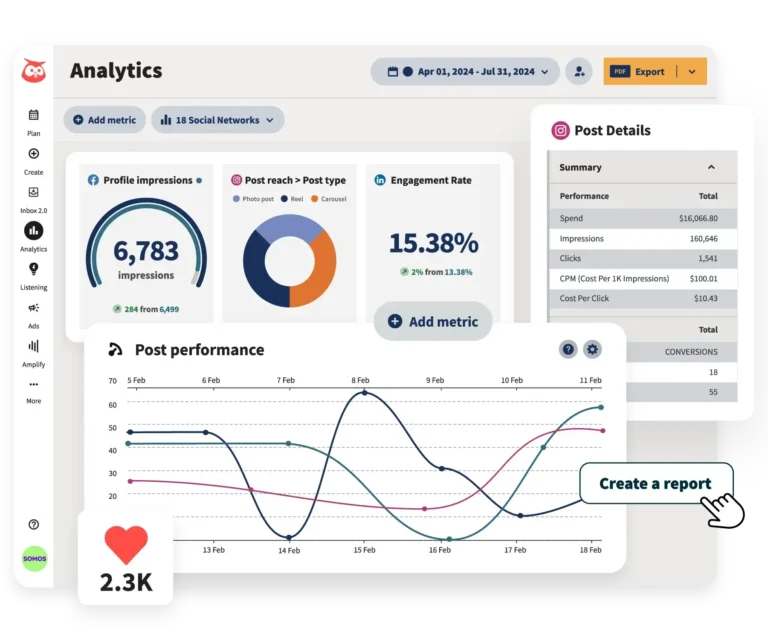
Attribution is a common stumbling block for enterprise marketing teams, impacting their ability to demonstrate ROI. The ideal platform should support various attribution models, including first-touch, last-touch, linear, time-decay, and custom models. Crucially, it must directly link marketing interactions to pipeline progression and closed-won revenue, moving beyond mere MQL volume. Inquiries should focus on whether attribution reports are accessible within the CRM or require export to a separate business intelligence tool.
Native CRM Integrations and Open API
Enterprise marketing automation should function as an execution layer built upon a unified CRM, not as a parallel data repository. The platform’s ability to treat the CRM as the definitive system of record is paramount. Features such as open APIs, pre-built connectors for major CRMs like Salesforce, Microsoft Dynamics, and SAP, and webhook support are baseline requirements. The frequency of data synchronization is a critical consideration: real-time, bidirectional sync offers significantly more value than a nightly batch job.
Sandboxing and Staging Environments
A secure environment for testing is essential before deploying global campaigns. Sandboxing allows marketing operations teams to build, test, and refine complex workflows without impacting live production data. Vendors should clarify whether sandbox environments replicate production data structures and if changes can be promoted with a structured review process.
Compliance and Audit Logs
Adherence to regulations such as GDPR, CCPA, CASL, and industry-specific mandates (HIPAA, FINRA) requires verifiable records of consent, data processing activities, and access. The platform must provide exportable audit logs, support contact-level consent management, and flag data processing activities that may require regulatory review. This is a non-negotiable requirement for any enterprise operating across multiple jurisdictions. A practical test during vendor demos is to inquire about GDPR Data Subject Access Request (DSAR) workflows and the time required to retrieve all data associated with a single contact. Ambiguous responses often indicate a significant governance gap.
Orchestrating Buying Groups with Enterprise Marketing Automation
The complexities of enterprise B2B purchasing, involving an average of 11 stakeholders, make manual coordination of messaging at scale an insurmountable challenge. Buying-group orchestration addresses this by identifying all stakeholders within a target account, assigning roles (economic buyer, technical evaluator, champion, end-user), scoring the group’s collective engagement, and triggering coordinated outreach based on this holistic signal.
Personalization Without Fragmentation
The challenge of enterprise personalization is frequently rooted in data architecture, not channel limitations. When marketing channels draw from disparate databases, inconsistent customer experiences emerge. For example, a CFO might see a retargeting ad for a product already purchased, while a VP of Engineering receives a cold email shortly after a colleague engaged in a discovery call. The solution lies in a unified data layer. When all touchpoints—web activity, email engagement, ad clicks, CRM notes, sales call logs—are recorded and retrieved from the same central record, personalization becomes an execution task rather than an engineering feat.
From a platform perspective, enterprise marketing automation should support:
.png)
- Account-based data unification: Consolidating all interactions related to a specific account.
- Buying group segmentation: Creating dynamic segments based on the collective engagement of individuals within an account.
- Account-level workflow triggers: Initiating campaigns based on the overall engagement level of a target account.
- Cross-channel journey mapping: Visualizing and optimizing the complete journey of individuals and buying groups across all touchpoints.
Aligning Sales Handoffs
Failures in MQL-to-SQL handoffs are seldom data-related; they typically stem from a lack of clearly defined criteria. Marketing and sales departments must agree on the precise definition of a marketing-qualified buying group before any automation is implemented. Effective handoff frameworks typically define:
- Target account criteria: The characteristics of accounts that qualify for sales engagement.
- Buying group identification: The process and data points used to identify key stakeholders.
- Engagement scoring thresholds: The level of collective engagement required to qualify a buying group.
- Sales qualification criteria: The specific actions and information sales requires for further engagement.
Organizations that implement nurture workflows with lead scoring and behavioral triggers often see MQL-to-SQL conversion rates that are 30% to 50% higher than those using less sophisticated methods. Programs incorporating AI-driven intent signals can achieve even greater lifts, reaching up to 62%.
The Imperative of Unified CRM and Governance
Unified CRM data is the bedrock upon which segmentation, orchestration, attribution, and compliance are built. The governance RACI (Responsible, Accountable, Consulted, Informed) for enterprise marketing automation typically involves four key functions:
- Marketing Operations: Responsible for platform configuration, workflow management, and data integrity.
- Sales Enablement: Ensures sales processes are integrated and aligned with marketing efforts.
- IT Security: Oversees data security, access controls, and compliance with IT policies.
- Legal & Compliance: Mandates adherence to regional and industry-specific regulations.
Before any platform deployment, every cell of this RACI matrix must be clearly defined.
Structuring Teams, Roles, and Permissions
Enterprise marketing automation platforms should offer robust capabilities for structuring teams, roles, and permissions, including:
- User partitions: Isolating data and campaign access for distinct business units or regions.
- Campaign approval workflows: Implementing multi-step review processes for campaign content and deployment.
- Team-level permission sets: Defining specific access rights for different functional teams.
HubSpot’s Marketing Hub Enterprise exemplifies this, providing native user partitions, campaign approval workflows, and team-level permission sets, thereby avoiding the need for cumbersome bolt-on modules.
Integrating Existing Tools Without Adding Risk
Most enterprises operate with a legacy technology stack that includes existing marketing automation platforms (MAPs), CRMs, advertising platforms, data warehouses, and compliance tools. Integration planning, therefore, becomes as much a risk management exercise as a technical one. The integration risk checklist should include:
- Data mapping consistency: Ensuring accurate and uniform data field definitions across all integrated systems.
- Bi-directional sync capabilities: Confirming that data flows seamlessly in both directions.
- Conflict resolution protocols: Establishing clear rules for handling data discrepancies.
- Real-time vs. batch processing: Understanding the implications of data latency for campaign effectiveness.
- API limitations and costs: Assessing the technical and financial constraints of integration.
A proactive approach involves requesting a technical architecture review session during vendor evaluations. This session, ideally involving solutions architects or marketing operations leads, can reveal critical insights into platform fit that feature comparison matrices might overlook.
AI Marketing Automation for Enterprise Teams
Artificial intelligence is transforming enterprise marketing automation by enhancing four key areas: content assistance, predictive insights, summarization, and next-best-action guidance. The significant shift in 2026 is the move from rule-based automation to agentic AI—systems capable of reasoning towards a goal rather than merely executing predefined triggers. This evolution from "if this, then that" to intelligent agents that can analyze churn risk, build dynamic segments, and deploy retention offers without human intervention marks a new era in campaign efficiency.
A notable statistic reveals that 45% of marketing teams now utilize at least one agentic AI system for automation tasks, a substantial increase from 15% in 2024. These teams report a 27% faster campaign build time and a 19% reduction in cost per qualified lead. HubSpot’s Breeze AI suite stands out as a highly integrated solution for the mid-to-enterprise market, with its agents handling prospecting research, content generation, customer service routing, and data enrichment directly within the CRM environment.
Trusting AI vs. Human Review
Human review remains indispensable for high-risk AI outputs, compliance-sensitive content, and model overrides, especially within regulated industries. A practical framework for AI governance in enterprise marketing automation dictates review requirements based on the AI output type:
| AI Output Type | Review Requirement |
|---|---|
| Email subject line suggestions | Human review optional; A/B test to validate |
| Predictive lead score | Human review before routing; sales override capability |
| Compliance-sensitive content | Mandatory human review + legal sign-off |
| Segment definitions generated by AI | Human review before paid media activation |
| Next-best-action recommendations | Human review for high-value accounts; automated for long-tail |
The failure rate for AI initiatives, often between 42% and 54% in 2025 due to integration failures and data issues, underscores the critical importance of high-quality underlying data. AI amplifies existing data; therefore, a thorough data audit is essential before deploying AI-driven automation to prevent the amplification of inaccuracies.
Enterprise Marketing Automation, Attribution, and Revenue Reporting
Multi-touch attribution is the mechanism by which marketing demonstrates its contribution to pipeline and revenue, a critical factor in securing executive buy-in. The primary obstacle to accurate attribution is the lack of complete journey data, often caused by marketing tools that do not share a unified record with the CRM. When customer interactions are logged in disparate systems, attribution models capture only a partial view of the buyer’s journey. The only sustainable solution is a unified CRM where every marketing, sales, and service interaction is recorded in a single record, enabling true multi-touch attribution across the entire buyer lifecycle.
When evaluating attribution capabilities, key considerations include:
- Model flexibility: Support for various attribution models (first-touch, last-touch, linear, time-decay, U-shaped, W-shaped).
- Account-level attribution: The ability to attribute revenue to specific accounts based on collective engagement.
- Full-funnel visibility: Tracking interactions from initial awareness through to closed-won deals.
- Customizable reporting: Tools to build and share bespoke attribution reports tailored to specific business needs.
Handling Anonymous and Known Journey Data
Every buyer journey begins anonymously. Potential customers may engage with content for weeks before identifying themselves. If attribution models only begin tracking after a form submission, a significant portion of the buyer’s journey is overlooked. Enterprise marketing automation platforms must support:
- Anonymous visitor tracking: Identifying and tracking the behavior of website visitors before they convert.
- Identity resolution: Linking anonymous activity to known contacts once they are identified.
- Cross-device tracking: Following user journeys across multiple devices.
- Data enrichment: Augmenting anonymous data with third-party insights to build richer profiles.
This capability to manage anonymous journey data at scale requires substantial infrastructure investment, extending beyond simple configuration settings.
Implementing Enterprise Marketing Automation
Successful enterprise implementation follows a structured, five-phase sequence. Skipping any phase, particularly the initial two, is a common precursor to rollout failures.
Phase 1: Data Audit
This critical phase involves inventorying all databases containing marketing-relevant data, assessing data quality, identifying duplicates, and documenting field mappings between systems. This is often the most challenging and underestimated phase, requiring a budget of at least four to six weeks for a comprehensive enterprise-scale audit.
Phase 2: Governance Design
Before platform selection, it is essential to define team structures, roles, permissions, and approval workflows. This includes building the governance RACI matrix and identifying regional compliance requirements. This phase necessitates collaboration among Legal, IT, and regional marketing leadership, not solely marketing operations.
Phase 3: Integration Planning
Map every tool requiring integration with the new platform, defining sync direction, frequency, and conflict-resolution rules. Prioritize CRM integration above all other integrations.
Phase 4: Pilot Launch
Select a single, well-defined use case—typically an email nurture campaign for a specific segment—and run it on the new platform with clear success metrics. Collect data for 60 to 90 days before expanding. The pilot phase is crucial for identifying integration gaps, data quality issues, and workflow design problems at a manageable scale.
Phase 5: Phased Rollout
Expand use cases, teams, and regions incrementally. Establish a monthly platform governance review to assess performance, identify areas for adjustment, and plan future initiatives.

The typical timeline for an enterprise marketing automation implementation, from contract signing to full production launch, spans six to twelve months. Aggressive timelines are achievable but demand dedicated internal resources, strong executive sponsorship, and comprehensive onboarding support from the chosen platform vendor.
Migrating from a Legacy MAP
Legacy MAP migrations often falter due to three primary issues: historical data loss, broken attribution, and errors in workflow recreation. A recommended migration checklist includes:
- Data backup and validation: Ensuring all historical data is securely backed up and can be accurately validated.
- Attribution model mapping: Replicating or adapting existing attribution models to the new platform.
- Workflow review and optimization: Auditing existing workflows for efficiency and relevance before rebuilding.
- Phased data migration: Transferring data in manageable batches to minimize disruption.
- User training and adoption: Comprehensive training for all users on the new platform’s functionalities.
Evaluating Enterprise Marketing Automation Platforms
The enterprise marketing automation landscape in 2026 is highly competitive, with AI capabilities emerging as the primary driver for platform evaluation.
The Current Marketing Automation Landscape
Several dominant platforms cater to enterprise needs:
HubSpot Marketing Hub Enterprise
HubSpot has successfully transitioned from its SMB roots to become a formidable enterprise contender. Its key differentiator is the native integration of marketing automation, CRM, sales, service, content, and AI (Breeze) within a single data model, eliminating the need for extensive connector integrations. For organizations seeking a unified revenue platform rather than a best-of-breed automation layer, HubSpot presents a compelling option in the mid-to-enterprise segment. According to Datanyze, HubSpot holds the largest market share in the marketing automation category at 29.58%.
Best for: Mid-to-large enterprises prioritizing CRM-unified data, rapid time-to-value, and AI-native automation without significant integration overhead.
Adobe Marketo Engage
Marketo remains a recognized leader, consistently featured in Gartner’s Magic Quadrant. It offers a robust orchestration and segmentation engine for global enterprises managing multi-product campaigns, with its strengths lying in deep segmentation capabilities and flexibility. However, its setup complexity and steeper learning curve are notable trade-offs.
Best for: Large enterprises with sophisticated segmentation requirements and dedicated marketing operations resources.
Oracle Eloqua
Oracle Eloqua is inherently governance-ready and excels in global organizations with complex compliance needs. It supports fatigue management, cross-CRM integrations, and granular campaign controls. It is a strong choice for organizations in regulated industries with strict data residency requirements.
Best for: Enterprise organizations in regulated industries (financial services, healthcare, public sector) where governance and compliance are paramount.
Salesforce Account Engagement (formerly Pardot)
Salesforce Account Engagement offers tight integration with Salesforce CRM, making it the preferred choice for organizations already standardized on the Salesforce ecosystem. For non-Salesforce CRM users, the integration story is considerably weaker.
Best for: Enterprise organizations where the entire revenue stack, including CRM, service, and commerce, is already on Salesforce.
HubSpot’s unified architecture, where the CRM serves as the foundation for automation, provides a clear competitive advantage for organizations seeking to avoid separate CRM integration projects. This fundamental distinction is crucial for building accurate attribution, implementing robust governance controls, and scaling operations across diverse regions.
The Role of LinkedIn in Enterprise Programs
LinkedIn warrants specific attention in enterprise B2B programs due to its professional user base. Its precise targeting capabilities—by job title, seniority, company, department, and function—make it the most effective channel for reaching specific stakeholders within target accounts. The integration between LinkedIn Ads and enterprise marketing automation platforms should facilitate:
- Target account list syncing: Uploading and synchronizing target account lists with LinkedIn Campaign Manager.
- Account-based ad targeting: Enabling ad campaigns to be served to specific individuals within target accounts.
- Engagement tracking: Capturing LinkedIn ad interactions within the marketing automation platform for a holistic view of engagement.
- Lead matching and enrichment: Connecting LinkedIn ad leads to existing CRM records and enriching their profiles.
Frequently Asked Questions About Enterprise Marketing Automation
Implementation Timeline
The average enterprise marketing automation implementation takes six to twelve months from contract signing to full production launch. A focused pilot launch for a single use case can typically be completed in eight to twelve weeks. Data quality issues discovered during the integration phase are the most common cause of timeline overruns, highlighting the importance of a pre-selection data audit.
Proving ROI to Executives
The most persuasive approach to demonstrating ROI to executives involves directly linking marketing automation to pipeline and revenue growth, rather than focusing solely on operational efficiency metrics like "hours saved." A recommended framework includes:
- Pipeline velocity: Measuring the speed at which leads move through the sales funnel.
- Revenue contribution: Quantifying the direct impact of marketing campaigns on closed-won deals.
- Customer acquisition cost (CAC): Demonstrating improvements in the efficiency of acquiring new customers.
- Customer lifetime value (CLTV): Showing how improved customer engagement contributes to long-term value.
Enterprise Marketing Automation vs. CDPs
While the lines are blurring, enterprise marketing automation platforms increasingly incorporate functionalities traditionally associated with Customer Data Platforms (CDPs), such as first-party data management, identity resolution, and behavioral data capture. Whether a separate CDP is necessary depends on the complexity of an organization’s data requirements. For core B2B marketing orchestration, lead nurturing, and attribution, a unified CRM-powered MAP may suffice. However, for real-time event streaming, cross-product data stitching at petabyte scale, or direct integrations with data warehouses for ML model training, a CDP may still be warranted. Currently, only 18% of B2B marketers integrate marketing automation with a CDP.
Security and Compliance Features
Enterprise marketing automation platforms must minimally support:
- Role-based access controls: Ensuring users only access data and functionalities relevant to their roles.
- Data encryption: Protecting data both in transit and at rest.
- GDPR/CCPA compliance: Features to manage consent, data subject requests, and data processing.
- Audit trails: Comprehensive logs of all user activities and system changes.
- Regular security assessments: Vendor commitment to ongoing security testing and vulnerability management.
For organizations in healthcare, financial services, or the public sector, verification of vendor compliance with HIPAA, FINRA, or FedRAMP is essential.
Dedicated ABM Tool Necessity
Increasingly, dedicated ABM tools are becoming redundant as modern enterprise marketing automation platforms absorb core ABM functionalities like account-level scoring, buying-group identification, and target account list management. The need for a separate ABM tool may arise if the program requires highly sophisticated third-party intent data, advanced account prioritization models, or custom orchestration logic beyond the MAP’s native capabilities. However, for most enterprise B2B organizations, consolidating ABM efforts within the primary marketing automation and CRM platform offers significant advantages in data integrity and operational simplicity.
About the Author