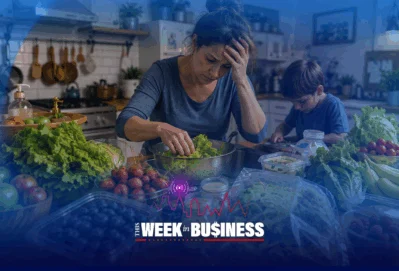
What happens when the systems designed to keep our food safe start to break down? This question lies at the heart of a growing concern among public health experts and economists alike. Corinne Low, a distinguished Wharton associate professor of business economics and public policy, articulates a fundamental economic principle often overlooked in discussions surrounding food safety: it is unequivocally a public good. This classification carries significant implications, as it suggests that individuals and families are inherently incapable of providing adequate food safety for themselves, necessitating a robust, collective societal effort, primarily through governmental oversight.
Professor Low’s analysis highlights several critical vulnerabilities in the contemporary food safety landscape, including the insidious effects of reduced staffing within regulatory bodies, the weakening of inspection protocols, and systemic changes to disease surveillance mechanisms. These factors collectively contribute to an environment where consumers find themselves increasingly susceptible to the dangers of foodborne illness. Furthermore, Low critically examines the consequences when the onus of ensuring food safety is effectively shifted onto the shoulders of parents and individual consumers, and why the prevailing trust in companies to self-regulate is fundamentally insufficient. The resulting scenario precipitates a broader inquiry into the very essence of government’s role, the ethical responsibilities of businesses, and the foundational protections that citizens should rightfully expect and depend upon from their societal structures.
Understanding Food Safety as a Public Good
To fully grasp the gravity of Professor Low’s argument, it is crucial to understand the economic definition of a "public good." A pure public good possesses two key characteristics: non-excludability and non-rivalry. Non-excludability means that it is impossible or prohibitively expensive to prevent individuals from consuming the good, even if they don’t pay for it. Non-rivalry means that one person’s consumption of the good does not diminish another person’s ability to consume it. Clean air, national defense, and public street lighting are classic examples.
Food safety, in its broader sense, fits this definition. When a regulatory agency prevents a contaminated product from reaching the market, everyone benefits from that prevention, whether they directly contributed to the agency’s funding or not (non-excludable). The protection afforded to one consumer does not reduce the protection available to another (non-rivalrous). Because individuals cannot realistically test every item of food they purchase, or inspect every processing plant, they rely on collective systems. Without these systems, a "free-rider problem" emerges, where individuals would benefit from others’ efforts to ensure safety without contributing, leading to under-provision of the good by the private market. This economic reality underscores why governmental intervention and robust public institutions are indispensable for maintaining a safe food supply.
A History of Regulation and Erosion: A Chronology of Challenges
The United States’ modern food safety framework is a product of progressive reforms, often spurred by public outcry following significant health crises. The early 20th century saw the establishment of foundational agencies like the Food and Drug Administration (FDA) and the creation of landmark legislation such as the Pure Food and Drug Act and the Federal Meat Inspection Act, largely in response to exposés like Upton Sinclair’s "The Jungle." These acts recognized the critical need for federal oversight to protect public health and ensure market integrity.
Throughout the 20th century, the regulatory apparatus evolved, with major advancements like the Federal Food, Drug, and Cosmetic Act of 1938 and subsequent amendments that expanded FDA’s authority. The early 1990s, however, marked a turning point. A series of high-profile foodborne illness outbreaks, notably the 1993 E. coli O157:H7 outbreak linked to Jack in the Box hamburgers that sickened hundreds and killed four children, highlighted persistent gaps in the system. While this tragedy led to increased awareness and some reforms, it also coincided with periods of governmental austerity and a philosophical shift towards deregulation.
The Food Safety Modernization Act (FSMA) of 2011 represented the most sweeping reform of U.S. food safety laws in over 70 years, shifting the focus from responding to contamination to preventing it. While FSMA’s intent was proactive, its implementation has been a continuous challenge, often hampered by insufficient funding and staffing for the very agencies tasked with enforcing its complex provisions. This period has seen a gradual but steady erosion of the regulatory infrastructure, particularly affecting the FDA and USDA’s capacity to fulfill their mandates effectively. Reports from Government Accountability Office (GAO) and various public health organizations have consistently pointed to these resource deficiencies over the past two decades.
The Triple Threat: Staffing, Inspections, and Surveillance Under Strain
Professor Low’s analysis zeroes in on three interconnected pillars of food safety that have come under increasing pressure:
1. Reduced Staffing:
Regulatory agencies like the FDA and USDA are responsible for overseeing vast and complex food supply chains. The FDA alone regulates an estimated 80% of the U.S. food supply, covering everything from produce and seafood to processed foods and animal feed. Despite a continuously expanding and globalized food industry, the number of inspectors has not kept pace. Data from various government reports indicate that FDA’s field staff, including inspectors, has seen stagnation or even decline in certain areas over the past decade, while the number of facilities requiring inspection has grown. For instance, reports indicate that the FDA inspects domestic food facilities, on average, once every five to seven years, and foreign facilities even less frequently, far below the FSMA’s envisioned inspection rates. This understaffing leads to longer intervals between inspections, allowing potential hazards to go undetected for extended periods. It also results in a loss of institutional knowledge as experienced personnel retire without adequate replacements, weakening the collective expertise necessary to navigate emerging threats.
2. Weakened Inspections:
Beyond the sheer number of inspectors, the nature and intensity of inspections have also evolved, not always for the better. There has been a discernible shift in some areas from prescriptive, hands-on oversight to a greater reliance on industry-developed hazard analysis and critical control point (HACCP) plans, and even third-party audits. While industry responsibility is crucial, without robust governmental verification, these systems can falter. Critics argue that this reliance on industry self-regulation can create inherent conflicts of interest, where the imperative for cost-cutting may supersede strict adherence to safety protocols. When inspections are less frequent, less thorough, or focus more on documentation than on physical verification, the likelihood of detecting problems like unsanitary conditions, improper handling, or inadequate processing increases significantly. Furthermore, the increasing complexity of modern food production, involving intricate supply chains spanning multiple countries and diverse processing methods, makes traditional inspection models challenging to apply effectively without sufficient resources and specialized training.
3. Changes to Disease Surveillance:
A robust food safety system doesn’t just prevent contamination; it also quickly identifies and responds to outbreaks when they occur. This requires sophisticated disease surveillance, which involves collecting, analyzing, and interpreting data on foodborne illnesses. The Centers for Disease Control and Prevention (CDC), along with state and local public health departments, play a vital role in this network. However, these critical components of the public health infrastructure have also faced budget cuts and resource limitations. Reductions in funding for state laboratories can delay the identification of pathogens, slow down outbreak investigations, and hinder the ability to link geographically disparate cases. The advent of whole-genome sequencing has revolutionized pathogen identification, but the capacity to utilize this technology effectively is not uniformly distributed across all jurisdictions. Gaps in data sharing between federal, state, and local agencies, and sometimes between public health and regulatory bodies, can further impede a rapid and coordinated response, allowing contaminated products to remain on shelves for longer, leading to more illnesses.
The Burden on Consumers and the Illusion of Self-Regulation
When the public safety net frays, the burden disproportionately falls upon the individual consumer. As Professor Low emphasizes, expecting parents to somehow police every food item their family consumes is an unrealistic and unfair expectation. Consumers lack the specialized knowledge, equipment, and access to information necessary to assess the safety of complex food products originating from global supply chains. They rely on the implicit promise that products available in stores have met certain safety standards.
The concept of "trusting companies to regulate themselves" is appealing to some proponents of minimal government intervention, but it often proves inadequate in practice. While many companies uphold high safety standards, the profit motive can, at times, create incentives to cut corners, delay upgrades, or resist stricter regulations if they impact the bottom line. History is replete with examples where corporate negligence, rather than malicious intent, led to devastating outbreaks. From salmonella in eggs to listeria in cantaloupe or romaine lettuce, recalls are frequent reminders that even with internal quality controls, external, independent oversight is indispensable. Data on food recalls consistently show that contamination issues persist despite industry efforts. In 2022, for example, the FDA oversaw 179 food recalls, affecting a wide range of products and demonstrating the constant vigilance required. Consumer advocacy groups frequently highlight how corporate lobbying efforts often seek to weaken proposed regulations or reduce enforcement budgets, further illustrating the tension between profit and public health.
Statements and Reactions
Experts like Corinne Low consistently argue for a renewed commitment to public food safety infrastructure. "Food safety is not a luxury; it’s a fundamental right and an economic necessity," Low might assert, emphasizing that "the costs of inaction—in terms of public health crises, healthcare expenditures, and lost productivity—far outweigh the investment needed for robust regulatory systems."
Consumer advocacy groups echo these sentiments, frequently issuing statements demanding greater transparency, increased funding for regulatory agencies, and stronger enforcement powers. "Consumers should not have to gamble with their health every time they eat," states a representative from a leading food safety watchdog organization, urging policymakers to "prioritize public health over corporate interests and budget austerity."
Industry representatives, while often asserting their commitment to food safety and highlighting their internal quality assurance programs, also point to the complexities of modern food production and the economic pressures they face. "Our industry invests billions in safety protocols and technology," one food manufacturing executive might argue, "but the global supply chain presents unprecedented challenges. Collaboration with regulators, not just adversarial oversight, is key to managing these risks."
Government officials, particularly those within the FDA and USDA, frequently acknowledge the challenges of overseeing a dynamic food system with limited resources. They often highlight initiatives like FSMA and partnerships with industry and academia, while simultaneously advocating for increased congressional appropriations. A spokesperson for a federal agency might state, "We are committed to ensuring the safety of the nation’s food supply, but this requires sustained investment in our scientific capabilities, inspection force, and surveillance networks. Food safety is a shared responsibility, but government plays a unique and essential role."
Broader Implications and The Path Forward
The deterioration of food safety systems carries far-reaching implications beyond individual illness. At a societal level, it poses a significant public health crisis. Foodborne illnesses lead to millions of doctor visits, hospitalizations, and thousands of deaths annually in the U.S. alone, according to the CDC. Many survivors experience long-term health complications, including kidney failure, chronic arthritis, and neurological damage, transforming acute infections into chronic burdens on individuals and the healthcare system.
Economically, the impact is staggering. The USDA estimates that foodborne illnesses cost the U.S. billions of dollars each year in medical expenses, lost wages, and productivity. Industry also suffers immense financial losses from product recalls, facility shutdowns, legal fees, and irreparable damage to brand reputation. A single major outbreak can devastate a company and erode public trust in entire food categories.
Perhaps most critically, the weakening of public food safety systems erodes public trust in government’s ability to protect its citizens and in businesses’ commitment to consumer well-being. This erosion of trust can have broader societal consequences, contributing to cynicism and disengagement.
Addressing this critical issue requires a multi-pronged approach:
- Increased Funding: A substantial and sustained increase in appropriations for the FDA, USDA, and state/local public health departments is paramount. This funding must be directed towards hiring and training more inspectors, investing in advanced laboratory technologies, and strengthening surveillance networks.
- Enhanced Enforcement: While prevention is key, regulatory agencies must have the resources and authority to enforce existing regulations vigorously, with meaningful penalties for non-compliance.
- Modernizing Regulations: Continuous adaptation of regulations to keep pace with evolving food production technologies, global supply chains, and emerging pathogens is essential. This includes strengthening FSMA’s implementation.
- International Cooperation: Given the global nature of the food supply, international collaboration on standards, inspections, and rapid information sharing is crucial to prevent contaminated products from entering domestic markets.
- Technological Integration: Leveraging technologies like blockchain for enhanced traceability, advanced genomic sequencing for faster pathogen identification, and AI for predictive analytics can significantly bolster food safety efforts.
- Consumer Education: While not a substitute for robust regulation, empowering consumers with reliable information about safe food handling practices at home remains important.
In conclusion, Professor Corinne Low’s assertion that food safety is a public good serves as a vital reminder that its provision cannot be left solely to individual vigilance or corporate self-interest. The current trajectory of reduced staffing, weakened inspections, and compromised surveillance mechanisms signals a perilous weakening of a fundamental societal protection. Reversing this trend demands a renewed collective commitment from government, industry, and the public to invest in and uphold the robust systems necessary to ensure that the food we eat is consistently safe, reliable, and worthy of our trust. The question of what happens when these systems break down is not merely academic; it is a question with profound implications for public health, economic stability, and the social contract itself.
About the Author