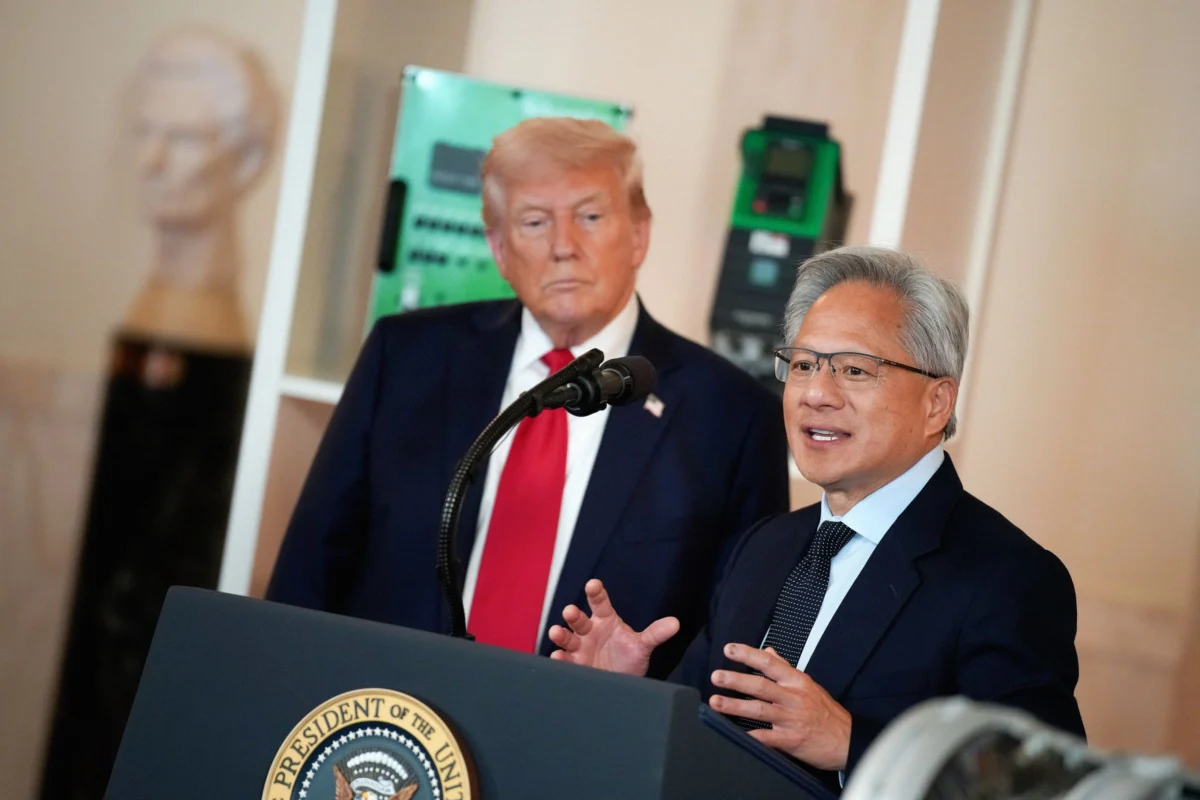
The intersection of high-stakes technology and national politics reached a new level of visibility on Thursday morning when former President Donald Trump interrupted a high-level internal meeting at Nvidia, the world’s leading manufacturer of artificial intelligence chips. During an all-hands staff meeting at the company’s Santa Clara, California, headquarters, CEO Jensen Huang received a direct phone call from Trump, an interaction witnessed by thousands of employees both in person and via a virtual livestream. This unprecedented interruption occurred against a backdrop of historic financial success for Nvidia and the company’s strategic pivot toward increased political engagement in Washington, D.C.
A Public Display of Private Communication
The all-hands meeting, a routine but significant event for Nvidia’s global workforce, was held at the company’s sprawling "Voyager" campus. These meetings are traditionally used by Huang to outline the company’s technical roadmap, celebrate milestones, and address the concerns of a workforce that has seen Nvidia’s market capitalization skyrocket into the trillions. On this occasion, as Huang was addressing the audience, his mobile phone rang. In a rare departure from protocol, Huang stepped to the side of the stage to answer the call.
According to sources present at the event, the distinctive voice of Donald Trump was clearly audible through Huang’s lapel microphone, which remained active. While the specific details of the conversation were not discernible to the audience, the tone was described as congratulatory. Huang returned to center stage in less than a minute, resuming the presentation without providing an immediate explanation to the staff.
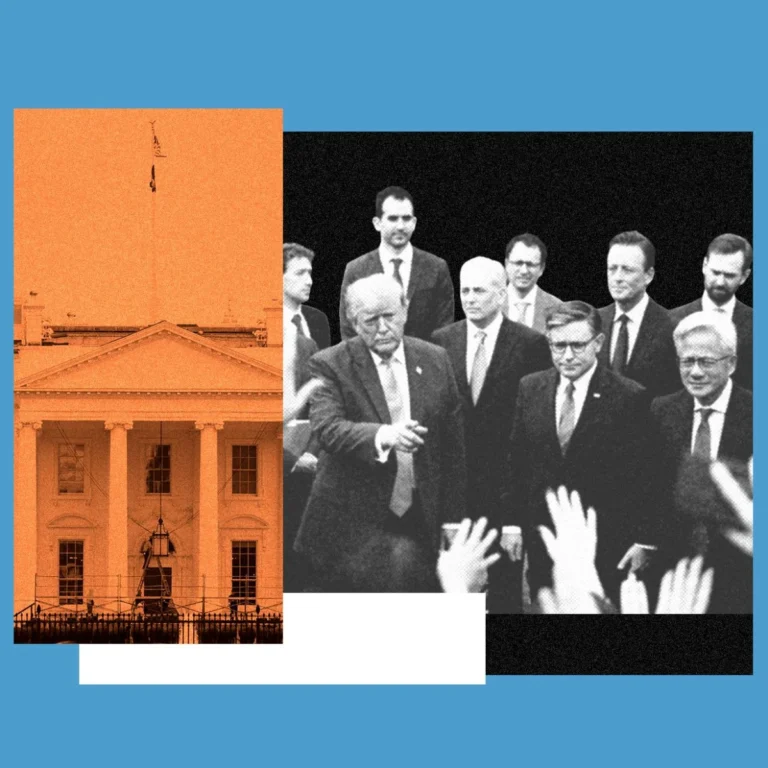
The incident was later confirmed in a public capacity when Donald Trump took to his social media platform, Truth Social, to praise the Nvidia executive. In his post, Trump congratulated Huang on Nvidia’s "incredible" quarterly performance and expressed optimism regarding the company’s financial trajectory for the coming year. The public acknowledgment solidified what had been a moment of internal speculation, highlighting the direct line of communication between the Republican presidential nominee and one of the most influential figures in the global technology sector.
Record-Breaking Financial Performance
The timing of the call was not incidental. Nvidia had recently released its second-quarter financial results, which once again exceeded the already high expectations of Wall Street analysts. The company reported a staggering revenue of $96 billion for the quarter, representing a 106 percent increase compared to the same period in the previous year. This growth is primarily attributed to the insatiable global demand for Nvidia’s H100 and Blackwell series graphics processing units (GPUs), which serve as the foundational hardware for training large language models (LLMs) and generative AI applications.
Nvidia’s data center business has become its primary engine of growth, eclipsing its traditional gaming and professional visualization segments. As hyperscale cloud providers—including Microsoft, Amazon, and Google—race to build out their AI infrastructure, Nvidia has maintained a near-monopoly on the high-end chips required for these tasks. The company’s forecast for the next fiscal year remains "rosy," with Huang indicating that supply remains the only significant bottleneck to even higher revenue figures.
The Launch of the Nvidia Political Action Committee
Beyond the financial headlines, the day of the call coincided with a major shift in Nvidia’s corporate strategy regarding government relations. The company officially announced the formation of a new employee-funded political action committee (PAC). This move signals Nvidia’s intent to play a more active and formal role in the federal legislative process as the debate over AI regulation, semiconductor subsidies, and national security intensifies.
For years, Nvidia has maintained a relatively low profile in Washington compared to legacy tech giants like Intel or IBM. However, as AI becomes a central pillar of national security and economic policy, Jensen Huang has increasingly found himself in the halls of power. The newly formed PAC will allow Nvidia employees to pool resources to support federal candidates, providing the company with a standardized mechanism for political influence.
The establishment of the PAC comes at a critical juncture. The Biden administration has implemented rigorous export controls designed to prevent advanced AI chips from reaching China, a move that has directly impacted Nvidia’s bottom line. Simultaneously, there is a bipartisan push in Congress to establish safety frameworks for AI development. By formalizing its political presence, Nvidia aims to ensure its interests are represented in discussions that could dictate the future of the semiconductor industry.
Navigating Complex Political Waters
The relationship between Nvidia and Donald Trump is multifaceted. During his presidency, Trump’s administration initiated the trade tensions with China that have evolved into the current technological "cold war." While Nvidia has benefited from some domestic manufacturing incentives, it has also faced challenges due to the restrictions on selling its most advanced hardware to the Chinese market—a region that has historically accounted for a significant portion of its revenue.
Despite these tensions, Huang and Trump have met in closed-door sessions in the past to discuss the role of AI in American competitiveness. Trump’s recent praise suggests a desire to align his "America First" economic platform with the success of the nation’s most valuable technology companies. For Nvidia, maintaining a rapport with both current administration officials and potential future leaders is a pragmatic necessity. The company must navigate a landscape where AI is viewed simultaneously as a tool for economic growth and a potential threat to national stability.
Strategic Acquisitions and Antitrust Scrutiny
Adding to the complexity of the moment are reports that Nvidia is moving to consolidate its position in the AI ecosystem through major acquisitions. Recent reports from The Information and Business Insider suggest that Nvidia has reached an agreement to acquire Hugging Face, the preeminent open-source platform for AI models and datasets.
The deal, which is rumored to be valued at upwards of $13 billion, would be a transformative move for Nvidia. Hugging Face is often described as the "GitHub of AI," serving as the central hub where developers share models, code, and training data. By acquiring the platform, Nvidia would move beyond being a hardware provider and become a central player in the software and data infrastructure of the AI world.
However, an acquisition of this magnitude is certain to trigger intense scrutiny from US antitrust regulators, including the Federal Trade Commission (FTC) and the Department of Justice (DOJ). Under the current administration, regulators have taken a skeptical view of "vertical integration" by dominant tech firms. Critics argue that Nvidia’s control over both the hardware (GPUs) and the primary software repository (Hugging Face) could stifle competition and prevent smaller startups from entering the market.
The direct communication from Trump, who has frequently criticized the "Big Tech" policies of the current administration, raises questions about how a potential second Trump term might handle such mergers. While Trump has expressed a desire to deregulate certain industries, his administration was also characterized by unpredictable interventions in corporate deals based on national security or personal grievances.
Industry Implications and Future Outlook
The interruption of the Nvidia all-hands meeting serves as a vivid illustration of the blurring lines between corporate leadership and political campaigning. As AI continues to dominate the global economic discourse, the leaders of companies like Nvidia are no longer just CEOs; they are geopolitical actors whose decisions influence international relations and national security.
The broader implications of Nvidia’s political and corporate maneuvers are significant:
- AI as a Political Asset: The "congratulatory" nature of Trump’s call indicates that the success of the American AI industry will be a major talking point in the upcoming election cycle. Both parties are eager to claim credit for the "AI boom."
- Increased Lobbying Competition: With the launch of its PAC, Nvidia is entering a space already crowded by Big Tech lobbyists. This will likely lead to more aggressive advocacy for policies that favor hardware manufacturers, such as continued subsidies for domestic fabrication plants (fabs).
- Regulatory Uncertainty: The rumored Hugging Face deal will serve as a litmus test for how the U.S. government intends to regulate the AI supply chain. If the deal is blocked, it may signal a limit to Nvidia’s expansionist ambitions. If approved, it could cement Nvidia’s dominance for a generation.
As the meeting in Santa Clara concluded, the atmosphere among staffers was described as "abuzz." For many at Nvidia, the call was a reminder that their work is at the center of a global struggle for technological supremacy. Jensen Huang’s ability to resume the meeting and return to the business of building chips suggests a CEO who is comfortable operating in the eye of the storm. Whether that storm results in continued unprecedented growth or a regulatory reckoning remains the most pressing question for the company and its investors.
About the Author